Chronique d'une déliquescence nationale vue de l'étranger.
Tandis que les centres-villes français et les abords des lycées se transforment en zones de non-droit sous les coups de boutoir de bandes ultra-violentes et de groupuscules islamistes, la classe politique locale souffle sur les braises.
Pour l'observateur américain, la France fait figure de grand malade de l'Occident.
Sans un sursaut d'autorité immédiat de la part de ses dirigeants, le pire est devant elle.
Une nation fracturée, un pouvoir en plein naufrage
Il est des moments dans l'histoire des grandes nations où le vernis de la civilisation cède sous la pression conjuguée de la lâcheté politique et de la barbarie urbaine.
Ce que traverse la France actuellement dépasse l'entendement.
Ce qui a commencé sous couvert de revendications lycéennes et de malaise estudiantin s'est mué, en l'espace de quelques jours, en un véritable brasier insurrectionnel.
Des milliers d'interpellations, des centaines de membres des forces de l'ordre et des services de secours blessés, des lycées saccagés, des halls et des façades incendiés de Nantes à Bordeaux :
Le pays se « bordélise » à un rythme effréné, sous les yeux d'un pouvoir exécutif frappé d'impuissance, englué dans des gesticulations stériles alors que la situation lui échappe totalement.
L'attaque des symboles : quand les secours et l'école sont profanés
Le degré de sauvagerie atteint ces derniers jours touche à l'irrationnel. Les premiers de cordée du secours public ne sont plus épargnés.
À l'image de ce camion technique spécialisé des sapeurs-pompiers un véhicule d'intervention lourde d'une valeur supérieure à 500 000 euros, nécessitant plus de deux ans de fabrication sur-mesure lourdement pillé et incendié, privant durablement les citoyens d'un outil vital de protection.
Puis ce sont les sanctuaires de la République française eux-mêmes qui brûlent.
Des établissements scolaires pris pour cibles, vandalisés, ravagés par les flammes, illustrant la haine viscérale de tout ce qui incarne l'ordre, l'autorité et l'avenir de la jeunesse.
Une chienlit attisée : la folie furieuse de l'extrême gauche à l'Assemblée
Comment en est-on arrivé là ?
La réponse brûle les lèvres des analystes :
Par la compromission coupable d'une partie de la classe politique locale.
À l'Assemblée nationale, le spectacle offert par La France Insoumise (LFI) s'apparente à une trahison des fondements républicains.
Au lieu d'apaiser, de condamner la violence et de rappeler les manifestants au cadre légal, ces tribuns de la haine attisent le feu, justifient l'inacceptable et encouragent la chienlit.
Dans le même temps, le contraste institutionnel a été saisissant :
Des élus de l'opposition, qu'ils soient communistes ou centristes, ont su faire preuve de sens républicain en soutenant ouvertement les forces de l'ordre face au chaos, s'attirant les rares hommages d'un gouvernement désarmé.
Mais face à eux, l'extrême gauche s'est imposée en complice consciente d'une subversion totale.
Le masque tombe : racaille des cités, slogans islamistes et spectre du pire
La nature réelle de ces « émeutes » ne trompe plus personne hors des frontières.
Les images tournées par les témoins et relayées en boucle montrent le vrai visage des casseurs.
Des hordes sauvages qui traquent les fonctionnaires de police en hurlant des menaces de mort (« à mort, il faut la tuer »), et des groupuscules qui transforment la contestation sociale en beuglements haineux scandant des invocations religieuses pour terroriser et massacrer.
Les services de renseignements et les observateurs lucides notent l'immixtion criminelle de réseaux mafieux à l'instar de la DZ Mafia bien décidés à parasiter le chaos pour asseoir leurs trafics de stupéfiants et transformer les banlieues en enclaves étanches.
Le couperet américain : la lucidité tragique vue de l'extérieur
C’est précisément cette réalité brute, sans filtre, qui a provoqué l'électrochoc à l'international.
Les déclarations de Donald Trump sur son réseau social pointant du doigt une immigration de masse hors de contrôle et une tentative d'hégémonie de l'islam radical sur un pays autrefois grand ont trouvé un écho stupéfiant bien au-delà du camp conservateur américain.
Fait notable et révélateur de la gravité de la crise :
Des figures influentes et des élus du Parti démocrate américain (la gauche aux États-Unis) partagent en privé ou publiquement ce constat d'alarme, jugeant le multiculturalisme français au pied du mur et l'impasse actuelle quasi désespérée.
Quand l'Amérique, tous partis confondus, regarde la France avec effroi en y voyant le laboratoire d'une décadence civilisationnelle, c'est que le seuil de non-retour est atteint.
Le moment de vérité
Il n'y a plus de place pour la naïveté, ni pour le politiquement correct qui consiste à voiler la face derrière de prétendus mouvements sociaux légitimes.
La France fait face à un péril mortel : la convergence entre l'ultra-violence criminelle, le séparatisme islamiste et la déstabilisation institutionnelle menée de l'intérieur par les pyromanes de l'extrême gauche.
Si le gouvernement français ne rétablit pas l'ordre, le vrai, le musclé, sans faiblesse ni concession, ce sont les fondements mêmes de la nation qui s'effondreront définitivement.
La vérité est là, implacable.
Reste à savoir si l'État a encore le courage de regarder la réalité en face avant qu'il ne soit trop tard.
Garett Skyport pourDayNewsWorld
There are no translations available.
UNE FRANCE FERVENTE FACE
AU DEFI DES FRACTURES NATIONALES
Pendant quatre jours, du 25 au 28 septembre, la France a vécu au rythme de la visite d'État et apostolique du pape.
De Notre-Dame de Paris à la cathédrale de Metz, en passant par les foules recueillies des Champs-Élysées et le sanctuaire de Lourdes, le pays a offert le visage d'une nation apaisée, portée par la foi, le respect et le sens du sacré.
La ferveur tranquille de la France profonde
Bien loin de l'agitation médiatique habituelle et des débordements urbains qui émaillent trop souvent l'actualité, ces rassemblements ont témoigné d'une dignité exemplaire. Des centaines de milliers de fidèles, de pèlerins et de simples curieux familles, jeunes, anciens se sont massés dans le calme et la communion.
Cette France silencieuse mais bien vivante a rappelé sa profondeur spirituelle et son attachement à ses racines.
Dans les rues piétonnisées de la capitale comme sur la prairie de Massabielle à Lourdes, l'atmosphère est restée constante : de la joie, de la piété et une tenue irréprochable.
La communauté des croyants et les citoyens rassemblés ont montré ce que la France sait offrir de plus noble : une fraternité sincère et une ferveur contenue.
Une parole ferme sur l'essentiel
Tout au long de ses interventions, le Souverain Pontife s'est exprimé avec la clarté et la fermeté qu'on lui connaît.
Rappelant la valeur inaliénable de la vie humaine de son commencement à sa fin naturelle, il a porté un message exigeant face aux évolutions sociétales actuelles, rejetant toute dérive utilitariste ou comptable de l'existence.
Une ligne de conscience claire qui a trouvé un écho profond chez les croyants rassemblés, réaffirmant le rôle de l'Église comme boussole morale face aux dérives du temps.
Le peuple souverain face aux manœuvres politiques
En marge des cérémonies religieuses, le ballet des personnalités politiques n'a pas manqué d'attirer l'attention.
Les présences calculées, les hésitations et les retours de dernière minute en tribune officielle pour capter un peu de la lumière pontificale n'ont toutefois leurré personne.
Le contraste était saisissant entre le calcul des élites politiques et la sincérité du peuple réuni dans les nefs et sur les parvis. La piété des fidèles n'appartient à personne, et les tentatives de récupération sont restées vaines face à la vérité de l'événement.
Le saisissant contraste du lendemain
À peine la ferveur pontificale retombée et l'écho des prières assourdi, le pays s'est pourtant réveillé dans un tout autre paysage.
Dès le lendemain, la réalité des tensions sociales a repris ses droits avec une vivacité déconcertante.
Blocages de lycées, cortèges houleux, affrontements avec les forces de l'ordre marqués par des policiers blessés notamment à Grasse et conteneurs enflammés dans la rue sont venus rompre brutalement la quiétude qui prévalait la veille.
Ce basculement met en lumière un contraste saisissant : d'un côté, une France du silence, du respect et de la sérénité; de l'autre, la gesticulation d'une contestation alimentée par la gauche radicale.
L'illustration la plus frappante en demeure cet élu local esquissant des pas de danse tout sourire devant des feux de poubelles sous les encouragements de manifestants.
La question fondamentale du modèle d'assimilation
Ce contraste met en lumière un enjeu encore plus profond :
La remise en cause du modèle d'assimilation.
Alors que l'intégration a longtemps fonctionné de manière naturelle et harmonieuse pour ceux qui embrassaient les valeurs républicaines, une frange de la société semble aujourd'hui revendiquer une rupture explicite avec les codes de la communauté nationale, alimentant un rejet virulent des institutions.
La prolifération de zones de non-droit, l'économie souterraine des trafics et le refus manifeste d'adhérer au pacte républicain sont perçus non seulement comme une menace pour la sécurité, mais aussi comme le signe d'une démission politique.
Face à la complaisance idéologique qui accompagne cette fragmentation, le débat s'impose désormais d'un retour à une exigence ferme :
Celle d'une réaffirmation claire de l'autorité et du respect de la nation comme conditions préalables à l'appartenance à la communauté nationale.
Simon Freeman pourDayNewsWorld
WHAT IS MY SMALL BREAST ?
You post a buxom 28A !.
Is having a small breast complexing ?
No: make it a strength and assume!
The positives and negatives :
For the former, you don't suffer from back pain, pain during a race, you can walk for whole days without a bra...
For the latter, hard to find a 28A !
Then you turn to H&M !
It's up to lingerie brands to stick to these small sizes !
Key moment : you find yourself for the first time in the dark in a bed with your boyfriend.
Hi ! hey !! your boyfriend doesn't care about having to deal with a 35D or a 28A !!!
YOUR CONCLUSION:
Finally, the chest measurement is far from being as important as we would have us believe. Goodbye Nabila and Bella Habib !
NO your boyfriend is not going to leave you because you do not go beyond cup A.
If he dares to make you a reflection, LEAVE !!
Because there are many guys who don't care about your chest size !
Mia Kennedy forDayNewsWorld
TOWARDS TAX REFORM
FAIR AND TRANSPARENT
In a world where taxes weigh increasingly heavily on citizens and businesses, tax havens have become attractive havens. They offer considerable tax advantages and are the result of intense tax competition between states. However, to reach an equitable solution, it is essential to rethink the role of tax havens while holding accountable the States which seek to attract wealthy taxpayers and companies, and to institute a flat tax rate of 5% everywhere.
Tax competition issues :
Exacerbated tax competition between States fuels the proliferation of tax havens, thus creating significant disparities in taxation. Some States offer very favorable tax conditions to attract investors, which has the effect of depriving States of legitimate tax resources and worsening inequalities.
In-depth reflection on the management of this competition is necessary to establish a balance between the needs of States and the need for fair taxation.
Hold states accountable and account for every penny :
States, whether they are considered tax havens or not, must be held accountable for their tax policies. It is imperative to demand full transparency from them, as well as rigorous accountability regarding the use of tax revenues.
Leaders in high-tax states must account for every penny spent and ensure public funds are used responsibly and efficiently. Abuse and waste of public money must be severely condemned, and independent control mechanisms must be put in place to ensure transparent financial management.
Rethinking tax havens towards a balanced reform :
Rather than systematically condemning tax havens, it is necessary to rethink their role in the global tax system. Fair tax reform should aim to reduce the disparities between states in terms of taxation, ensuring that all contribute fairly to the financing of public services. One proposal could be to introduce a flat tax rate of 5% everywhere, thus ensuring a fair and predictable level of taxation for citizens and businesses.
A tax haven for all : rethinking tax hells
In the debate on tax havens, it is essential to recognize that many countries have become veritable tax hells for citizens and businesses. Taxpayers face overwhelming tax pressure, complex regulations and excessive bureaucracy. It is therefore not surprising that many people are looking for alternatives to reduce their tax burden.
Faced with this reality, it is legitimate to ask why citizens and businesses do not deserve a real tax haven.
After all, if states can create oppressive tax environments, there should also be just reasons why taxpayers should benefit from favorable tax conditions.
Finding a tax haven for all does not mean evading taxes, but rather finding a reasonable balance between tax contribution and economic stimulation.
A favorable tax environment can encourage investment, foster job creation, attract talent and stimulate economic growth.
This would benefit both citizens and businesses, creating shared prosperity.
However, it is crucial to emphasize that the search for a tax haven for all must not be at the expense of tax justice and social equity.
Tax rules and regulations should be transparent, fair and applicable to all actors.
It is essential to avoid abuses, tax evasion and fraudulent practices that weaken public finances and fuel inequalities.
The creation of a tax haven for all requires a profound tax reform, based on the principles of transparency, accountability and fairness. States must recognize that favorable fiscal conditions can be a powerful economic engine, attracting investment and promoting prosperity.
However, this must be accompanied by strong control mechanisms to ensure that the tax benefits actually benefit the economy and society as a whole.
The discussion on tax havens needs to be broadened to include a reflection on the tax hells that many taxpayers face.
It is time to rethink tax systems, aiming to create a real tax haven for all, where the tax contribution is fair, the environment is favorable to business and the economy, and where prosperity is shared fairly. Balanced and transparent tax reform is the key to achieving this ambitious goal.
To achieve a lasting and equitable solution, it is essential to hold States accountable, to rethink the role of tax havens and to introduce a fixed tax rate of 5% everywhere. This will promote more balanced tax competition, reduce inequalities and ensure that all taxpayers participate equitably in financing the needs of society.
Moreover, it is imperative to promote transparency, accountability and the responsible use of public funds in order to restore citizens' confidence in taxation.
Only fair and transparent tax reform can ensure a fair and efficient tax system for all...
Tom Morgan forDayNewsWorld
There are no translations available.
RENDRE SES CHEVEUX FINS PLUS EPAIS
POURQUOI NE PAS TENTER UNE CURE DE SEBUM ?
La cure de sébum est destinée aux cheveux très fins, sans volume et texture.
Mais a prime abord il faut radicalement changer tes habitudes capillaires, et en avoir la volonté !
Que penses-tu quand tu lis : interdit de se laver les cheveux pendant un mois ?
Toi qui te les lave presque tous les deux jours !
La cure de sébum ?
Une cure de sébum consiste à ne pas se laver les cheveux (du tout du tout) pendant au moins un mois
Pourquoi ?
En fait, c’est que le sébum est bon pour les cheveux et le cuir chevelu.
D’une part le sébum protège et hydrate naturellement le cuir chevelu et les cheveux, d'autre part il régule la peau, qui dégage alors moins de sébum. Ainsi la chevelure ne ce graisse pas vite.
Et après un mois sans lavage, les cheveux deviennent plus fort, plus épais, plus volumineux.
Fini la corvée de tous les deux jours.
Comment s'y prendre ?
S’acheter une perruque semblable à ta nature de cheveux, à ta couleur, et avec une frange, pour qu’on ne voit pas la délimitation des faux cheveux. Comme ça tu passes de partout.
Et des bonnets ou des foulards pour des coiffures qui cachent.
Le rituel
1° Il convient de te brosser les cheveux deux fois par jour avec une brosse en fibres naturelles (poils de sanglier ou simili) ce qui étale le sébum des racines aux pointes.Et tu passes tes mains dans les cheveux ce qui décolle les racines et les aére.
2° Lave ta brosse après l’usage, à l’eau et au shampooing.
3° Change ta taie d’oreiller journellement.
La première semaine ne t'affole pas car des pellicules apparaissent subitement. Mais dès le lendemain elles s'en vont en se brossant les cheveux.
Puis les cheveux deviennent de plus en plus poisseux …et ça donne un effet mouillé.
Mais courage ! Le résultat tant attendu peut se faire au bout de trois semaines seulement.
Il est obligatoire de se conformer au rituel pendant au moins trois semaines voire quatre au grand maxi.
Et attendre que le sébum arrive au pointes.
Et à ce moment c'est gagné !
Des avantages ?
La cure te permet de réguler la sécrétion de sébum pour que tu puisses espacer les shampooings. Et de plus elle permet de soigner l’intégralité de la longueur grâce le sébum.
Et en dix minutes tu seras prête le matin au lieu de passer un temps infini avec feu les vilains cheveux.
Normalement, le but de la cure c’est de réguler sa sécrétion de sébum pour pouvoir espacer les shampoings, mais aussi de soigner l’intégralité de la longueur avec le sébum.
Mia Kennedy pour DayNewsWorld
There are no translations available.
MODE AUTOMNALE 2026
Il y a la mode des podium et celle de la rue.
La mode que l'on peut porter tous les jours. Elle s'inspire aussi des défilés de mode.
Pour l'automne en premier c'est la mode du jean le denim.
On peut même s'habiller tout en jean avec une chemise en jean et un jean, une combinaison en jean ou une jupe en jean avec des bottes en jean.
Mais toujours le jean doit être de couleur bleu.
Et le cuir est de retour.
Il s'associe avec d'autres matières.
Si vous portez une veste en cuir ou un petit perfecto en cuir vous l'associez avec une jupe d'une autre matière ou avec un pantalon un peu habillé.
Par contre là on évitera le jean comme association.
Puis il y a le petit manteau blouson en fausse fourrure de différentes couleurs arrive le rose le jaune le bleu.
Enfin un peu de gaieté en automne même si nous avons toujours le soleil, les couleurs sont toujours du bien.
N'oublions pas la folie des stickers qui sont sur les pulls les pantalons les sacs à main les chaussures même les grands créateurs en sont fous chez Louis Vuitton on les trouve sur les chaussures avec des stickers de voyage de couleur, sur les blousons sweat chez Gucci les stickers sont sur les pulls les manteaux les pantalons.
La mode est de toute évidence au confortable avec tous les sweat-shirt de couleur les tennis.
On remarque aussi un retour des épaulettes sur les corsage et les manteaux.
Puis l'imprimé avec les fleurs revient en force sur corsage pantalon robe petit conseil si vous portez une pièce à fleur porter un manteau sobre avec: surtout pas faire trop d'extravagance !.
Pour les prochains froids on retrouve les doudounes mais là ce sont les doudounes XXL.
Essayez avant d'emprunter la doudoune d'une copine un peu plus forte que vous. Car avec une taille de plus on peut très vite ressembler à unepetite boule, ce qui n'est pas très féminin.
La petite robe noire est toujours de rigueur : elle est vraiment très pratique quand on ne sait pas quoi mettre on l'enfile un petit coup de rouge à lèvres des petits talons ,des ballerines, et l'on est prête à sortir.
Dernier petit détail pour les chaussures les talons à la mode sont les petits talons bien pratiques pour une journée bien remplie.
Alors allez vite faire du shopping pour trouver la petite pièce qui vous manque. À bientôt ...
Mia Kennedy pourDayNewsWorld
TOTAL HAIR REMOVAL A YOUTH RITUAL
SHAVING IS PREFERABLE TO FULL-BODY WAXING
Eventhough women have always known about hair removal, new practices are emerging among young people in Japan :
pubic hair removal
A small number of women undergo complete hair removal, this practice particularly affecting 18-24 year olds (6%) and almost no women after 50.
Complete shaving, on the other hand, is much more common:
They constitute 99% of hair removal procedures and vary according to age group, with the highest proportion among younger people.
FOR WHAT ?
Let's not forget that body hair has always been considered socially negative, especially under the armpits and legs, to such an extent that an unshaven woman encounters more difficulty in her intense romantic relationships.
Those who favor a bare pubic area, on the other hand, would find it to be a more intense source of pleasure and sexual fulfillment.
Some partners also believe that hygiene and cleanliness are achieved through a bare pubic area.
Others, both women and men, mention the aesthetic aspect and find themselves sexier...
However, there are still some young people who are fans of Nubian hair, undoubtedly unconsciously captivated by the exciting scents of pheromones...
Kate White forDayNewsWorld
BE A BOMB OUT OF BED
How to have a peach complexion in the morning ?
And not having drawn features and suitcases under your eyes when you wake up enough to shoot a six-foot-long mine in your mirror ! Banish difficult mornings with a few essential evening rituals.
Before going to bed you have to go through the make-up removal box!
Go no excuse not to take cotton, wipe and cleansing lotion. We're not talking about an exhausting day at work or a crazy evening with your crush of the year, the make-up removal box in the bathroom is mandatory for hunting down impurities !
Make a new look
We apply on her freshly cleansed skin a lotion which tones the skin while avoiding the eye contour, then a night cream and why not an eye contour serum. And now your skin is well hydrated for the night.
So far, nothing extraordinary, just super banal, will you retort ?
Yes, but have you thought about the small facial massage in the evening ?
No, of course, we are in too much of a hurry to slip under the duvet. Go a little more effort.
Do a little facial massage.
This is the infallible technique for not looking dug up early in the morning.
It decongests the skin while being effective in evacuating toxins
So no more hesitation, let's get started.
When applying your night cream, you pinch the skin quite firmly between your thumb and index finger, reproducing the movement centimeter by centimeter on each side of the face with both hands.
Repeat the exercise from the cheekbones towards the temples, from the mouth towards the ears, from the chin towards the jaw and finally from the chin towards the birth of the neck.
The guarantee of a peachy complexion the next day.
Evening food hygiene.
It is better to avoid all foods that are too fatty and bet on a good plate of vegetables with a portion of starch so as not to be peckish in the evening.
And above all, beware of snacking before going to bed !
Sleep the sleep of the wise.
Adopt regular schedules and listen to your biological clock:
from the first yawns your body signals its fatigue. Restorative sleep lasts between 6 and 9 hours depending on the person.
Addicted to your screen, you certainly are, so turn it off for a good half hour before falling into the arms of Morpheus
And by following all these little tips you will be on top when you wake up !!!
Mia Kennedy forDayNewsWorld
There are no translations available.
LA PUNAISE DES BOIS ET SA COUSINE DIABOLIQUE
L'ART ET LA MANIÈRE DE SANCTUARISER SA DEMEURE
L'automne a ce charme singulier des matins brumeux et des premiers feux de cheminée, mais il apporte aussi son lot de convives indésirables.
Alors que la nature s'endort, une armée miniature s'ébranle. Sur les façades ensoleillées de nos belles villas, le long des balcons en fer forgé et aux abords des baies vitrées, elles font leur grand retour : les punaises.
Entre la punaise verte des bois (Palomena prasina), notre inoffensive locale, et sa redoutable compère invasive, lapunaise diabolique (Halyomorpha halys), ces hôtes automnaux transforment la quiétude des extérieurs en un discret siège.
Pour les propriétaires soucieux d'immaculé et d'art de vivre, l'intrusion de ces insectes aux allures de tanks miniatures n'est évidemment pas une option.
Mais point n'est besoin de céder à la panique, ni de recourir à l'arsenal lourd des biocides industriels. La riposte la plus élégante se niche au cœur même de la botanique.
Anatomie d'un indésirable : savoir à qui l'on a affaire
Si notre punaise des bois locale passe du vert tendre estival au brun bronze pour se fondre dans les sous-bois, la punaise diabolique, venue d'Asie, arbore une livrée marbrée rehaussée de ces fameux motifs blancs en damier sur les antennes. Toutes deux partagent le même objectif automnal :
Ladiapause.
Trompées par la tiédeur de nos murs ou la douce réverbération d'une terrasse exposée sud, elles cherchent simplement une faille pour échapper au gel. Une fois à l'intérieur, leur vol lourd et bourdonnant trahit leur désorientation.
La règle d'or absolue :
Ne jamais, sous aucun prétexte, céder à l'impulsion d'un coup de balai ou d'une pantoufle rageuse. En cas de stress, ces insectes libèrent par leurs glandes odoriférantes un cocktail chimique d'aldéhydes un parfum tenace évoquant la coriandre rance ou le plastique chauffé.
Un véritable « gaz de combat » domestique dont on se passera volontiers dans un salon de standing.
Le « Bouclier Olfactif » : sanctuiser sa propriété par le végétal
Plutôt que de subir leurs ballets erratiques, l'art de la haute protection réside dans l'anticipation.
Pour empêcher ces squatteurs d'approcher des seuils de la maison, il s'agit de dresser une ligne de défense invisible mais radicale :
La saturation olfactive.
Dans la subtile grammaire de la nature, certaines plantes n'émettent pas seulement des fragrances : elles orchestrent de véritables illusions sensorielles.
1. La stratégie du "signal d'alarme" et du prédateur fantôme
Le saviez-vous ?
Pour la punaise, certaines émanations botaniques ne sont pas simplement désagréables :
Elles agissent comme un code d'alerte rouge absolu.
En libérant des molécules aux notes camphrées ou surpuissantes, certaines plantes simulent chimiquement la présence d'un danger mortel ou d'un prédateur redouté sur zone.
Persuadée qu'un péril imminent menace sa survie, la punaise rebrousse chemin en catastrophe, fuyant le secteur à grandes foulées bien avant d'avoir atteint vos façades.
2. Les sentinelles vertes à adopter d'urgence sur les terrasses
Pour marier l'utile à l'agréable et préserver l'esthétique soignée de vos extérieurs, installez de grands bacs ou des bordures stratégiques composées des variétés suivantes :
La Tanaisie commune (Tanacetum vulgare) :
C'est la reine incontestée de la répulsion. Ses sommités jaunes et son feuillage profondément découpé exhalent un parfum camphré lourd. Pour un insecte, s'approcher d'un massif de tanaisie revient à traverser une zone de non-droit saturée de signaux de danger.
La menthe poivrée :
Plantée en pot le long des balcons ou des coursives, sa fragrance mentholée incisive agresse instantanément leur système olfactif.
L'Armoise et l'Absinthe :
Leurs notes amères et pénétrantes complètent à merveille ce dispositif de défense naturelle, créant une barrière infranchissable pour les indésirables.
3. L'artillerie fine : le spray préventif
Pour parfaire l'isolation olfactive de la villa, un traitement de surface aux premiers frissons fait des merveilles :
Le purin ou spray à l'ail :
Une macération d'ail concentrée additionnée d'un trait de savon noir, vaporisée discrètement sur les encadrements de fenêtres et les balustrades. Si l'odeur s'estompe très rapidement pour notre nez humain, elle demeure un repoussoir absolu pour les insectes pendant plusieurs jours.
Le cocktail d'huiles essentielles :
Quelques gouttes d'essence de menthe poivrée ou de lemongrass associées à de l'alcool à 70° appliquées aux points névralgiques achèveront de décourager les plus téméraires.
L'art de l'éviction en douceur
Si malgré tout, quelques spécimens égarés venaient à franchir le seuil, la méthode douce reste de mise. Glissez délicatement une feuille de papier rigide sous l'intrus, recouvrez-le d'un verre, et raccompagnez-le vers la liberté extérieure sans le brusquer.
En combinant l'élégance de massifs répulsifs bien pensés et une barrière olfactive subtile, votre propriété demeurera ce qu'elle a toujours dû être : un havre de paix, résolument clos à l'agitation de l'automne.
Emily Jackson pourDayNewsWorld
HOW TO REVEAL YOUR IDENTITY
WITH YOUR PERFUME OF THE MOMENT ?
To wear perfume is to reveal a little piece of yourself by showing yourself in your true light.
So choose the fragrance that suits you because your trail will leave an indelible mark of your identity .
This is therefore the first determining step.
Go to a perfumery in good company likely to advise you well !
Or seek advice from a saleswoman, she knows her business well.
Warning: the final scent is not the same on the strip of paper from the perfumery or on your buddy as it is on your skin...
But this is not the only step! To wear good perfume, spraying the fragrance in the right place is essential!
Your perfume must exhale all its aromas!!!
°The perfume sprayed on the skin
Of course, your epidermis is the best physical support. It will sublimate the scents of your fragrance but specific areas are to be preferred:
the famous pulse points, i.e. the parts of the body where the heat is concentrated such as the neck, the nape of the neck, the ankles, behind the ears, the neckline or the wrists.
Finally, the hair can also be a privileged place.
Ah! cool to feel beautiful with her perfume. You love !!!
Kate White forDayNewsWorld
RED ALERT
SPACE APOCALYPSE IS IMMINENT !
Outer space , particularly the critical zone between 400 and 550 kilometers altitude, is becoming an ultra-saturated orbital bottleneck where the risk of catastrophic collisions increases exponentially.
In this highly coveted terrestrial suburb, thousands of satellite constellations, foremost among them SpaceX's Starlink, cross paths at dizzying speeds.
Today, only an automated choreography of avoidance, repeated several times a day with micro-pushes, separates humanity from an irreversible technological disaster.
Here is an in-depth analysis of this invisible crisis that threatens our hyper-connected civilization.
1. The great 500-kilometer traffic jam
For decades, low Earth orbit (LEO) was a vast and relatively uncrowded space.
Those days are over. The advent of mega-constellations has transformed the area between 430 km and 500 km altitude into a veritable ring road during rush hour.
Why this precise altitude?
It offers the ideal compromise for low-bandwidth telecommunications and high-speed internet:
minimal latency and natural atmospheric reentry within a few years for the debris, thus avoiding perpetual pollution of space.
The result: everyone is rushing in. In addition to the thousands of Starlink satellites, there are the fleets of OneWeb, Amazon's projects (Project Kuiper) and a multitude of university or military cubesats.
2. The War of the Buttons: Thousands of Daily Avoiders
At altitudes where objects are traveling at nearly 28,000 km/h (approximately 7.8 km/s), a crossing at a distance of one kilometer is considered a hair's breadth.
At that speed, the slightest impact is not a simple shock: it is an explosion of pure kinetic energy.
To avoid the worst, operators must constantly adjust trajectories.
Autonomous algorithms:
SpaceX, for example, uses automated avoidance systems based on tracking data from the US Space Command.
Invisible impulses:
Thanks to Hall effect thrusters (ion engines), the satellites receive emergency commands, making small thrusts several times a day to modify their orbit by just a few meters.
The cost of survival:
Each maneuver consumes precious fuel, reducing the satellite's operational lifespan, and is akin to a game of orbital Russian roulette where the slightest computer bug would be equivalent to a head-on collision.
3. The Kessler Syndrome: The Apocalypse Scenario
If two medium-sized satellites were to collide head-on, the world would witness the onset of Kessler Syndrome .
Theorized in 1978 by NASA scientist Donald J. Kessler, this scenario describes a terrifying domino effect.
The mechanism of the chain reaction
The initial collision:
Two satellites pulverize, instantly generating a cloud of tens of thousands of debris the size of a marble or a brick.
The Shrapnel effect:
Each of these fragments retains its indomitable orbital velocity and in turn becomes a deadly projectile.
Saturation:
These debris will cross into neighboring orbits, colliding with other satellites, which will in turn break apart.
Within a few days, or even a few hours, an uncontrollable chain reaction could transform low Earth orbit into an unusable wasteland.
4. The "Night of the Satellites": the consequences of a global blackout
If this catastrophe were to occur, the consequences for humanity would not be merely a spectacle of lights in the night sky. It would be an immediate and brutal technological regression. A veritable "night of the satellites" would paralyze our daily lives.
Communications blackout: Instantaneous loss of global internet in isolated areas, disruption of maritime and air links.
Logistical and financial chaos: Geolocation systems (GPS, Galileo) interconnected with low Earth orbit would suffer major disruptions, freezing global banking transactions synchronized by space atomic clock and blocking transport.
Climate and weather blindness: No more real-time data to anticipate hurricanes, monitor fires or map agricultural resources.
Earth in quarantine: The curtain of debris surrounding the planet would make manned space missions, maintenance of the International Space Station, and deep-space exploration (to the Moon or Mars) simply impossible. Earth would be trapped under an armor of kinetic scrap metal.
5. The urgent need for a space highway code
Space today suffers from the "commons" syndrome:
Everyone benefits, no one regulates it in a binding way.
Current rules rely largely on the goodwill of private companies and national agencies.
If we want to prevent the 500-kilometer radius from becoming the graveyard of our modernity, the international community must urgently impose a universal space highway code :
financial penalties for abandoned debris, the obligation of immediate deorbiting in case of failure, and the industrial development of orbital cleaning technologies (space tugs, magnetic nets).
The orbital watch is working at full capacity, but the thread holding our space infrastructure together has never been thinner. The countdown to the final, fatal impact has already begun.
Paul Emison forDayNewsWorld
There are no translations available.
EUTHANASIE DE L'ECONOMIE LE E-INVOICING ET
LE E-REPORTING VONT PULVERISER LES ENTREPRISES
ET CREER UN CHOMAGE DE MASSE JAMAIS VU
Le pays avance les yeux bandés vers son propre suicide industriel.
Alors que la mise en place de la facture électronique (e-invoicing) et de la transmission automatisée des données (e-reporting) s'impose progressivement en cette rentrée de septembre 2026, la passivité générale a de quoi donner le vertige. Entre résignation et anesthésie collective, dirigeants, chefs d'entreprise et syndicats observent sans broncher la mise en place d'un mouchard d'État permanent.
Sous prétexte d'une traque illusoire de la fraude à la TVA, c'est ni plus ni moins que le secret commercial, technologique et industriel de toute la nation qui se retrouve aspiré, centralisé et offert aux quatre vents, ouvrant la voie à une destruction totale du tissu productif et à un tsunami social d'une violence inédite.
Le grand déballage : la violation totale et définitive du secret industriel
La technocratie administrative ne voit dans une entreprise qu'une ligne de tableur et un flux de taxes. En obligeant chaque structure à transmettre en temps réel le détail chirurgical de ses factures désignation précise des pièces, volumes, prix d'achat, identité des fournisseurs et des clients, elle détruit un principe fondamental : la protection absolue des savoir-faire et du secret technologique.
Qu'il s'agisse de chimie industrielle, de pharmacie, de mécanique de pointe ou d'aéronautique, le résultat est le même. N'importe quel concurrent un tant soit peu outillé, ou n'importe quelle puissance étrangère en quête de rétro-ingénierie, dispose désormais d'une feuille de route clé en main.
À ce niveau de détail, pourquoi s'embêter à espionner ou à concevoir ?
Il suffit de collecter les flux de facturation pour obtenir le part list intégral d'un composant de haute technologie, d'un sous-ensemble mécanique, ou même des éléments constitutifs des fleurons de défense et industriels français.
Penser que ces montagnes de données stratégiques seront en sécurité relève de l'aveuglement le plus total. La liste des récents cataclysmes numériques est là pour le prouver :
malgré des discours rassurants et des pare-feux prétendument impénétrables, les forteresses de l'État et des grands opérateurs volent en éclats les unes après les autres.
Comment ignorer le piratage massif de Bercy ayant exposé les données de 780 000 contribuables parmi les plus aisés, la compromission des fichiers de l'Agence Nationale des Titres Sécurisés (ANTS), du ministère de l'Intérieur, la fuite abyssale touchant des millions de dossiers sur France Travail, ou encore l'intrusion ciblée dans les bases de données de la Fédération Française de Tir, sans parler de tant d'autres scandales étouffés ?
Quand les ministères régaliens et les sanctuaires de la donnée publique se font piller avec une régularité métronomique, prétendre centraliser l'intégralité du tissu commercial et industriel français dans un gigantesque coffre-fort numérique est une plaisanterie macabre.
Ce n'est plus une question de savoir si les données fuiteront, mais de quand le grand braquage pulvérisera les plans des missiles, des avions de chasse et des innovations technologiques françaises.
Demain, à force de vouloir tout contrôler, on pourra commander les composants nécessaires pour fabriquer dans son garage le dernier missile à la mode ou un équipement stratégique ultra-sensible.
C'est une folie furieuse, une aberration sécuritaire d'une magnitude inouïe.
C'est l'équivalent de prendre une Ferrari dotée de douze kilomètres au compteur et de l'envoyer directement chez le ferrailleur pour la passer sous la presse hydraulique.
Tout ça pour récupérer une poignée de centimes de TVA.
Résistance européenne, blocage politique et sidération anglo-saxonne
Alors que Paris déroule son plan avec un aveuglement dogmatique, la prise de conscience gagne le continent.
Plusieurs pays voisins tirent le frein d'urgence face à ce que beaucoup considèrent comme une folie furieuse.
La Pologne a opposé un non catégorique en gelant son projet centralisé (le KSeF), tandis que la Hongrie et plusieurs nations d'Europe centrale et orientale emboîtent le pas, fermement décidées à dire stop avant d'asphyxier leurs économies.
De son côté, l'Italie fait figure de victime d'un piège qu'elle a elle-même tendu.
Enfoncée jusqu'au cou dans ce dispositif après des années de dysfonctionnements, de surcoûts pour ses entreprises et de piratages massifs soigneusement étouffés, Rome cherche désespérément une issue de secours.
Mais faire machine arrière relève aujourd'hui du casse-tête politique : dans le jeu complexe des coalitions gouvernementales italiennes, défaire une telle usine à gaz administrative se heurte à des négociations parlementaires interminables, paralysant toute tentative de retour au bon sens.
Hors des frontières de l'Union européenne, le spectacle provoque une stupeur absolue.
Qu'il s'agisse du Royaume-Uni post-Brexit ou de la Suisse, les observateurs et milieux d'affaires anglo-saxons assistent à cette dérive avec un mélange d'incrédulité et d'effarement.
De Londres à Zurich, la question n'est plus seulement de savoir si la technocratie française est déconnectée du réel, mais bien de se demander si les commandes de l'État ne sont pas tombées entre les mains de véritables échappés de l'asile psychiatrique, tant la conception d'un tel hara-kiri industriel relève de la démence pure et simple.
L'euthanasie programmée des entreprises et le chômage de l'impensable
Le coût de mise en conformité de ces usines à gaz logicielles, combiné à l'asphyxie financière et à la perte sèche de compétitivité, va tout simplement mettre à genoux des centaines de milliers de TPE et PME.
C'est une véritable euthanasie de l'économie française qui est en train d'être signée par des bureaucrates totalement coupés du terrain.
Lorsqu'une entreprise meurt de ne plus pouvoir faire face aux exigences d'un flicage administratif kafkaïen ou de voir ses fichiers clients et ses secrets de fabrication piratés et pillés, ce sont des emplois par milliers qui partent en fumée.
La France va tout droit vers un taux de chômage totalement ahurissant, du jamais vu, de l'inimaginable, transformant le pays en un immense désert social où le travail productif aura été totalement radié par la folie normative.
MEDEF et syndicats patronaux : la capitulation des élites
Le plus sidérant dans cette tragédie bureaucratique reste le silence assourdissant des corps intermédiaires. Que font les syndicats patronaux ?
Où est le MEDEF ?
Sont-ils achetés par la cause, anesthésiés, ou ont-ils définitivement perdu la tête ?
À force de courber l'échine, ces organisations semblent avoir totalement oublié leur raison d'être :
défendre la liberté d'entreprendre, la sécurité des affaires et la souveraineté économique du pays.
Assister sans dire un mot à la mise à mort programmée des entreprises et à la livraison des secrets industriels relève de l'abandon de poste caractérisé.
Le MEDEF et les états-majors patronaux commettent une erreur historique et suicidaire :
ils s'imaginent à l'abri, pensant naïf que seuls les petits commerçants et les TPE sombreront sous la charge.
C'est ne rien comprendre à l'écosystème.
Quand le réseau des PME sous-traitantes s'effondre ou se fait siphonner ses secrets de fabrication par des concurrents étrangers, c'est l'ensemble du vaisseau amiral qui coule.
Ce silence des élites économiques n'est pas seulement de la lâcheté, c'est une cécité stratégique en phase terminale.
L'illusoire confort des salariés et le mirage des caisses d'État
Quant aux salariés et aux syndicats de travailleurs, confortablement installés dans une indifférence distante, leur réveil sera d'une violence inouïe.
Ils observent l'exécution à petit feu du tissu entrepreneurial comme s'il s'agissait d'un simple problème de "patrons".
Quelle tragique illusion !!
Sans entreprises pour créer de la valeur, investir et verser des fiches de paie, il n'y a plus de salaires, plus de cotisations, et plus la moindre ressource pour financer les caisses de chômage.
L'État ne pourra pas financer indéfiniment le naufrage généralisé d'une nation qui ne produit plus rien.
Quand le tissu économique meurt, ce ne sont pas juste des bilans comptables qui s'effacent : ce sont des familles entières projetées sans filet dans la misère absolue.
Le Réveil ou la Casse : l'impact ou la survie
Il est encore temps de dire stop, mais l'heure n'est plus aux demi-mesures ni aux rapports feutrés.
Le pays est plongé dans un coma léthargique, anesthésié par la propagande de la technocratie.
Le compte à rebours est pourtant enclenché, et il n'y a plus de pilote dans l'avion :
l'appareil fonce droit vers le sol à une vitesse colossale.
Si personne ne se lève immédiatement pour arracher le manche et redresser la barre, il n'y aura pas de miracle à l'atterrissage.
Ce sera le crash, d'une brutalité sauvage et irréversible.
L'appareil va se disloquer contre la réalité dans un effroyable bain de sang social et économique.
À l'impact, tout sera pulvérisé :
l'avion éparpillé en mille morceaux, les structures financières broyées, et sur le tarmac du désastre, le spectacle hallucinant d'un carnage intégral des débris de vie, des lambeaux d'entreprises, des milliers d'existences déchiquetées, un membre ici, des restes de savoir-faire là, éparpillés dans la cohue d'une ruine nationale.
Ceux qui dormaient encore ouvriront peut-être les yeux une microseconde avant l'impact, juste à temps pour réaliser qu'ils sont déjà morts, fauchés en plein sommeil par leur propre lâcheté.
Allez-vous sortir immédiatement de cette léthargie pour vous battre et arracher votre survie, ou allez-vous attendre sagement d'être réduits en bouillie dans le grand cimetière de l'économie française ?
Samantha Moore pourDayNewsWorld
FOR AN INTERNATIONAL CRIMINAL TRIBUNAL LAW
IN ORDER TO END TAX CRIMES
STATES AND THEIR LEADERS
To put an end to tax crimes committed by high-tax states and leaders, it is time to consider the adoption of a new law by the International Criminal Court. This law would seek to punish those responsible for these crimes against the people and businesses, by imposing prison sentences so severe that states and leaders would have an incentive to comply with a maximum tax rate of 10% to avoid be condemned.
Recognize tax crimes :
The abusive practices and oppressive tax policies of high-tax states can be seen as crimes against the people and businesses.
These crimes deprive citizens of resources necessary for their well-being and hinder economic development.
It is therefore crucial to recognize them as such and to treat them with the severity they deserve.
Hold leaders accountable :
Introducing tough prison sentences for executives involved in tax crimes sends a clear message that they are personally responsible for their actions. This would encourage leaders to act responsibly and ensure that public resources are used ethically and efficiently.
Deterrence and behavior change :
The heavy prison sentences would be a deterrent to high-tax states and leaders, prompting them to rethink their tax policies and adopt a more reasonable tax rate. The prospect of significant criminal penalties would encourage them to prefer a fairer and more transparent approach to taxation.
Strengthening international credibility :
The adoption of such a law by the International Criminal Court would strengthen the credibility of the international community in its fight against tax crimes. It would show that tax abuse is not tolerated and that there is an international legal mechanism to hold those responsible for such criminal acts to account.
Protection of the rights of the people and companies :
The new law of the International Criminal Court would aim to protect the fundamental rights of the people and companies, by guaranteeing a fair tax environment conducive to prosperity. It would restore the confidence of citizens and economic players, ensuring a fairer distribution of tax burdens and putting an end to abusive practices.
Passing a new International Criminal Court law, with tough prison sentences for tax crimes committed by high-tax states and executives, would be a decisive step in ending these unjust practices.
This would hold leaders accountable, deter tax abuse, build international credibility, and protect the rights of people and businesses. This measure would be a strong signal that tax crimes will not be tolerated and that serious consequences await those who commit them.
Yes it's time to do with 10% maximum tax, it's possible !
Citizens think about going to vote it's the absolute weapon that will make all this possible !!
Tom Morgan forDayNewsWorld
E-BILLING ALERT
BIG BROTHER TAX TOTAL SURVEILLANCE AND
ADMINISTRATIVE INCINERATION OF CITIZENS
The year 2026 constitutes a major, discreet but decisive turning point in the relationship between the State, businesses and citizens.
This turning point has not been debated, nor truly understood. It has been enveloped in reassuring, almost anesthetizing, technocratic vocabulary: e-invoicing, e-reporting, modernization, simplification.
Behind these seemingly neutral words, however, a profound transformation has taken place: the establishment of permanent digital control of economic activity.
Presented as a simple technical evolution, this reform actually marks a change in political paradigm.
It is no longer a question of collecting taxes after the fact, nor even of carrying out spot checks. The principle becomes that of continuous surveillance: tracking everything, anticipating everything, archiving everything, correlating everything.
Each invoice, each flow, each transaction becomes usable data, integrated into an automated control mechanism.
The official discourse promised simplification, efficiency, transparency and equality before the tax law.
The reality is the opposite.
E-invoicing and e-reporting do not alleviate anything: they shift the administrative burden, complexity and costs onto businesses, especially smaller ones, while significantly strengthening the power of the tax authorities.
What used to be a periodic reporting obligation is now a permanent, almost real-time transmission.
The company no longer works solely for its clients or partners: it becomes an active cog in the state machine.
With this system, the state no longer simply verifies. It observes, compares, analyzes, and anticipates. The algorithm gradually replaces the inspector. The presumption of innocence recedes in favor of constant suspicion.
Every statistical anomaly becomes a signal, every deviation a risk, every technical error a potentially punishable offense. The machine does not contextualize, does not discuss, does not understand: it executes.
This system is not financially neutral. It imposes massive and continuous costs: mandatory software, approved platforms, incessant updates, consultants, training, permanent compliance.
An entire ecosystem thrives around this constraint, validated or encouraged by the state, while businesses absorb the bill.
It's no longer a tax, but an indirect structural levy, without a clear limit, added to all the others. The more complex the system becomes, the more errors it generates, and the more penalties it produces. The cycle is complete.
In this context, error is no longer human: it becomes criminal by default.
A bug, a misconfiguration, a faulty update is all it takes. The algorithm blames, the administration enforces.
This is no longer a tax audit, but an automated economic police force.
The system does not create any wealth.
He siphons it.
By establishing these systems, the State is not simply collecting data: it is creating a structural dependency. Working, selling, and invoicing become impossible without going through approved, monitored, and interconnected infrastructures.
Autonomy is declining, economic freedom is eroding.
The company becomes a mere appendage of a centralized system, subject to shifting rules, decided without real debate, imposed in the name of supposed progress.
Gradually, the state no longer limits itself to taxation: it authorizes. Without a validated platform, there is no invoice. Without digital compliance, there is no business. Without technical obedience, there is no legal existence. The free enterprise disappears. It is placed under guardianship, gently, progressively, but totally.
While collective attention is scattered over secondary debates, this transformation is moving forward quietly.
Under the guise of modernization and the fight against fraud, a regime of total economic surveillance is being established. Orwell imagined Big Brother as a dystopia imposed by force.
Reality is more effective: it is accepted, sometimes applauded, always justified by a foundational lie "it's for your own good".
Despite this obsessive collection, despite this intrusive control, deficits are exploding. The debt is worsening. Money is disappearing into an ever more costly and inefficient administrative maze. The problem has never been a lack of resources, but a system that consumes money as quickly as it confiscates it.
Perhaps the most worrying thing is not the system itself, but the silence surrounding it. The acceptance. The resignation. Freedom is replaced by conformity, responsibility by submission, vigilance by a semblance of comfort. The future is locked in while we talk about progress.
Because e-invoicing and e-reporting are not an end in themselves. They are only one link in a broader strategy: the complete takeover of economic, and then social, life.
Businesses serve as laboratories. They are measurable, traceable, and dependent. Today the invoice, tomorrow the payment, the day after tomorrow the behavior. What is tested on the economy will be extended to the citizen.
Power is no longer exercised with a human face. It hides behind dashboards, scores, thresholds. You are not accused: the machine flags you.
And when faced with a machine, there is neither dialogue nor mitigating circumstances. You are no longer an individual, but a stream of data.
Logic naturally leads to an economic rating system. Companies are categorized as "reliable", "risky", and "suspect".
Conditional access to credit, restricted aid, targeted controls, preventive sanctions. This is not science fiction, but the logical continuation of the system.
In the same move, any untraceable transaction becomes suspect. Cash becomes an anomaly. The objective is clear: controllable, conditional, programmable money. A euro that can only be spent as authorized by the authorities, that can expire, punish, and influence behavior.
Governance then rests on fear. Fear of making mistakes, fear of being reported, fear of automatic punishment. No need for brutal dictatorship. We monitor ourselves, we self-discipline. The prison no longer has walls: it is administrative.
Consent is manufactured. We are told repeatedly that it's to combat fraud, that those who have nothing to hide have nothing to fear, that it's inevitable. Dispossession becomes progress, surveillance a form of protection. The people don't resist: they update their software.
All of this is being imposed without any real democratic debate. Decrees, directives, technical regulations, opaque jargon. By the time understanding arrives, the infrastructure will already be in place, the lock in place.
What's at stake isn't the invoice, the VAT, or fraud. What's at stake is the freedom to do business, the freedom to trade, the freedom to manage one's own labor. In a society where everything is controlled, control replaces the law.
They won't kill you. They'll burn you alive, slowly.
Forget tanks and boots. Modern dictatorship doesn't execute: it incinerates without a visible flame. 21st-century cremation is digital. It begins with a technical requirement, imposed software, automated control. Then the heat rises.
Your activity is now non-compliant. Your account is temporarily frozen. Your access is suspended as a precaution. You're still breathing, but your economic existence is suffocating.
They don't burn bodies. They burn possibilities, the capacity to work, to exchange, to choose. Every regulation is a match, every algorithm a spark, every silence a can of gasoline. By the time you realize the room is on fire, the doors are already locked.
The most terrifying thing is that this cremation is done with your consent. They don't tie you up, they just make you click.
They're not locking you up, they're bringing you into compliance. And while you adapt, the fire keeps growing.
One day, you'll say it's too late. And the response will be that there's no longer an outside. Because infrastructure isn't voted on, it's imposed.
This is a final warning before the total inferno. People do not die from ignorance, but from habit. They are not destroyed by hatred, but by resignation.
If you continue to confuse progress with surveillance, security with control, comfort with freedom, then don't say you didn't know. You won't have been executed.
You will have been burned alive by a cold system, which you allowed to happen because it was convenient.
Tom Morgan forDayNewsWorld
There are no translations available.
SEISME EN ALLEMAGNE LA POUSSEE DES EXTREMES FAIT TREMBLER LE POUVOIR
Après les électeurs de la Saxe-Anhalt le 6 septembre 2026 et de la victoire du parti d’extrême droite Alternative für Deutschland (AfD), c’était au tour des 3,8 millions d’électeurs du « Meck-Pom » et de Berlin d’être appelés aux urnes.
A l’issue de scrutins marqués par une participation en forte hausse, les premiers ont placé l’AfD en tête ; les seconds, le parti de gauche radicale Die Linke.
Grand perdant de ces élections, le chancelier Friedrich Merz (CDU).
Le verdict des urnes dans ces deux scrutins régionaux traduit une exaspération profonde de l'électorat, exploitée par les mouvements situés aux marges de l'échiquier politique
1. La poussée des forces contestataires : entre rejet de l'aide internationale et crise urbaine
Le ressentiment géopolitique dans le Nord-Est :
En Mecklembourg-Poméranie-occidentale, l'AfD s'impose en tête avec 37,9 % des suffrages en captant la colère face à l'inflation énergétique et à l'effort financier en direction de Kiev.
Dans un territoire où les gains annuels moyens plafonnent sous 40 000 euros, l'affectation de 11,6 milliards d'euros à l'Ukraine suscite un vif rejet, renforcé par le fait que 62 % des citoyens n'y perçoivent pas Moscou comme un péril immédiat.
Le choc immobilier dans la capitale :
Du côté de Berlin, la gauche radicale crée la surprise en raflant 25,3 % des voix, grâce à une campagne axée sur la tension locative.
Sa proposition phare étatiser 220 000 logements privés moyennant une décote de 40 % (un coût chiffré à 36 milliards d'euros) et ériger 7 500 biens par an a su convaincre les citadins. Dans les deux territoires, la participation s'est élevée à 79 %, illustrant l'ampleur de l'enjeu pour la population.
2. Le camouflet des modérés : l'effondrement de la droite et la résistance sociale-démocrate
Le paysage politique traditionnel sort profondément divisé et affaibli de ces consultations.
Dans le Land du Mecklembourg-Poméranie-occidentale, la coalition chrétienne-démocrate sombre à la lisière des 5 % de suffrages exprimés (projections ARD), frôlant de peu l'éviction de l'hémicycle régional.
Le SPD (centre gauche) : décroche 35,7 %. Die Linke (gauche radicale) enregistre 6,7 %. Les Écologistes : atteignent 5,4 %.
BSW (gauche souverainiste) : demeure hors de l'assemblée avec 4,9 %.
A Berlin les conservateurs sortants rétrogradent à 19,1 %, suivis des Verts (14,5 %) et des sociaux-démocrates (12,1 %). L'AfD réalise une percée notable en grimpant à 16,2 %.
3 Un Chancelier contesté mais inflexible
Malgré cette déconvenue, le Chancelier refuse de se retirer et d'altérer sa feuille de route. Tout en qualifiant ces scores de « désastre » imputable au duel SPD-AfD, le dirigeant de 70 ans refuse de dévier.
Il réaffirme la nécessité d'imposer ses arbitrages économiques, concédant la dureté des réformes engagées tout en dénonçant l'action des formations radicales qui érodent la confiance dans les institutions.
Au sein de la CDU, le doute gagne cependant du terrain.
De nombreux représentants locaux estiment désormais que les concessions accordées aux partenaires sociaux-démocrates pour gouverner ont altéré la crédibilité du Chancelier, compromettant sa capacité à incarner un véritable renouveau.
Boby Dean pourDayNewsWorld
There are no translations available.
TRUMP PREND LE CONTROLE DU GROENLAND
LES DESSOUS D'UN ACCORD CHOC
Donald Trump a annoncé vendredi 18 septembre 2 026 avoir obtenu du Danemark et du Groenland un "contrôle permanent" de la sécurité du territoire arctique stratégique qui permettra, selon Washington, d'empêcher les adversaires des États-Unis, Chine et Russie en tête, de s'y installer.
En décembre 2024, le président élu avait déjà affirmé que le contrôle du Groenland était, selon lui, indispensable à la sécurité nationale des États-Unis jusqu'à évoquer l'achat de ce territoire de 57000 habitants.
L'accord, annoncé par le président américain dans une longue publication sur sa plateforme Truth Social, "confère aux États-Unis un contrôle permanent sur la sécurité, ainsi que sur tous les autres besoins, (du) Groenland".
La Chine et la Russie dans le viseur
Concrètement, cet accord doit empêcher tout "adversaire" de Washington d'établir une présence militaire au Groenland ou d'y réaliser des investissements sensibles sans accord des États-Unis. Une disposition qui vise la Chine et la Russie, a précisé par la suite la diplomatie américaine. C'est l’assurance que les futurs projets miniers et infrastructures clés bénéficient prioritairement aux intérêts américains.
Donald Trump a également indiqué que les États-Unis allaient "immédiatement lancer le processus de développement d'une importante présence militaire". L'accord, d'une "durée de vie infinie", n'aura "aucun coût" pour Washington, a précisé le président , en évoquant un "rêve devenu réalité".
Le Danemark , de son côté, a salué un accord "bon pour l'Otan et l'Europe" qui maintient la souveraineté de ce territoire autonome danois.
Le texte "reconnaît la souveraineté et l'intégrité territoriale du Royaume (du Danemark) et le droit du peuple groenlandais à l'autodétermination de la population locale", a déclaré de son côté la Première ministre danoise Mette Frederiksen.
L'accord devrait être signé à New York, en marge de l'Assemblée générale de l'ONU.
Des ressources convoitées dans un contexte de transition mondiale
L’intérêt international pour le Groenland repose en grande partie sur son potentiel minier. L’exploitation des ressources y a débuté dès le XIXᵉ siècle, mais la plupart des mines ont fermé au cours du XXᵉ siècle. Aujourd’hui, seules quelques exploitations restent actives, principalement orientées vers les pierres précieuses et certains matériaux industriels.
Cependant, la transition énergétique et le développement des technologies numériques ont profondément modifié la valeur stratégique des métaux dits « critiques ». Le sous-sol groenlandais recèlerait du cuivre, du fer, du nickel, du molybdène, du graphite ou encore de l’ilménite, utilisée pour produire le titane. Les estimations demeurent imprécises, mais certaines réserves sont jugées prometteuses.
Ce sont surtout les terres rares qui concentrent l’attention. Essentielles à de nombreuses technologies de pointe, elles constituent un enjeu majeur de souveraineté industrielle. Les réserves du Groenland, évaluées à environ 1,5 million de tonnes, restent modestes à l’échelle mondiale, mais des projets comme Kvanefjeld et Motzfeldt pourraient considérablement renforcer le rôle de l’île sur ce marché stratégique.
De précieuse ressources qui seront à portée de main des Américains.
Un territoire redevenu central dans la géopolitique de l’Arctique
Au-delà des ressources, le Groenland occupe une position géographique exceptionnelle.
D'une part, le Groenland est situé à un emplacement stratégique, sur l'itinéraire le plus court entre la Russie et les États-Unis.
Le changement climatique, d'autre part, accélère la fonte des glaces, rendant progressivement accessibles de nouvelles routes maritimes entre l’Asie, l’Europe et l’Amérique du Nord. Ces voies pourraient transformer les flux du commerce mondial et renforcer l’importance stratégique de l’Arctique.
Cette évolution attire naturellement l’attention des grandes puissances. La Russie a intensifié sa présence militaire dans la région, en modernisant ses bases et en s’appuyant sur une flotte de brise-glaces qui lui confère un avantage décisif pour la navigation et le contrôle des routes arctiques. La Chine, de son côté, a intégré l’Arctique à sa stratégie globale avec le projet de « Route de la Soie polaire », cherchant à sécuriser des voies commerciales et des ressources supplémentaires.
Dans ce contexte, le Groenland apparaît comme un territoire clé, qui vient de basculer dans la sphère d' influence des Etats-Unis.
Une présence militaire américaine ancienne mais toujours stratégique
L’implication des États-Unis au Groenland ne date pas de ces rivalités récentes. Dès la Seconde Guerre mondiale, Washington a investi l’île pour sécuriser l’Atlantique Nord. La base de Thulé, fondée en 1943, est rapidement devenue un élément central du dispositif militaire américain, en particulier durant la guerre froide.
Située à proximité du passage GIUK — reliant le Groenland, l’Islande et le Royaume-Uni — cette base permet de surveiller les mouvements aériens et sous-marins entre l’Arctique et l’Atlantique. Elle conserve aujourd’hui encore un rôle clé dans la détection de missiles balistiques et la surveillance des activités russes dans la région.
Un accord de défense de 1951, mis à jour en 2004, donnait déjà quasiment carte blanche aux forces armées américaines pour déployer des installations au Groenland, à condition qu'elles préviennent les autorités.
Ainsi, bien avant que les ressources minières ne soient au cœur des débats, le Groenland constituait déjà un maillon essentiel de la sécurité américaine.
Cet accord à venir ne fait que concrétiser la volonté américaine de conserver une influence dominante sur l’avenir stratégique et économique du Groenland, notamment face aux ambitions russes et chinoises.
Joanne Courbet pourDayNewsWorld
There are no translations available.
ALERTE AUX FRONTIERES DE L'OTAN
LA GUERRE HYBRIDE DE MOSCOU S'INTENSIFIE
L'Europe du Nord et de l'Est traverse une phase de tensions aiguës marquée par la multiplication d'incursions armées et de provocations directes attribuées à Moscou.
Au cours de la nuit du 14 au 15 septembre 2026, l'OTAN a franchi un cap inédit en abattant un drone non identifié venu de Biélorussie qui survolait le territoire lituanien avant de s'écraser près du lac de Kaunas, tandis que la marine polonaise repêchait un autre engin suspect au large des côtes baltes.
Dans le même temps, les forces maritimes russes ont tiré des fusées éclairantes à proximité d'un hélicoptère danois en patrouille, déclenchant une vive protestation de Copenhague qui dénonce une tentative d'intimidation inacceptable.
Ces événements récents font suite à une frappe ciblée menée dimanche par un drone russe sur une ligne ferroviaire stratégique ukrainienne, située à deux kilomètres à peine de la frontière polonaise, qui visait un convoi dans lequel voyageaient notamment l'ancien Premier ministre britannique Boris Johnson et l'ex-directeur de la CIA David Petraeus.
La Russie réaffirme d'ailleurs sa rhétorique d’intimidation envers les pays européens.
" Si l’Europe, qui parle quotidiennement de se préparer à la guerre contre la Russie, venait à attaquer la Fédération de Russie, ce serait une tout autre guerre, et elle serait très courte ", a menacé, ce mercredi 16 septembre, Sergueï Lavrov, le ministre des affaires étrangères russe, lors du Festival mondial de la jeunesse à Iekaterinbourg, rapporte l’agence Interfax.
Tout en assurant que la Russie n’a " aucune intention d’attaquer l’Europe ", M. Lavrov a dit espérer que cette " mise en garde " soit entendue par les capitales européennes et les institutions de l’Union européenne, accusées par le Kremlin d’aller plus loin dans l’escalade.
Menace nucléaire, sabotages et guerre de l'ombre
Cette montée en puissance des accrochages s'inscrit ainsi dans un contexte d'escalade verbale et d'actions clandestines coordonnées à travers l'Europe.
L'incursion aérienne en Lituanie fait directement écho aux tensions ravivées par le président lituanien, qui a réclamé en juillet dernier le stockage d'armes atomiques de l'OTAN sur son sol, provoquant une riposte immédiate du Kremlin qualifiant le pays de cible stratégique prioritaire.
En parallèle, la guerre hybride s'intensifie sur le terrain continental, comme l'illustrent les avancées de l'enquête allemande sur l'attaque avortée du 4 août contre un avion ukrainien à l'aéroport de Leipzig. Les services de renseignement attribuent désormais ce projet d'attentat au drone piégé au GRU russe, s'appuyant sur des réseaux de transit d'explosifs identifiés à travers la Bulgarie et la Serbie.
La réorganisation stratégique du flanc oriental
Face à l'accumulation de ces menaces asymétriques, les nations limitrophes de la Russie accélèrent la restructuration et le verrouillage de leur dispositif de défense collective.
La Pologne fait désormais décoller sa chasse tactique de manière préventive dès qu'une activité de drones russes est repérée dans l'ouest de l'Ukraine pour protéger son espace aérien.
Sur le plan de la dissuasion stratégique, la Finlande a formalisé son adhésion à la « dissuasion avancée » proposée par la France, devenant le dixième pays membre de ce partenariat de sécurité tout en écartant le stationnement permanent d'armes nucléaires sur son sol en temps de paix.
Dans une dynamique similaire, le gouvernement estonien prépare lui aussi son intégration prochaine à cette architecture de protection régionale pour faire face au durcissement des tensions.
Jaimie Potts pourDayNewsWorld
There are no translations available.
CELINE DION LES SECRETS REVELES
D'UN REGNE ABSOLU
Il y a les stars que l'on admire, et puis il y a Céline. Céline qui entame, samedi 12 septembre, une série de mégaconcerts à la Plenitude Arena à Paris
Depuis plus de quatre décennies, la diva québécoise ne se contente pas de squatter le sommet des charts :
elle s'est installée directement dans nos cœurs. Des podiums de Las Vegas aux larmes de la tour Eiffel, retour sur la folle mécanique d'un phénomène pop devenu tout simplement intouchable. Le déclic Goldman et l'attaque du marché américain
Avant de devenir la reine incontestée des ballades mondiales, Céline Dion a réussi un coup de maître : séduire deux mondes que tout oppose.
Côté francophone, le miracle se produit en 1995. Jean-Jacques Goldman prend les commandes, lui demande de ravaler sa puissance américaine et de chanter presque à l'oreille. Résultat ?
" Pour que tu m'aimes encore " devient l'hymne ultime de toute une génération, et l'album " D'eux" décroche le titre d'album francophone le plus vendu de l'histoire.
Mais Céline ne s'arrête pas là. Portée par la vision d'un René Angélil plus audacieux que jamais, elle s'attaque au marché américain avec une discipline de fer.
Quand elle pose sa voix sur "My Heart Will Go On" pour la bande originale de "Titanic" en 1997, elle ne chante plus : elle entre de plein fouet dans la culture pop universelle.
Une voix hors norme (et du travail, beaucoup de travail)
Ce qui coupe le souffle chez Céline, c'est cette capacité à passer d'un murmure intime à des aigus capables de faire trembler les murs d'un stade. Derrière les envolées vocales spectaculaires qui nous donnent tous des frissons, il y a une hygiène de vie quasi militaire et une maîtrise chirurgicale du chant.
L'art vocal de Céline Dion s'appuie sur une gestion millimétrée du timbre et du souffle.
Elle maîtrise parfaitement le registre mixte et le belting, cette capacité à pousser la voix de poitrine vers des aigus vertigineux sans jamais altérer la justesse ni la rondeur du son. C'est cette projection athlétique qui lui permet de surpasser les arrangements orchestraux les plus denses sans effort apparent.
Toutefois, la réelle magie de ses interprétations réside dans le contraste qu'elle insuffle au sein d'un même morceau. Céline alterne les attaques en friture (vocal fry), les passages en voix soufflée et les glissements mélismatiques légers (vocal runs), instaurant un véritable ascenseur émotionnel pour l'auditeur.
Qu'elle réinvente les grands classiques de "Starmani" ou qu'elle entonne ses propres tubes, la diva jongle avec les registres avec une aisance déconcertante. C'est cette combinaison unique entre une technique irréprochable et un feeling profondément soul qui a scellé sa signature sonore.
La copine devenue légende
Au-delà de l'aspect purement musical, le lien indéfectible qui l'unit à son public s'est forgé dans le partage d'un récit personnel ininterrompu.
Si on l'aime autant, c'est aussi parce que Céline n'a jamais triché. Petite dernière d'une tribu modeste de quatorze enfants à Charlemagne, elle incarne la fille du peuple à qui tout a réussi, sans jamais perdre son authenticité.
Mariage grandiose, combats pour devenir mère, deuils douloureux...
Le public a tout suivi, pas à pas. En effaçant la frontière entre sa vie de femme et son répertoire, Céline s'est déplacée du statut de simple chanteuse à celui de membre de la famille. On pleure avec elle, on vibre avec elle, on grandit avec elle.
Le pari fou de Las Vegas
En 2003, alors qu'elle est au sommet de sa gloire, tout le milieu du disque crie à la folie : elle décide de poser ses valises à Las Vegas. À l'époque, les résidences sont réservées aux stars sur le déclin.
Erreur de débutants pour les critiques ! En créant un show sur mesure au Caesars Palace, Céline inverse les règles du jeu : au lieu de partir en tournée, c'est la planète entière qui fait le voyage pour venir la voir. Bilan ? Des salles combles pendant des années .
Dans une salle conçue sur mesure, entourée de décors hyper-esthétisés, la chanteuse réinvente le modèle économique du spectacle vivant.
La résurrection d'une icône
Ces dernières années, le conte de fées a croisé la route de la maladie.
Atteinte du syndrome de la personne raide (une maladie neurologique rare), Céline aurait pu s'effacer. Au lieu de cela, elle a choisi la vérité nue dans son documentaire "I Am: Celine Dion", montrant ses doutes et ses douleurs sans aucun fard.
Puis est arrivé ce soir du 26 juillet 2024. Seule au premier étage de la tour Eiffel, sous une pluie battante, elle entonne l'*Hymne à l'amour* de Piaf pour l'ouverture des Jeux olympiques. Plus qu'une performance vocale, c'était un moment de pure magie, un acte de résilience spectaculaire.
Ce soir-là, la star a définitivement quitté la scène pop pour entrer au panthéon des mythes vivants.
Kate White pourDayNewsWorld
There are no translations available.
MORT DE CATHERINE RINGER
LA VOIX DES RITA MITSOUKO S'ETEINT A 68 ANS
L'univers de la musique française perd une figure emblématique : Catherine Ringer, connue pour avoir été la voix emblématique des Rita Mitsouko, s'est éteinte à l'âge de 68 ans. La nouvelle a été transmise mardi 15 septembre 2026 par l'intermédiaire de ses enfants, via un communiqué transmis à l'AFP.
La chanteuse s'est éteinte brutalement au cours de la nuit du 14 septembre, terrassée par une tumeur fulgurante.
Ses proches ont tenu à rendre hommage à une créatrice d'exception qui aura marqué plusieurs générations par son timbre, ses compositions, sa liberté d'esprit et sa singularité.
Un duo mythique né d'un coup de foudre
C'est à Montreuil, durant l'année 1979, que la vie de l'artiste bascule lors d'un casting pour le spectacle Flash rouge.
Elle y fait la connaissance du guitariste Fred Chichin. De cette rencontre amoureuse et artistique naît, en novembre 1980 sur la scène du Gibus, la formation Rita Mitsouko alliance de consonances latino-asiatiques, mitsouko signifiant « mystère » en japonais.
La mention « Les » y sera adjointe plus tard pour dissiper la confusion du public, qui assimilait le nom du groupe à la seule cantatrice.
Fille d'un peintre rescapé des camps et d'une mère architecte, la jeune Francilienne née le 18 octobre 1957 avait interrompu ses études dès l'âge de 15 ans.
Multipliant les expériences hors des sentiers battus y compris une brève carrière dans le cinéma érotique, assumé sans tabou, elle trouve son équilibre créatif aux côtés de Chichin. Complices par leur goût de la provocation et de l'anticonformisme, ils incarnent l'énergie créatrice des années Mitterrand à travers un style visuel et musical d'une grande audace.
Leurs succès (Andy, C'est comme ça, Les Histoires d'A, ou le célèbre Marcia Baïla composé en hommage à la danseuse Marcia Moretto emportée par le cancer) s'imposent comme des classiques intemporels.
Engagements et poursuite en solo
Fred Chichin s'éteint en 2007 des suites d'un cancer foudroyante, à l'âge de 53 ans. Marquée par cette perte, la chanteuse évoquait une baisse d'énergie récurrente aux dates anniversaires du drame, estimant toutefois que l'existence se composait indissociablement d'épreuves et de moments heureux.
"Ce n'est pas non plus un but dans la vie d'être que heureux. La vie est faite de hauts et de bas. Et s'il n'y avait pas les bas, il n'y aurait pas de haut, ce serait plat."
Après une parenthèse, elle reprend le chemin de la scène pour continuer de faire vivre le répertoire du duo, avant d'amorcer une carrière personnelle. Son premier opus en solo, Ring n'roll (2011), lui vaut le titre d'Artiste féminine de l'année aux Victoires de la musique 2012.
En 2019, la Philharmonie de Paris accueille son spectacle célébrant les 40 ans de sa rencontre avec Fred Chichin. Ces dernières années, l'artiste s'était orientée vers des lectures poétiques, portée par sa passion pour la métrique et le rythme des mots.
Considérée comme une artiste militante, attentive à l'environnement, à la défense des droits des femmes et opposée à l'extrême droite, elle avait marquant l'actualité en 2024.
Devant le ministère de la Justice, elle avait interprété une version remaniée de La Marseillaise saluant l'intégration du droit à l'IVG dans la Constitution, avant de décliner la bise qu''Emmanuel Macron voulait lui faire. Un personnage inclassable !
Kate White pourDayNewsWorld
GREENLAND A REBIRTH OF THE MONROE DOCTRINE OR A NEW DIVISION OF THE WORLD
BETWEEN THE GREAT POWERS
DonaldTrump, backed by key members of his administration, presented the operation dubbed "Absolute Determination" – the assault carried out in Caracas on January 3, 2026, which resulted in the arrest and forced exfiltration of Venezuelan President Nicolás Maduro – as a military feat of remarkable magnitude.
From the White House's perspective, the time has now come for a rapid reorientation towards new objectives, even as the international community is still struggling to measure the impact of the unprecedented move made by the American president.
In this context, civil societies and governments in Cuba, a long-time target of Secretary of State Marco Rubio, in Colombia, the main supplier of cocaine to the American market, and in Mexico, the central axis of fentanyl trafficking to the United States, can legitimately fear what a world order shaped by Trump has in store for them.
The inhabitants of Greenland are also in the crosshairs, with statements from the American president asserting that the island is essential to the national security imperatives of the United States.
The lack of a firm reaction from the majority of European leaders does not appear to be of any nature to temper the momentum of the American president.
This restraint is all the more troubling as it gives the impression that those who traditionally present themselves as the guarantors of international law have themselves ceased to believe in its relevance.
The joint statement published later by 26 member states of the European Union, all except Hungary, was in the same ambiguity, carefully avoiding any explicit condemnation of Washington's violation of international rules.
Russian and Chinese reactions :
While Latin America wavered between cautious approval and deep concern, the most virulent criticism came from Russia and China.
President Vladimir Putin had already expressed his support for Nicolás Maduro at the beginning of December.
On January 3, 2026, the Russian Ministry of Foreign Affairs initially limited itself to calling for a resolution of the crisis through dialogue.
Subsequently, Moscow hardened its rhetoric, explicitly demanding that US authorities release "the legitimately elected president of a sovereign state and his wife."
Beijing, for its part, denounced the US operation in no uncertain terms, bluntly calling it a blatant violation of international law.
Russia's stance, however, appears marked by a profound double standard, given Moscow's offensive against Ukraine, which has resulted in the illegal occupation and annexation of a significant portion of Ukrainian territory.
As for China, this sequence of events presents a strategic opportunity, particularly with regard to Taiwan, whose international status, unlike that of Venezuela, remains contested and ambiguous.
All of these developments suggest a gradual shift towards a logic in which the major powers—the United States, China, and Russia—seek to carve out spheres of influence in which they can intervene without constraint.
If Beijing and Moscow prove unable to provide concrete support to their now overthrown Venezuelan ally, it is also because there is no clear mechanism to precisely define the boundaries between these competing spheres of influence.
Areas of influence
This perspective of a world compartmentalized between Washington, Moscow and Beijing also sheds light on the relative absence of European protest against American action in Venezuela.
It reflects the growing awareness, within European capitals, that the era of an international order based on liberal and democratic principles is probably coming to an end.
Europe lacks the necessary room for maneuver to adopt a position that might provoke an American disengagement and relegate it to Russia's strategic sphere of influence.
Consequently, for European leaders, strict adherence to international rules has become a secondary concern.
The priority now is to maintain US support and to appease an unpredictable president in the hope of continuing to support Ukraine and preventing further aggressive actions from the Kremlin. Trump's stated intention to revive the annexation of Greenland, a territory rich in mineral resources and rare earth elements, is fully in line with his project of hegemony over the Western Hemisphere.
This resurgence of a two-hundred-year-old Monroe Doctrine, which Trump has renamed the "Donroe Doctrine," was formalized in the US National Security Strategy published in December 2025.
This document affirms the objective of "restoring the conditions for strategic stability on the Eurasian continent" and "reducing the risk of confrontation between Russia and European states".
Abby Shelcore forDayNewsWorld
There are no translations available.
COMPRENDRE LES ENJEUX AUTOUR DU CONTROLE
DU DETROIT DE BAB EL-MANDEB
PAR LES HOUTHIS
Le détroit de Bab el-Mandeb (« la porte des larmes ») constitue l'un des verrous stratégiques de la planète : séparant la péninsule Arabique (Yémen) de la corne de l'Afrique (Djibouti), ce passage resserré commande l'accès à la mer Rouge et, par extension, au canal de Suez distant de 1 800 kilomètres.
Contrairement à d'autres passages contraints par des hauts-fonds ou une faible profondeur, la passe principale de Bab el-Mandeb (Dact-el-Mayun) est large d'une vingtaine de kilomètres et profonde de plus de 300 mètres, ce qui permet le transit fluide des plus grands supertankers et porte-conteneurs du monde sans manœuvre délicate.
Sa valeur est géographique puisqu'il s'agit de l'artère fondamentale qui sépare une route maritime de 30 jours entre l'Asie et l'Europe d'un grand détour de 40 à 50 jours par le cap de Bonne-Espérance.
Vital pour le commerce maritime mondial, le détroit voit passer 10 % du commerce mondial de pétrole avec 5 millions de barils par jour, ainsi que 30 % du trafic conteneurisé.
L'extension des opérations et le contrôle territorial exercé par le mouvement Houthi (Ansar Allah) sur la côte sud de la mer Rouge bouleversent désormais l'équilibre de cette zone névralgique.
Cette centralité géographique explique pourquoi la moindre instabilité sur ces rives se répercute instantanément sur l'économie mondiale, d'autant que le basculement s'est concrétisé par une prise de contrôle militaire directe sur le terrain.
1. La bascule militaire et territoriale sur le terrain
La prise de contrôle par les Houthis du 9 septembre 2026 s'appuie sur une avancée tactique majeure le long du littoral yéménite, où leur emprise s'est renforcée par la capture de la ville portuaire de Mocha (Mokha) ainsi que de positions insulaires critiques comme Périm, qui divise le détroit en deux passes, Zuqar et Hanish.
En transformant rapidement ces positions côtières et insulaires en batteries de tir équipées de missiles antinavires, de drones kamikazes et de vedettes légères, les Houthis ont sanctuarisé le détroit sous leur feu.
Face à cette organisation militairement disciplinée et hautement centralisée, la coalition opposée souffre d'une nette fragmentation entre les forces du gouvernement yéménite reconnues, le Conseil de transition du Sud (STC) et les intérêts saoudiens, ce qui empêche toute riposte coordonnée.
Cette mainmise militaire et le verrouillage physique du passage ont immédiatement déstabilisé les flux maritimes, entraînant une onde de choc majeure sur l'ensemble de la chaîne logistique mondiale.
2. L'impact sur la chaîne logistique et l'économie globale
Le blocage et la menace permanente pesant sur le transit par la mer Rouge provoquent des répercussions en cascade à l'échelle mondiale, à commencer par la déviation quasi généralisée des navires par le cap de Bonne-Espérance qui ajoute entre 10 et 14 jours de mer par voyage, soit une augmentation de 35 % de la distance parcourue.
Cet allongement des trajets réduit artificiellement la capacité globale de transport maritime, car les navires restent bloqués plus longtemps en mer pour effectuer une même rotation, tandis que les surcoûts en carburant dépassent souvent le million de dollars par trajet contourné, même si les armateurs évitent les frais de transit du canal de Suez.
Parallèlement, l'envolée des primes d'assurance pour risque de guerre sur la route de Suez pousse les taux de fret des conteneurs vers des sommets dont les coûts sont directement répercutés sur le consommateur final, sans compter que le détournement d'environ 9 % du pétrole maritime mondial et d'une part importante du gaz naturel liquide génère une volatilité accrue sur les cours énergétiques.
Face à ce désordre économique, les grandes puissances internationales se retrouvent paralysées par des arbitrages politiques complexes qui empêchent toute résolution rapide de la crise.
3. Les ressorts politiques et l'équation internationale
L'attitude des puissances régionales et mondiales face à cette crise révèle des arbitrages stratégiques délicats, illustrés par la retenue des États-Unis qui, malgré les incitations saoudiennes à une intervention directe et massive, cherchent à éviter un nouvel engagement militaire terrestre ( "endless war" ) et se contentent d'un suivi de la situation pour ne pas embraser un front direct risquant de déboucher sur un conflit régional incontrôlable.
De leur côté, les Houthis ont orienté leur contrainte maritime principalement contre les navires liés à leur ennemi saoudien afin d'imposer un embargo ciblé et de peser dans le rapport de force local.
Bien que soutenus logistiquement et politiquement par Téhéran, les Houthis agissent selon un agenda propre, utilisant leur contrôle du détroit comme un levier pour légitimer leur pouvoir au Yémen et s'imposer comme un acteur incontournable de " l'Axe de la Résistance".
Ce blocage diplomatique et l'incapacité des acteurs internationaux à neutraliser la menace installent le conflit dans une perspective d'usure à long terme.
4. Vers une usure durable ?
Cette situation s'inscrit dans la durée car la guerre asymétrique menée par les Houthis depuis des positions mobiles, souterraines et peu coûteuses rend impossible la sécurisation totale du détroit par de simples patrouilles ou frappes ciblées, tandis qu'en l'absence d'une force terrestre capable d'occuper durablement la frange côtière yéménite, le risque sur les voies de navigation demeure permanent.
Pour les armateurs mondiaux, le détour par l'Afrique est ainsi devenu la norme sécuritaire par défaut, transformant une crise temporaire en un réarrangement structurel des routes maritimes où les grands acteurs (MSC, Maersk, CMA CGM) ont restructuré leurs lignes en boucle ("Hub and Spoke ") pour décharger leurs conteneurs dans des grands hubs de Méditerranée occidentale (comme Algésiras ou Tanger) avant réacheminement par de plus petits navires (" feeders ").
Ce qui renforce l'attractivité des routes ferroviaires transasiatiques et des corridors multimodaux pour les marchandises à haute valeur ajoutée.
Cette réorganisation profonde du commerce mondial s'accompagne d'un bouleversement durable des équilibres diplomatiques et sécuritaires dans toute la région.
5. Les répercussions systémiques sur la géopolitique régionale
Au-delà de la logistique commerciale, l’ancrage des Houthis à Bab el-Mandeb redessine les équilibres politiques autour de la mer Rouge, plaçant l'Arabie saoudite dans une impasse stratégique où l'échec des frappes passées et l'hésitation américaine la contraignent à chercher des voies d'apaisement diplomatique avec Téhéran et Sanaa, ce qui réduit sa capacité de projection régionale.
Dans le même temps, les pays riverains comme Djibouti, l'Érythrée, le Soudan et la Somalie voient leur valeur stratégique augmenter, Djibouti devenant plus que jamais un centre d'observation critique pour les bases militaires étrangères qui y sont implantées.
Enfin, en démontrant qu'ils peuvent paralyser une part significative des flux mondiaux, les Houthis s'affirment comme un gouvernement de fait doté d'une capacité de nuisance internationale, ce qui complique durablement toute tentative de restauration de l'État yéménite sous sa forme antérieure.
En combinant emprise militaire, impact économique global et recomposition des alliances, cette crise consacre une rupture définitive dans la gestion des espaces maritimes stratégiques.
La prise de contrôle tactique et l'influence exercée par les Houthis sur Bab el-Mandeb marquent la fin de l'ère où la libre circulation sur les grands détroits internationaux était garantie par la seule présence des marines occidentales.
En transformant un goulot d'étranglement naturel en un levier de pression politique et économique, les Houthis ont démontré qu'une force régionale asymétrique pouvait imposer un surcoût structurel à l'économie mondiale.
La vulnérabilité des grandes artères maritimes est désormais un paramètre permanent avec lequel la logistique internationale doit impérativement composer.
Abby Shelcore pourDayNewsWorld
There are no translations available.
11 SEPTEMBRE 2001
25 ANS D'HOMMAGES DE SCANDALES SANITAIRES
ET DE FRACTURES A NEW-YORK
A l'occasion du 25ᵉ anniversaire des attentats du 11 septembre 2001, les États-Unis se rassemblent pour honorer la mémoire de près de 3 000 personnes qui ont perdu la vie lors de la pire attaque terroriste survenue sur le sol américain.
La foule se presse à "Ground Zero" autour des deux vastes bassins matérialisant les deux tours détruites du World Trade Center. Vingt-cinq ans plus tôt, quatre avions de ligne détournés par des pirates de l'air d'Al-Qaïda frappaient en plein cœur les symboles de la puissance économique, militaire et politique américaine :
l'effondrement des deux tours du World Trade Center à New York, l'attaque contre le Pentagone à Washington, et le crash du quatrième appareil dans un champ de Pennsylvanie après la révolte des passagers.
Un hommage solennel en présence des plus hautes autorités
La cérémonie principale de Lower Manhattan rassemble de figures politiques d'hier et d'aujourd'hui.
Les anciens présidents Bill Clinton, George W. Bush et Barack Obama, ainsi que le président Joe Biden, assistent solennellement au protocole aux côtés du vice-président JD Vance.
De son côté, l'ancien président Donald Trump assiste aux cérémonies commémoratives organisées au Pentagone. situé à Arlington, dans l’Etat de Virginie, près de Washington, où il prononce un discours.
À New York, une figure focalise l'attention du paysage médiatique :
Zohran Mamdani, 34 ans, le maire de la ville issu de la gauche du Parti démocrate (Democratic Socialists of America). Premier édile musulman de l'histoire de la métropole new-yorkaise à avoir prêté serment sur le Coran, sa présence en bonne place sur l'esplanade du World Trade Center ravive les fractures politiques locales.
Tensions politiques et controverses autour du maire de New York
La présence de Zohran Mamdani à Ground Zero suscite de vives réactions au sein du camp conservateur.
L'ancien maire de New York au moment des attaques, Rudy Giuliani, s'est publiquement dit « offensé » par la participation du jeune élu progressiste de 34 ans aux commémorations.
Ces oppositions se sont également traduites par le lancement d'une pétition citoyenne ayant rassemblé plus de 100 000 signatures. Les signataires accusent le maire de s'associer à des personnalités jugées trop critiques à l'égard des institutions américaines ou insuffisamment fermes face aux idéologies extrémistes.
Au cœur de ces récriminations figure notamment la nomination de Ramzi Kassem au poste de conseiller juridique (Chief Counsel) de la mairie.
Professeur de droit à la City University of New York (CUNY) et fondateur de la clinique juridique CLEAR, Ramzi Kassem est une figure controversée auprès des médias conservateurs américains en raison de son travail d'avocat de la défense auprès de détenus de la prison de Guantánamo et de personnes poursuivies dans le cadre de la lutte antiterroriste post-11 septembre.
Par ailleurs, les positions fermes de Zohran Mamdani sur la politique internationale notamment son soutien appuyé à la cause palestinienne et ses accusations de « génocide » portées contre Israël concernant la guerre à Gaza continuent de faire de sa figure un sujet de débat vif au sein de la municipalité.
Un scandale sanitaire relancé : les dossiers de l'air toxique
Loin de se cantonner au registre mémoriel, l'administration municipale a profité de cette semaine d'anniversaire pour poser un acte politique et sanitaire fort.
Le maire Mamdani a rendu publique la déclassification de dizaines de milliers de documents internes de la ville.
Selon l'édile, ces archives révèlent des dissimulations orchestrées par les autorités locales de l'époque concernant le niveau réel de toxicité de l'air autour de Ground Zero au lendemain des effondrements.
Au-delà des 2 977 victimes directes des attentats, le bilan humain s'est en effet lourdement alourdi au fil des décennies.
Selon le programme fédéral de suivi médical, plus de 9 400 personnes sont décédées ultérieurement des suites de pathologies (cancers, affections respiratoires graves) directement liées à l'exposition aux poussières et particules toxiques du site. "Des gens sont tombés malades parce que les dirigeants auxquels ils faisaient confiance leur ont menti en leur affirmant qu'ils pouvaient respirer sans danger un air toxique", a déclaré Zohran Mamdani.
Cette prise de position met directement en cause les gestions des municipalités de l'époque, ciblant le rôle de Rudy Giuliani, maire à l'automne 2001, ainsi que celui de son successeur Michael Bloomberg, élu à la fin de cette même année.
Transmettre l'histoire à une génération née après
Tandis qu'Al-Qaïda tente de rappeler son existence en diffusant des images de son fondateur Oussama ben Laden et de son fils Hamza (tué lors d'une opération militaire américaine en 2019), la réalité démographique américaine impose de repenser la manière d'enseigner le 11 Septembre.
En effet 100 millions d'Américains, soit près d'un tiers de la population du pays, ne sont aujourd'hui pas nés ou étaient trop jeunes pour conserver un souvenir personnel de l'événement. Un « devoir de mémoire » à transmettre auprès des jeunes générations.
Kelly Donaldson pourDayNewsWorld
There are no translations available.
QUID DE L'AMBITION SPATIALE EUROPEENNE
AU SOMMET INTERNATIONAL
SUR L'ESPACE SPATIAL A PARIS
Le Sommet international sur l'Espace tenu à Paris, au Grand Palais, met en lumière le besoin urgent de refonder l'ambition spatiale européenne face au décrochage industriel et aux nouvelles menaces géopolitiques.
En novembre 2025, lors de l’annonce de la tenue de l’événement du 9 sepembre 2026, Emmanuel Macron avait dit vouloir "rassembler les Européens autour d’une ambition commune" et "construire une vision partagée de la place de l’Europe sur la carte des puissances spatiales mondiales à l’horizon 2035".
Le président a également qualifié le secteur spatial européen de "fragile" appelant à renforcer ses capacités, notamment grâce à une "gouvernance partagée".
1.Les raisons profondes de la mobilisation spatiale européenne
La tenue d'un sommet de haut niveau sur l'espace répond en premier lieu à une transformation radicale du contexte stratégique mondial. L'espace a définitivement perdu son statut de sanctuaire pacifique pour devenir un théâtre de rivalités directes.
Les menaces qui pèsent sur les infrastructures orbitales qu'il s'agisse de brouillage de signaux GPS, d'espionnage satellite ou d'actes de cyberattaque démontrent que la souveraineté militaire et la sécurité nationale terrestres dépendent désormais directement des capacités spatiales des États.
A cet impératif sécuritaire s'ajoute une pression économique et industrielle sans précédent exercée par le modèle américain du New Space, incarné par SpaceX, et par les investissements étatiques massifs de la Chine. La capacité à déployer des constellations à très haute fréquence et à des coûts réduits risque d'entraîner une marginalisation durable de l'industrie européenne si celle-ci ne réagit
Enfin, la prise de conscience des vulnérabilités de l'Europe s'est accélérée à la suite d'une période critique marquée par la perte d'accès garanti à l'espace, rendant l'autosuffisance technologique indispensable.
Bien qu'Ariane 6 ait été mise en service, l'Europe a traversé une période délicate de perte d'accès garanti aux orbites terrestres. La souveraineté exige de retrouver un accès lourd, réutilisable et à bas coût.
La part de l’Europe dans les satellites lancés en orbite a en effet considérablement reculé depuis le début des années 2010. Alors qu’un peu plus d’un satellite sur cinq lancé dans le monde en 2011 était européen (20,7 %), soit une part proche de celle des États-Unis (22,1 %), ce chiffre est tombé à seulement 0,3 % l’an dernier.
En 2025, les États-Unis ont ainsi mis plus de 4 000 satellites en orbite, la Chine 387, la Russie 99, et les pays européens 13. L'offensive européenne pour développer ses capacités spatiales militaires est non seulement portée par la guerre menée par la Russie en Ukraine, mais aussi par la volonté de s'éloigner de la dépendance de longue date vis-à-vis des États-Unis dans le domaine spatial.
De plus, la multiplication des méga-constellations sur l'orbite basse exige aujourd'hui que l'Europe s'impose dans la définition des normes internationales de gouvernance, de sécurité et de gestion des débris spatiaux.
2. Les projets technologiques structurants : IRIS² , Ariane 6 et Argonaut
Pour traduire cette volonté d'autonomie en capacités opérationnelles, les dirigeants et les institutions européennes concentrent leurs efforts sur trois programmes industriels majeurs, couvrant respectivement les télécommunications sécurisées, l'accès à l'orbite et la logistique lunaire.
IRIS²(Infrastructure for Resilience, Interconnectivity and Security by Satellite) :
Conçue comme la réponse européenne aux constellations privées américaines, IRIS prévoit le déploiement de plus de 300 satellites en orbites basse et moyenne.
Ce réseau hybride a pour mission de fournir des communications hautement sécurisées exploitant les technologies de chiffrement quantique au profit des forces armées, des gouvernements et des services d'urgence des États membres.
Il permettra également d'éliminer les zones blanches numériques en offrant une connectivité haut débit en Europe et dans les régions stratégiques adjacentes.
Le programme repose sur un partenariat public-privé réunissant les principaux acteurs industriels du secteur, avec un objectif de pleine opérationnalité d'ici la fin de la décennie.
Ariane 6 : Pilier de l'indépendance d'accès à l'espace, le lanceur lourd Ariane 6 a pour vocation de garantir la souveraineté européenne en remplaçant Ariane 5 avec des coûts opératoires réduits de près de moitié.
Proposée en deux configurations modulables Ariane 62 à deux boosters pour les missions institutionnelles et Ariane 64 à quatre boosters pour les charges lourdes et les lancements multiples, la fusée intègre un étage supérieur réallumable doté du moteur Vinci.
Cette innovation permet de placer plusieurs satellites sur des orbites distinctes lors d'un même vol tout en assurant une désorbitation propre pour préserver l'environnement spatial.
Argonaut (European Large Logistics Lander) :
Projet phare de l'Agence spatiale européenne (ESA) pour l'exploration lunaire, Argonaut est un atterrisseur autonome lourd conçu pour déposer jusqu'à 1,5 tonne de fret sur la surface de la Lune.
Destiné à appuyer les missions internationales d'exploration comme le programme Artemis, ce cargo spatial assurera le ravitaillement des astronautes et la livraison d'équipements scientifiques ou de véhicules d'exploration, garantissant à l'Europe un rôle d'acteur de premier plan dans l'économie lunaire émergente.
"Je veux voir dans deux ans la première capsule cargo européenne, Nyx, s'amarrer à la Station spatiale internationale; dans cinq ans le premier atterrisseur lunaire européen, Argonaut, se poser à la surface de la Lune; et dans dix ans, la première capsule européenne habitée décoller de Kourou avec à son bord des astronautes européens et d'autres nations", a décliné Emmanuel Macron dans son discours du 10 septembre, en référence au Centre spatial guyanais (CSG).
3. Les divergences de vision entre nations européennes
Malgré la cohérence théorique de ces grands programmes, la mise en œuvre pratique de la politique spatiale se heurte à des divergences idéologiques et industrielles profondes, en particulier entre la France et l'Allemagne.
Sur le plan économique, deux visions de la politique industrielle s'opposent.
La France prône un modèle souverainiste fondé sur une préférence européenne stricte imposant aux acteurs publics de recourir exclusivement aux lanceurs du continent et sur la règle du retour géographique, qui attribue les contrats industriels au prorata des contributions financières des États.
Cette approche vise à préserver les champions industriels historiques.
À l'inverse, l'Allemagne défend un modèle plus libéral d'ouverture à la concurrence, demandant la mise en adjudication des marchés publics afin de stimuler le tissu des start-ups privées du New Space et de réduire les coûts pour les utilisateurs.
Ces désaccords se traduisent directement dans la gouvernance des filières de lancement.
Alors que l'accès à l'espace était jusqu'ici géré autour du duo traditionnel Ariane (mené par la France) et Vega (mené par l'Italie), l'Allemagne exige désormais une place pour ses propres constructeurs de micro-lanceurs.
La semaine dernière, une start-up allemande, Isar Aerospace, a réussi le premier lancement orbital commercial depuis le sol européen en faisant décoller une fusée de 28 mètres depuis la Norvège.
L'Italie a de son côté engagé une démarche d'autonomisation pour la commercialisation de sa fusée Vega-C.
L’émergence de petits lanceurs alternatifs Isar, mais aussi l’allemand RFA, qui prévoit un premier lancement d’ici la fin de l’année, ou l’espagnol PLD Space pourrait favoriser l’innovation et compléter l’offre du programme européen Ariane, dominé par la France
Le risque est toutefois de disséminer les investissements requis pour créer un concurrent aux entreprises américaines et chinoises, SpaceX en tête, qui prévoit de lancer jusqu’à 10 000 fusées par an dès 2030.
Enfin, des priorités politiques divergentes persistent :
la France met l'accent sur la puissance militaire et l'exploration humaine, tandis que l'Allemagne et les pays du Nord privilégient les applications civiles, l'observation environnementale de la Terre et la rationalité financière des investissements publics.
4. Les compromis trouvés pour préserver l'avenir de la filière
Afin de dépasser ces blocages susceptibles de paralyser l'Europe spatiale, un accord d'équilibre a été négocié dans le cadre de l'ESA, scellant un compromis pragmatique entre les exigences parisiennes et berlinoises.
D'un côté, la France a obtenu la consolidation financière immédiate de la filière Ariane 6 , grâce à un engagement d'abondement public annuel soutenu par les États membres(jusqu'à 340 M€/an), combiné à la réaffirmation du principe de préférence européenne pour les satellites gouvernementaux.
De l'autre, l'Allemagne a obtenu la garantie que les programmes futurs post-Ariane 6 feront l'objet d'une compétition ouverte (Launcher Contest), permettant aux acteurs privés émergents de concourir pour les marchés publics de lancement.
Ce compromis historique permet à l'Europe de sécuriser ses capacités de lancement à court terme tout en engageant la transition de son modèle industriel vers plus de compétitivité.
En combinant souveraineté stratégique, grands programmes d'infrastructure et ouverture à l'innovation privée, les États membres cherchent à garantir que le continent conserve son rang de puissance spatiale de premier ordre dans les décennies à venir.
Paul Emison pourDayNewsWorld
GREENLAND
OBJECT OF ALL DESIRES
Donald Trump's recent statements on Greenland have reignited media attention on this Arctic territory, often perceived as marginal. Yet, beyond the initial surprise, the United States' interest in this vast island is rooted in a long-standing pattern, fueled by increasingly significant economic, strategic, and geopolitical considerations.
A Greenlandic society facing crucial choices
Since the establishment of autonomy in 1979, and its subsequent expansion in 2010, the island has enjoyed significant leeway in managing its natural resources. This development has profoundly shaped local political debate.
For a long time, the social-democratic Siumut party dominated the political scene, advocating a gradual exploitation of mineral resources as an engine of economic development and as a step towards future independence.
However, this direction was called into question during the 2021 elections. The Inuit Ataqatigiit party, with environmentalist leanings and in favor of independence, came to power promising to curb the most controversial mining projects and to protect the environment.
This political divide reflects a broader societal split. While some Greenlanders see the extractive industry as an opportunity for jobs and income, a significant portion of the population, predominantly Inuit, fears irreversible consequences for ecosystems and traditional ways of life. These tensions will weigh heavily on the local elections scheduled for April 2025, in a context where the possibility of an independence referendum is beginning to be discussed.
Coveted resources in the context of global transition
International interest in Greenland is largely based on its mineral potential. Resource exploitation began there as early as the 19th century, but most mines closed during the 20th century. Today, only a few operations remain active, mainly focused on precious stones and certain industrial materials.
However, the energy transition and the development of digital technologies have profoundly altered the strategic value of so-called "critical" metals. Greenland's subsoil is believed to contain copper, iron, nickel, molybdenum, graphite, and ilmenite, used to produce titanium. Estimates remain imprecise, but some reserves are considered promising.
Rare earth elements are the main focus of attention. Essential to many cutting-edge technologies, they represent a major issue of industrial sovereignty. Greenland's reserves, estimated at around 1.5 million tons, remain modest on a global scale, but projects like Kvanefjeld and Motzfeldt could significantly strengthen the island's role in this strategic market.
A territory that has once again become central to the geopolitics of the Arctic
Beyond its resources, Greenland occupies an exceptional geographical position. Climate change is accelerating the melting of its ice, gradually opening up new maritime routes between Asia, Europe, and North America. These routes could transform global trade flows and reinforce the strategic importance of the Arctic.
This development naturally attracts the attention of major powers. Russia has intensified its military presence in the region, modernizing its bases and relying on a fleet of icebreakers that gives it a decisive advantage in navigation and control of Arctic routes. China, for its part, has integrated the Arctic into its overall strategy with the "Polar Silk Road" project, seeking to secure additional trade routes and resources.
In this context, Greenland appears as a key territory, likely to shift into one sphere of influence or another.
An old but still strategic American military presence
The United States' involvement in Greenland predates these recent rivalries. As early as World War II, Washington invested in the island to secure the North Atlantic. The Thule Air Base, founded in 1943, quickly became a central element of the American military apparatus, particularly during the Cold War.
Located near the GIUK passage—linking Greenland, Iceland, and the United Kingdom—this base allows for the monitoring of air and submarine movements between the Arctic and the Atlantic. It still plays a key role today in detecting ballistic missiles and monitoring Russian activities in the region.
Thus, long before mineral resources became the focus of debate, Greenland was already an essential link in American security.
Trump's statements reflect a logic of strategic continuity
It is within this context that Donald Trump's remarks must be interpreted. In December 2024, the president-elect stated that control of Greenland was, in his view, essential to the national security of the United States. These statements are consistent with those made during his first term, when he raised the idea of purchasing the territory.
While the idea of annexation seems unlikely, this rhetoric can be interpreted as a political signal. It aims to reiterate the American desire to maintain a dominant influence over Greenland's strategic and economic future, particularly in the face of Russian and Chinese ambitions.
The objective may be less the formal possession of the territory than the assurance that future mining projects and key infrastructure projects primarily benefit American interests.
Joanne Courbet forDayNewsWorld
There are no translations available.
DELICIEUX POIVRONS FARCIS
Voici en cette rentrée deux recettes faciles de poivrons farcis. L’une avec du bœuf haché et l’autreavec des saucisses italiennes. Dans les deux cas, une délicieuse sauce à l’ail rôti pour les accompagner.
Ingrédients
Pour les poivrons farcis au bœuf haché
Gros poivrons rouges ou jaunes-4
Huile d’olive-15 ml (1 c. à soupe)
Oignon, haché-1
Champignons-125 g
Bœuf haché-250 g
Basilic séché 1 c. à soupe
Fromage parmesan 3 c. à soupe
Sauce tomate-500 ml
Sel et poivre
Pour les poivrons farcis aux saucisses italiennes
Poivrons rouges ou jaunes-4
Chair de saucisses italiennes douces, cuite-4
Petit oignon, haché-1
Riz à grain long, cuit-75 ml (⅓ tasse)
Fromage Caciocavallo ou mozzarella râpé-125 ml (½ tasse)
Parmesan râpé ¼ tasse
Basilic séché 1 c. à soupe
Huile d’olive extra vierge
Pour la sauce à l'ail rôti
Gousse d’ail, hachées grossièrement-4
Huile d’olive extra vierge-(3 c. à soupe)
Tomates italiennes, coupées en gros morceaux-8
Vin blanc ⅓ tasse
Sel et poivre
Basilic frais ou pesto-
Préparation
Pour les poivrons farcis au bœuf haché
1°Préchauffez le four à 180 °C
2°Coupez le dessus des poivrons et videz l’intérieur.
3°Faites blanchir les poivrons 6 minutes.
4°Faites cuire les oignons, les champignons, la viande, le basilic séché, le parmesan et la sauce tomate environ 20 minutes. 5°Salez et poivrez
6°Remplissez les poivrons de cette farce. Faites-les cuire au four 30 minutes.
Pour les poivrons farcis aux saucisses italiennes
1°Préchauffez le four à 180 °C
2°Coupez le dessus des poivrons et videz l’intérieur. Conservez la partie du haut.
3°Mélangez tous les ingrédients et remplissez les poivrons du mélange obtenu.
5°Remettez la partie du haut sur les poivrons et déposez-les dans un plat allant au four.
5°Faites cuire les poivrons au four de 40 à 45 minutes. Servez avec la sauce tomate à l’ail rôti.
Pour la sauce à l'ail rôti
1°Dans une poêle, faites revenir l'ail dans l'huile jusqu'à l'obtention d'une légère coloration.
2°Ajoutez les tomates et faites-les bien saisir.
3°Déglacez la poêle avec le vin, puis faites cuire environ 10 minutes. Assaisonnez et ajoutez du basilic frais ou quelques cuillères à soupe de pesto.
Servez la sauce avec les poivrons farcis que vous pouvez accompagner avec des pâtes fraîches.
Astuce Vous pouvez remplacer le basilic séché par 2 c. à soupe de pesto.
Régalez-vous en famille!
Marie-Chantal de Verneuil pourDayNewsWorld
There are no translations available.
RAPPORT PISA
BAISSE GENERALISEE DES PERFORMANCES SCOLAIRES ET DEGRINGOLADE DE LA FRANCE
La publication des derniers résultats du classement PISA (basés sur les tests menés en 2025 auprès de 760 000 adolescents dans 91 pays) révèle un choc éducatif mondial marqué par une baisse généralisée des performances scolaires à travers l'ensemble des pays de l'OCDE, dessinant une véritable crise de l'apprentissage que le modèle asiatique parvient seul à dominer largement.
Cette baisse est d'ailleurs particulièrement marquée en Europe.
La Chine, sur les provinces évaluées, écrase le classement mondial avec un score impressionnant de 612 points en mathématiques, suivie par Singapour (563 points) et le Japon (525 points), tandis que l'Estonie s'impose comme la championne incontestée du continent européen en décrochant la 6ᵉ place mondiale avec 508 points, résistant bien mieux que ses voisins à la dégradation globale
A l'inverse, de nombreuses nations enregistrent un effondrement sans précédent de leurs acquis :
Israël chute ainsi à la 33ᵉ place, signant ses pires résultats historiques sous l'effet des conditions de guerre, l'Espagne fait face à une véritable débâcle éducative en atteignant ses plus bas niveaux depuis la création de l'évaluation, et la Suisse, bien qu'elle figure encore parmi les nations les mieux classées d'Europe, s'inquiète d'avoir perdu l'équivalent d'une année scolaire complète en mathématiques et en lecture sur la dernière décennie, ce qui pousse sa presse à réclamer un recentrage urgent sur les missions fondamentales de l'école que sont lire, écrire et calculer.
Les explications de l'OCDE
L'OCDE rappelle que la crise du Covid-19 n'explique plus tout, la baisse ayant commencé bien avant.
Plusieurs nouveaux facteurs sont mis en avant pour expliquer ces difficultés.
D'une part, l'omniprésence des écrans joue un rôle déterminant : l'exposition excessive aux smartphones et aux réseaux sociaux en dehors du temps scolaire nuit directement à la concentration et entrave l'apprentissage de la lecture chez les élèves.
D'autre part, on observe un recul marqué du soutien parental, l'enquête soulignant un affaiblissement très net du suivi de la scolarité par les familles, un phénomène particulièrement visible en France.
Enfin, le manque de personnel éducatif demeure un obstacle majeur la moyenne de l'OCDE s'établissant à 39 %.
La dégringolade de la France
Au cœur de ce déclin, la France enregistre une dégringolade particulièrement brutale en chutant de 18 rangs pour atterrir à une inquiétante 27ᵉ place sur 91 pays évalués, provoquant de vives réactions au sein du débat public.
En mathématiques,le score français s'effondre, passant de 474 points à 458 points en trois ans. À titre de comparaison, le score était de 495 points en 2012. Le pourcentage d'élèves très performants s'est écroulé, tombant à 5 % contre 11 % en 2015.
En compréhension de l'écrit, c'est une baisse inédite à 456 points. Un tiers des jeunes Français éprouve désormais de grandes difficultés à comprendre des textes longs ou complexes. Le niveau des garçons issus de milieux favorisés enregistre un net recul.
En sciences la France limite cependant la casse en restant statistiquement stable à 483 points.
C'est la seule note positive.
Cette chute met en lumière un paradoxe majeur où une dépense publique importante ne garantit plus l'efficacité du système éducatif, la baisse du niveau découlant de plusieurs décennies de dévaluation des exigences, d'une idéologie égalitariste ayant favorisé le nivellement par le bas, et d'un affaiblissement continu de l'autorité des professeurs au sein des classes.
Ce phénomène est accentué par la détérioration matérielle et symbolique du statut des enseignants, dont les salaires demeurent sous la moyenne des pays comparables de l'OCDE.
Face à ce constat alarmant il y a urgence à revaloriser le métier d'enseignant , le plus important des facteurs de réussite d'un système scolaire se situant dans le statut de de ce dernier.
Ensuite la culture du mérite, de l'effort et de la rigueur académique de réhabilite.
L'école est désormais sommée de réinterroger ses choix pédagogiques et l'allocation de ses moyens financiers pour assurer la souveraineté, la compétitivité et l'avenir de ses futurs citoyens.
Andrew Preston pourDayNewsWorld
There are no translations available.
TOUT SAVOIR SUR LA VICTOIRE DE L'AfD
EN SAXE-ANHALT
PARTI DE L'EXTREME-DROITE ALLEMANDE
L’Alternative pour l’Allemagne (*Alternative für Deutschland*, AfD*, fondée en 2013 à l’origine comme un mouvement eurosceptique, s’est installée comme la deuxième force politique fédérale (20,8 % des voix aux législatives) et vient de franchir un cap historique lors des régionales du 6 septembre 2026 en Saxe-Anhalt en frôlant 44 % des suffrages.
L’extrême gauche die Linke a obtenu , les Verts 9%, les sociaux-démocrates du SPD 9%.
Le BSW, parti issu de la gauche radicale a franchi la barre des 5% nécessaire pour être représenté au Parlement régional.
Le parti d'extrême-droite a plus que doublé son résultat de 2021, laissant loin derrière la CDU, qui est passée de 37,1 % à un peu moins de 19 %.
Il a ainsi infligé une défaite cuisante au parti du chancelier Friedrich Merz, qui avait promis de juguler l'essor de l'AfD à son entrée en fonction en mai 2025. Et il s'impose comme une figure incontournable du champ politique outre-Rhin.
Mais en dépit de son score élevé, l'AfD n'est toutefois pas parvenue à obtenir la majorité absolue au Parlement , avec 39 sièges sur 43.
Le chef de file du parti en Saxe-Anhalt, Ulrich Siegmund, a cependant revendiqué un « mandat très clair pour gouverner ».
Mais que sait-on du grand vainqueur de la soirée électorale en Saxe-Anhalt ?
Ulrich Siegmund, la « ligne douce » au service d'un programme radical
Considéré comme le , Ulrich Siegmund incarne un style singulier au sein de l'Alternative pour l'Allemagne (AfD). Davantage homme de contact et pragmatique de terrain qu’idéologue véhément, le chef de file du parti sait habilement arrondir les angles pour faire passer des orientations politiques sans concession.
Né le 25 octobre 1990 à Havelberg, tout juste trois semaines après la réunification officielle de l'Allemagne, Ulrich Siegmund a aujourd'hui 35 ans. Avant de faire son entrée au parlement régional (*Landtag*) de Magdebourg en 2016 à l’âge de 26 ans, il a suivi une formation professionnelle dans le commerce de détail et de gros, complétée ultérieurement par un cursus en psychologie d'entreprise (*Wirtschaftspsychologie*).
Entrepreneur averti, il a notamment créé sa propre société spécialisée dans la vente de produits d'ambiance et de parfums d’intérieur (comme la marque *Berlin Duftet*), opérant dans le secteur du marketing et de la distribution depuis Berlin.
Très actif sur les réseaux sociaux (notamment sur TikTok où il compte plusieurs centaines de milliers d'abonnés), Siegmund cultive une proximité calculée avec ses électeurs. Il sait parfaitement exploiter le sentiment de déclassement et d'injustice perçu par une partie de la population de l'Ex-RDA, qui estime avoir été délaissée au profit de l'Allemagne de l'Ouest ou des populations immigrées.
Assistant à la nostalgie grandissante vis-à-vis de l'ancienne Allemagne de l'Est (« Ostalgie »), il n'hésite pas à s'appuyer sur ce levier identitaire. Lors de ses réunions publiques, il est fréquent de voir flotter l'ancien drapeau de la RDA, un symbole réapproprié par ses partisans pour exprimer un rejet du pouvoir central et des élites de Berlin.
Derrière son image de médiateur affable et communicant s'abrite pourtant une ligne politique sans ambiguïté. Présidé par Siegmund à l'échelle régionale, le parti s'appuie sur le programme idéologiquement dense de plus de 155 pages adopté au printemps à Magdebourg. Ce texte fixe une feuille de route radicale : rétablissement strict des frontières, révision des politiques migratoires, remise en cause de la transition énergétique et refonte des institutions du Land.
C'est précisément cette dualité entre un ton courtois et une doctrine de rupture qui fait d'Ulrich Siegmund un levier d'adhésion massif pour la droite nationaliste dans l'est du pays. Le défi du « cordon sanitaire »
Malgré ses succès électoraux, la participation de l’AfD à un gouvernement reste entravée par le Brandmauer (« cordon sanitaire » ou « mur de feu »), par lequel l'ensemble des partis traditionnels s'engagent à refuser toute alliance avec l'extrême droite.
L'alliance conservatrice CDU/CSU conduite par Friedrich Merz, ainsi que le SPD, les Verts et la FDP, rejettent officiellement toute coalition fédérale avec l'AfD. L'AfD est ainsi reléguée au rôle de première force d'opposition au Bundestag, pesant fortement sur les débats sans pouvoir exercer directement le pouvoir exécutif.
Le chancelier allemand Friedrich Merz, , très impopulaire, plombé par les disputes au sein de sa coalition avec les sociodémocrates sur les réformes à mener, a reconnu avoir une responsabilité dans la défaite de la CDU en Saxe-Anhalt, tout en insistant sur sa « détermination » à gouverner.
« Il en va ni plus ni moins du futur de notre pays », a déclaré Friedrich Merz, avant de rappeler qu’il était « élu pour quatre ans » depuis 2025, semblant ainsi exclure toute démission. « Abandonner n’est pas une option », a-t-il ajouté.
« Nous savons que l’Allemagne, du fait de son histoire [nazie], a une responsabilité particulière. Nous préserverons toujours notre ordre politique et notre solide ancrage en Europe », a déclaré le dirigeant conservateur.
C'est à l'échelle régionale que le cordon sanitaire subit les plus fortes pressions :
En atteignant plus de 40 % des voix dans certains Länder (comme la Saxe-Anhalt), l'AfD rend la formation de coalitions sans elle extrêmement complexe. Les partis traditionnels se voient contraints d'articuler des alliances hybrides et souvent instables (regroupant la CDU, le SPD, voire le parti de gauche Die Linke pour former une majorité.
L'AfD n'ayant pas décroché la majorité absolue des sièges (50 %+1), l'absence de partenaire la prive du poste de ministre-président de Land, la contraignant soit à gouverner en minorité soit à rester dans l'opposition face à une méga-coalition d'interdiction.
Le chef de file du parti en Saxe-Anhalt, Ulrich Siegmund, a cependant revendiqué un « mandat très clair pour gouverner », tout en reconnaissant ne pas disposer à ce stade d’une majorité.
Sahra Wagenknecht, fondatrice de l’Alliance Sahra Wagenknecht (BSW), a appelé à un « nouveau départ politique » en Saxe-Anhalt après l’entrée de justesse de son parti au Parlement régional, excluant une coalition avec l’AfD mais pas une coopération ponctuelle.
Si la direction fédérale de la CDU maintient une ligne ferme contre l'AfD, des coopérations ponctuelles existent sur certains textes au niveau municipal et régional.
Le succès de l’AfD ne se limite pas à la Saxe-Anhalt ni aux Länder de l’Est. Le dernier sondage Insa début septembre crédite l’AfD de 28 % des intentions de vote aux élections fédérales prévues en 2029. L’union CDU-CSU stagne à 20 %, tandis que le SPD poursuit son déclin à 13 %.
Le 20 septembre prochain, deux autres élections régionales allemandes seront scrutées : dans le Land de Berlin et celui de Mecklembourg-Poméranie-Occidentale. A Berlin, Die Linke devance la CDU et l'AfD tandis qu'en Mecklembourg-Poméranie-Occidentale, le parti d'extrême droite est donné premier avec près de 36 %, devant la ministre-présidente SPD Manuela Schwesig à 29 %.
La persistance de l'AfD au-dessus de la barre des 20-30 % pose la question de la durabilité du cordon sanitaire, certains observateurs redoutant une normalisation progressive d'accords d'abstention ou de soutien sans participation directe....
Joanne Courbet pourDayNewsWorld
There are no translations available.
POURQUOI LE "NON" DE L'ISLANDE A L'UE CONSTITUE UN CAMOUFLET MAJEUR POUR BRUXELLES
Le rejet du projet d'adhésion à l'Union européenne par les Islandais samedi 29 août 2026 dans un vote serré -52,8 % de "non" contre 47,2 % de "oui" repose sur un arbitrage net entre le sentiment de souveraineté nationale et les avantages d'une intégration européenne plus poussée et dénote une perte d'attractivité de l'U E. LES RAISONS DU REJET
La préservation de la pêche et de la souveraineté maritime
La pêche représente une part fondamentale de l'économie islandaise ainsi que de son identité nationale (en référence aux guerres de la morue menées dans le passé contre la Grande-Bretagne).
La crainte de la Politique commune de la pêche (PCP) a fortement joué .
Le secteur de la pêche s'est en effet fortement mobilisé par peur que l'adhésion n'ouvre les eaux territoriales islandaises aux chalutiers européens , notamment espagnols ou néerlandais, et n'impose des quotas décidés depuis Bruxelles.
De plus la maîtrise des ressources reste également un autre point. Conserver un contrôle total sur l'agriculture et les ressources naturelles reste une priorité non négociable pour une majorité de citoyens.
L'accès aux avantages de l'UE sans ses contraintes
L'Islande estimait déjà bénéficier d'une "intégration suffisante" grâce à ses accords existants :
L'Espace économique européen (EEE) et Schengen :L'île profite déjà du marché unique européen (libre circulation des marchandises, des capitaux, des services et des personnes) sans subir les transferts de souveraineté politique, la bureaucratie européenne ou la perte de poids décisionnel au Parlement européen.
Indépendance commerciale :
Les opposants ont rappelé que rester en dehors de l'UE laissait à l'Islande la liberté de négocier ses propres accords bilatéraux avec de grandes puissances, comme son accord de libre-échange avec la Chine.
Le sentiment d'autosuffisance politique et démocratique
Bien que le contexte géopolitique instable et la pression du gouvernement de la Première ministre Kristrún Frostadóttir aient poussé à considérer l'UE comme un refuge diplomatique ou sécuritaire, les électeurs ont préféré conserver leur autonomie complète :
La population rurale et les circonscriptions périphériques ont voté massivement contre le projet, compensant le vote favorable des habitants de la capitale Reykjavik. Les Islandais estiment ne pas avoir besoin de l'UE pour garantir leur prospérité ou définir leur trajectoire politique.
Le non islandais a porté un coup dur aux efforts de l'UE. L’idée était que l’adhésion de l’Islande se ferait rapidement, allégerait la pression budgétaire et inciterait peut-être même la Norvège, riche en pétrole, à reconsidérer sa position.
UN REVERS MAJEUR POUR LA DYNAMIQUE ET LES AMBITIONS GEOPOLITIQUES DE BRUXELLES Un coup d'arrêt à la relance de l'élargissement
Ainsi le rejet islandais met fin aux espoirs de rompre la stagnation d'une Union européenne amputée par le Brexit et sans nouveau membre depuis l'adhésion de la Croatie en 2013.
L'échec est d'autant plus cuisant que l'Islande incarnait le candidat idéal :
un État prospère, aux institutions démocratiques irréprochables et déjà intégré au marché unique (EEE) ainsi qu'à l'espace Schengen. Bruxelles perd ainsi l'opportunité d'intégrer un contributeur net au budget communautaire au terme de négociations qui s'annonçaient rapides et sans risque financier.
Une opportunité géopolitique et stratégique manquée en Arctique
Sur le plan géopolitique, l'UE manque une occasion capitale de renforcer son ancrage diplomatique et sécuritaire direct dans la région polaire.
Alors que l'Arctique devient un théâtre d'affrontements stratégiques majeur pour le contrôle des nouvelles routes maritimes et des ressources naturelles, la présence de l'Islande aurait permis à Bruxelles de peser plus lourd face aux ambitions de la Russie et de la Chine.
Des candidats vulnérables sur la sellette
L'intégration de l'Islande devait servir de contrepoids rassurant dans le processus global d'élargissement.
En regroupant ce candidat exemplaire avec des pays des Balkans plus pauvres et aux bilans démocratiques contestés à l'instar du Monténégro,et de l'Ukraine , Bruxelles espérait apaiser le scepticisme de plusieurs capitales européennes.
Désormais, ces candidatures fragiles se retrouvent exposées à un examen individuel bien plus sévère.
Un désaveu politique au profit de la souveraineté nationale
Enfin, ce vote constitue un camouflet symbolique d'une grande portée.
Malgré les appels de la Première ministre Kristrún Frostadóttir et les propositions de partenariat de défense, les Islandais ont préféré la souveraineté nationale et le contrôle direct de leurs ressources, notamment la pêche.
Ce refus envoie un signal très clair :
une nation développée peut juger une intégration partielle via l'EEE préférable à un statut de membre de plein droit.
Un camouflet qui devrait faire réfléchir les technocrates de Bruxelles, l'Union européenne et sa flopée de diktats dissuadant les nations riches d'y adhérer...
Joanne Courbet pourDayNewsWorld
There are no translations available.
ACCORD TRUMP-VENEZUELA
VERS UN PROTECTORAT PETROLIER DE CARACAS
L’annonce par le président américain Donald Trump, le 28 août 2026, "d’un grand accord pétrolier" conclu avec le pouvoir vénézuélien marque un tournant majeur dans l’histoire contemporaine des relations entre Caracas et Washington.
Alors que plusieurs jours se sont écoulés sans que le moindre texte officiel ou contrat écrit ne soit rendu public, les contours d’une transaction inédite se dessinent à travers les déclarations des responsables politiques.
En concédant l’exploitation de 17 gisements soit plus de 20 % des réserves prouvées du pays sur une période de 25 ans renouvelables aux intérêts américains, la présidente par intérim Delcy Rodríguez opère un revirement géopolitique spectaculaire. Que se cachet-il derrière le triomphalisme des discours officiels ? 1. La bascule stratégique : de la sanction à la tutelle directe
Pendant des années, la politique étrangère américaine vis-à-vis du Venezuela s’est structurée autour d'un principe cardinal : "la pression maximale".
Privilégiant un arsenal de sanctions financières suffocantes, un embargo sur le brut et une isolation diplomatique stricte, Washington entendait faire céder le pouvoir chaviste.
Cependant, les événements récents – marqués par l'enlèvement de Nicolás Maduro par les forces américaines et la prise de fonction de sa vice-présidente Delcy Rodríguez à la tête d'un gouvernement intérimaire ont radicalement déplacé le curseur. Washington est ainsi passé d'une logique de rupture et de sanctions à une stratégie de contrôle institutionnel et économique direct.
Cette mutation modifie profondément l'équilibre politique à Caracas.
Alors que l'intérim de Delcy Rodríguez ne devait théoriquement pas dépasser l'été 2026, l'absence de calendrier électoral couplée aux retombées financières promises par l'accord estimées par Caracas à 209 milliards de dollars sert de levier pour pérenniser son maintien au pouvoir.
Pour l’exécutif intérimaire, l’argument économique devient la seule source de légitimation face à une crise sociale aiguë, marquée par des inégalités béantes et l'effondrement des services publics.
En acceptant cette relation asymétrique s'apparentant à un protectorat, le pouvoir en place troque sa souveraineté contre une garantie de survie politique sous le regard attentif de Washington. 2. Le pétrole lourd vénézuélien : un impératif technique pour Washington
Si Washington s'implique aussi directement dans la gouvernance de la transition vénézuélienne, c'est avant tout en raison de la nature spécifique du sous-sol de ce pays des Caraïbes.
Le sous-sol vénézuélien héberge plus de 300 milliards de barils de réserve, mais la valeur de ce pétrole réside autant dans sa quantité que dans sa qualité.
Majoritairement lourd et extra-lourd, le brut extrait de la ceinture de l'Orénoque nécessite des infrastructures sophistiquées pour être extrait et raffiné. Or, le complexe industriel américain du Golfe du Mexique a précisément été façonné, au fil des décennies, pour traiter cette catégorie particulière de brut.
L'interruption des flux vénézuéliens consécutive à l'embargo avait contraint les raffineurs américains à se tourner vers des alternatives plus onéreuses, notamment le pétrole canadien, soumis à d'importants coûts de transport et aux incertitudes commerciales.
L'accès direct aux ressources vénézuéliennes résout ainsi une équation industrielle complexe.
Cette opportunité technique rencontre un impératif politique immédiat pour l'administration américaine :
alors que les tensions géopolitiques au Moyen-Orient tirent les prix de l'énergie vers le haut, garantir un approvisionnement stable à proximité des côtes américaines constitue un levier déterminant pour modérer le prix du carburant à la pompe et rassurer l'opinion publique avant des échéances électorales clés.
Au-delà des considérations intérieures et industrielles américaines, la reprise en main du robinet pétrolier vénézuélien répond à un impératif géopolitique majeur pour la diplomatie des États-Unis : stopper l'ancrage de puissances rivales dans l'hémisphère occidental
En raison des sanctions antérieures imposées par Washington, le Venezuela s'était progressivement réorienté vers un réseau d'alliances alternatives.
Plus de 80 % de la production vénézuélienne prenait ainsi la direction de la Chine à des prix bradés via des circuits opaques, tandis que la Russie et l'Iran apportaient un soutien technologique, financier et militaire à Caracas.
En instaurant une présence économique et juridique dominante sur les gisements vénézuéliens, les États-Unis entendent démanteler ces réseaux d'exportation parallèles. Le maintien et l'extension des opérations d'entreprises américaines telles que Chevron visent à réintégrer le brut vénézuélien dans les canaux commerciaux légaux contrôlés par l'Occident.
En fermant progressivement la porte aux acteurs chinois, russes ou iraniens, Washington réaffirme sa volonté d'exclure les puissances rivales de son pré carré géopolitique, transformant la dépendance pétrolière du Venezuela en un levier d'éviction diplomatique.
4. Une crise de légitimité majeure pour le chavisme
Si ce recentrage satisfait les priorités de Washington, il provoque en revanche des ondes de choc politiques dévastatrices sur la scène intérieure vénézuélienne.
Le chavisme, doctrine politique fondée par Hugo Chávez et au pouvoir depuis le début du siècle, s'est historiquement structuré autour de la défense intransigeante de la souveraineté nationale et de la lutte contre l'impérialisme américain.
La gestion étatique stricte des ressources via l'entreprise publique PDVSA constituait le pilier symbolique et économique du projet révolutionnaire.
Dès lors, la concession de 17 gisements majeurs pour un quart de siècle à des intérêts américains représente un déni flagrant des principes fondateurs du mouvement. Les critiques ne se limitent plus à l'opposition traditionnelle, mais s'élèvent désormais au sein même du parti au pouvoir.
La décision de Delcy Rodríguez d'engager le pays dans une politique de subordination économique, potentiellement contraire à la Constitution héritée de 1999, fragilise les fondements idéologiques du régime.
Ce grand écart entre le discours patriotique historique et la réalité des concessions accordées place le gouvernement intérimaire dans une position d'extrême vulnérabilité politique.
5. Réserves d'investissements et réalités économiques
Face aux promesses de prospérité agitées par l'exécutif pour faire accepter ce tournant, la réalité industrielle du secteur pétrolier vénézuélien imposerait pourtant une grande prudence.
Vingt-cinq ans de désinvestissements, de mauvaise gestion et de dégradation des infrastructures ont réduit drastiquement les capacités de production du pays, passées de plus de 3 millions de barils par jour à moins de 900 000 aujourd'hui.
Bien que le pays repose sur les plus grandes réserves mondiales, la remise en état des installations nécessitera des capitaux colossaux et plusieurs années de travaux complexes.
De plus, l'enthousiasme du marché reste modéré par l'opacité entourant la nature exacte de l'accord et par le risque juridique persistant. Sans garanties institutionnelles claires et en l'absence de contrats formellement ratifiés, les grandes majors pétrolières internationales hésitent à engager des investissements massifs dans un environnement politique instable.
Le retour effectif du pétrole vénézuélien sur le marché mondial s'inscrira donc dans un temps long, rendant incertaine l'amélioration rapide du niveau de viedes Vénézuéliens, toujours confrontés aux pénuries et à la dépréciation de leurs conditions de vie.
En définitive, l'accord annoncé par Donald Trump consacre l'émergence d'une nouvelle séquence politique dans la relation entre Washington et Caracas. Substituant le contrôle économique et la concession de ressources stratégiques à la confrontation idéologique ouverte, cette dynamique transforme le Venezuela en un territoire sous influence directe.
Alors que le pouvoir intérimaire tente d'assurer sa survie financière au prix d'un renoncement à sa souveraineté, le pays se trouve confronté à un double défi : restaurer un outil industriel dévasté et surmonter une crise de légitimité politique inédite.
Alyson Braxton pourDayNewsWorld
There are no translations available.
CRUES MORTELLES AU NEPAL ET EN CHINE
Un effondrement rocheux d’une ampleur exceptionnelle a déclenché des crues éclair et des torrents de boue dévastateurs dans l’Himalaya, à la frontière entre le Népal et le Tibet.
Le bilan provisoire continue de s’aggraver après la crue dévastatrice survenue mercredi au Népal. Il est désormais monté à 903 morts et 4.247 disparus, a annoncé lundi l’autorité népalaise chargée de la gestion des situations d’urgence.
Du côté chinois, les médias ont fait état de 16 morts et 546 disparus sur leur territoire, portant le total provisoire des victimes de la catastrophe à 919 morts et 4.793 disparus. Parmi les victimes étrangères figurent des touristes ainsi que de nombreux pèlerins hindous et bouddhistes venus d'Inde pour visiter les sites sacrés de la région, comme l'a confirmé le porte-parole de la diplomatie chinoise, Lin Jian.
L’espoir diminue
Pendant ce temps, les équipes de secours mènent une course contre la montre éprouvante pour tenter de retrouver des survivants au milieu d'un paysage d'apocalypse. 4 388 policiers ont été mobilisés dans le cadre des opérations de recherche et de secours
Les secouristes s’affairent sans relâche, dans des conditions
périlleuses et malgré les risques causés par une nouvelle montée des
eaux. Ils espèrent en particulier sauver une centaine d’ouvriers bloqués
dans un tunnel. Mais cinq jours après, l’espoir de retrouver des
rescapés dans la mer de boue et de débris qui a ravagé des villages
entiers s’amoindrit.
« Des villages entiers et des marchés ont été purement et simplement rayés de la carte », a témoigné David Fisher, responsable de la Fédération internationale des sociétés de la Croix-Rouge et du Croissant-Rouge (FICR) au Népal, organisation qui a débloqué en urgence plus d'un million d'euros pour soutenir les opérations.
Parallèlement à la recherche des disparus, la menace sanitaire devient critique : Mona Sherpa, directrice de l’ONG Care Nepal, alerte sur le risque imminent d'épidémies de maladies suite à la destruction totale des infrastructures d’assainissement et d’approvisionnement en eau potable.
C'est pourquoi dimanche, pour des raisons sanitaires, les autorités népalaises ont commencé à enterrer des victimes sans même attendre l’identification des dépouilles, pour des raisons de santé publique.
Ces inhumations ont lieu après prélèvement d’un échantillon ADN, ont précisé les autorités, et à titre provisoire pour les victimes de confession hindoue. Elle permettra à leurs familles, après leur identification formelle, de les exhumer et de les brûler, comme le veut la tradition.
La dynamique exacte du drame
Grâce à l’analyse des premières images satellitaires, les scientifiques ont pu reconstituer la dynamique exacte du drame. Contrairement aux premières hypothèses d'un simple mouvement glaciaire, l'origine première réside dans le décrochage massif de plusieurs millions de mètres cubes de roches sur les flancs situés au nord du mont Langtang Lirung, un sommet culminant à 7 234 mètres.
En s'effondrant, cette masse minérale gigantesque a emporté dans sa chute le glacier suspendu juste au-dessus de la zone déstabilisée. Ce mélange instable de roches, de glace et d'eau s'est alors métamorphosé en une lave torrentielle fulgurante, ravageant tout sur son passage le long du bassin de la rivière Bhote Koshi.
Sur le terrain, la situation demeure extrêmement précaire et la menace persiste. L'accumulation des débris a bloqué le cours naturel des eaux, formant un lac de barrage instable. Les autorités népalaises ont immédiatement émis une alerte critique le long de la Bhote Koshi, redoutant qu'une rupture brutale de cette digue naturelle ne provoque une seconde onde de crue dévastatrice en aval.
Le Premier ministre britannique a indiqué que le Royaume-Uni débloquait une aide de 5 millions de livres (environ 5,8 millions d’euros) afin de participer à l'effort de solidarité internationale.
Les Etats-Unis se disent prêts à apporter au Népal toute assistance humanitaire nécessaire.
Andrew Preston pourDayNewsWorld
There are no translations available.
ACCORD DE LA MECQUE
LE PACTE MILITAIRE QUI REDESSINE
LE MOYEN-ORIENT
L’accord de défense conjointe de La Mecque, signé le 7 août 2026 par le prince héritier saoudien Mohammed ben Salmane, le président turc Recep Tayyip Erdoğan et le premier ministre pakistanais Shehbaz Sharif, constitue une réorganisation majeure de l'échiquier stratégique au Moyen-Orient et en Asie du Sud.
Une alliance née de l'urgence régionale
Ce pacte tripartite s'inscrit dans un contexte d'embrasement régional ouvert par l'escalade militaire du début de l'année 2026. Confrontée à la vulnérabilité de ses installations pétrolières et de ses voies maritimes stratégiques en mer Rouge et dans le Golfe, l'Arabie saoudite a cherché à bâtir un dispositif de dissuasion solide et immédiat.
Plutôt que d'attendre des garanties occidentales parfois sujettes aux aléas politiques internes, Riyad s'est tournée vers deux alliés majeurs :
la Turquie, puissance industrielle de l'OTAN disposant d'un secteur de la défense en pleine croissance, et le Pakistan, seule puissance nucléaire du monde musulman et partenaire militaire historique du Royaume.
Une architecture de défense intégrée
L'accord repose sur une clause d'assistance mutuelle rédigée sur le modèle de l'article 5 de l'OTAN :
toute agression armée contre l'un des trois États signataires est considérée comme une attaque contre l'ensemble du bloc. Cette dissuasion politique s'appuie sur une coopération industrielle approfondie.
L'entente prévoit des transferts de technologies et la co-localisation de lignes de production sur le sol saoudien, conformément aux objectifs du plan Vision 2030.
Les projets incluent l'assemblage de drones d'attaque lourds Bayraktar Akıncı, une participation au programme de chasseur turc de 5ᵉ génération KAAN, l'intégration d'avions JF-17 Block III coproduits par le Pakistan, ainsi que le déploiement conjoint de systèmes de défense antiaérienne et navale.
Un secrétariat permanent basé à Riyad assure la planification des opérations et la standardisation des équipements.
Les réactions de Washington, Paris et des puissances internationales
Cette initiative suscite des lectures contrastées chez les grands acteurs globaux et régionaux :
Les États-Unis ont accueilli le pacte de manière favorable.
Le président Donald Trump y voit une application concrète "du partage du fardeau" (burden-sharing), où les partenaires régionaux assument la charge de leur propre sécurité sans solliciter un engagement accru des troupes américaines.
La France et les partenaires européens affichent une réserve plus pragmatique.
Tout en saluant les initiatives visant à sécuriser le commerce maritime, Paris observe avec préoccupation la concurrence directe que pose ce bloc pour ses exportations militaires (Rafale, systèmes navals) en raison des exigences saoudiennes de transferts de technologie que la Turquie accepte de remplir.
Au contraire l'Iran condamne fermement une initiative perçue comme un bloc sunnite hostile à sa politique régionale, tandis qu' Israël suit avec une extrême vigilance le rapprochement d'une puissance nucléaire et d'une puissance industrielle aux portes du Golfe.
La Chine, de son côté, maintient une neutralité attentive, tirant parti de ses excellentes relations industrielles avec Islamabad pour préserver ses intérêts économiques sans s'opposer au nouveau bloc.
Un tournant vers l'autonomie stratégique
En associant capacités nucléaires, puissance industrielle de pointe et capital financier, l'accord de La Mecque consacre l'émergence d'un pôle de sécurité autonome au Moyen-Orient.
Sans rompre l'alliance historique avec les États-Unis, Riyad, Ankara et Islamabad posent les jalons d'une architecture régionale capable de défendre ses intérêts propres indépendamment des tutelles extérieures.
Garett Skyport pourDayNewsWorld
ECB ANATOMY OF A TECHNOCRATIC DICTATORSHIP
WHY THE EUROPEAN CENTRAL BANK IS RUINING CITIZENS AND STIFLING STATES
Who elected the Frankfurt elite ?
By what right does a handful of untouchable technocrats arrogate to themselves the power to ruin millions of families, stifle our businesses, and dictate the fiscal policy of nations?
No one !
Hailed at the turn of the century as the holy grail of stability and the engine of shared prosperity, the European Central Bank has turned out to be quite the opposite:
A machine of mass destruction of purchasing power, a citadel of the Ancien Régime, and the primary enemy of the European people. The conclusion is undeniable, the outcome disastrous. The charade has gone on long enough; it's time to end the nightmare.
I. DEMOCRATIC DENIAL: REPRISALS BY UNELECTED OFFICIALS
In a true democracy, power derives from the people and is exercised under the direct control of universal suffrage. The ECB, however, was built on an absolute heresy: total independence. In concrete terms, this means that entrenched bureaucrats, parachuted in through backroom deals, rule the continental economy without ever being accountable to anyone.
Zero legitimacy : No citizen has ever cast a ballot to elect the president or the board of directors of this institution. Any power that is not elected and is free from any popular control has a name: it is technocratic authoritarianism.
The hostage-taking of nations : When a country's population dares to vote against Brussels' neoliberal roadmap, Frankfurt pulls out the big guns. Remember Greece or Italy, threatened with financial strangulation and liquidity cuts to force them into submission. The ECB doesn't advise, it chants: "Submit or sink . "
Ordinary plunder : Brutal rate hikes to compensate for their own diagnostic errors, crushing of mortgage credit, condemning young people to inadequate housing, and destruction of savers' capital...
Decisions are made behind closed doors in the marble of Frankfurt, and citizens have no choice but to pay the price.
II . THE ECONOMIC OUTLOOK: THE STRAIGHTSIDE THAT IS DRIVING NATIONS DRY
The euro, managed by the ECB, was supposed to bring wealth. Twenty-five years later, it has dug the grave of our industry and transformed our states into humiliated debtors.
The criminal dogma of Article 123 :
By prohibiting the ECB from directly financing governments, the European treaties committed a major economic betrayal. Sovereign states were thrown to the wolves of private financial markets, international speculators, and investment funds.
Result :
Billions of tax dollars evaporate each year in debt interest paid to rentiers, rather than going into our hospitals, schools, or infrastructure.
The "one size fits all" approach that is devastating the continent :
To claim to apply the same monetary policy and interest rates to economies as divergent as France, Germany, and Greece is sheer madness. The strong euro has served as a tailor-made solution for northern exporters while decimating the productive capacity of the south and the Mediterranean.
The blindness of 2% inflation :
Unlike the US Federal Reserve (Fed), which is legally required to maintain employment, the ECB recognizes only one dogma: inflation at 2%.
Mass unemployment ?
Social breakdown ?
Business bankruptcies ?
The Frankfurt tower contemplates this economic disaster with the cynical coldness of an accountant.
While the eurozone sinks into a quagmire under supervision, the proof comes from those who had the wisdom to say no. Switzerland maintains sovereign control over its franc and boasts an insolently healthy economy.
Sweden and Denmark retain their krona and monetary independence , free from the dictates of anyone. The United Kingdom retains its central bank.
These nations are not mirages: they are living proof that there is no inevitability in submitting to the bankruptcy organized by the ECB.
III. THE COERCITATIVE MANIFESTO: neutralize, disarm or dissolve
There is no inevitability to enduring this straitjacket: the trap is only perfect as long as we refuse to fight back. If political leaders still have an ounce of courage and respect for their constituents, the time for polite warnings is over.
Now is the time to tell them stop, enough is enough , and to engage in a no-holds-barred showdown.
Direct election of the board of directors :
First non-negotiable ultimatum. Every representative sitting on the ECB Governing Council must be directly elected by universal suffrage of European citizens. Without a popular mandate, their decisions must be declared null and void by national parliaments.
The takeover of national banks :
States must break the ban on direct financing and abolish Article 123. National central banks must regain the power to issue the currency needed to finance major public works, reindustrialization and the energy transition, deliberately ignoring the Frankfurt demands.
The threat of dissolution and the return to sovereign currencies :
The outright dismantling of the European System of Central Banks must be clearly laid out on the table. If the ECB refuses to adapt its status to align with the priorities of national employment and growth, then the euro must be shattered to make way for the return of national currencies or a system of fair settlement between sovereign states.
In conclusion:
IT'S TIME TO BLOW THE WHISTLE TO THE END OF RECESS!
The ECB is not an institution serving Europe; it is its most violent poison.
It stifles our economies, despises our democracies, and sacrifices the future of our children on the altar of an outdated technocratic ideology.
It's high time to call an end to the fun and games.
You don't negotiate with an octopus that's suffocating you: you cut off its arms.
We must engage in the ultimate power struggle, dismantle this monster of impunity and finally give people and states the key to their financial destiny.
If the ECB refuses to yield to universal suffrage and the will of nations, let it be swept away without mercy and thrown into the dustbins of history.
Paul Emison forDayNewsWorld
There are no translations available.
COMMENT LA CRISE DES PUCES IA ET
LA MENACE SUR LE DETROIT D'ORMUZ
FONT TANGUER L'ECONOMIE MONDIALE
Les marchés financiers de la région Asie-Pacifique viennent de vivre une journée de vertige absolu qui annonce des secousses bien plus profondes pour l'ensemble des nations.
En quelques heures, le KOSPI sud-coréen s'est envolé de plus de 6 % dans une frénésie spéculative avant que la nervosité ne reprenne le dessus face aux incertitudes majeures qui pèsent sur la chaîne d'approvisionnement globale.
Les derniers résultats du géant Alibaba ainsi que les arbitrages colossaux autour des composants de haute technologie montrent que le moindre grain de sable dans le secteur des semi-conducteurs peut désormais déclencher un séisme financier planétaire.
Cette hyper-volatilité met à nu une dépendance industrielle devenue presque aveugle envers les microprocesseurs dédiés à l'intelligence artificielle, où chaque rumeur de pénurie ou de surcapacité fait vaciller les cours boursiers d'un continent à l'autre.
Au même moment, une onde de choc venue du Moyen-Orient est venue alourdir un climat déjà électrique à la suite d'incidents majeurs signalés sur des navires de fret au cœur des voies de navigation iraniennes.
L'annonce d'incendies à bord de cargos dans le détroit d'Ormuz a immédiatement propulsé le cours du pétrole Brent au-dessus des 91 dollars le baril, rappelant avec une brutalité froide la fragilité extrême de nos circuits d'approvisionnement.
Ce passage maritime d'une importance névralgique absolue, véritable goulot d'étranglement par lequel transite une part gigantesque de l'énergie mondiale, demeure le talon d'Achille d'un système économique mondial incapable de se passer de ses flux pétroliers quotidiens.
La moindre étincelle dans cette zone critique ne se contente pas de faire grimper le prix du plein à la pompe, elle renchérit instantanément le coût du transport maritime global, fait exploser les primes d'assurance des flottes commerciales et alimente une hausse généralisée des coûts de production pour l'ensemble des entreprises du globe.
Face à la conjonction d'une crise technologique en Asie et d'une menace sécuritaire sur les grandes routes maritimes, l'économie mondiale bascule dans une zone d'incertitude redoutable où chaque convulsion géopolitique a des répercussions directes sur le quotidien des consommateurs.
La paralysie potentielle de ce point de passage stratégique, combinée à la surchauffe des infrastructures technologiques asiatiques, démontre à quel point la prospérité des nations ne tient plus qu'à la fluidité de quelques artères maritimes et à la stabilité de quelques lignes d'assemblage de puces.
Si ces verrous venaient à céder durablement, ce ne sont pas seulement les indices boursiers qui s'effondreraient, mais bien l'ensemble du commerce international qui se retrouverait paralysé, exposant la vulnérabilité d'un monde interconnecté au bord de la rupture
Un sursaut de souveraineté sous peine de choc systémique
Cette double crise montre la folie d'un modèle économique mondial suspendu à un fil.
Qu'il s'agisse de la surchauffe des puces électroniques ou du blocage de quelques milles nautiques dans le golfe Persique, nous payons au prix fort des décennies de dépendance aveugle et de flux tendus incontrôlés.
Il y a aujourd'hui une urgence absolue à réagir, à réinvestir dans nos souverainetés industrielles et à sécuriser nos approvisionnements énergétiques avant que la machine ne se grippe définitivement.
On ne pourra pas continuer éternellement à jouer avec le feu sur les artères vitales du globe : sans prise de conscience immédiate et sans mesures drastiques pour casser cette vulnérabilité structurelle, c'est l'ensemble de l'économie mondiale qui finira par aller au tapis.
Sandra Stac pourDayNewsWorld
There are no translations available.
PHILIPPE BOUVARD NOUS A QUITTES
LE TENDRE ET CHALEUREUX ADIEU DE LA FRANCE
A UN GEANT DE L'ESPRIT
La France s'éveille aujourd'hui coupée d'une part d'elle-même, plongée dans cette pénombre particulière que laisse derrière elles les étoiles qui s'éteignent.
Philippe Bouvard a tiré sa dernière révérence. Avec lui, ce n'est pas seulement un monument du journalisme qui s'efface, c'est tout un pan de notre mémoire collective, de notre patrimoine intellectuel et de notre art de vivre qui bascule dans l'éternité.
Pendant plus de six décennies, cet artisan d'exception a régenté le royaume des lettres et du verbe avec une maestria souveraine.
Écrivain prolifique, chroniqueur d'une lucidité foudroyante, architecte incontesté du bon mot, il aura incarné jusqu'à son dernier souffle la quintessence de l'esprit français :
cette alliance magistrale entre la hauteur de vue, l'érudition joyeuse et la drôlerie impertinente.
L'Orfèvre du Verbe et le Bâtisseur du Rire
Rien de ce qui touchait à la comédie humaine n'était étranger à Philippe Bouvard.
Avec une rigueur d'orfèvre et un amour presque sacré de la langue française, il a ciselé des milliers de formules, d'aphorismes et de satires qui demeurent gravés à jamais dans notre patrimoine.
Sa plume ne manquait jamais de mordant, mais sa malice s'accompagnait toujours d'une souveraine élégance :
il observait le monde avec le regard d'un moraliste grand seigneur, préférant toujours élever son public par le sourire plutôt que de céder à la facilité.
Et puis, il y eut cette cathédrale de la dérision qu'il a bâtie de ses propres mains :
Les Grosses Têtes.
Sous son magistral bâton de chef d'orchestre, cette agora radiophonique est devenue l'abri de tous les talents, le sanctuaire de la répartie et le rendez-vous sacré de la France entière.
Il a réuni autour de lui les plus brillants esprits de son temps pour offrir au peuple la plus belle des générosités : la culture partagée dans le grand éclat de rire de la liberté.
Un Phare pour la Nation, un Réconfort pour les Siens
Au-delà de l'homme public au palmarès étourdissant, au-delà du patron de presse exigeant et du travailleur infatigable, Philippe Bouvard était un rassembleur au cœur immense.
Un homme qui savait écouter, dénicher la lumière chez les autres et offrir à ses contemporains ce don si rare : le bonheur de penser en s'amusant.
Aujourd'hui, alors que les projecteurs s'éteignent et que le silence se fait sur les studios, l'hommage d'une nation tout entière s'élève vers sa mémoire.
Mais par-dessus les applaudissements de la foule et l'admiration du pays, ce sont nos pensées les plus ferventes, les plus émues et les plus profondément respectueuses qui se tournent vers son épouse adorée, ses deux filles et l'ensemble de sa famille.
Car derrière le géant de la culture et le maître des médias, il y avait le socle d'un foyer.
Face à la douleur incommensurable d'un tel vide, face à la souffrance de cette séparation, que toute sa famille trouve ici l'expression de notre tendresse la plus sincère.
Puissent la fierté d'une vie si grandiose et le témoignage d'amour d'un peuple tout entier apporter à ses proches un réconfort à la mesure de l'homme d'exception qu'il a été.
Philippe Bouvard ne nous quitte pas vraiment :
il s'inscrit dans le marbre de nos mémoires !
Le maître s'est tu, mais l'écho de sa grandeur résonnera à jamais.
Joanne Courbet pourDayNewsWorld
There are no translations available.
GUERRE D'USURE EN UKRAINE
LA STRATEGIE RUSSES DE SATURATION FACE
AU MUR DE LA DEFENSE OCCIDENTALE
L'intensification massive des frappes combinées sur Kiev et les infrastructures critiques ukrainiennes marque un tournant décisif dans le conflit.
En lançant simultanément des vagues de drones d'attaque, des leurres de nouvelle génération et des missiles balistiques haute précision, Moscou vise désormais un objectif clair : la saturation absolue du bouclier antiaérien de l'Ukraine.
Cette bascule vers une guerre d'attrition aérienne pose un défi inédit aux pays membres de l'OTAN et interroge directement les capacités industrielles et stratégiques de l'Occident.
La stratégie de saturation : de la frappe tactique à l'asphyxie logistique
La doctrine d'attaque russe repose désormais sur un principe d'asymétrie économique et matérielle visant à épuiser la défense adverse avant même l'interception.
Volumétrie et mixité des vecteurs : Les attaques combinent des drones à bas coût de type Shahed-136 (Geran-2) et des leurres simplifiés en polystyrène (Gerbera) pour fixer l'attention des radars et forcer le tir d'intercepteurs. Dans le même temps, des missiles de croisière Kh-101 et des vecteurs balistiques Iskander-M visent les cibles prioritaires.
Disparité des coûts d'interception : Neutraliser un drone leurre évalué à quelques dizaines de milliers d'euros nécessite fréquemment le tir d'un missile intercepteur de type MIM-104 Patriot ou SAMP/T, dont le coût unitaire dépasse trois millions d'euros.
Production industrielle en flux continu : La réorganisation de l'appareil productif russe permet le renouvellement constant des stocks de drones et de missiles à un rythme soutenu, neutralisant l'effet des salves précédentes.
Le dilemme occidental : le goulot d'étranglement de la production de défense
Face à cette stratégie d'usure, les alliés de Kiev se heurtent aux limites structurelles de leurs capacités industrielles de défense.
Capacités de production sous tension :
La fabrication de missiles antibalistiques de pointe exige des délais incompressibles. Les volumes annuels sortant des chaînes d'assemblage occidentales restent très inférieurs à la vitesse de consommation observée sur le théâtre ukrainien.
Pression sur les stocks nationaux :
Le transfert continu d'équipements vers l'Ukraine réduit les réserves stratégiques des armées alliées, créant des tensions d'arbitrage face à d'autres zones de crise mondiales.
Adaptation du modèle doctrinal :
L'Occident a privilégié historiquement des systèmes Sol-Air très performants mais rares et coûteux, là où la réalité du terrain exige un volume massif de défense étagée et abordable.
Perspectives et adaptations : vers une nouvelle architecture de défense
Pour éviter la rupture de couverture, les forces ukrainiennes et les industriels occidentaux mettent en œuvre plusieurs leviers stratégiques.
Axe stratégique
Mesures opérationnelles et industrielles
Défense étagée hybride
Réservation des missiles lourds (Patriot, SAMP/T) aux seuls missiles balistiques, tandis que les drones sont pris en charge par la guerre électronique et des unités mobiles.
Guerre de frappe dans la profondeur
Utilisation de drones d'attaque longue portée pour cibler directement les usines de fabrication, les dépôts et les sites de lancement sur le sol russe.
Projets d'intégration de crise (FrankenSAM)
Adaptation de missiles occidentaux modernes sur des lanceurs d'origine soviétique et relocalisation progressive de capacités d'assemblage en Europe.
Cette phase du conflit démontre que la victoire aérienne ne dépend plus uniquement de la supériorité technologique ponctuelle, mais de la capacité à maintenir une cadence industrielle durable face à une stratégie d'attrition programmée.
Garett Skyport pourDayNewsWorld
WAR ON REALITY
WHY NEWSPEAK MUST BE DESTROYED
BEFORE SHE DESTROYS US
There was a time, not so long ago, when a cat was a cat, when a blind person was blind without needing to be labeled a "person with reduced vision," and when an astronaut was an exceptional athlete with arteries of steel and absolute composure. This era of common sense is now being systematically eroded by a bureaucratic pathology.
Newspeak.
Under the guise of progress, tolerance and the fight against discrimination, a caste of out-of-touch theorists and paralyzed administrators has undertaken to rewrite the dictionary.
The initial premise is as absurd as it is dangerous: altering words would allow us to bend reality, biology, and the laws of nature to our desires. This is the triumph of pure ideology over facts.
But history has proven it a thousand times over:
No ideology has ever moved the world forward !
They simply mired him in dogma, mediocrity, and denial.
The "space retiree": when the grotesque becomes the norm
To measure the level of systemic imbecility we have reached, one only needs to push the logic of this semantic censorship to its operational conclusion.
Take the space sector or fighter aviation, absolute pinnacles of human endeavor.
To scrupulously respect the so-called "inclusivity" charters and avoid the wrath of lawyers, an administrative job offer for an orbital mission should now prohibit any mention of age, elite physical abilities or medical constitution.
We would end up publishing this masterpiece of soothing jargon
"Seeking a high-altitude collaborator (M/F/X), regardless of age, cardiovascular capacity, or gravitational experience. Ability to work under low pressure is appreciated."
In this game, what prevents a 73-year-old senior citizen, worn out by a life of work and seeking three quarters to claim his full pension, from submitting his application, believing that "floating in a cockpit, after all, is less arduous than construction work"?
Since the rule forbids naming the real, the administration is obliged to analyze this case with the same seriousness as a 30-year-old airline captain with a resting heart rate of 45 beats per minute.
This is bureaucratic madness pushed to the point of madness: they prefer to theorize the possibility of an orbital nursing home rather than accept a fundamental biological truth: no, all human beings are not interchangeable.
Physics does not sign a diversity charter
The great tragedy of Newspeak is that it always ends up crashing into the wall of reality.
And reality doesn't compromise.
The $G$ guillotine :
You can vote for all the egalitarian decrees on earth, an acceleration to $8G$ during an atmospheric reentry or a brutal resource couldn't care less about political correctness.
At 75, arterial walls give way under pressure, the retina no longer adheres, the brain shuts down. Gravity is, by definition, a merciless and strictly discriminatory force.
The equation versus the accepted wisdom :
The equation for rocket thrust has never read a sociology essay.
If recruitment is based on criteria of ideological representativeness instead of a drastic optimization of weight, volume and biological resistance, the capsule does not go into orbit: it crashes on the launch pad.
We remember the historical anecdote concerning Sally Ride in 1983 :
NASA engineers, completely disconnected from biological reality due to overzealousness and fear of mishandling the first American female astronaut, had prepared 100 sanitary tampons for her for a 7-day flight, seriously wondering whether to tie them together to prevent them from floating around in the cabin.
This is what happens when administrative fear and dogma replace basic logic:
The technique immediately descends into utter absurdity.
The craft of impotence, when semantics sinks the ground !
This mimicry is not confined to NASA laboratories; it is now infecting real economic and industrial life.
Take a look at our companies.
Today, a site manager on a construction project or a manager of a metallurgy plant can no longer look for a "robust worker for carrying heavy loads".
This is legally suspicious. He has to draft a bloodless text requesting a "multi-purpose supply operator".
Result ?
We are interviewing candidates whose physical profiles are completely unsuited to the demanding nature of the job.
We waste three weeks on hypocritical job interviews, only to end up getting sick leave after lifting the first bag of cement.
This is impotence organized by decree.
The same trend is occurring in the emergency services: by smoothing out the physical entry criteria so as not to offend anyone and to put everyone in the same statistical box, we end up weakening the safety chain.
Fire, plane crash or robbery do not require whether the speaker respects gender parity:
They demand to be able to extract a 90-kilogram victim from a burning vehicle in less than thirty seconds.
If you lack the strength or the backbone, the victim burns. Newspeak silently kills the principle of reality under a mountain of good intentions.
The economic cost of collective cowardice
This widespread linguistic hypocrisy does not make society more just.
It makes her cowardly, ineffective, ruinous, and intellectually sterile.
It forces decision-makers, engineers and business leaders to practice a form of permanent schizophrenia: using sugar-coated language to appease the gatekeepers of administrative bureaucracy, while secretly and urgently applying the strictest selection behind the scenes to avoid industrial accidents or bankruptcy.
While our companies waste their energy drafting fifty-page inclusion charters, adapting their HR software to mask common-sense vocabulary, and paying consultants in "compassionate communication," our international competitors apply simple rules:
Competence, resilience, and results. Newspeak is a tax on intelligence that stifles productivity and destroys the spirit of excellence.
Planned destruction: the paper cathedral must be razed
For society to progress, for businesses to produce, for emergency services to function, and for rockets to continue launching, the bleeding must be stopped and a robust cultural counter-offensive launched:
Calling things by their name :
Systematically reject administrative jargon, grotesque neologisms, and the censorship of everyday vocabulary. If a position requires being young, sharp, and capable of working 60 hours a week, this must be clearly stated in writing.
Purging the regulations :
Send the ideologues back to their studies, dissolve the semantic validation committees and put facts, physical constraints and science back at the center of all decisions.
Recognizing excellence and uniqueness :
To reaffirm loudly and clearly that selection based on raw skill, physical age, authority, or resilience is not an insult, but the essential condition for safety and success. Not everyone is capable of doing everything, and that's perfectly fine.
Gravity will never sign a diversity charter, any more than a fire will negotiate with administrative notice. It is time to declare open war on Newspeak, to reduce this semantic charade to ashes, and to impose the immediate return of the reign of reality.
Simon Freeman forDayNewsWorld
FRANCE TAX PIRATES 780 000 TAXPAYERS
SIPHONS PROVEN BY ABSURDITY
ON THE SECURITY FAILURE OF THE STATE
It's a figure that rings out like an admission of powerlessness:
780 000 . The State itself had to finally admit it officially: the Directorate General of Public Finances (DGFiP) had its servers breached, delivering the tax and personal data of nearly 780,000 citizens to cybercriminals.
To see the very heart of the Ministry of the Economy looted in this way is an absolute technical humiliation. But the most appalling thing remains the official reaction:
a soothing ministerial speech, full of ready-made formulas to try to stifle the affair and encourage calm.
To minimize the seriousness of such a breach at the top of the tax system demonstrates a total disconnect from the realities on the ground.
A recurring catastrophe: 12 months of cyber debacle in the public sphere
This devastating attack against the Ministry of Economy and Finance is unfortunately just the tip of the iceberg. For a year now, the list of intrusions and massive data thefts within government departments and public bodies has read like a chronicle of impending bankruptcy:
DGFiP (Public Finances) :
780 000 tax records and identities siphoned directly into the tax databases.
ANTS / France Titres :
The colossal theft involving 11.7 million user accounts, putting scanned identity documents (passports, identity cards) into circulation, a veritable gold mine for imposters.
France Travail (formerly Pôle Emploi) : Repeated hacks affecting hundreds of thousands of job seekers through the compromise of third-party systems and software that steals credentials.
Ministry of the Interior:
Intrusions into professional messaging systems and exfiltration of instruction sheets and sensitive files.
Urssaf and Pajemploi:
Theft of personal data of more than 1.2 million contributors.
Ministry of Sports (Pass'Sport):
Large-scale leak including the identities and bank details (IBAN) of 3.5 million households.
Federations and sovereign services (FFTir, hunting permits, etc.):
Theft of targeted files containing the identities of legal gun owners and permit holders.
The craze for e-invoicing and e-reporting:
The planned demise of trade secrets!
It is on this minefield that public decision-makers claim to impose the generalization of electronic invoicing ( e-invoicing ) and real-time e-reporting to the entire private sector.
The blindness is total. By demanding the centralization of all invoices and purchase lines from companies, the State will not only collect aggregate financial data:
It directly exposes the industrial secrets and know-how of the entire French economic fabric.
By having access to the exhaustive details of the raw materials purchased, the subcontractors solicited, the precise volumes, the supply frequencies and the negotiated prices, any competitor or foreign intelligence service that hacks these databases will be able to reverse engineer on an industrial scale.
Whether it is fine chemicals, pharmaceuticals, aeronautics, automotive or high technology, it will become child's play to reconstruct the manufacturing formulas, assembly lines and secret processes of any French company.
Add to that the automatic disclosure of margins, customer lists and exact cash flow in real time, and you have the outright sabotage of our economic sovereignty.
How can we convince business leaders that a sudden technological miracle will protect this vitally sensitive data, when the government ministries, supposed to apply the most stringent ANSSI standards, prove incapable of protecting their own databases ?
There was no quantum leap or magic shield pulled out of a hat. Tomorrow's interconnections will rely on the same networks and suffer from the same structural flaws.
The European alarm bell
French obstinacy is all the more incomprehensible given that experience among our neighbors suggests the utmost caution:
The Italian precedent:
A pioneer with its centralized exchange system ( Sistema di Interscambio ), Italy has paid a heavy price for the reality of its flaws and leaks. Faced with the imminent threat to trade secrets and highly confidential data, the Italian government is now seeking to reverse course and is considering withdrawal measures or emergency exemptions to limit the damage.
The caution of European partners:
Witnessing these repeated fiascos, several European countries categorically refuse to throw their companies into such a security trap.
The final warning
Persisting in wanting to centralize everything on software infrastructures that are leaking from all sides amounts to criminal irresponsibility.
The executive branch is behaving like a blinded pilot who refuses to listen to his warning lights, hurtling at 500 km/h towards the wall of cyber reality.
At this speed, compliance charters and fine ministerial speeches are just paper: at the first impact, the financial apparatus explodes, the economic machine stops dead, and all that will remain of our companies are spare parts.
There is still time to turn off the ignition and stop everything before the final impact.
Pamela Newton forDayNewsWorld
REFLECTING ON A DEEPLY MOVING CEREMONY LET US NEVER FORGET !
On Sunday, July 19, 2026, we gathered to remember the 52 heroes who died for France, having fallen here under Nazi fury.
Thanks to the testimony of a courageous woman who prepared their bodies for burial, we know the extent to which these men in the prime of their youth were tortured and brutalized by militiamen and Gestapo henchmen.
Their ordeal ended in this clearing.
Klaus Barbie sought to humiliate them; we shall respect them.
Klaus Barbie sought to destroy them; we shall honor them with our presence.
We will never forget them !
Men of the shadows, Resistance fighters from our villages, *maquisards*, young men fleeing forced labor conscription (STO), or those hunted down and cast out because of their race or religion:
all of them joined the Resistance.
Let us admire their greatness.
Let us not forget these broken families, gathered at the Vélodrome d'Hiver in Paris, nor the deportees who were victims of the totalitarian and destructive ideology of Nazism
May young people and future generations know the reality of our local history.
You who pass by, stop here !
In the silence of your heart, remember their names, their struggles, and their sacrifices.
A DUTY OF VIGILANCE FOR THE FUTURE
In the face of history's horrors, let us remember that antisemitism and hatred of others are real and destructive scourges.
Even today, it is imperative that we remain vigilant. Keeping these events etched in our memories and hearts is not merely a duty to the past; it is a vital bulwark for the future.
As Pastor Trocmé advocated in Chambon-sur-Lignon on June 23, 1940 :
"Let us, too, take up the weapons of the spirit."
From Châtillon-d'Azergues to Montluc Prison where Jean Moulin was held alongside so many Resistance fighters and Jewish victims of barbarism these places remind us where fanaticism and indifference lead.
May every human being be recognized for their fundamental dignity. Let us continue to pass on this memory so that obscurantism may finally vanish, and so that every child may grow up free, in lasting peace.
Patrick Mourreau and Françoise Mullie Chavanis forDayNewsWorld
MEGAFIRES ARE NOT INEVITABLE
Gironde and the Landes de Gascogne massif are facing an implacable reality, tragically illustrated by the megafires of July 2026. Driven by an early drought and extreme heat waves, the department quickly plunged into a crisis of unprecedented scale.
Nationally, the toll of this historic start to the season already exceeds 12,500 fires and nearly 44,000 hectares of vegetation gone up in smoke.
Specifically in the Gironde and Landes area, the fires have ravaged more than 42,000 hectares, directly threatening the gates of the Bordeaux metropolitan area and forcing up to 220,000 residents to evacuate urgently.
6th generation headlights
These extremely violent fires resembled sixth-generation blazes: convective and unpredictable, they created their own weather patterns, generating spectacular fire flares and massive toxic smoke. This smoke caused a critical deterioration in air quality across a wide swathe of the country from southwestern France to the Mediterranean Sea. In terms of human lives and property damage, the fires destroyed 198 homes and left 84 firefighters injured in the Gironde department, with 4 fatalities.
Faced with this scale, the operational response required the deployment of a colossal logistical and human force. More than 2,500 firefighters, supported by national reinforcements and 1,500 military personnel, gendarmes, and police officers, were thrown into the battle to protect towns and ensure safe evacuations.
This ground barrier was reinforced by 18 aircraft relentlessly bombarding the flame fronts, including for the first time the deployment of heavy logistical capabilities such as the A400M for retardant drops, an A330 MRTT, a Reaper surveillance drone, and NH90 tactical helicopters. On the ground, the historical network of the Forest Fire Prevention Service (DFCI) guided rescue efforts along tracks and water points, although the vastness of the fire fronts forced the dispersal of forces to prioritize the protection of scattered homes.
The demographic attractiveness and urbanization of the region are the cause.
This dispersal, however, reveals the structural flaws of a management model long based solely on reaction. While climate change undoubtedly plays a triggering role, the tragedy also stems from the region's demographic attractiveness and urbanization.
Indeed, nearly 95% of wildfires are caused by humans, and 80% start within 50 meters of homes. The proliferation of hamlets bordering the forest increases risky activities while trapping emergency services in defensive missions to protect property, to the detriment of an offensive strategy.
Moreover, land-use planning tools remain underutilized; only 13 municipalities in the mountain range have a Forest Fire Risk Prevention Plan (PPRIF). Furthermore, the legal obligation to clear brush within a 50-meter radius is still too often ignored or neglected.
The lessons learned from the 2026 crisis confirm that it is unrealistic to rely solely on increasing firefighting resources, especially since firefighting policies absorb the majority of funding to the detriment of prevention. To prevent the cost of fire safety from becoming unsustainable and to ensure that the protection of populations is not compromised in the face of climate intensification,
A radical change of course is required: it is now urgent to act drastically on human behavior, to generalize the PPRIF to regulate risky urbanization, and to rigorously and uncompromisingly enforce brush clearing measures across the entire territory.
Boby Dean forDayNewsWorld
There are no translations available.
CRAMPES AU REVEIL
LE MAGNESIUM EST-IL LE SEUL COUPABLE ?
Qui n’a jamais été réveillé en sursaut au petit matin par une douleur fulgurante au mollet ?
En cette période de fortes chaleurs estivales, le phénomène tend d'ailleurs à se multiplier.
Si notre premier réflexe est souvent de blâmer un manque de magnésium, la réalité est un peu plus complexe... et souvent plus simple à régler !
Le piège de la déshydratation estivale
Avec les températures caniculaires actuelles, notre corps transpire beaucoup plus, même durant notre sommeil.
Cette perte hydrique s'accompagne d'une fuite de précieux sels minéraux.
Ajoutez à cela le souffle d'un ventilateur qui refroidit les muscles ou des draps trop lourds qui maintiennent les pieds pointés vers le bas, et vous obtenez le cocktail parfait pour une contraction musculaire involontaire et douloureuse au saut du lit.
Le magnésium joue son rôle, mais il n'est qu'un acteur parmi d'autres dans cette mécanique de précision.
Le plan d'attaque en 4 réflexes
Le réflexe "Gourde de nuit" : Boire un grand verre d'eau fraîche juste avant de dormir et dès le réveil change radicalement la donne pour les fibres musculaires assoiffées.
L'étirement "Flex" en douceur : Avant même de poser le pied à terre, ramenez lentement les orteils vers vous pour allonger le mollet et désamorcer la crise.
Le bon choix de magnésium : Si vous optez pour une cure de compléments, privilégiez le citrate ou le bisglycinate. Ils sont bien mieux tolérés et assimilés par l'organisme que le simple oxyde de magnésium.
L'astuce fraîcheur : Évitez de braquer la climatisation ou le ventilateur directement sur vos jambes nues pendant la nuit ; le froid localisé favorise la tétanie du muscle.
Une note de douceur pour finir
En fin de compte, nos muscles ne font que nous rappeler à l'ordre avec les moyens du bord.
Prendre soin de son corps en été, c'est aussi s'accorder le temps de ralentir, de savourer un grand verre d'eau citronnée à l'ombre et de masser ses jambes fatiguées en fin de journée.
Après tout, un réveil serein et sans grimace est le plus beau cadeau que l'on puisse s'offrir pour bien commencer une journée ensoleillée.
Jenny Chase pourDayNewsWorld
There are no translations available.
TRAVAILLER PLUS POUR S'AIMER MOINS
QUAND LA BUREAUCRATIE DETRUIT
LE COUPLE LA NATALITE ET L'HUMANITE
Le « coup de gueule de Mia ! »
Nous y voilà.
Nous avons réussi l’exploit de transformer nos lieux de travail en machines à broyer le portefeuille, tout en y interdisant le dernier rempart contre la solitude : l’affection humaine.
Aujourd'hui, la formule magique du quotidien s'est inversée pour devenir une sentence : travailler plus pour gagner moins, et surtout, vivre seul.
Pris à la gorge par une fiscalité confiscatoire et un coût de la vie délirant, le citoyen n'a plus le choix.
Pour espérer boucler des fins de mois de plus en plus squelettiques, il doit trimer sans relâche.
Le lieu de travail n’est plus seulement un espace professionnel ; c’est là que les gens passent l'essentiel de leur vie éveillée.
Et c'est précisément là, dans ce dernier espace de socialisation réelle, qu’une poignée d'idéologues hors-sol a décidé de poser des barbelés comportementaux.
L'entreprise-monastère : quand le moindre sourire devient un délit
Sous prétexte légitime à l'origine de protéger contre les abus de pouvoir et le harcèlement, les technocrates ont tout mélangé.
Par une dérive puritaine absurde, ils ont criminalisé le jeu de la séduction, la complicité et la simple affinité humaine.
Aujourd’hui, si on écoute les nouveaux dogmes de l'entreprise, un regard un peu trop soutenu ou un compliment relèvent presque de Police Secours.
L'absurdité réglementaire : Deux collègues ou un patron et sa secrétaire qui s’aiment en secret ?
Une hérésie suspecte, un conflit d'intérêts permanent.
Mais que ces deux mêmes personnes passent devant le maire, et magiquement, tout devient pur, net et autorisé.
Ce formalisme hypocrite nie totalement la transition naturelle de la vie : pour qu'il y ait mariage, il faut bien qu'il y ait rencontre, séduction et complicité préalable !
La dictature de la méfiance :
On force les employés à se regarder en chiens de faïence.
On aseptise les bureaux, on flique les couloirs, interdisant toute spontanéité.
Le fiasco des applications de rencontre : l'amour sur catalogue
Pour compenser ce vide affectif organisé, on renvoie les citoyens vers des applications de rencontre.
Parlons-en, de ces usines à frustration.
Deux écrans froids qui s'entrechoquent, des profils standardisés, des discussions virtuelles qui tournent à vide...
On est à des années-lumière d'une véritable rencontre humaine.
On ne remplace pas le magnétisme d'un premier regard en face à face, le ton d'une voix, ou le hasard d'une discussion autour d'une machine à café par un algorithme mercantile qui vit de la frustration de ses utilisateurs.
Un pays de célibataires dépressifs : la catastrophe démographique
Le résultat de cette politique de la méfiance est sous nos yeux :
Une solitude record et des taux de dépression qui explosent.
Une baisse catastrophique de la natalité.
Comment faire des enfants quand on ne peut plus former de couples ?
Comment fonder un foyer quand les occasions de se rencontrer physiquement sont méthodiquement verrouillées ?
Si l'objectif de nos bureaucrates était de fabriquer une société d'individus isolés, tristes, dociles et uniquement concentrés sur leur survie financière, c’est une réussite totale.
Assez de folie : exigeons le retour du bon sens !
Il est temps de sonner la fin de la récréation pour ces apprentis sorciers de la morale de bureau.
Le législateur et les directions des ressources humaines doivent revoir de fond en comble cette armada de règles infantilisantes.
Oui à la punition sévère de l'abus de pouvoir et du harcèlement réel.
Non au flicage des sentiments et à l'interdiction de s'aimer sur le lieu de travail.
Rendons aux gens leur liberté d'adultes consentants. La France doit de toute urgence brûler ce code de bonne conduite puritain et revenir à la réalité, à l'intelligence et à la vie. Sans quoi, à force de vouloir tout réguler, nous finirons par n'avoir plus rien à gouverner qu'un grand désert démographique et social.
Mia Kennedy pourDayNewsWorld
There are no translations available.
AILES BRISEES DE LA REPUBLIQUE
LE SCANDALE ABSOLU DES CANADAIRS FRANCAIS
Plaques d'aluminium rivetées à la hâte, micro-fissures stoppées au foret et cellules usées jusqu'à la corde. Pendant que l'État camoufle sa faillite comptable derrière des chiffres de disponibilité en trompe-l'œil, nos pilotes-pompiers partent à la guerre du feu à bord d'épaves volantes qui auraient dû finir à la casse depuis dix ans. Révélations sur un abandon politique criminel.
C'est un secret de polichinelle que l'administration s'efforce d'étouffer sous les tapis dorés des ministères : la flotte des Canadair CL-415 français est à bout de souffle, exsangue, et ne tient dans les airs que par un miracle quotidien d'ingénierie et une dose de courage qui frise l'héroïsme suicidaire.
Pour quiconque s'approche de ces mastodontes jaunes et rouges sur les tarmacs du Sud de la France, le choc est visuel.
Ce que l'État présente fièrement comme le "fer de lance" de la Sécurité civile s'apparente en réalité à de la brocante aéronautique. Les structures métalliques de ces appareils, âgés pour la plupart de plus de trente ans, portent les stigmates d'une guerre d'usure asymétrique.
Les observateurs les plus avertis et les mécaniciens les plus lucides ne s'y trompent plus : nous faisons voler des vestiges.
La mécanique du pire : des pansements sur des fractures
Le profil de mission d'un Canadair est unique au monde.
Ce n'est pas un avion de ligne qui glisse sagement à altitude constante.
C'est une machine de combat soumise à un traitement d'une violence inouïe.
Ecoper six tonnes d'eau en douze secondes en hydroplanant sur une mer formée, traverser des colonnes de convection thermique ascendantes d'une violence extrême, puis plonger dans des reliefs escarpés pour larguer à ras des cimes avant une ressource brutale...
Chaque rotation équivaut à des centaines d'heures de vol d'un appareil classique en termes de fatigue des matériaux.
Le résultat de ce martyre mécanique est terrifiant. Les criques ces micro-fissures qui se propagent au cœur des structures métalliques sous l'effet des contraintes sont partout.
Pour stopper leur progression mortelle qui menacerait d'arracher une aile en plein vol, les techniciens en sont réduits à des techniques de fortune : percer de petits trous à chaque extrémité de la fissure pour dissiper les concentrations de contraintes et bloquer l'effet de déchirure.
Plus affolant encore, la présence visible sur les coques et les ailes de plaques de renfort en aluminium posées en surépaisseur, fixées à la va-vite avec des rangées de rivets.
Au diable l'aérodynamisme et la pureté du profil !
L'urgence n'est plus à la performance, elle est structurelle : il faut empêcher l'avion de se briser en deux.
Voir ces patchs métalliques appliqués "au bout de ficelle" sur des machines censées exécuter ce qui s'apparente à de la voltige lourde en milieu hostile a de quoi donner le vertige à n'importe quel ingénieur en aéronautique.
Envoyer des hommes dans des brasiers infernaux à bord de cellules métalliques réparées comme des casseroles en étain n'est plus de la gestion de crise, c'est de l'inconscience d'État.
Une faillite politique et budgétaire absolue
Comment un grand pays comme la France a-t-il pu laisser son outil de souveraineté environnementale et humaine se dégrader à ce point ?
La réponse tient en deux mots : incurie et court-termisme.
Depuis des décennies, les gouvernements successifs gèrent la Sécurité civile à flux tendu, selon la sinistre logique du « ça passe encore pour cette saison ».
Plutôt que de planifier un lissage rigoureux de la flotte en achetant des appareils neufs de manière régulière, l'État a préféré fermer les yeux, repoussant sans cesse les budgets de renouvellement aux lois de finances ultérieures.
Cette absence totale d'anticipation s'est fracassée contre un mur industriel prévisible.
Lorsque le constructeur canadien a fermé sa ligne de production en 2015 faute de commandes, la France n'a rien fait pour s'y opposer ou pour anticiper. Aujourd'hui, alors que la nouvelle version (le DHC-515) émerge à peine d'une décennie de sommeil industriel, le carnet de commandes européen est saturé.
Les premiers avions neufs promis à la France ne seront pas livrés en masse avant 2032 ou 2033.
Entre-temps, l'État jette des millions d'euros par les fenêtres dans des contrats de maintenance privés pharaoniques pour maintenir sous perfusion des avions qui auraient dû être mis à la ferraille depuis bien longtemps. C'est une faillite financière doublée d'un naufrage logistique.
Honte à ceux qui ordonnent, gloire à ceux qui volent
Face à ce désastre administratif, un immense hommage doit être rendu à ceux qui subissent cette situation en première ligne. Les pilotes de la Sécurité civile, pour la plupart anciens de l'aéronavale ou de l'armée de l'air, ainsi que leurs mécaniciens au sol, accomplissent quotidiennement des exploits surhumains.
Il faut une dose de courage incommensurable, une abnégation totale et un sens du devoir hors du commun pour sangler son parachute, s'installer aux commandes de ces machines usées, et décoller face à des vents décorchants pour plonger au cœur de la fournaise.
Ces hommes ne sont pas seulement des pompiers du ciel, ce sont des soldats de la République envoyés au front avec des armes défectueuses.
L'ambiance dans les cockpits lors des turbulences d'un incendie majeur n'est pas faite de sérénité technologique, elle est lourde du spectre de la défaillance mécanique catastrophique. Ils savent que chaque ressource appuyée peut être celle de trop pour un longeron fatigué.
Pendant que les ministres en costume se succèdent pour des séances de communication bien rodées devant les caméras à chaque début d'été, se félicitant d'un taux de disponibilité temporairement redressé à grands coups de millions d'euros de réparations cosmétiques, la honte devrait les étouffer.
Envoyer l'élite des pilotes risquer sa vie dans des mission s de voltige extrême à bord d'épaves volantes est une indignité nationale. La France n'a plus d'argent pour sa sécurité, elle n'a plus de vision pour son territoire, elle n'a plus que le courage de ses hommes pour masquer la faillite absolue de ses dirigeants.
Pamela Newton pourDayNewsWorld
There are no translations available.
LE GRAND RETOUR DU PEAGE MEDIEVAL QUAND LA BELGIQUE REINVENTE LE RACKET AUTOROUTIER
Bienvenue au XXIe siècle, ou plutôt… en plein cœur du Moyen-Âge. L'annonce du projet belge d'imposer une vignette automobile aux conducteurs étrangers ne relève ni d'une politique écologique, ni d'une saine gestion des infrastructures. C’est un acte de piraterie routière pure et simple, un hold-up institutionnalisé aux frontières d’une Europe qui se prétendait « sans barrières ».
L'Europe sous racket : Le retour des octrois et des duchés
Est-ce donc cela, l’idéal de l'espace Schengen ?
Un espace de liberté, ou plutôt un coupe-gorge fiscal où chaque État, chaque duché, chaque micro-canton attend le voyageur au tournant avec son gourdin fiscal ?
A ce rythme, il faudra bientôt s'acquitter d'une gabelle pour traverser un pont et d'un droit de cuissage pour garer sa berline.
La libre circulation est devenue un concept de marketing pour technocrates.
Dans la réalité, le conducteur européen est une vache à lait que l'on trait jusqu'au sang. Malheur à l'audacieux qui souhaite simplement voyager, travailler ou rendre visite à des proches de l’autre côté d’une ligne imaginaire : il sera racketté à la frontière, sous peine d’amendes d'un autre âge.
Eurodéputés et passe-droits : Qui va payer la facture ?
Au milieu de cette infamie, une question cruciale et ô combien savoureuse se pose : nos chers eurodéputés vont-ils, eux aussi, coller ce macaron de la honte sur le pare-brise de leurs luxueux véhicules de fonction ?
Ne soyons pas dupes. Si par miracle la règle s'appliquait à eux, la vignette serait immédiatement remboursée par leurs notes de frais pharaoniques.
Ce qui signifie, en clair, que l'argent des contribuables européens servirait à payer une taxe belge pour des élus hors-sol.
Un circuit fermé de gaspillage public, une spoliation de plus dans les caisses des États membres, pendant que le citoyen lambda, lui, compte ses centimes pour aller travailler.
La coupe est pleine
Cette folie administrative doit être stoppée net. On ne bâtit pas un continent sur le repli, la taxation punitive et la mesquinerie transfrontalière. Si la Belgique n'a plus les moyens d'entretenir son réseau routier pourtant déjà légendaire pour son état de délabrement, qu'elle coupe dans le budget de ses mille-feuilles administratifs plutôt que de détrousser ses voisins.
Messieurs les politiciens, rangez vos vignettes. Les automobilistes ne sont pas les serfs de votre nouveau féodalisme.
Samantha Moore pourDayNewsWorld
THE ASSISTED SUICIDE OF THE EUROPEAN ECONOMY
BUREAUCRATIC HIGH TREASON
The forced introduction of e-invoicing and e-reporting in Europe is no longer a simple administrative drift: it is an absolute industrial suicide, planned and executed in cold blood by a technocracy in the throes of a control frenzy.
To scrape together a few measly billion euros in VAT, a handful of madmen in the civil service have decreed the death of trade secrecy.
This system forces each company to violate its own trade secrets by handing over its financial flows, margins, customer portfolios and all of its industrial revenues to centralized state platforms.
This is a systematic violation of intellectual property, a complete exposure offered to international competition.
The grotesque illusion of state "vaults"
The main argument of the proponents of this bureaucratic nightmare rests on a computer naiveté bordering on imbecility: that government servers are inviolable. Recent events, however, have dealt them a resounding blow.
The massive hacking of the ANTS (France Titres) portal exposed the personal data of more than 10 million citizens, including dates of birth, identities and tens of thousands of copies of passports and identity cards.
The conclusion is inescapable: the most sensitive state systems are frighteningly porous.
If the administration is "capable" of exposing the identity, passports and dates of birth of millions of citizens during massive hacks of its own sovereign files, how dare it claim to protect the economic DNA of our industries ?
Centralizing all invoices, supplier lists and industrial components on public servers is like painting a giant target on Europe's back.
This is not a tax database, it is the largest catalogue of industrial espionage in human history, open to all.
Hacking these giant servers is not a hypothesis, it is a mathematical certainty in the short term.
European companies are already like corpses on borrowed time, waiting for the first state-sponsored hacker to come along and steal their trade secrets.
The great banquet of global competition
While Europe methodically hammers its own regulations into its heart, the rest of the world watches this self-sabotage with general hilarity and undisguised cynicism. Foreign powers don't need to deploy complex espionage networks: the European bureaucracy does the destructive work for free.
In Washington, Beijing, but also in São Paulo, Sydney and Tokyo, they are popping champagne in the face of such stupidity:
- North America is watching with relish the centralization of data that will allow them to dissect the profitability of European companies and buy up the leftovers for a pittance.
- South America and Australia are rubbing their hands together, waiting to recover the market share of a suffocated continent, unable to protect its own manufacturing secrets.
- China is eager to see supply chains and industrial formulas indexed, ready to be copied and duplicated on a large scale.
The verdict in High Treason
Faced with such a disaster, it is necessary to call things by their name.
The individuals lurking in the shadows of ministries and commissions, who conceived and validated this scheme, are neither incompetent nor idealistic:
They are traitors to the nation and the continent.
To surrender the lifeblood and economic sovereignty of a people to the systemic enemy under the guise of accounting compliance constitutes the purest act of high treason of the 21st century.
In other countries, particularly in the United States, sabotage of such magnitude against vital national and economic security interests would constitute the ultimate federal crime.
Across the Atlantic, high treason at this level of criminal gravity and systemic destruction would lead its perpetrators and directors straight to death row and the electric chair.
But in Europe, those responsible for this assisted suicide will likely get away with medals, promotions and golden pensions, leaving behind a field of industrial ruins and a continent transformed into an economic colony of the rest of the world.
From industrial suicide to mass unemployment and social bankruptcy
The planned collapse of the European economic fabric through the violation of trade secrets will not stop at the doors of the commercial courts; it will seal the fate of tens of millions of citizens.
Once European companies have been plundered by international competition, hacked by foreign state-owned enterprises and driven into bankruptcy, Europe will enter an era of absolute and structural mass unemployment.
A social cataclysm of unprecedented scale, before which states will be totally powerless.
The total breakdown of solidarity systems
In this landscape of industrial desolation, the European social models, once proud standard-bearers of the welfare state, will collapse like houses of cards.
The end of tax revenues: Who will finance the compensation of this army of the dispossessed ?
State insolvency: To try to mask the disaster, governments will first try to get into debt, until the very signature of states is worthless on international markets.
The system will simply no longer be able to compensate anyone.
Without businesses to pay corporate tax, without employer contributions and without employee contributions, the unemployment insurance and national solidarity funds will be instantly depleted.
The specter of misery and famine
When the economic machine grinds to a halt and the state collapses, biological reality reasserts itself. The issue is no longer a decline in purchasing power, but basic survival.
For this gigantic mass of unemployed people, for whom the system will no longer know what to do, the horizon will no longer be the search for a job, but the search for subsistence.
Europe, which thought it had banished major hunger crises from its modern history, will rediscover mass food insecurity.
Supply chains, also disrupted by the bankruptcy of local distributors and producers, will no longer be able to feed urban populations deprived of resources.
This bleak scenario is the inevitable future of Europeans, born from the bureaucratic madness of
e-factoring and e-reporting , which outlines the brutal transition from a hyper-regulated continent, by "Madmen", to an area of underdevelopment and absolute social distress.
The administration wanted to control every cent of VAT, but it succeeded in destroying European citizens.
Samantha Moore forDayNewsWorld
There are no translations available.
ALERTE ROUGE LE JOUR OU TOUT EMBRASE ! ?
Mes chéries,
Oubliez la grisaille, les pulls informes et la routine. Regardez par la fenêtre : le soleil commence à brûler, l’air s'échauffe, et vos corps trépignent d’impatience.
Le message est clair : il est temps, ou plutôt, c'est le moment ou jamais de sortir de votre chrysalide !
Cette semaine, on laisse le passé au placard et on se métamorphose en véritables créatures de feu. Je vous ai préparé un cocktail d'astuces si brûlantes et sensuelles qu’elles vont faire grimper le thermomètre bien haut.
Que vous lisiez ceci entre copines pour planifier votre prochaine conquête, ou que vos hommes jettent un coup d’œil indiscret par-dessus votre épaule… préparez-vous, car l'atmosphère va devenir d'une chaleur absolument torride.
Etape 1 : Le Grand Dévoilement (Une peau à faire fondre le soleil)
Pour être plus belle, plus désirable et plus sexy que jamais, tout commence par la texture. On veut de la peau, mes chéries, mais une peau douce, satinée, d’un érotisme subtil qui appelle le toucher.
Le rituel "Peau de soie" : Sous la douche, on gomme, on polit, on sublime. On libère chaque centimètre carré de cette armure d'hiver pour révéler une sensualité brute.
L'éclat qui rend fou : Juste après, on applique une huile sèche généreuse, parfumée au monoï envoûtant et au musc sauvage. Laissez vos jambes galbées, vos clavicules et votre décolleté plongeant attraper les premiers rayons du soleil.
Cet effet "glowy" mouillé ?
C'est une arme de séduction massive.
Les filles vont mourir d'envie d'avoir le même magnétisme, et les hommes… ils vont en avoir des sueurs froides et le souffle court.
Etape 2 : Le Vestiaire de la Tentation (Oser la ferveur)
Le beau temps arrive, alors on allège les matières, on raccourcit les tissus et on ose le grand jeu. Être sexy, c'est un art de la suggestion qui fait monter la température en un battement de cils.
Le pouvoir des transparences :
Un top en maille ultra-légère ou une blouse de soie qui laisse deviner, sous le soleil, une lingerie fine et audacieuse. Rien n'est totalement exposé, tout est suggéré.
C'est le secret absolu pour enflammer les imaginations.
Les coupes du désir :
Sortez les jupes fendues qui dévoilent une cuisse galbée au moindre pas, ou les dos-nus vertigineux.
Imaginez-vous en terrasse, un verre givré à la main, le vent léger qui effleure votre peau nue…
Un frisson purement électrique pour quiconque croise votre sillage.
Etape 3 : La Beauté Torride (Un visage qui embrase)
On veut un look magnétique, une mise en beauté synonyme de passion et de chaleur estivale.
Des lèvres à croquer : On oublie le mat, on veut du vibrant, du charnel. Place aux gloss ultra-brillants, effet bouche mordue, aux teintes cerise défendue ou nude ambré.
Une bouche si pulpeuse qu'elle donne instantanément des envies de baisers volés et passionnés sous la chaleur du jour.
Le regard de braise : Un soupçon de mascara pour intensifier le regard et un teint chaud, caramel, effet retour de plage. Vous n'attendez pas l'été, mes chéries, vous l'incarnez.
Le mot de la fin !
Mes chéries, la nature se réveille et vos corps réclament de la chaleur. Ne cachez plus vos courbes, assumez votre sensualité torride, rayonnez.
Soyez si belles, si divinement provocantes et si sûres de votre pouvoir que le simple fait de vous voir marcher dans la rue propage une onde de chaleur tropicale à toute la ville.
Allez, déployez vos ailes de papillon… et embrasez tout sur votre passage.
A très vite pour des confidences encore plus chaudes !
A consommer sans aucune modération. XOXO, votre Mia.
Mia Kennedy pourDayNewsWorld
There are no translations available.
LE 4 JUILLET DE LA MISSION DIVINE A L'EXPANSIONNISME IMPERIAL AMERICAIN
Le 4 juillet 1776, célébré comme l’acte de naissance des États-Unis, occupe une place singulière dans l’imaginaire collectif.Pourtant,
si l’on s’écarte de la mythologie patriotique pour observer l’histoire
avec la rigueur des travaux académiques récents, cette date apparaît
moins comme une rupture brutale que comme le point de cristallisation
d’un processus pluriséculaire.
La Déclaration d’indépendance des États-Unis a été principalement rédigée par Thomas Jefferson. Cependant, elle a été élaborée par un comité de cinq membres du Congrès continental (ainsi appelé par rapport à la Grande-Bretagne) : Thomas Jefferson (1743-1826), principal rédacteur, John Adams (1735-1826), Benjamin Franklin (1706-1790), Roger Sherman (1721-1793) et Robert R. Livingston (1746-1813). Jefferson a rédigé la première version du texte en 1776, puis le comité et le Congrès ont apporté des modifications avant son adoption officielle le 4 juillet 1776.
Loin d’une révolution sociale radicale qui aurait renversé les structures de pouvoir, l’indépendance américaine s’apparente à une « mise en ordre » pragmatique. Elle est le moment où une société coloniale, déjà profondément structurée par ses héritages religieux et politiques, choisit de formaliser son autonomie pour mieux stabiliser son avenir, ouvrant ainsi la voie à la Constitution de 1787 et à l’expansionnisme de la « Destinée manifeste ».
I Les racines lointaines : La « City upon a Hill » comme moteur historique
Pour comprendre 1776, il faut remonter à 1620. L’arrivée du "Mayflower" à Cape Cod n’est pas un simple épisode migratoire ; c’est l’acte fondateur d’une identité. Les 102 Puritains, fuyant les persécutions en Angleterre,puis ceux venant de l'Europe entière,ne cherchent pas seulement la liberté de culte : ils entendent construire une communauté exemplaire, guidée par la loi divine.
Le Mayflower Compact, bien que modeste dans sa forme, contient en germe une révolution conceptuelle : l’idée que l’autorité politique ne découle pas d’un souverain lointain, mais d’un consentement mutuel au sein de la communauté. Cette fibre démocratique locale, magistralement analysée par Alexis de Tocqueville au XIXe siècle, montre que les institutions américaines ne sont pas nées dans le vide de 1776, mais plongent leurs racines dans les mœurs et l'éthique des premiers colons.
John Winthrop, en théorisant la « cité sur la colline » ("city upon a hill "), a légué à l’Amérique ce messianisme qui imprègne encore sa politique actuelle. Cette vision n'est pas une simple curiosité historique ; elle est la matrice de l’exceptionnalisme américain. Elle transforme une nation naissante en une entité investie d’une mission providentielle, dont la survie et l’expansion sont perçues comme une nécessité morale autant que politique.
II 1776 : Une révolution contenue et une légitimité sécularisée
Lorsque Thomas Jefferson rédige la Déclaration, il ne cherche pas à inventer un monde nouveau "ex nihilo". Il s’inscrit dans une culture politique britannique déjà marquée par les idéaux des Lumières et les théories de John Locke sur les droits naturels. Comme le souligne l’historien Gordon S. Wood — dont les travaux sur la radicalité politique de la Révolution américaine restent des références incontournables —, 1776 est une rupture politique majeure, mais une continuité sociale.
En 1776, le pouvoir change de mains, mais il ne change pas de nature sociale. Les élites coloniales — planteurs, juristes, grands marchands — remplacent l’administration britannique sans pour autant remettre en cause les hiérarchies existantes ou le système esclavagiste, véritable « péché originel » que la Déclaration occulte.
La Déclaration d’indépendance opère une opération intellectuelle brillante : elle sécularise le messianisme puritain. La « mission divine » de Winthrop devient la « mission universelle » de la démocratie américaine. Ce faisant, elle justifie la rupture avec Londres non par un simple désir d'indépendance, mais par une nécessité morale : la défense des droits naturels de l’humanité. C’est cette transformation qui donne aux États-Unis leur capacité unique à se présenter comme le porteur d'un modèle universel.
II 1787 : L’architecture de la puissance et le verrouillage institutionnel
Après l’ivresse de l’indépendance, le réveil fut brutal. Les "Articles de la Confédération", trop souples et incapables de créer une véritable union, menaient le pays à l’asphyxie financière et à l’instabilité interne. La Convention de Philadelphie de 1787 ne répond pas seulement à un besoin d’ordre : elle répond à la nécessité d'organiser la puissance.
James Madison et les pères fondateurs, à travers les "Federalist Papers", ont théorisé une crainte profonde : celle de la « tyrannie de la majorité ». Ils craignaient que la démocratie directe ne mène à l’anarchie. La Constitution de 1787 est donc une architecture de retenue : le système des "checks and balances" (équilibre des pouvoirs) est conçu pour filtrer les passions et assurer une continuité étatique.
En verrouillant le système politique, les fondateurs ont créé un socle de stabilité qui a permis au pays de se projeter vers l’extérieur. Sans cette solidité institutionnelle, l’expansion territoriale du XIXe siècle aurait été impossible. La Constitution a transformé une nation rebelle en une machine géopolitique capable de durer, rendant la puissance américaine prévisible pour ses alliés et redoutable pour ses adversaires.
IV La « Destinée manifeste » : Du modèle à l’expansion mondiale
Au XIXe siècle, la synthèse entre l’héritage puritain et le pragmatisme constitutionnel trouve son prolongement naturel dans la doctrine de la « Destinée manifeste ». Cette idée que l’Amérique a le droit, voire le devoir, d’étendre ses institutions jusqu’au Pacifique ne doit pas être lue comme un simple impérialisme territorial. Elle est la réalisation concrète du messianisme initial.
Des travaux comme ceux d’**Anders Stephanson** démontrent que, pour les Américains de cette époque, l’expansion n’est pas une conquête, mais une « libération » ou un progrès de la civilisation. Cette dynamique a été le moteur de l’identité nationale, ce que **Frederick Jackson Turner** appelait « la frontière ». Cette frontière, en se déplaçant constamment, a forgé le caractère américain et a préparé le pays à son rôle de puissance mondiale après 1898.
Cette dynamique de « frontière » n’a jamais cessé de muter pour s’adapter aux enjeux contemporains, transformant aujourd'hui cet expansionnisme en une projection de puissance multiforme. Loin d'être obsolète, cette « Destinée manifeste » se déploie désormais sur de nouveaux théâtres stratégiques, à l'instar de l'Arctique, où la sécurisation des ressources et des routes maritimes est traitée comme un impératif de survie nationale.
Elle s’exprime surtout par la domination des infrastructures invisibles, où la suprématie technologique et la maîtrise de l'intelligence artificielle remplacent la conquête territoriale. Aujourd'hui, les États-Unis ne cherchent plus tant à annexer des terres qu'à standardiser le monde selon leurs normes, faisant de leur modèle économique et de leur influence numérique le système d'exploitation indispensable à la marche de la planète.
Ainsi, le 4 juillet reste, encore aujourd'hui, le point d'ancrage d'une mission qui, tout en cherchant à stabiliser son propre ordre, ne cesse de repousser ses frontières, prouvant que cette révolution des origines était bien moins un achèvement qu'une dynamique de puissance conçue pour ne jamais s'arrêter.
Britney Delsey pourDayNewsWorld
There are no translations available.
ASPA LE SCANDALE REPUBLICAIN
DE LA RETRAITE AU RABAIS
Derrière l'acronyme lissé de l’ASPA (Allocation de Solidarité aux Personnes Âgées) se cache l’une des injustices les plus féroces de notre système social.
Présentée par l'État comme un filet de sécurité bienveillant pour remplacer l'ancien « minimum vieillesse », cette allocation s'est transformée en une véritable camisole de force administrative.
Paupérisation organisée, privation de liberté de circulation, plafonnement du courage : bienvenue dans la réalité sauvage d'une France qui punit ses aînés les plus précaires.
L'Assignation à Résidence : La Retraite Sous Surveillance Gendarme
C’est le secret le mieux gardé de la bureaucratie française : toucher l’ASPA, c’est accepter de fait de perdre sa pleine liberté d'aller et venir.
Pour maintenir ses droits, un allocataire doit résider en France au moins 9 mois dans l’année (270 jours).
Au-delà de 90 jours d’absence cumulés qu’il s’agisse de vacances, de visites familiales ou de repos, le couperet tombe et les versements s'arrêtent net.
Comment justifier une telle assignation à résidence ?
Sous prétexte de contrôler l’argent public, l’État flique les déplacements de citoyens dont le seul crime est d'avoir eu des carrières hachées, des périodes de chômage subies ou des accidents de la vie.
Pourquoi un retraité ayant cotisé toute sa vie à taux plein pourrait-il voyager au gré de ses envies, tandis qu'un bénéficiaire de l'ASPA devrait pointer comme un quasi-détenu en liberté surveillée ?
C’est une atteinte intolérable à un droit fondamental : la liberté de circuler.
Un Montant de Misère : Survivre Sous le Seuil de Dignité
Soyons lucides : les montants actuels de l’ASPA à peine 1 043,59 € par mois pour une personne seule maintiennent délibérément les bénéficiaires sous le seuil de pauvreté.
Dans une France où l'inflation flambe et où les coûts de l'énergie et de la santé exposent les budgets, comment peut-on décemment imaginer qu'un être humain puisse vivre avec une telle somme ?
La logique républicaine la plus élémentaire voudrait que le minimum vieillesse soit indexé, a minima, sur le SMIC.
Travailler une vie entière, ou subir les aléas d'un marché de l'emploi destructeur, ne devrait jamais condamner à une survie au rabais.
En refusant de porter l’ASPA au niveau du salaire minimum, l’État organise sciemment une précarité institutionnalisée pour ses aînés, les condamnant à choisir entre se chauffer et se nourrir.
Travailler Plus pour Gagner des Miettes : Le Piège Absolu du Plafond
Le cynisme de l'appareil d'État atteint son paroxysme lorsque l'on observe les règles du cumul emploi-retraite.
Pour un retraité « classique », le cumul est souvent totalement libre et sans plafond.
Mais pour le paria de l’ASPA, celui qui n'a pas d'autre choix que de chercher un petit boulot pour sortir la tête de l'eau, le système se montre impitoyable.
Le site officiel du gouvernement confirme la sentence :
les gains issus d'une activité professionnelle complémentaire sont soumis à un abattement trimestriel strict de 1 640,73 € pour une personne seule.
Autrement dit, l'État vous accorde le droit de gratter à peine 546,91 € par mois.
Un centime de plus, et la machine administrative intervient pour raboter votre allocation.
On maintient la tête des gens sous l'eau :
c’est l’interdiction formelle de s'en sortir par l'effort.
Un découragement institutionnel qui enferme les plus pauvres dans une trappe à pauvreté éternelle.
La Spoliation Post-Mortem : L’État Voleur d’Héritage
C’est l’ultime coup de poignard de ce dispositif, le piège absolu qui achève de démontrer la perversité du système :
L’ASPA n’est pas un don, c’est une dette.
Si un allocataire a réussi, au prix de toute une vie de sacrifices, à acquérir un petit logement, une part de copropriété avec son conjoint ou le moindre bout de patrimoine pour protéger les siens, l’État se tient prêt à bondir.
Au moment du décès, la machine administrative se transforme en véritable charognard successoral.
Dès que l’actif net de la succession dépasse le seuil légal, les pouvoirs publics se servent sans vergogne sur l’héritage potentiel, dépouillant les descendants pour récupérer chaque centime versé.
Ce n’est plus de la solidarité nationale, c’est une aumône hypothécaire, un prêt déguisé à un taux humain exorbitant qui s'assure que la pauvreté se transmettra, elle aussi, de génération en génération.
Le Vent du Boulet Électoral : Vers l'Explosion du Système ?
A l’approche des prochaines échéances électorales majeures, cette situation devient un baril de poudre politique.
Les lignes bougent, et le pouvoir en place commence à trembler.
Dans les coulisses des états-majors politiques, une force d’opposition souverainiste que tout le monde reconnaîtra sans qu'il soit nécessaire de la nommer fourbit ses armes.
Pour ces candidats qui capitalisent sur la colère des oubliés de la République, l'ASPA actuelle est une cible idéale.
La promesse est claire, bien que murmurée pour l'instant : détruire ce mécanisme infantilisant et injuste.
L'ambition affichée par cette opposition serait de balayer ces mesures liberticides d'assignation à résidence et d'indexer enfin ce véritable minimum vieillesse sur le niveau du SMIC, redonnant ainsi un pouvoir d'achat réel et une liberté totale aux retraités français.
Le message est envoyé aux urnes, et il risque de faire de sacrés dégâts chez les technocrates.
En Conclusion
Le bilan de l’ASPA est un réquisitoire sanglant contre la politique sociale de notre pays.
En transformant une aide de solidarité en un outil de contrôle social liberticide et culpabilisateur, l’État faillit à sa mission première.
On n'aide pas les gens en les enfermant entre quatre walls, en rationnant leurs déplacements et en pénalisant leur volonté de travailler.
Il est temps de saboter cette machine à humilier. L'ASPA ne doit plus être cette aumône conditionnelle et fliquée, mais un droit inconditionnel à la dignité.
Les fossoyeurs de la justice sociale qui gèrent ce pays feraient bien de regarder les sondages : à force de traiter les retraités pauvres comme des citoyens de seconde zone, ils ont eux-mêmes creusé leur propre tombe politique.
La colère gronde, et elle s'apprête à tout emporter sur son passage.
A l’approche des prochaines échéances électorales, le sort des bénéficiaires de l’ASPA et la refonte globale du minimum vieillesse s'imposent comme des enjeux explosifs du débat public.
Face à l'exaspération grandissante des retraités pris au piège de cette précarité institutionnalisée, les promesses de rupture avec ce modèle infantilisant et liberticide pèseront lourdement dans l'isolement ou l'adhésion finale des électeurs au moment du vote !!
Pamela Newton pourDayNewsWorld
MIDDLE EAST
HISTORIC END-OF-WAR AGREEMENT
OIL PRICES PLUNGE AND MARKETS SOAR
The announcement on Monday, June 15, 2026, of an agreement for an immediate cessation of hostilities in the Middle East marks a major geopolitical turning point after a period of turmoil that began on February 28. Negotiated under the auspices of Pakistani Prime Minister Shehbaz Sharif, a key mediator in the conflict, this agreement seals a truce on all fronts, including in Lebanon, while simultaneously reshaping regional power dynamics amid unprecedented tensions between the American administration and the Israeli government.
A strategic turning point: The pillars of the agreement
The official signing, scheduled for this Friday, June 19, in Geneva, will mark the end of military operations. While the full text remains confidential, the outlines revealed sketch a complex crisis exit strategy structured around several key areas. President Donald Trump has already ordered the reopening of the Strait of Hormuz—a vital link for global hydrocarbon trade—thus lifting the naval blockade and guaranteeing duty-free passage for international vessels.
In parallel, a 60-day diplomatic roadmap has been established. This component, confirmed by statements to the New York Times , includes negotiations on lifting international sanctions and economic reconstruction plans for Iran. At the heart of these talks, the nuclear issue occupies a central place, with the possibility of a long-term moratorium (15 to 20 years) on uranium enrichment. To support this transition, the Iranian news agency Mehr reported the release of $24 billion in frozen Iranian assets.
Market reactions and economic impact
This prospect of de-escalation was met with immediate relief by financial markets, which had suffered greatly from the instability since the outbreak of the conflict in February. Oil prices, which had soared following the blockade of the Strait of Hormuz, fell by more than 4%. This easing of tensions spread to Asian stock markets, with the Tokyo Stock Exchange jumping 4% and the Seoul Stock Exchange 5%, signaling a return of confidence in the global economy.
A reconfiguration of US-Israeli alliances and tensions
The most striking aspect of this sequence lies in the apparent rift between Washington and Tel Aviv. Donald Trump publicly criticized Israeli Prime Minister Benjamin Netanyahu, calling his judgment flawed following an airstrike that killed three people in the southern suburbs of Beirut the day before the announcement.
This diplomatic instability resonates particularly strongly within Iran's Supreme National Security Council, which, despite accepting the truce, has adopted triumphalist rhetoric, declaring a victory over "humiliated enemies." Faced with this situation, Western powers are attempting to regain control. In a joint statement, the United Kingdom, France, Germany, and Italy declared themselves "prepared to lift relevant sanctions" in exchange for clear and verifiable measures from Tehran. The G7 summit in Évian this week will thus serve as a testing ground for coordinating this follow-up, with President Emmanuel Macron emphasizing that the objective will be to assess the consequences of this compromise on support for Lebanon and the sustainability of the ballistic missile and nuclear agreement.
Perspectives and challenges of mediation
While UN Secretary-General António Guterres hailed it as a "crucial step," the challenge remains immense. The agreement rests on a fragile balance between the pragmatism displayed by Donald Trump, anxious to appease an American public weary of the conflict, and the deep mistrust of Israel, which fears a compromise too favorable to its sworn enemy.
As US Vice President JD Vance prepares to represent the United States in Geneva — with possible participation from President Trump himself — the success of this 60-day process will largely depend on the mediators' ability to ensure that commitments are met.
The survival of this truce in a climate of historical mistrust remains, at present, the major challenge to stability in the Middle East.
Alize Marion forDayNewsWorld
G7 IN DISARRAY
HE WORLD ECONOMIC ORDER
ESCAPE THE WEST
The G7 continues to occupy a central place in international economic diplomacy, but its real influence is now situated within a profoundly transformed environment. The global economy is no longer structured around a single center of coordination, but rather by a multiplicity of power centers with divergent interests. This evolution is accompanied by a gradual weakening of global governance mechanisms and a rise in macroeconomic imbalances that largely escape any form of collective regulation.
From a strictly economic perspective, the relative weight of the G7 has considerably diminished. According to IMF estimates for 2026, the group's countries represent approximately 28% of global GDP in purchasing power parity, compared to over 60% in the 1990s. In nominal terms, their share remains higher, around 40 to 43%, but the trend is clearly toward erosion. This development reflects the shift in the center of gravity of the global economy towards emerging Asia, and in particular towards China and India.
This is also accompanied by a more structural phenomenon: the G7 now represents less than 10% of the world's population, which exacerbates the gap between economic weight and overall representativeness.
This relative decline occurs in a context where the global economy is increasingly structured by persistent current account imbalances. For several decades, some countries have accumulated massive surpluses while others absorb these flows in the form of structural deficits.
China is currently the central element of this configuration. Its current account surplus is estimated at between 3% and 4% of GDP, with trade surpluses that have regularly exceeded several hundred billion dollars in recent years. This performance is based on a very particular economic structure, characterized by an investment rate exceeding 40% of GDP and a relatively low share of household consumption, around 38% to 40% of GDP, compared to 55% to 70% in advanced economies.
This internal asymmetry explains the external projection of the Chinese model. Production capacity is growing structurally faster than domestic demand, leading to a constant need to export industrial surpluses. This logic is not limited to China: Japan, South Korea, and Taiwan also exhibit profiles of economies with significant surpluses, while in Europe, Germany has long embodied a similar model based on industrial competitiveness and the moderation of domestic demand.
Conversely, the United States has played the role of the main deficit country for several decades, with a current account deficit fluctuating around 3 to 4% of GDP, thus absorbing a large portion of the world's excess savings.
This global system of imbalances is not new, but it has become much more difficult to regulate.
Historically, coordination mechanisms existed to correct these tensions, as evidenced by the Plaza Accord of 1985, which allowed for a coordinated revaluation of the yen of nearly 50% against the dollar between 1985 and 1988 in order to reduce American trade imbalances.
At that time, the United States still possessed sufficient leadership to organize coordinated adjustments among major economic powers. This type of coordination appears much more difficult today. The reasons for this shift are numerous.
On the one hand, the structure of the global economy has become more fragmented, with a proliferation of growth poles and diverging national strategies.
On the other hand, the United States itself is now adopting a more ambiguous stance, combining selective opening, industrial protectionism and a logic of economic security.
Finally, no international institution truly plays the role of regulator of global imbalances. The IMF retains a monitoring and analysis function but lacks any binding leverage, while the WTO is limited to resolving specific trade disputes and not to managing structural macroeconomic imbalances.
In this context, the G7 appears less as a center of decision-making than as a space for political coordination among advanced economies facing similar challenges but unable to address them in a unified manner. This difficulty is compounded by increasingly pronounced internal divergences.
The United States now views economic competition with China as a matter of national security and has embarked on a massive industrial policy aimed at reducing its dependence in strategic sectors such as semiconductors or critical technologies.
Germany, on the other hand, remains heavily exposed to foreign markets, particularly China, with an economy of which almost half is based on exports, which limits its propensity to support strategies of trade confrontation.
France, for its part, advocates a more interventionist approach, based on reciprocity and the protection of European industrial interests, but its influence remains constrained by the internal balance of power within the European Union.
These divergences prevent the emergence of a coherent common strategy to address global imbalances. They also reflect a deeper transformation of international political economy, marked by the resurgence of industrial policies and power politics.
The European Union itself is facing this shift. Its historical model, based on open markets and regulation by law, is being put under pressure by the simultaneous competition from the United States and China.
Trade between the EU and China now exceeds €800 billion annually, but this interdependence is asymmetrical, with Europe being more dependent on Chinese industrial imports than vice versa, particularly in sectors related to the energy transition.
The global economy is thus gradually entering a phase of fragmentation, characterized by rising trade barriers, strategic reindustrialization, and the securing of value chains. In this new environment, traditional multilateral institutions are struggling to impose common rules, while states are increasingly favoring unilateral or regional responses.
At every G7 summit, the same question arises: does this forum still retain the capacity to influence major global balances, or is it merely a reflection of a bygone international order?
The question is all the more relevant given that the current geopolitical and economic context differs profoundly from that which presided over the creation of the group in the mid-1970s.
The return of global imbalances
One of the most striking phenomena of the contemporary economy lies in the magnitude of current account imbalances. For several decades, some countries have built their prosperity on the continuous accumulation of trade surpluses, while others absorb a growing share of global production while recording recurring external deficits.
This situation is not new. It has accompanied globalization since at least the 1980s. However, its current intensity has reached an unprecedented level.
At the heart of this dynamic lies China. After having long been considered the "world's factory," it has become the world's leading producer of trade surpluses. Its economic model is based on a combination of massive support for industrial investment, strategic credit orientation, and a relative limitation on the share of income redistributed to households.
This architecture promotes the growth of the national production apparatus but simultaneously limits the growth of domestic consumption.
The result is a simple equation: production capacity increases faster than domestic demand, creating a surplus that must be sold abroad.
This situation is not unique to China. Other Asian economies exhibit similar characteristics. Taiwan, for example, has proportionally even larger external surpluses. Japan and South Korea remain heavily reliant on their industrial exports.
In Europe, Germany has long been the most emblematic example of this strategy based on external competitiveness and moderating domestic demand. The Netherlands, Denmark, and some northern European countries have also accumulated significant surpluses.
In contrast, the United States occupies the opposite position. Its chronic trade deficit has played a stabilizing role in the global economy for several decades. By importing more than it exports, it allows surplus economies to maintain their growth model.
But this situation generates increasing political tensions. Persistent deficits are perceived as the counterpart to industrial losses, regional imbalances, and increased dependence on foreign suppliers. As issues of economic sovereignty become more prominent, political acceptance of these imbalances diminishes.
The rise of India, Indonesia, Brazil, and several Gulf economies has also profoundly transformed the global economic landscape. A growing share of international growth, investment, and trade now lies outside the traditional G7 sphere of influence.
This development fuels criticism from the "Global South," which often views the group as a Western club seeking to maintain an influence disproportionate to its actual weight in the global economy.
The G7 summits, which impose no legal obligations on their members, thus appear less as a forum for developing a common strategy than as a perpetual exercise in finding the lowest common denominator.
The Chinese question at the heart of Western concerns:
If there is one issue today that can unite the concerns of G7 members, it is the Chinese economic model.
The problem lies not only in the scale of Beijing's industrial power. It also stems from the very nature of its integration into the global economy.
For several years, the Chinese authorities have pursued a strategy aimed at reducing the country's external dependencies while simultaneously strengthening the rest of the world's dependence on certain Chinese industrial capabilities. The battery, solar panel, electric vehicle, critical minerals, and energy transition technology sectors illustrate this trend.
This approach creates a fundamental imbalance.
International trade has traditionally been based on a logic of mutual interdependence: each actor accepts certain dependencies in exchange for the advantages conferred by open markets. However, China's strategy increasingly appears to be an attempt at asymmetrical maximization of this interdependence.
This situation is fueling growing concerns in developed countries. Western governments fear the gradual disappearance of industrial capacities considered strategic, not only for economic reasons but also for reasons of national security.
The case of the European automotive industry is particularly revealing. Beyond its direct economic importance, this sector constitutes a reservoir of essential technological skills for many activities related to industrial sovereignty and defense. The prospect of a lasting weakening of this productive base is therefore provoking increasingly strong political reactions.
Europe faces its contradictions.
The difficulty for the European Union lies in the lack of consensus on how to respond to these challenges.
For several decades, European integration has been based on a fundamental conviction: open markets, economic integration and respect for common rules are the best guarantees of prosperity and political stability.
This vision is now confronted with a radically different international environment.
The United States is implementing ambitious industrial policies to relocate certain strategic activities. China is massively mobilizing its public resources to support its businesses.
At the same time, geopolitical considerations are playing an increasingly important role in economic decisions.
Faced with this development, European states are reacting in contrasting ways.
France has traditionally defended an approach more focused on economic sovereignty and trade reciprocity. It believes that free trade can only function sustainably if the rules apply equally to all participants.
Germany adopts a more cautious position. Its economic model remains deeply tied to exports and foreign markets. Despite recent developments, a significant portion of its industrial base remains dependent on China, which fuels strong reluctance towards strategies of trade confrontation. BASF, in fact, is relocating part of its chemical production to China.
This divergence extends far beyond the Franco-German framework. It reflects the structural difficulty of a European Union composed of states whose economic interests do not always coincide.
The real European challenge is therefore not only commercial; it is political. It consists of determining whether the Union wishes to remain primarily a market space or gradually become a strategic actor capable of collectively defending certain fundamental interests.
The final paradox of the G7:
The paradox of the G7 is that it remains indispensable precisely at the moment when its capacity for action is weakening.
No other forum brings together the major industrialized democracies, as well as Egypt, the United Arab Emirates, Qatar, and others, with such regularity. Yet, none seems any less capable today than in the past of unilaterally imposing the rules of the international system.
The true success of a G7 summit is therefore no longer measured by the signing of spectacular agreements or the adoption of ambitious declarations. It lies in its ability to maintain a minimum of strategic convergence between partners whose interests tend to diverge.
The central issue is no longer just the rise of China, nor even the competition between Beijing and Washington. It is more fundamental: it concerns the ability of great powers to build a stable framework for coexistence in a world where no actor is dominant enough to impose its rules alone, but where none can prosper sustainably in isolation.
It is this tension between interdependence and rivalry that now defines the political economy of the 21st century. The G7 is no longer the conductor of this orchestra. It has become one of its main observers, sometimes influential, often powerless...
Boby Dean forDayNewsWorld
THE GREAT VEHICLE INSPECTION RACKET: THE EUROPEAN SCAM
WHO IS DRIVING THE PEOPLE TO REVOLT
Europe should die of shame, and our leaders along with it. How long will citizens continue to silently accept being robbed ?
Vehicle inspections have not been a road safety measure for a long time.
It's a grotesque administrative charade, an ultra-violent mandatory levy, and a daily insult to drivers' intelligence. The public has been lulled to sleep with security rhetoric and environmental guilt-tripping to better mask an organized state racket.
The diagnosis is unequivocal: this system, corrupt to the core, has reached the end of its deception.
If European institutions and governments persist in maintaining this legalized extortion, they will only reap a storm. Anger is simmering, the people are at their wits' end, and by constantly squeezing citizens' wallets, they risk a backlash of historic proportions.
The technological hoax: When the on-board computer ridicules the State
Let's open our eyes to the technical absurdity of this vast charade. Today, every vehicle on the road is a computer on wheels.
On-board computers (OBD) and on-board electronics monitor every vital function of the car in real time, 24 hours a day, 7 days a week.
The slightest sensor malfunction, the smallest braking or ignition problem, immediately triggers a dashboard warning. Level 1, Level 2, then complete vehicle immobilization if the driver does not intervene.
The cars monitor each other down to the second.
In this context, what is the point of paying a fortune every two years for a technician to come and plug in a connector and visually inspect what the car is already screaming about in its own on-board reports?
It's absolutely ridiculous. People are being forced to pay for an outdated inspection, which comes "after the fact," solely to validate a mandatory administrative stamp. It's the very definition of extortion.
The height of cynicism: The absolute scandal of the electric car
But where the scandal turns into a tragic farce, where the hypocrisy of the lobbyists is laid bare, is with the massive advent of electric vehicles. It's the highlight of the show, the apotheosis of technocratic madness.
Who are we kidding ?
- What exactly are being checked on an electric car during these mock exams ?
Are we trying to check if the exhaust pipe is leaking when there isn't ?
- Can we measure the polluting emissions of an engine that doesn't burn a drop of fuel ?
- Do we inspect for oil leaks in a gearbox that doesn't exist ?
The truth is incredibly harsh: an electric vehicle is a factory-sealed high-voltage battery pack.
Vehicle inspection centers do not have the tools, skills, or even the legal right to open or intervene on these ultra-secure systems installed by manufacturers.
Millions of motorists are thus forced to pay astronomical sums for inspectors to look at... nothing. A simple visual inspection of the bodywork and tires, billed at a premium price.
This is a clear-cut scam, pure and simple blackmail where the State becomes an active accomplice of an industry that organizes planned obsolescence to force the renewal of car fleets and eliminate the working classes from the road.
The security lie in the face of global realities
To maintain this permanent hold-up, the technocrats tirelessly brandish the same scare tactic:
Safety. "Without vehicle inspections, there would be chaos and carnage on the roads," we are told repeatedly in a moralizing tone.
It's a blatant lie, a mass manipulation.
All you have to do is look up and see the rest of the planet.
Many countries around the world, including entire states among the most developed in North America or Asia, have never imposed any mandatory technical inspections on their citizens.
Their vehicles are moving, their people are on the move, and guess what ?
Their roads are no more deadly, and they do not record more accidents or mechanical failures than in Europe.
Road safety is just a smokescreen, a hypocritical pretext to mask the reality: the maintenance of a gigantic rent-seeking situation for the large private control networks well known to all.
These multinational inspection companies have locked down parliaments, infiltrated the European Commission and dictate draconian laws to ensure that billions of euros continue to flow directly from motorists' pockets into their bank accounts.
Conclusion: From democratic denial to general uprising
The evidence is clear, undeniable, and irrefutable: vehicle inspections are a European racket that must stop immediately. Citizens have been lulled to sleep by decades of propaganda, but the alarm bells are ringing.
The middle class and modest households, strangled by inflation and suffocated by disguised taxes, can no longer and will no longer tolerate this institutionalized plundering.
With major political deadlines and decisive election periods shaking Europe approaching, this issue is no longer a simple administrative dispute: it is social dynamite.
If leaders persist in their contempt, if they refuse to listen to the visceral frustration of the population and if they stubbornly insist on protecting the privileges of lobbies rather than the purchasing power of citizens, the situation will become catastrophic.
History has taught us what happens when a people are cornered, robbed, and treated with such cynicism.
The citizens' anger is turning into a deep, radical, and profound black rage.
If this system of extortion is not abolished outright, we are headed straight for a general uprising, a popular revolt of unprecedented violence.
Let the technocrats in Brussels and the ministers barricaded in their palaces take note: by pushing the people to the limit, the protest will no longer be settled at the ballot box, but in the streets.
And it will end very badly, like in 1789, with a social explosion that nothing will be able to stop.
We need to say STOP, and we need to say it now.
Luc T. forDayNewsWorld
There are no translations available.
LIBAN L'ENGRENAGE DE LA GUERRE
ET L'IMPASSE DU HEZBOLLAH
Autrefois salué comme la « Suisse du Moyen-Orient », le Liban s'enfonce aujourd'hui dans une crise multidimensionnelle dont l'issue semble invisible. Le pays du Cèdre ne traverse pas une simple mauvaise passe ; il est prisonnier d'un nœud gordien où s'entremêlent un effondrement économique historique, une paralysie politique chronique et le fardeau d'une géopolitique régionale explosive.
Aujourd'hui pris en étau par l'onde de choc de la confrontation armée impliquant les États-Unis et Israël face à l'Iran, le territoire libanais subit de plein fouet une guerre par procuration destructrice qui le dépasse.
Face à un système confessionnel à bout de souffle et à une population acculée, une question s'impose désormais avec urgence : le Liban est-il condamné à demeurer le terrain de jeu sacrifié des grandes puissances, ou existe-t-il encore une issue pour dénouer cette situation inextricable ?
La situation au Liban est qualifiée d'inextricable précisément parce que le Hezbollah au Liban n'est pas un simple groupe armé extérieur, mais une composante organique, politique et sociale du pays.
Un État dans l'État
Le Hezbollah possède une branche militaire plus puissante que l'armée régulière libanaise, mais il est aussi un parti politique incontournable.
Il siège au Parlement, participe aux gouvernements et dispose d'un droit de veto de fait sur les grandes décisions nationales, bloquant régulièrement les institutions (comme l'élection présidentielle).
Un réseau social et économique parallèle
Dans ses bastions (Sud-Liban, plaine de la Bekaa, banlieue sud de Beyrouth), le Hezbollah supplée les faillites de l'État libanais. Il gère des hôpitaux et des écoles,des systèmes de distribution d'eau et d'électricité,et des banques et des réseaux. d'aide sociale.
Pour une grande partie de la population chiite, il est le principal garant de la sécurité et de la survie quotidienne.
Le dilemme de la communauté internationale
Cette dualité crée un piège pour les puissances étrangères (États-Unis, Europe) :
En effet sanctionner ou attaquer le Hezbollahrevient à asphyxier l'économie libanaise et à punir des institutions publiques où le groupe est représenté. Aider financièrement le Liban sans conditions strictes risque de renflouer indirectement les structures contrôlées par le mouvement. Et désarmer le Hezbollah par la force ou l'exclure du jeu politique provoquerait instantanément une nouvelle guerre civile, car aucune force interne n'a les moyens de l'y contraindre.
C'est ce statut d'acteur à la fois indispensable, ultra-armé et ancré dans la population qui rend l'équation libanaise impossible à résoudre
L'analyse des positions respectives de l'Iran et des États-Unis met en lumière un affrontement global où le Liban est devenu l'un des principaux théâtres de négociation et de blocage. Face à l'escalade militaire régionale, les deux puissances articulent des exigences difficilement conciliables, mêlant sécurité maritime, souveraineté et survie de leurs alliés sur le terrain.
La position et les exigences de l'Iran
Pour Téhéran, le conflit au Liban est indissociable de sa propre confrontation avec les États-Unis et Israël.
L'objectif absolu de la diplomatie et des Gardiens de la révolution (CGRP) est de préserver les capacités militaires et politiques du Hezbollah, clé de voûte de son "Axe de la Résistance".
L'Iran exige qu'un cessez-le-feu général avec les États-Unis englobe impérativement l'arrêt total des opérations israéliennes au Liban. Téhéran refuse catégoriquement les trêves partielles (qui ne protégeraient que Beyrouth) et réclame un retrait complet des forces israéliennes du territoire libanais.
Face à l'affaiblissement de ses alliés régionaux, l'Iran utilise l'arène libanaise pour faire pression En menaçant d'activer d'autres fronts (comme le détroit de Bab el-Mandeb via les Houthis), le régime cherche à pousser Washington à réfréner les initiatives militaires d'Israël.
Sur le plan bilatéral enfin, la position iranienne durcie par les courants conservateurs — réclame la levée complète des sanctions économiques, le dégel de ses avoirs à l'étranger, des réparations de guerre et la reconnaissance internationale de sa souveraineté sur le détroit de Hormuz.
De plus, Téhéran refuse tout compromis sur ses stocks d'uranium hautement enrichi.
La position et les exigences des États-Unis
Sous la direction de l'administration Trump, la stratégie américaine repose sur une politique de pression maximale, combinant blocus naval et médiation diplomatique, avec la volonté ferme de découpler les négociations bilatérales du cas libanais.
Washington (qui parraine les négociations de paix via le Pakistan) refuse d'inclure formellement le Liban dans le périmètre du cessez-le-feu direct américano-iranien.
Tout en négociant de manière fragile pour éviter des frappes massives sur Beyrouth, les États-Unis soutiennent le droit d'Israël à mener ses opérations contre les infrastructures du Hezbollah dans le sud du pays.
L'exigence prioritaire à court terme de Washington est la réouverture totale et inconditionnelle du détroit d'Omuz afin de rétablir les flux pétroliers mondiaux. Pour contraindre l'Iran, l'armée américaine maintient un blocus naval strict sur les ports iraniens, asphyxiant une économie déjà fragilisée par des contestations internes.
À long terme, les exigences américaines restent inchangées : l'Iran doit accepter des restrictions majeures et vérifiables sur son programme nucléaire et balistique, et cesser définitivement son soutien financier et militaire aux groupes armés non étatiques de la région, à commencer par le Hezbollah. Les points de blocage sont nombreux.
La situation demeure ainsi hautement instable : chaque avancée dans les négociations directes se heurte systématiquement aux réalités militaires du terrain libanais, où l'Iran tente de sanctuariser son allié tandis que les États-Unis cherchent à capitaliser sur son affaiblissement
Le Liban ne pourra pas s'extraire de cette impasse tant qu'il restera l'otage des ambitions de puissances extérieures et d'une classe politique figée dans ses privilèges. La guerre par procuration qui s'y joue, attisée par les tensions avec les États-Unis, consume les dernières forces d'une nation déjà à genoux. Pourtant, l'avenir du pays n'est pas écrit à Washington, Téhéran ou Tel-Aviv, mais bien à Beyrouth.
Pour briser ce cercle vicieux, le Liban doit impérativement rebâtir un État de droit souverain, affranchi du confessionnalisme et des tutelles étrangères. Sans ce sursaut intérieur historique, le pays du Cèdre risque de s'effacer définitivement de la carte pour ne plus être qu'un champ de ruines géopolitique.
Andrew Preston pourDayNewsWorld
There are no translations available.
EBOLA 2026 FACE AUX VACCINS
LES DESSOUS D'UNE LUTTE COMPLEXE
Depuis le printemps 2026, l'Afrique centrale fait face à une nouvelle crise sanitaire majeure.
Une épidémie de virus Ebola s'est déclarée dans l'est de la République démocratique du Congo (RDC) et s'est rapidement propagée en Ouganda.
Face à la rapidité de la transmission, l'Organisation mondiale de la santé (OMS) a déclaré cette épidémie « Urgence de santé publique de portée internationale ».
Pourtant, la science a fait d'immenses progrès ces dix dernières années, et nous disposons aujourd'hui de vaccins très efficaces contre Ebola.
Alors, comment expliquer cette nouvelle flambée épidémique ?
Pour comprendre, il faut plonger dans la biologie du virus, les failles des technologies médicales et les réalités économiques du monde pharmaceutique. Voici un décryptage simple et complet pour tout comprendre, étape par étape.
1. La biologie : Le virus Ebola a plusieurs « cousins »
La première chose à savoir, c'est qu'il n'existe pas un seul virus Ebola, mais toute une famille. Les scientifiques parlent de différentes espèces de virus.
Trois d'entre elles sont particulièrement dangereuses et mortelles pour l'être humain :
L'espèce Bundibugyo : Découverte en 2007, elle est un peu moins meurtrière (elle tue entre 25% et 50% des malades), mais elle reste extrêmement redoutable.
L'espèce Zaïre :
C'est la plus connue et la plus dévastatrice. Elle a causé la terrible épidémie de 2014-2016 en Afrique de l'Ouest. Elle tue en moyenne 80% à 90% des personnes qu'elle infecte si aucun soin n'est apporté.
L'espèce Soudan :
Responsable de plusieurs épidémies, elle présente un taux de mortalité d'environ 50%.
Le problème actuel :
L'épidémie de 2026 est causée par l'espèce Bundibugyo.
Or, toutes nos armes médicales actuelles (les vaccins et les traitements par anticorps qui fonctionnent si bien aujourd'hui) ont été fabriquées spécifiquement pour combattre l'espèce Zaïre. Face à l'espèce Bundibugyo, elles sont malheureusement inefficaces.
2. Le diagnostic : Le virus a joué à cache-cache avec les machines
Pour stopper une épidémie, il faut tester les malades le plus vite possible pour les isoler et soigner leurs proches.
Mais lors de cette épidémie, le virus a réussi à circuler sans que personne ne s'en rende compte pendant près de trois mois (depuis début mars 2026, alors que l'alerte n'a été donnée qu'à la mi-mai).
Comment est-ce possible ?
C'est le résultat d'un piège technologique :
Le test PCR, comment ça marche ?
Les tests PCR recherchent le matériel génétique (l'ADN ou l'ARN) du virus dans le sang.
Pour cela, les machines utilisent de petits outils moléculaires appelés « amorces » (ou primers). Ces amorces doivent s'emboîter parfaitement avec le code génétique du virus, comme une clé dans une serrure.
Le goulot d'étranglement :
Les machines de test rapide utilisées dans les hôpitaux de campagne (la plateforme GeneXpert) ont été programmées pour reconnaître uniquement la clé de l'espèce Ebola Zaïre.
Le résultat :
Lorsque les premiers malades d'Ituri (en RDC) ont été testés avec ces machines, les tests ont affiché « négatif ». Le virus Bundibugyo, ayant une signature génétique différente, est passé sous le radar des machines.
À l'heure actuelle, le virus a un taux de reproduction de base.
Cela signifie que chaque personne malade contamine en moyenne un peu plus d'une autre personne, ce qui alimente une hausse continue des cas. Au dernier bilan consolidé, on compte 381 cas confirmés en RDC et 19 en Ouganda.
3. L'immunologie : Pourquoi le vaccin existant ne fonctionne pas
Beaucoup de gens se demandent : « Pourquoi ne vaccinons-nous pas tout le monde avec le vaccin existant? »
Pour comprendre, il faut s'intéresser à la manière dont fonctionne notre système immunitaire.
Un vaccin contre Ebola (comme le vaccin Ervebo, qui est aujourd'hui le seul vaccin homologué disponible) apprend à notre corps à fabriquer des anticorps.
Ces anticorps sont comme des soldats entraînés à reconnaître une cible très précise :
la protéine de surface (la glycoprotéine, ou GP) qui enveloppe le virus.
Malheureusement, la protéine de surface de l'espèce Ebola Zaïre et celle de l'espèce Ebola Bundibugyo sont très différentes.
Les anticorps fabriqués grâce au vaccin actuel ne parviennent pas à s'accrocher au virus de Bundibugyo.
C'est ce que l'on appelle une absence de protection hétérologue (ou protection croisée).
L'OMS déconseille donc l'utilisation du vaccin classique, car il ne protégerait pas les populations.
4. L'économie : Qu'est-ce que la « faillite de marché » ?
Puisque le virus Bundibugyo est connu depuis 2007, pourquoi n'avons-nous pas développé un vaccin spécifique plus tôt ?
C'est ici qu'intervient une dure réalité économique : la faillite de marché (market failure). Développer un vaccin de A à Z coûte extrêmement cher (parfois près d'un milliard de dollars).
Les entreprises pharmaceutiques privées investissent cet argent lorsqu'elles savent qu'elles pourront revendre le vaccin et gagner de l'argent.
Or, les épidémies d'Ebola Bundibugyo sont extrêmement rares, imprévisibles et touchent des populations très pauvres d'Afrique subsaharienne. Il n'y a donc aucun « marché stable » ou acheteur garanti pour un tel produit.
Les entreprises privées ont donc laissé les projets de recherche au fond de leurs tiroirs, car le risque de perdre de l'argent était trop élevé.
Comment la communauté internationale réagit-elle en 2026 ?
Pour contourner cette faillite, deux grandes organisations de santé mondiale, la CEPI (Coalition pour les innovations en matière de préparation aux épidémies) et Gavi (l'Alliance du Vaccin), ont mis en place une stratégie de financement innovante appelée « push-pull » (pression-attraction).
Le bouton "Push" (Pousser la recherche) :
La CEPI a injecté plus de 60 millions de dollars pour financer directement les laboratoires et les chercheurs afin de développer de nouveaux vaccins spécifiques au Bundibugyo. Cela réduit le risque financier pour les scientifiques.
Le bouton "Pull" (Attirer les industriels) :
Gavi a débloqué 50 millions de dollars à travers son First Response Fund. Cet argent sert à garantir aux fabricants que s'ils produisent un vaccin efficace, Gavi l'achètera immédiatement pour le distribuer. Cela donne confiance aux industriels pour lancer la production de masse à l'avance.
5. La science en action : Les trois pistes de vaccins en développement
Grâce à ces financements d'urgence, trois vaccins candidats sont aujourd'hui propulsés vers les phases de test :
La piste rVSV (développée par l'organisation IAVI) : Ce vaccin utilise un virus inoffensif pour l'homme, modifié génétiquement pour afficher à sa surface la protéine du virus Bundibugyo.
C'est la méthode la plus prometteuse car elle protège les animaux à 100% en une seule dose.
Cependant, aucun lot n'était prêt pour l'homme, et il faudra 7 à 9 mois de fabrication avant de pouvoir commencer les tests sur le terrain.
La piste ChAdOx1 (Université d'Oxford / Serum Institute of India) :
Ce vaccin utilise la technologie de vecteur adénoviral de chimpanzé, la même qui a servi à fabriquer le vaccin AstraZeneca contre le Covid-19. Très rapide à produire à grande échelle, ce vaccin pourrait être prêt pour des essais cliniques sur l'humain d'ici 2 à 3 mois.
La piste ARNm (Moderna) :
Validée pendant la pandémie de Covid-19, cette technologie apporte directement le « mode d'emploi » génétique au corps humain pour qu'il fabrique lui-même ses défenses contre le virus Bundibugyo. Moderna a reçu jusqu'à 50 millions de dollars de la CEPI pour accélérer ses recherches.
En parallèle, pour soigner les malades, les médecins testent un cocktail d'anticorps expérimentaux appelé MBP134 (développé par Mapp Biopharmaceutical), qui a la particularité de pouvoir bloquer plusieurs espèces d'Ebola en même temps.
6. Les obstacles réels : La guerre, les rituels et la politique
Développer des vaccins en laboratoire est une chose, mais les appliquer sur le terrain en est une autre. Les soignants et les humanitaires font face à des défis quotidiens immenses
L'insécurité et la guerre :
L'est de la RDC est une zone de conflit armé actif où opèrent de nombreuses milices. Plusieurs centres de traitement d'Ebola ont été attaqués et pillés, obligeant parfois les chercheurs à suspendre leurs activités ou les essais cliniques.
La méfiance et les traditions :
Les rituels funéraires locaux, qui consistent à laver les corps des défunts avant l'enterrement, sont une source majeure de contagion, car la peau des personnes décédées d'Ebola reste extrêmement chargée en virus. Les équipes de sensibilisation se heurtent parfois à de la méfiance, et des heurts éclatent lorsque des familles tentent de récupérer les corps de leurs proches pour des funérailles traditionnelles.
La géopolitique de la peur :
L'épidémie suscite des inquiétudes bien au-delà de la zone de transmission. En mai 2026, le projet des États-Unis de construire et de financer un centre de quarantaine de 50 lits à Nanyuki, au Kenya, a déclenché une vague de panique locale. Les citoyens kényans, craignant que cela n'importe accidentellement le virus sur leur territoire, ont saisi la justice. La Haute Cour kényane a finalement suspendu le projet en juin 2026, illustrant la sensibilité politique extrême entourant ce virus.
Ce qu'il faut retenir
L'épidémie d'Ebola Bundibugyo de 2026 nous rappelle que la sécurité sanitaire mondiale est un combat de chaque instant.
La science possède aujourd'hui les technologies pour vaincre ces virus.
Cependant, pour y parvenir, il ne suffit pas de faire de la recherche :
il faut une volonté politique et financière internationale capable de soutenir les populations dans les zones de conflit, d'adapter les outils de diagnostic en continu et de financer la recherche sur les maladies des pays les plus pauvres avant que les crises ne se déclarent.
Jenny Chase pourDayNewsWorld
There are no translations available.
IRAN / ETATS-UNIS
LA GUERRE INVISIBLE
QUI REDESSINE LE MOYEN-ORIENT
Au cœur de la confrontation entre les États-Unis et l’Iran se trouve une opposition doctrinale profonde qui dépasse largement les seuls enjeux nucléaires.
Depuis le renforcement des tensions régionales observé en 2025-2026, Washington et Téhéran défendent deux conceptions radicalement différentes de la sécurité et de l’équilibre stratégique au Moyen-Orient.
Cette rivalité structure aujourd’hui l’ensemble des crises régionales, qu’il s’agisse du dossier nucléaire, des conflits au Liban et en Syrie ou encore de la sécurité des routes maritimes internationales.
Le choc des doctrines se concrétise par la « pression maximale » américaine face à l’« Axe de la Résistance » iranien. La doctrine américaine : contenir et affaiblir l’influence iranienne
La stratégie américaine repose sur le principe de la « pression maximale » (Maximum Pressure Strategy), qui vise à réduire simultanément les capacités économiques, militaires et diplomatiques de la République islamique.
Pour Washington, l’Iran constitue le principal facteur de déstabilisation régionale en raison de son programme nucléaire, de son développement balistique et de son soutien aux groupes armés alliés dans plusieurs pays du Moyen-Orient.
Cette politique s'appuie sur plusieurs instruments complémentaires : sanctions économiques renforcées, restrictions financières internationales, contrôle des exportations pétrolières iraniennes, présence militaire dans le Golfe et soutien aux partenaires régionaux des États-Unis.
L’objectif n’est pas seulement d’empêcher l’acquisition de l’arme nucléaire par Téhéran, mais également de réduire son influence géopolitique et sa capacité à soutenir les organisations qui composent ce que Washington qualifie de « réseau de proxies iraniens ».
Dans cette logique, les sanctions économiques constituent une arme stratégique majeure.
Elles visent à limiter les revenus pétroliers iraniens, à affaiblir les capacités budgétaires du régime et à accroître le coût économique de sa politique régionale.
Les décideurs américains considèrent qu’une pression économique durable peut contraindre Téhéran à accepter des concessions substantielles sur le nucléaire, les missiles balistiques et ses activités régionales.
La doctrine iranienne : la guerre asymétrique et l’unité des fronts
Face à la supériorité militaire et technologique américaine, l’Iran a développé depuis plusieurs décennies une stratégie de défense asymétrique fondée sur la multiplication de partenaires régionaux et sur la projection indirecte de sa puissance.
Cette doctrine repose sur ce que les responsables iraniens désignent comme « l’Axe de la Résistance », un ensemble d’acteurs politiques et militaires présents au Liban, en Syrie, en Irak, au Yémen et dans les territoires palestiniens.
Pour Téhéran, ces organisations constituent une profondeur stratégique indispensable permettant de dissuader toute attaque directe contre le territoire iranien.
Dans cette perspective, le Hezbollah libanais, les Houthis yéménites ainsi que diverses milices chiites irakiennes ne sont pas considérés comme de simples alliés circonstanciels, mais comme des composantes intégrées d’un système régional de défense.
Toute tentative visant à neutraliser l’un de ces acteurs est perçue par l’Iran comme une menace directe contre sa sécurité nationale.
Cette conception explique la position iranienne lors des négociations internationales : Téhéran refuse généralement de dissocier la question nucléaire des enjeux régionaux, estimant que sa sécurité repose sur un ensemble cohérent de capacités militaires, diplomatiques et stratégiques.
La sécurité maritime : un levier géopolitique majeur
La rivalité irano-américaine s’est progressivement déplacée des espaces terrestres vers les principaux corridors maritimes mondiaux, transformant les routes énergétiques en instruments de pression politique.
Le détroit d’Ormuz occupe une place centrale dans cette confrontation.
Situé entre le Golfe Persique et l’océan Indien, il constitue l’un des passages stratégiques les plus importants du monde pour le transport des hydrocarbures.
Une part considérable du pétrole mondial transitant par voie maritime emprunte ce corridor, ce qui confère à l’Iran un levier géopolitique particulièrement sensible.
Washington considère la liberté de navigation dans cette zone comme un intérêt stratégique fondamental.
Les États-Unis maintiennent ainsi une présence navale importante afin de garantir la sécurité des flux commerciaux et d'empêcher toute tentative iranienne de perturber le trafic maritime international.
De son côté, Téhéran considère le contrôle du détroit comme un instrument de dissuasion essentiel face aux sanctions occidentales. Les responsables iraniens rappellent régulièrement leur capacité à perturber la circulation maritime en cas d’escalade militaire ou économique.
Cette dynamique s’étend également à la mer Rouge et au détroit de Bab el-Mandeb, où les attaques menées par les Houthis contre des navires commerciaux ont démontré la capacité de l’Iran à exercer une pression indirecte sur plusieurs axes majeurs du commerce mondial.
La sécurisation de ces routes maritimes est ainsi devenue l’un des principaux enjeux des discussions entre Washington et Téhéran.
Le bras de fer nucléaire et l’économie des sanctions
Le programme nucléaire iranien demeure le principal point de blocage entre les deux pays.
Les États-Unis exigent la mise en place de mécanismes de contrôle stricts permettant de limiter durablement les capacités d’enrichissement de l’uranium de l’Iran et d’empêcher toute éventuelle militarisation du programme nucléaire.
Washington réclame également des restrictions concernant les programmes balistiques susceptibles de servir de vecteurs à une future capacité nucléaire militaire.
Pour les autorités américaines, toute levée substantielle des sanctions doit être conditionnée à des garanties vérifiables et durables portant sur ces différents aspects.
L’Iran adopte une position inverse. Les dirigeants iraniens considèrent que leur programme nucléaire relève d’un droit souverain et refusent de négocier sous la contrainte économique.
Ils exigent prioritairement la levée des sanctions financières et pétrolières, ainsi que le dégel de leurs avoirs détenus à l’étranger.
Les avancées technologiques réalisées par Téhéran au cours des dernières années ont renforcé cette position.
Les autorités iraniennes estiment désormais disposer d’un levier de négociation suffisamment important pour refuser toute concession unilatérale avant l’obtention d’avantages économiques tangibles.
Les conflits régionaux : le désaccord fondamental L’une des divergences les plus profondes concerne la manière d’aborder les crises régionales.
Les États-Unis privilégient une approche dite de « découplage ».
Selon cette logique, les négociations nucléaires doivent être traitées indépendamment des conflits régionaux afin d’éviter que chaque dossier ne bloque l’ensemble du processus diplomatique.
Washington cherche ainsi à isoler les discussions nucléaires des affrontements impliquant le Hezbollah, les Houthis ou les milices irakiennes.
L’Iran défend au contraire une approche globale fondée sur « l’indivisibilité des fronts ».
Pour les dirigeants iraniens, les différents théâtres régionaux sont interdépendants et participent d’un même équilibre stratégique. Toute négociation durable doit donc inclure des garanties concernant l’ensemble de ses alliés régionaux.
Cette divergence est particulièrement visible au Liban, où Téhéran considère le Hezbollah comme un acteur central de sa stratégie de dissuasion, tandis que Washington soutient les initiatives visant à réduire son influence militaire et politique.
Une impasse stratégique durable ?
La confrontation entre les États-Unis et l’Iran ne se résume pas à un différend diplomatique classique. Elle oppose deux modèles de sécurité régionale incompatibles.
Les États-Unis cherchent à contenir l’influence iranienne et à limiter ses capacités nucléaires et militaires, tandis que l’Iran considère son réseau régional d’alliés et ses avancées technologiques comme les garanties essentielles de sa survie stratégique.
Dans ce contexte, chaque concession demandée par l’un est interprétée par l’autre comme une menace directe contre ses intérêts fondamentaux.
Cette perception réciproque explique la persistance de l’impasse diplomatique malgré les multiples cycles de négociations et les tentatives de médiation observés depuis plusieurs années.
Tant que ces doctrines opposées continueront de structurer les calculs stratégiques des deux puissances, les perspectives d’un règlement durable demeureront limitées.
Alize Marion pourDayNewsWorld
There are no translations available.
DIPLOMATIE SECRETE
LES COULISSES DES NEGOCIATIONS DE L'OMBRE ENTRE WASHINGTON ET TEHERAN
Derrière la rhétorique belliqueuse et les affrontements par procuration qui secouent le Moyen-Orient, notamment au Liban, les États-Unis et l'Iran maintiennent un canal de communication secret. Ces négociations de l'ombre, souvent qualifiées de "diplomatie de l'arrière-boutique", tentent d'éviter un embrasement régional total.
Le canal d'Oman : Le pivot du dialogue discret
Depuis des décennies, et de manière intensifiée lors des récentes crises, le Sultanat d'Oman sert de médiateur principal. Les diplomates américains et iraniens ne se rencontrent pas directement dans la même pièce ; ils pratiquent la "diplomatie de proximité".
En effet les négociateurs américains (souvent menés par des envoyés de la Maison-Blanche ou du Département d'État) et les officiels iraniens logent dans des hôtels distincts à Mascate. Les intermédiaires omanais font la navette entre les délégations pour transmettre les propositions et les lignes rouges de chaque camp.
En parallèle, la Suisse, qui représente les intérêts américains à Téhéran, reste le canal officiel et permanent pour les messages d'urgence vectorisés directement entre les deux capitales.
Les dossiers chauds sur la table
Les discussions actuelles ne visent pas un grand accord de paix, mais plutôt un accord de désescalade mutuelle structuré autour de points précis :
Les divergences entre les États-Unis et l’Iran portent sur plusieurs dossiers majeurs.
Concernant le front libanais, les États-Unis exigent le retrait du Hezbollah au nord du fleuve Litani ainsi que l’arrêt des transferts d’armes iraniennes, tandis que l’Iran conditionne tout apaisement à l’instauration d’un cessez-le-feu permanent et à la fin du soutien militaire inconditionnel accordé à Israël.
Sur la question du programme nucléaire, Washington demande le gel de l’enrichissement d’uranium à haute teneur, proche de 60 %, alors que Téhéran réclame un allègement des sanctions économiques qu’il juge étouffantes en échange de concessions techniques.
Enfin, en matière de sécurité maritime, les États-Unis exigent l’arrêt des attaques menées par les Houthis, alliés de l’Iran, contre les navires de commerce en mer Rouge, tandis que l’Iran considère cette situation comme un moyen de maintenir une pression sur l’économie mondiale.
Pourquoi le secret est-il vital ?
Pour les deux administrations, la discrétion est une question de survie politique.
A Washington, toute concession face à Téhéran est immédiatement verrouillée et critiquée par l'opposition.
A Téhéran, le régime doit afficher une posture de fermeté absolue face au "Grand Satan" pour satisfaire sa base ultra-conservatrice.
Ces négociations de l'ombre s'apparentent à un jeu d'échecs à haut risque : chaque message transmis par le canal omanais vise à tester la résilience de l'adversaire, tout en s'assurant qu'aucun des deux pays ne franchisse le point de non-retour vers une guerre ouverte directe.
Joanne Courbet pourDayNewsWorld
There are no translations available.
DICTATURE ALGORITHMIQUE
POURQUOI LA PREMIERE MINISTRE IA AU MONDE FAIT SCANDALE EN ALBANIE
C'est une première mondiale qui brouille les frontières entre science-fiction et gouvernance politique.
Au cœur des Balkans, l'Albanie a tenté un coup d'éclat politique en introduisant Diella comme la première ministre dotée d'intelligence artificielle pour superviser les marchés publics.
Son titre : Ministre des Marchés publics.
Apparue sous les traits d'un hologramme en costume traditionnel face au Parlement, cette entité virtuelle se voit confier une mission cruciale : éradiquer la corruption.
Ce choix de gouvernance a été orchestré dans un contexte marqué par des problématiques de corruption endémique, poussant le pouvoir à chercher une parade objective face aux dérives politiques.
En effet des manifestations et des enquêtes ont ciblé certains membres du gouvernement, notamment des accusations de favoritisme ou de corruption dans des marchés publics. Ces affaires renforcent les inquiétudes concernant l'intégrité des institutions publiques.
Bien que le Premier ministre ne soit pas personnellement inculpé, cette situation alimente un mécontentement important au sein de la population.
Une arme technologique contre la corruption
Classée 80e sur 180 pays selon l'indice de Transparency International, l’Albanie cherche une parade objective face aux dérives humaines. Initialement lancée comme assistante administrative sur le portail e-Albania, Diella monte en grade pour superviser les appels d'offres de l'État.
Ses prérogatives consistent à :
-Analyser les dossiers de candidature et vérifier la conformité des offres. -Garantir une transparence totale des procédures d'attribution. -Recruter de manière autonome des experts internationaux pour les litiges complexes.
« Les appels d'offres publics seront désormais exempts de corruption à 100 % », promet Edi Rama.
L’objectif sous-jacent est clair : moderniser l'appareil d'État pour accélérer le processus d’adhésion de l’Albanie à l’Union européenne.
Des zones d'ombre sur la neutralité
Cependant, l'enthousiasme initial s'est vite heurté à des questions cruciales quant à la réelle neutralité du système. Si une IA ne possède ni ego, ni compte bancaire à garnir, sa nomination suscite un scepticisme marqué au sein de l'opposition et de la population. Plusieurs zones d'ombre persistent :
Le mythe de l'impartialité : Diella a été développée en collaboration avec Microsoft. Or, un algorithme dépend de ses données d'entraînement et des choix de ses concepteurs, ce qui n'exclut pas le transfert de biais humains ou de vulnérabilités techniques.
De plus, le manque de transparence sur ses algorithmes rend difficile la vérification de son indépendance et de sa légitimité.
Controverses éthiques et dilemmes démocratiques
L'affaire a pris une tournure inattendue avec la révélation que l'image de Diella appartenait à l'actrice albanaise Anila Bisha, utilisée sans son consentement pour une représentation politique.
Au-delà de l'aspect juridique, cette délégation de pouvoir interroge les fondements mêmes de la démocratie, où les décisions humaines et la responsabilité politique sont essentielles pour garantir la justice et la liberté.
Un algorithme, lui, se contente d'optimiser des critères mathématiques.
Qu'il s'agisse d'une révolution administrative ou d'un coup de communication politique, l'expérience albanaise pose les bases d'un débat vertigineux sur l'avenir de la démocratie à l'ère du numérique.
Boby Dean pourDayNewsWorld
There are no translations available.
DURCISSEMENT MIGRATOIRE
L'EUROPE FERME-T-ELLE SES PORTES
L'Union européenne traverse un point de bascule historique. Face à la poussée des partis nationalistes et à la pression constante sur ses frontières, Bruxelles et les États membres abandonnent définitivement l'ère de l'accueil pour enclencher un durcissement législatif inédit.
Ce « tour de vis », matérialisé par la mise en œuvre du Pacte asile et migration et de nouvelles directives, redessine les contours d'une Europe forteresse.
Un arsenal législatif durci : Le Pacte Asile et Migration
Adopté après des années de tractations, le nouveau Pacte asile et migration marque la fin d'une époque. L'objectif affiché est clair : reprendre le contrôle et harmoniser les procédures par le haut,en fermant les vannes.
- Filtrage strict aux frontières : Création de centres de rétention aux frontières extérieures pour identifier, enregistrer et évaluer les demandes d'asile en moins de sept jours.
- Solidarité obligatoire mais payante : Les pays membres doivent soit accueillir des demandeurs d'asile, soit verser une contribution financière compensatoire (environ 20 000 euros par relocalisation refusée) pour financer la gestion des frontières.
- Procédures d'expulsion accélérées : Les déboutés du droit d'asile ont vocation à être renvoyés immédiatement, réduisant drastiquement les délais de recours.
L'externalisation et le modèle des "Centres de retour"
La grande nouveauté de ce virage politique réside dans la tentation de l'externalisation, largement inspirée de modèles tiers, comme l'accord initial entre le Royaume-Uni et le Rwanda, ou l'accord Italie-Albanie.
L'UE explore et structure désormais la création de centres de retour situés hors de l'espace européen. L'idée est d'y transférer les migrants interceptés en mer ou en situation irrégulière le temps de traiter leur dossier ou d'organiser leur expulsion vers leur pays d'origine. Cette approche vise à créer un effet dissuasif majeur pour les candidats à l'exil.
Les raisons d'un basculement politique
Ce changement de cap n'est pas le fruit du hasard ; il répond à une triple réalité politique et sociale :
- La poussée électorale de la droite : Les gouvernements de coalition intègrent les exigences des partis conservateurs et nationalistes pour se maintenir au pouvoir.
- La saturations des capacités d'accueil : De nombreuses municipalités européennes (en Allemagne, aux Pays-Bas, en Belgique) alertent sur le manque de logements et d'infrastructures.
- La sécurisation du débat: L'immigration est désormais quasi systématiquement traitée sous l'angle de la sécurité nationale et de la protection des frontières. Une Europe fracturée face aux droits humains
Ce tour de vis ne se fait pas sans heurts. De nombreuses ONG, des agences de l'ONU et des juristes tirent la sonnette d'alarme face à ce qu'ils qualifient de recul systémique des droits fondamentaux.
« En externalisant ses frontières et en accélérant les renvois, l'Europe risque de bafouer le principe de non-refoulement et de mettre en danger des populations vulnérables. », selon une note collective d'organisations de défense des droits humains.
La criminalisation des ONG de sauvetage en mer Méditerranée et les conditions de détention dans les futurs centres hors-UE cristallisent les tensions, opposant une Europe technocratique et sécuritaire aux valeurs humanistes fondatrices de l'Union.
La question du durcissement de la politique migratoire en France soulève d 'épineux problèmes comme toujours.
Les partisans d'un durcissement strict considèrent que les hésitations de l'État constituent une erreur de gouvernance.
Selon cette approche, la France fait face à une surcharge de son modèle social et à une saturation de ses services publics (système de santé, logement, éducation) qui nuisent à la fois aux citoyens et aux personnes déjà installées.
Les tenants de cette position avancent que l'absence de fermeté notamment sur l'exécution des obligations de quitter le territoire français (OQTF) ou sur le contrôle des frontières crée un "appel d'air" et favorise le développement du travail clandestin, tout en fragilisant la cohésion nationale face à des difficultés d'intégration croissantes.
Mais bien sûr les opposants à un durcissement accru estiment que l'économie française a un besoin structurel de main-d'œuvre immigrée, en particulier dans des secteurs sous tension et les associations de défense des droits humains rappellent que la France est liée par des engagements constitutionnels et internationaux.
Et pourtant ne parle-t-on pas déjà de la France avec les expressions du politologue Jérôme Fourquet aussi négatives que « l 'archipel français » et la « moyennisation » ?
Il serait temps de prenre le sujet à bras le corps comme l'exigent les Français !
Vers une Europe imperméable?
En serrant la vis de manière coordonnée, l'Europe fait enfin le choix de la fermeté pragmatique sans remettre en cause toutefois sa tradition d'asile.
Mais reste à savoir si ces mesures complexes et coûteuses réussiront à dissuader les flux migratoires, ou si elles ne feront que déplacer les routes clandestines vers des trajectoires encore plus dangereuses.
Britney Delsey pourDayNewsWorld
There are no translations available.
AXE PEKIN-MOSCOU COMMENT XI JINPING
EST DEVENU LE MAITRE DU JEU FACE A POUTINE
Le ballet diplomatique qui s'est joué à Pékin en mai 2026 marque un tournant décisif dans la reconfiguration des équilibres mondiaux.
En recevant le président russe Vladimir Poutine quelques jours seulement après avoir accueilli l'Américain Donald Trump, le président chinois Xi Jinping s'est imposé comme le véritable pivot de la scène internationale, érigeant la Chine en passage obligé des superpuissances.
Si Moscou et Pékin continuent d'afficher une « coopération sans limites » scellée par une opposition commune à l'hégémonisme occidental, la réalité de leur relation s'avère bien plus complexe et déséquilibrée.
Entre une Russie isolée par la guerre en Ukraine, cherchant à s'appuyer sur la crise au Moyen-Orient pour rééquilibrer ses flux, et une Chine pragmatique, soucieuse de préserver ses intérêts globaux, le partenariat traditionnel a muté.
Dès lors, la lune de miel affichée résiste-t-elle à l'épreuve des faits économiques et des ambitions divergentes ?
La reconfiguration géopolitique : L’asymétrie du "partenariat sans limites"
Derrière la rhétorique officielle des « meilleurs amis » et la célébration des anniversaires diplomatiques (les 30 ans du partenariat de coordination stratégique), la relation entre Pékin et Moscou a subi une mutation profonde.
Elle s'est transformée en un rapport vertical où la Chine s'impose comme le "maître des horloges" face à une Russie isolée. Le protocole comme miroir de la hiérarchie des puissances
Les symboles diplomatiques trahissent la réalité du rapport de force. L'accueil protocolaire réservé à Vladimir Poutine à Pékin par le ministre des Affaires étrangères Wang Yi bien que membre du Politburo s'est révélé inférieur à celui déployé pour Donald Trump, reçu par le vice-président Han Zheng.
Cette nuance protocolaire illustre que pour Pékin, la relation avec Washington, bien que conflictuelle, demeure celle qui dicte l'agenda mondial.
La Russie, en quête désespérée de résultats pour soutenir son économie de guerre, se présente en demanderesse face à une Chine qui peut se permettre le luxe de la patience.
Le langage diplomatique : Pragmatisme chinois vs emphase russe
L'analyse des sémantiques officielles révèle deux récits parallèles :
Moscou utilise un registre hyperbolique, vantant un niveau de coopération « sans précédent » pour briser son isolement international.tandis que Pékin feint la sobriété en employant des concepts consensuels tels que la « stabilité », « l’énergie positive » ou la « multipolarité ».
La Chine cherche à projeter l'image d'un pôle de stabilité global et d'un faiseur de paix, évitant soigneusement de s'aliéner ses principaux marchés occidentaux pour les seuls beaux yeux du Kremlin.
L’asymétrie géo-économique : Une vassalisation par les flux
L'effondrement des échanges russes avec l'Europe a mécaniquement jeté Moscou dans la dépendance économique de Pékin. Cependant, ce qui constitue une planche de salut pour la Russie ne reste qu'une variable d'ajustement pour la Chine.
La dépendance commerciale unilatérale
Les chiffres du commerce bilatéral démontrent que la Russie s'est installée dans une position de vassal économique :
Si le commerce bilatéral s’est envolé depuis 2022 pour atteindre un record de 228 milliards de dollars en 2025, le marché russe reste marginal pour les entreprises chinoises, pesant moins de 5 % de ses exportations, loin derrière l’Asie du Sud-Est, l’Europe ou les États-Unis.
De plus, le commerce bilatéral a enregistré une baisse de 6,5% (à 240 milliards de dollars), marquant le premier coup d'arrêt après des années de croissance post-2022. Cela prouve que le marché russe s'essouffle et ne peut se substituer aux poumons économiques occidentaux de la Chine.
Seule l’arme énergétique permettrait à la Russie de rééquilibrer en partie un rapport de force toujours plus défavorable face à la Chine, à mesure que son économie est aspirée dans l’orbite chinoise. Le surplace énergétique : L'impasse de Power Siberia 2
L'arme énergétique russe semble cependant s'émousser face à la stratégie de diversification chinoise. Le mégaprojet de gazoduc Power Siberia 2, censé remplacer le volume perdu de Nord Stream 1 vers l'Europe (50 milliards de mètres cubes par an), reste bloqué. Pékin refuse de céder aux exigences russes pour plusieurs raisons :
1. Le prix : La Chine exige des tarifs inférieurs aux prix historiquement accordés à l'Europe. 2. La flexibilité : Pékin refuse de s'engager sur des volumes fixes à long terme. 3. Le mix énergétique : Le gaz ne représente que 10% de la consommation énergétique chinoise, une économie de plus en plus tournée vers l'électricité, le charbon et le pétrole.
Le front anti-occidental et la guerre hybride : Entre alignement et lignes rouges
Si l'union économique est déséquilibrée, l'alignement géopolitique reste solide sur un point central : la détestation de l'hégémonisme américain et la volonté de redéfinir un ordre international affranchi des règles occidentales.
L'opportunisme face aux crises au Moyen-Orient et en Ukraine
La Chine et la Russie capitalisent sur les tensions mondiales pour contrecarrer les États-Unis.
Face aux tensions en Iran (dont le blocus du détroit d'Ormuz renchérit les coûts industriels chinois), la Russie a profité de la crise pour augmenter de 35%*ses livraisons de brut vers la Chine au premier trimestre.
Les deux pays partagent une diplomatie alignée avec Téhéran et réclament un monde multipolaire exempt de "mesures coercitives unilatérales".
Concernant l'Ukraine, Pékin applique le principe chinois : « Écoutez ce qu’ils disent. Observez ce qu’ils font. »
Publiquement, la Chine affiche une "position impartiale" et évoque en coulisses (notamment auprès de Donald Trump) que la Russie pourrait regretter cette invasion.
Mais dans les faits, Wang Yi a été d'une franchise rare en déclarant que « la Chine ne peut pas permettre un échec de la Russie en Ukraine ». Un effondrement de Moscou laisserait Pékin face au bloc occidental.
Le soutien technologique et militaire direct
En effet l'aide chinoise s'est structurée de manière hautement stratégique pour éviter les sanctions directes tout en maintenant l'appareil militaire russe à flot :
Biens à double usage :
Fourniture massive de semi-conducteurs et de composants électroniques indispensables à la fabrication de drones russes. Coopération militaire directe. Les services de renseignement occidentaux confirment que l'Armée populaire de libération (APL) a formé des centaines de soldats russes sur le sol chinois, notamment l'unité d'élite Rubicon.
Ces formations portent sur la guerre électronique, les contre-mesures anti-drones et les simulations modernes, avant que ces troupes ne soient déployées aux postes de commandement sur le front ukrainien.
La relation sino-russe n'est certes pas une alliance d'égaux, mais un partenariat transactionnel hautement asymétrique.
La Russie y apporte ses ressources énergétiques à bas prix et sa force de perturbation géopolitique, tandis que la Chine fournit la bouée de sauvetage économique et technologique nécessaire à la survie du régime de Moscou.
En orchestrant ce ballet diplomatique entre l'accueil de Donald Trump et celui de Vladimir Poutine, Xi Jinping s'impose comme le véritable pivot de la scène internationale, capitalisant sur le chaos ambiant pour asseoir l'hégémonie future de Pékin.
Alize Marion pourDayNewsWorld
There are no translations available.
TAPIS ROUGE LE BUSINESS SECRET
DES AGENTS IMAGE DU CINEMA
Au festival de Cannes les cinéphiles se pressent enthousiastes de découvrir les nouveaux films.
Et des agents d'un genre nouveau appelés agents d'image se pressent pour négocier sur le marché du luxe l'apparition de leurs propres stars. Leur obsession, c’est le MIV (Media Impact Value), cet algorithme qui chiffre en temps réel la valeur publicitaire d'une sur tapis rouge.
A Cannes ou aux César, une seule montée des marches réussie peut rapporter à une maison de couture ou de joaillerie l'équivalent de 2 à 5 millions d'euros de retombées presse.
L'art du "Total Look" et les contrats à sept chiffres
Le deal se noue des mois à l'avance, dans le secret des suites des palaces parisiens. L'agent image orchestre ce qu’on appelle dans le jargon le « total look ». Pour une actrice de premier plan, le barème invisible mais bien réel des contrats d'ambassadrice (ou "amie de la maison") s'est envolé :
-L'exclusivité Couture : Porter la robe d'un seul et unique créateur pour toutes les cérémonies majeures de l'année. -Le contrat Joaillerie : Le droit exclusif de poser les parures d'un joaillier de la Place Vendôme sur le cou ou les poignets de la star. -Le volet Cosmétiques : Le maquillage officiel et le parfum, souvent les contrats les plus lucratifs, car ils s'adressent au grand public.
Pour le "talent", la bascule est vertigineuse. Alors qu'un film d'auteur exigeant ou un premier long-métrage asiatique ne paiera qu'un cachet modeste, le contrat d'image associé, lui, se chiffre en centaines de milliers, voire en millions d'euros.
C'est ce deal invisible qui finance le train de vie de la star et lui permet, paradoxalement, de continuer à tourner dans des films indépendants et fauchés.
La clause de la discrétion
« Le grand art de l'agent image », confie sous anonymat un habitué du milieu, « c'est de faire croire que tout cela est naturel. Le public doit penser que l'actrice a choisi cette robe par amour de l'art, pas parce qu'une clause de 40 pages l'oblige à poser de trois-quarts face pour que le logo des boucles d'oreilles soit visible sur la photo officielle. »
Le contrat stipule tout : le nombre de posts Instagram obligatoires, l'interdiction absolue d'être photographiée avec une marque concurrente (même lors d'un café en terrasse le lendemain matin), et le contrôle strict des légendes sur les réseaux sociaux.
Pour donner corps à cette mécanique bien huilée, il suffit de regarder de plus près les tapis rouges de ces dernières années. Derrière chaque image iconique se cache un contrat d'ingénierie publicitaire millimétré.
Voici des exemples précis qui illustrent comment les agents d'image lient le destin des stars à celui des géants du luxe :
Natalie Portman et Dior : L'art du "contrat de vie"
L’exemple le plus emblématique de la fidélité construite par un agent d'image est la relation entre Natalie Portman et la maison Dior. Égérie du parfum Miss Dior depuis plus d'une décennie, l'actrice oscarisée a signé un accord d'exclusivité quasi-total pour ses apparitions officielles.
La mécanique : Qu’elle présente un film d’auteur exigeant ou qu'elle foule le tapis rouge du Festival de Cannes, Portman porte presque systématiquement du Dior Haute Couture.
Son agent a négocié un contrat estimé à plusieurs millions d'euros par an, qui stipule une clause de moralité stricte mais offre à la star une sécurité financière absolue lui permettant de choisir ses rôles au cinéma sans pression financière.
Timothée Chalamet et Chanel / Cartier : Le vestiaire masculin redéfini La mode n'est plus l'apanage des actrices. Les agents d'image des acteurs masculins ont compris la valeur publicitaire de la nouvelle génération. Timothée Chalamet en est le parfait exemple.
La mécanique : En devenant le visage du parfum Bleu de Chanel (sous la direction de Martin Scorsese) tout en étant "ami de la maison" pour le joaillier Cartier, ses apparitions sont disséquées par les stylistes et les agents.
A chaque avant-première mondiale (comme pour Dune), l'acteur arbore des pièces de haute joaillerie Cartier (souvent des broches ou des colliers spectaculaires) directement sur la peau ou sur des costumes pointus. Le calcul du Media Impact Value( MIV) de ses looks sur Instagram se chiffre instantanément en millions de dollars pour les marques.
Zendaya et Law Roach : L'actrice devenue marque mondiale
S'il y a un duo qui a poussé l'art de l'agent d'image (ici combiné au rôle de styliste) à son paroxysme, c'est Zendaya et son "architecte d'image", Law Roach. Pour les tournées promotionnelles des films « Challengers » ou « Dune : Deuxième Partie », chaque tenue était un événement mondial.
La mécanique :Zendaya a signé des contrats majeurs avec Louis Vuitton (pour la mode) et Bulgari (pour la haute joaillerie). Sa force ?
Son agent négocie ce que l'on appelle le method dressing : adapter la haute couture au thème du film. Porter une robe vintage Thierry Mugler façon robot pour « Dune », ou des talons ornés de balles de tennis Loewe pour « Challengers ».
Ce ne sont plus de simples vêtements, ce sont des coups marketing mondiaux validés par les marques et orchestrés par son équipe d'image.
Isabelle Huppert et Balenciaga : L'alliance de l'anti-conformisme et du luxe
La preuve que ce système touche aussi le cinéma d'auteur le plus pointu : Isabelle Huppert. L'icône du cinéma indépendant français est devenue l'ambassadrice officielle de la maison Balenciaga.
La mécanique : Son agent d'image a réussi un coup de maître en mariant l'aura intellectuelle et transgressive de l'actrice avec l'esthétique radicale de Demna Gvasalia (directeur artistique de Balenciaga).
A Cannes, Huppert monte les marches en robe-guêpière noire ou en tenues excentriques de la marque. Pour Balenciaga, c'est l'assurance d'une caution culturelle maximale. Pour l'actrice, c'est la démonstration que l'on peut être une figure de proue du cinéma d'art et d'essai tout en étant au sommet du business du luxe.
Derrière le frémissement de la star face aux photographes, il n'y a pas que le trac du cinéma. Il y a la pression d'une multinationale du luxe qui attend son retour sur investissement.
Les cinéphiles applaudissent l'actrice ; l'agent image, lui, compte les flashes. Le tapis rouge est devenu le défilé le plus rentable de la planète.
Kate White pourDayNewsWorld
There are no translations available.
UN MONDE PERDU EN CHINE
UNE FORET MILLENAIRE ET INTACTE DECOUVERTE
AU FOND D'UN GOUFFRE GEANT
Six cents mètres sous la surface de la Terre, le soleil ne pénètre plus. Pourtant, la vie y prolifère. Le Xiaozhai Tiankeng, un gouffre monstrueux du sud de la Chine, abrite une forêt souterraine intacte. Une découverte qui remet en cause nos certitudes sur la résilience du vivant.
Bien que nous ayons parfois l’impression d’avoir tout découvert, la Terre a encore des secrets bien gardés. Le Xiaozhai Tiankeng en faisait partie.
Situé dans le comté de Fengjie, dans la municipalité de Chongqing, ce « puits céleste » (traduction littérale de Tiankeng) est le plus grand gouffre karstique au monde.
Ses dimensions dépassent l'entendement : 626 mètres de profondeur, 537 mètres de largeur et un volume vertigineux de près de 120 millions de mètres cubes. Deux tours Eiffel empilées l'une sur l'autre disparaîtraient presque entièrement dans son ouverture.
Ce trou monumental a commencé sa formation il y a environ 128 000 ans. C'est une puissante rivière souterraine, s'écoulant à travers la grotte de Difeng, qui a patiemment dissous la roche calcaire pendant des millénaires, provoquant l'effondrement successif des plafonds rocheux.
Le gouffre a ainsi adopté une structure rare en "double emboîtement", semblable à un sablier géant. Ses parois, quasi verticales, descendent vers un fond mystérieux que les populations locales connaissaient depuis des siècles, mais dont les scientifiques n'ont mesuré la véritable ampleur qu'en 1994.
Longtemps, une partie du grand public a cru ces abîmes stériles. Une erreur d'appréciation que les expéditions spéléologiques et botaniques ont magistralement corrigée.
Au fond du gouffre prospère une forêt subtropicale ancienne et luxuriante. Des arbres géants s'élancent vers la surface, tandis que des plantes survivent dans un microclimat stable et humide, souvent noyé de brume.
La température y reste constante, l'humidité élevée, et la lumière, bien que rare, suffit à entretenir la photosynthèse. Ce sanctuaire isolé abrite une biodiversité exceptionnelle : plus de 1 200 espèces végétales y ont été recensées, incluant des ginkgos ancestraux, des fougères rares et des mousses introuvables ailleurs.
Cette forêt constitue un laboratoire naturel unique. Comme le rapporte Science et Vie, elle offre aux biologistes et géologues une opportunité rare. Des recherches publiées dans le Chinese Journal of Plant Ecology révèlent que ces végétaux ont développé des adaptations chimiques spécifiques pour optimiser le peu de lumière qui leur parvient.
Étudier la vie dans ces conditions extrêmes permet de mieux comprendre la résilience du vivant. Comment ces plantes s'adaptent-elles à l'obscurité partielle ?
Quels mécanismes leur permettent de survivre sans accès direct au soleil ?
Les réponses à ces questions pourraient nous éclairer sur la conservation de la biodiversité, mais aussi inspirer de nouvelles approches en agriculture ou en écologie urbaine.
D’autant que la faune du Xiaozhai Tiankeng recèle encore bien des mystères.
Des espèces endémiques y vivent loin du monde extérieur. Les scientifiques y ont déjà croisé des animaux rares et discrets, comme le léopard nébuleux (qui utilise le site comme corridor écologique) ou la salamandre géante de Chine. Les expéditions futures devront continuer d'explorer cette dimension animale, la biodiversité souterraine profonde restant largement méconnue.
Ce site hors du commun attire désormais l'attention des voyageurs et des chercheurs. Pour concilier curiosité et science, un immense escalier touristique de 2 800 marches a été aménagé le long des parois, permettant d'observer le gouffre en toute sécurité.
L'accès au cœur même de l'écosystème le plus fragile reste toutefois strictement encadré pour les équipes de recherche. La préservation de cet équilibre millénaire est primordiale, car la moindre perturbation humaine pourrait menacer ce monde perdu.
Carl Delsey pourDayNewsWorld
ALERT THE BIG HEIST ON
OUR DRIVER'S LICENSES HOW BRUSSELS IS BREAKING A LIFETIME CONTRACT
A directive, passed behind closed doors by European institutions in 2025, is poised to commit a legal and democratic sacrilege under the guise of "road safety".
By 2030, the lifetime driving licence, this pink three-part document symbolizing autonomy and freedom, could simply be abolished and replaced by a precarious, revisable title subject to the whims of arbitrary medical checks.
This is an absolute scandal!!
This is a unilateral breach of a moral and legal contract between the Nation and its citizens!!!
The principle of non-retroactivity violated: A diploma obtained is a right acquired for life
In law, there is a fundamental principle that underpins citizens' trust in the law: non-retroactivity and respect for the initial contract. When you obtain your driver's license, investing time, money, and energy, the state issues you a permanent document .
This contract stipulates that your skills have been validated and that this right is granted to you for life, except in the case of serious misconduct on your part.
Trying to change the rules mid-stream for existing holders is heresy.
That the European Union wants to introduce new rules, probationary licenses or different versions for new generations of drivers is one thing.
But attacking the acquired rights of previous generations is another matter entirely.
Can we imagine the same thing for a doctor?
Should a practitioner who has undergone rigorous training, validated by a state diploma for life, have to appear before a commission every five years to prove that he still has the right to practice?
It's absurd. Worse, it's profoundly hypocritical: during the recent health crisis, the State rushed to call retired doctors back to the aid of the population.
At that time, they were not asked if they were up-to-date with the latest micro-technologies; their experience and knowledge accumulated over an entire career were praised.
Why should what is true for cutting-edge medicine not also be true for road driving?
The shameful targeting of seniors: The criminalized experience
Under the guise of polished statistics and technocratic orthodoxy, this reform unacceptably targets the most experienced drivers. It attempts to impose the received wisdom, the dogma , that exceeding a certain age automatically makes you a public danger.
This completely ignores the biological and professional realities of individuals. One can be of mature age, hold airplane or helicopter pilot licenses, master complex technologies, and possess reflexes and visual acuity far above average.
A lifetime of experience behind the wheel is the best guarantee of safety: anticipation, caution, and knowledge of the road network. Replacing this wisdom of the road with an administrative imposition is an insult to the intelligence and respect due to citizens.
By transforming a permanent permit into a provisional one subject to renewal, Brussels is sliding into widespread infantilization. This opens the door to medical arbitrariness and loss of autonomy, particularly in rural areas where the car is the only lifeline to social and medical life.
The final blow to an out-of-touch technocracy: The forced transition to full automation
Behind the European Commission's relentless pursuit lies a far more cynical truth: this reform is a low blow to the last generations of true drivers.
The medium-term objective is not to make the roads safer, but to discourage citizens from driving in order to prepare for the planned demise of the driver's license.
In the near future, self-driving cars are expected to become widespread, transforming our vehicles into mere passive and dehumanized means of transport. By making obtaining a driver's license more difficult today, Brussels technocrats are seeking to preemptively eliminate human resistance. They want to create a world where humans no longer have a say, entirely subject to algorithms.
However, the illusion of "zero accidents" through technology is a delusion. As we already see in advanced aviation, where excessive automation too often designates the human crew as the weak link, software failures and systemic errors do exist.
An accident is rarely the result of a single isolated cause; it is a chain of consequences that human intelligence and discernment are often the only things that can break it.
Eventually, true driving expertise will become the preserve of enthusiasts and collectors.
They will have to operate historic vehicles amidst fully automated traffic.
There is no justification for preventing a trained and respectful human driver from smoothly integrating into a flow of programmed trajectories. Prohibiting or jeopardizing this right now stems from a punitive ideology that rejects pluralism and freedom of choice.
A call to resistance: Let's reject the precariousness of our lives!
What is at stake here goes beyond mere road safety. It is a test of resilience for the sovereign people against the excesses of an unelected European governance.
If we accept today that the European Union tears up the original contract of our driving licence to comply with its delusions of total control, what will be the next "lifetime" right to be scrapped?
Our property titles?
Our diplomas?
Our pension rights?
We must spread the word. This article must be the starting point for a national movement. We are calling today for the creation of a National Anti-Provisional Permit Collective to:
Demand the absolute and unconditional maintenance of the lifetime validity of driving licenses obtained under the initial system.
Reject any form of mandatory medical screening based solely on age , which amounts to pure and simple discrimination.
Defending the right to human driving and respect for internal combustion and classic vehicles in the face of the forced standardization of the vehicle fleet.
To restore the supremacy of popular sovereignty over the detached directives of the European Commission.
Let's not allow the Brussels bureaucracy to erase our most basic rights and freedom of movement with the stroke of a pen. A driver's license is a contract. A contract must be respected. Let's organize a response !
Pamela Newton forDayNewsWorld
BEIJING SUMMIT TOWARDS A TACTICAL TRIAL
OR THE SYSTEMIC WAR OF POWERS
The diplomatic ballet that took place in Beijing offers a perfect illustration of the paradoxes of contemporary geopolitics. On one side, a meticulously orchestrated scene for the global financial markets: two heads of state surrounded by delegations of CEOs and chairman-CEOs of multinationals, toasting the renewal of trade flows.
On the other hand, there was the hushed and chilling reality of national security negotiations, where the real substance of the discussions focused on the weaponization of global technological infrastructure and the delineation of non-negotiable military red lines.
This summit, initially presented as a pragmatic and transactional extension of the discussions begun in Busan, proved to be a far more consequential milestone. Under the leadership of the American administration and the Chinese state apparatus, the meeting failed to resolve the structural antagonism between Washington and Beijing.
It has instead formalized a balance of technological terror and an institutionalized management of their mutual vulnerabilities. Behind the mirage of a commercial "reset" lies, in reality, a tactical pause, a precarious reprieve within a systemic cold war in which artificial intelligence has become the central pivot.
I. The Arsenalization of the "AI Stack": The War of Mutual Bottlenecks
To grasp the true scope of the Beijing negotiations, it is necessary to abandon the classic framework of international trade and adopt that of offensive geoeconomics.
The race for artificial intelligence is no longer just a competition of software innovation; it is structurally determined by the physical and material control of its value chain (the AI Stack).
The two superpowers now find themselves in a situation of destructive asymmetric interdependence, where each holds a blocking option over the other's industrial apparatus.
A. The American bottleneck: Absolute mastery of computing.
The United States maintains a critical and hegemonic lead over the upper and middle hardware layers of cutting-edge technology. This dominance rests on two main pillars:
- Architecture and design: Silicon Valley giants such as Nvidia and AMD hold a near-monopoly on the design of graphics processing units (GPUs) and advanced accelerator chips, essential for training and inference of large language models (LLMs).
-The militarization of technological alliances: The American diplomatic apparatus has succeeded in transforming geographical dependencies into strategic locks.
By exerting constant pressure on the Netherlands, Washington restricted ASML's ability to export its extreme ultraviolet (EUV) and deep ultraviolet (DUV) lithography machines to the Chinese market. Simultaneously, the alignment of Taiwan and TSMC (Taiwan Semiconductor Manufacturing Company) isolated Beijing from foundries capable of etching chips below the critical 5- and 3-nanometer thresholds.
Through the Bureau of Industry and Security (BIS) of the Department of Commerce, Washington has spent the last three years tightening a regulatory and technological noose around China's digital ecosystem, limiting its access to the computing power necessary for its civilian and military ambitions.
B. Chinese Counter-Encirclement: Monopoly on Resources and Inputs.
Faced with this embargo on computing power, China has not remained defenseless. It is using its near-monopoly control over the upstream end of the global supply chain to organize a counter-encirclement strategy.
- The processing of rare earths and critical metals: While the extraction of these minerals is geographically dispersed, China concentrates more than 60% of global production and nearly 90% of refining capacity.
Ahead of the summit, Beijing intensified its response by imposing strict restrictions and export licensing regimes on gallium and germanium, two metals essential for manufacturing high-power semiconductors, active electronically scanned array (AESA) defense radars, and space optronic technologies.
-The lever of the energy transition: China's industrial infrastructure dominates the processing of lithium, cobalt and graphite, components without which no electric vehicle battery can be assembled and no modern weapons system can be deployed on a large scale.
C. The balance of technological terror
The acceleration of this dynamic of reciprocal retaliation threatened to irrevocably fragment the world economy into two completely separate and incompatible technological blocs.
Such a scenario of abrupt decoupling would have destroyed value on an unprecedented scale: American tech would have been paralyzed by a shortage of critical components and minerals, while Chinese tech would have suffered a massive setback due to a lack of computing power for its data centers.
It is precisely this shared vulnerability that forced the two leaders to reach an agreement. The Beijing summit formalized a temporary truce regarding the most aggressive uses of these bottlenecks, according to economist Alicia García-Herrero.
II. The mirage of a commercial "Reset": Non-binding discussions to reassure markets
The working framework and trade agreements announced at the conclusion of the Beijing meeting were widely promoted through the official channels of both countries.
While these announcements have an undeniable economic reality, their main function remains political and psychological: it was about stabilizing global stock markets and offering immediate and visible gains for domestic public opinion.
A. Targeted concessions dictated by national imperatives
The two governments, facing distinct domestic economic challenges, found purely transactional common ground:
For the US administration, the prospect of its financial institutions and pension funds gaining access to Chinese institutional and retail markets represents a major victory for Wall Street interests.
For the Chinese leadership, the opening of clearer access routes to the American market for its clean energy companies (solar panels, battery technologies) is a much-needed breath of fresh air.
This allows Beijing to offload its structural industrial overcapacity and support a national economy slowed by the persistent crisis in its real estate sector and deflationary pressures.
B. The institutionalization of reversibility
However, a close analysis of the press releases reveals the inherent fragility of these advances.
The announced structures – “investment committees”, “new bodies for trade”, “bilateral councils” – constitute extremely flexible working frameworks.
While they provide a framework for dialogue that can lend credibility to future commitments, they do not, in themselves, constitute binding treaties or international legal obligations.
Moreover, the illusion of this rapprochement was immediately punished by market volatility: the announcement of a contract for the purchase of 200 Boeing airliners triggered a drop in the American aircraft manufacturer's share price, as investors deemed the order disappointing compared to expectations of a symbolic "mega-order."
This episode demonstrates that the business community remains aware that these trade flows are part of a short-term logic and that these investment frameworks can be suspended or cancelled at the first resurgence of geopolitical tensions.
III. The geopolitics of red lines: A security dialogue of the deaf
Behind the official smiles and the economic display, the discussions conducted behind closed doors by the diplomatic teams have highlighted the persistence of the most volatile points of friction on the globe.
It is on the military and strategic front that the red lines have been drawn most clearly, confirming the fundamental precariousness of the Sino-American relationship.
A. The American demand: The dismantling of the technological axis with Iran
The American administration presented itself in Beijing with a non-negotiable and priority demand: China must stop supplying Iran's military capabilities.
Washington is watching with growing concern the continued flow of dual-use Chinese technologies (electronic components, industrial-grade chips, navigation systems) to Tehran's missile and drone programs.
The seriousness of the issue is compounded by the fact that some of this technology is subsequently transferred by Iran to Russian forces in Ukraine.
For the United States, the continuation of this technological and economic support—with China remaining the primary buyer of sanctioned Iranian oil—constitutes an absolute obstacle to any normalization of bilateral relations.
While exit statements from the summit mentioned "similar" views on the need to stabilize the Middle East, details of a genuine commitment from Beijing to restrict its exports to Iran remained deliberately vague, suggesting a mere token concession rather than a strategic shift.
B. Beijing's inflexible position: The sanctuary of Taiwan
For the Chinese leadership, the Taiwan issue remains the absolute red line, the heart of its fundamental interests and a non-negotiable matter of national sovereignty.
The message sent to the American delegation by the Chinese state apparatus was unambiguous: the continuation and intensification of American arms transfers to Taipei constitute a provocation that China will not tolerate indefinitely.
The American response, delivered by Secretary of State Marco Rubio, was equally firm: any attempt at military action or a blockade against Taiwan would be a "catastrophic mistake," confirming that the American doctrine of deterrence and support for the island's self-defense remains fully operational.
The complete silence in public reports regarding a possible freeze on US arms sales to Taipei demonstrates that Washington simply listened to Beijing's complaints without yielding in any way. Both superpowers used these statements as much to reaffirm their positions to their respective domestic public opinion as to test the adversary's psychological resilience.
Therefore, the Beijing summit should not be interpreted as the starting point for de-escalation or lasting reconciliation. The structural conditions that make the relationship between China and the United States fundamentally antagonistic remain intact and unchanged: China has not relinquished either its domestic technological ambitions or its timetable for reunification with Taiwan. The United States maintains its de-risking doctrine and its strategic commitment to freedom of navigation and the defense of Indo-Pacific democracies.
What the two capitals obtained in Beijing was a tactical pause. Faced with the obvious fact that their respective economies are still too intertwined to withstand the shock of a sudden break, they chose to institutionalize the management of their rivalry.
Financial markets and the business community can capitalize on this temporary lull to finalize contracts and stabilize short-term supply chains.
However, the architecture of competition between major powers is not being reshaped around trade negotiations.
The red lines drawn in Beijing were not proposals for an agreement, but mutual warnings...
Alyson Braxton forDayNewsWorld
EUROPEAN REARMAMENT 2026
WHY IS EUROPE IN TURMOIL ?
MISSING OUT ON THE FUTURE WAR
The 2022 invasion of Ukraine triggered a structural transformation of armed forces in Europe. However, data from the Kiel Institute for the World Economy reveals that there is no single model for European defense.
On the contrary, a divide is emerging between two visions: the conventional restoration led by Germany and the disruptive hybrid approach championed by Poland. Between 2024 and 2026, Germany spent 85 billion euros but neglected innovation. Why is Poland becoming Europe's new military testing ground ?
I) The German paradox: financial power but technological regression
Germany has seen an unprecedented surge in spending, with orders reaching €85 billion in 2025 alone. However, prior to 2022, Berlin allocated 21% of its purchases to next-generation systems. By 2026, this share had fallen to 9%. This decline is explained by the urgent need to fill significant capability gaps: the bulk of the €100 billion special fund was absorbed by so-called "off-the-shelf" platforms to ensure immediate NATO interoperability.
For reasons of continuity, Berlin prioritized the purchase of 35 American F-35A fighter jets and 60 CH-47F Chinook helicopters, as well as the renewal of its Patriot missile stockpile. In terms of ground forces, Germany ordered only 123 tanks, a paltry number given its high-intensity needs.
The weight of the German industrial complex also played a role: trapped in long development cycles, Germany prioritizes the survival of its national production lines (Leopard 2, artillery) at the expense of agile experimentation.
Germany, despite its colossal budget, is "lagging behind" on innovation. Unlike Poland or the United Kingdom where strategic reviews are led by the Prime Minister, the German 2026 strategy remains mainly driven by the Ministry of Defence, limiting inter-agency integration.
Germany is also trying to protect its domestic industrial base while simultaneously purchasing American equipment for its nuclear emergency (F-35s). This creates budgetary fragmentation where innovation is sacrificed for the sake of preserving existing production lines.
II) The Polish model: Hybrid hypergrowth
Conversely, Poland now devotes 4.3% of its GDP to defense, the highest rate in NATO, and is emerging as the military linchpin of Eastern Europe.
It is becoming a champion of radical change: Warsaw is allocating 16% of its investments to "New Paradigm" technologies (AI, drones, cyber). Its strategy relies on the massive integration of "Ukraine-proof" systems: Bayraktar TB2 drones, Warmate loitering munitions, and communication satellites.
It is also acquiring a colossal armored force: Between 2020 and 2026, Poland ordered 726 battle tanks (American Abrams and South Korean K2s), totally eclipsing the combined orders of Germany, France and the United Kingdom (471 tanks in total).
Furthermore, thanks to the Seoul-Washington axis, Poland is turning to South Korea for its tanks and 486 HIMARS/Chunmoo rocket launchers, bypassing European delivery times to achieve operational capability in less than four years.
The divergence between Germany's 9% and Poland's 16% share of innovation underscores a major tactical risk. While Germany invests in heavy and very expensive platforms, global powers are redefining the cost of destruction. China, with its Jiutian mothership drone capable of launching 100 swarm drones, poses a saturation threat.
III) France: A "third way" between sovereignty and high technology
At the heart of this great decoupling, France is cultivating a unique "third way" strategy, rejecting both the massive conventional catch-up of Germany and the foreign technological dependence of Poland.
With a 2024-2030 Military Programming Law (LPM) of €413 billion, Paris is maintaining a sustained investment effort in disruptive technologies (estimated at between 12% and 14% of its purchases), while safeguarding its nuclear deterrent, an unshakeable pillar of its doctrine. Unlike its neighbors, France prioritizes strategic autonomy.
It is investing heavily in the SCAF (Future Combat Air System) program and the next-generation MGCS tank, while accelerating its drone and anti-drone warfare capabilities under the impetus of lessons learned in Eastern Europe.
However, with only 200 battle tanks in its fleet, Paris is taking the risky gamble of technological superiority and algorithmic precision at the expense of raw mass, a stance that forces it to become the spearhead of European innovation in order not to be left behind by the Sino-American duopoly.
Although France claims to be the only European military power with a complete army model (nuclear, space, overseas, high intensity), recent figures nevertheless highlight a structural fragility: it spends a lot to maintain its rank, but too little to change scale.
-The burden of deterrence: a budgetary "bubble." Of the €413 billion allocated in the 2024-2030 Military Programming Law (LPM), nearly 13% to 15% is earmarked solely for the modernization of nuclear deterrence (M51.3 missiles, new 3G SSBN submarines). This colossal fixed cost mechanically reduces the funds available for disruptive innovation and conventional nuclear weapons. The nuclear weapons crisis: the erosion of stockpiles.
With only 200 Leclerc tanks, France has a fleet 3.6 times smaller than Poland's. The French Army has only about 76 Caesar howitzers and a handful of unitary rocket launchers (LRUs). By comparison, Poland has ordered 486 equivalent rocket launchers.
Thus, in the event of a high-intensity conflict, French reserves would allow them to sustain less than 15 days of intense combat.
- The cost of strategic autonomy: France dedicates approximately 12% of its equipment budget to sovereign R&D. This is a source of pride, but it is also a financial drain: developing the Rafale or the future aircraft carrier (PANG) independently costs 3 to 4 times more per unit produced than purchasing "off-the-shelf" systems, as Poland does with South Korean equipment.
-Normative and operational inflation: Between 2024 and 2026, inflation in raw materials (steel, electronic components) reduced the purchasing power of the Military Programming Law (LPM) by approximately 30 billion euros. As a result, to remain within budgetary constraints, Paris had to postpone the delivery of 42 Rafale fighter jets and reduce the delivery targets for armored vehicles under the Scorpion program (Griffon, Jaguar).
The French paradox is glaring: by trying to do everything (nuclear, space, cyber, long-range projection) with a budget that represents only 60% of Germany's, France risks becoming a "sample army." It possesses the best technologies in Europe, but in such small quantities that they could not withstand a symmetrical shock against a power like Russia or cope with drone saturation, as exemplified by China's Jiutian.
By 2026, France has the ideas and the technology, but it no longer has the resources to match its scale.
IV) Sovereignty at multiple speeds
The divergence in rearmament strategies between 2024 and 2026 paints a picture of a fragmented Europe.
We are witnessing the birth of an agile Eastern Europe, technologically advanced but dependent on extra-European decision-making centers (USA, South Korea), facing a heavy Western Europe (Berlin, London, Paris), whose industrial inertia and priority given to rebuilding stocks are slowing the transition to digital combat.
The challenge for the future of the European Union will be to prevent these two trajectories from becoming incompatible, creating a German army that is a "museum of conventional high technology" facing a Polish army that is a "laboratory of algorithmic warfare".
It will not only be financial, but doctrinal: Europe must harmonize these trajectories to prevent its defense from becoming a heterogeneous collection of obsolete equipment in the face of tomorrow's asymmetric threats.
While Europe debates the allocation of its budgets between tanks and munitions, the world's superpowers are redefining the dynamics of conflict. Analysis of American and Chinese investments highlights a risk of decline for the European bloc.
On one hand, the United States is investing $75 billion in autonomous systems, seeking to maintain its algorithmic lead. On the other hand, China is taking a significant step forward with the Jiutian, a "mothership" drone capable of releasing swarms of 100 miniature drones.
This "saturation warfare" approach potentially renders obsolete the heavy and expensive platforms on which Western Europe, and Germany in particular, is currently concentrating its investments.
Without a rapid pivot to these disruptive technologies, European rearmament risks producing armies perfectly equipped to win the previous war.
Alize Marion forDayNewsWorld
UK 2026 THE POLITICAL EARTHQUAKE THAT BURIED THE BIPARTISANSHIP WEAKENS KEIR STAMMER
The electoral earthquake of May 7, 2026, marks the death knell of the Westminster two-party system. Between ethical scandals, an energy crisis, and the rise of populism, the country is plunging into unprecedented fragmentation.
It is an earthquake whose epicenter lies in the heart of Wales' former mining towns and the industrial suburbs of Northern England. The local elections of May 7, 2026, will go down in history as the moment when the British political system definitively broke free. Less than two years after its triumph in July 2024, Keir Starmer's Labour Party collapsed, swept away by an unprecedented moral crisis and a global economic shock stemming from the war in Iran.
The verdict of the ballot box is unequivocal. In Wales, a Labour stronghold for over a century, Labour has been relegated to third place with only 9 seats in the Senedd, behind the nationalists of Plaid Cymru (43 seats) and the spectacular surge of Reform UK (34 seats). In Scotland, the Scottish National Party (SNP) retains its lead with 58 seats, but Scottish Labour has been humiliated, tied with Reform UK. In England, the losses are in the thousands of local councilors.
The Shadow of Peter Mandelson
To understand this debacle, we must go back to Lord Mandelson's nomination as ambassador to Washington in December 2024. This choice by Keir Starmer, intended to reassure the Trump administration, turned into an ethical disaster.
Revelations about the financial links between the Labour heavyweight and the convicted sex offender Jeffrey Epstein including direct payments of $75,000 and leaks of confidential documents undermined the Prime Minister's promise of integrity.
The arrest of Peter Mandelson in February 2026 for gross misconduct completed the transformation of 10 Downing Street into a "bunker," disconnected from its base. As pollster John Curtice pointed out, this affair acted like a slow poison, reminding working-class voters of the worst days of the metropolitan elitism they reject.
The "double shock" of the war in Iran
This moral crisis was compounded by brutal economic distress. The closure of the Strait of Hormuz in March 2026, following the conflict between the United States, Israel, and Iran, triggered a surge in energy prices. The price of a barrel of oil climbed above $120, and British household gas bills jumped by 20% in a single month.
The UK, which imports 40% of its energy, suffered the most severe shock of all the G7 countries. With inflation rising above 5% and mortgage rates increasing, Starmer's "energy shield" was deemed inadequate by a population already exhausted by years of austerity. This economic fragility was exploited with surgical precision by Nigel Farage.
Reform UK and the polyarchic transformation
The big winner, Nigel Farage, is no longer just an agitator on the fringes of the system. His party, Reform UK, has become a structured opposition force, capturing 41% of the seats in the 2025 local elections before its historic breakthrough in 2026.
By establishing itself as the second-largest party in Wales and Scotland, Reform UK broke Labour's monopoly on the popular vote.
At the other end of the spectrum, Zack Polanski's Greens made an equally significant breakthrough.
By winning the Hackney mayoral election and taking control of four city councils, they established themselves as the radical alternative in urban and university centers.
"The two-party system is dead and buried," Polanski declared, emphasizing that the new political frontier now pits the "Eco-progressives" against the national-populists of Reform.
Labour's reckoning
Faced with the debacle, Keir Starmer is clinging to power, but the internal pressure is unbearable. More than 120 MPs have already defected during the vote on welfare reform, denouncing a plan that would plunge thousands of children into poverty.
Behind the scenes, the battle for succession is raging. While Health Secretary Wes Streeting, a leading figure of the Blairite wing, is ready to step in, it is Manchester Mayor Andy Burnham who is leading in the popularity polls. Burnham, who denounces a government too "subservient to the financial markets," embodies for many the hope of a return to the party's social roots.
The United Kingdom is entering a period of great turbulence. Between a Scotland where the pro-independence majority is now 73 seats and a fragmented England, the majoritarian government model seems to have run its course.
The British crisis is no longer an exception, but a magnifying glass of a Europe where traditional governing parties are fading away in the face of disruptive forces.
Jaimie Potts forDayNewsWorld
ENERGY TRANSITION
WIND TURBINES ON THE TEST BENCH
ALL YOU NEED TO KNOW ABOUT WIND TURBINES
They are erected on our hills like modern totems, monuments of glass, steel, and concrete that they would have us love in the name of ecology. They turn, slow and arrogant, silhouettes raised against the sky, brandished as proof of a green and sustainable future. But behind this postcard setting, behind the embellished rhetoric of developers and lobbies, lies a brutal truth: wind turbines are a sham.
They don't save the planet. They mutilate it. They don't reduce our ecological footprint. They worsen it. They don't promise a clean future. They are the very embodiment of an industrial lie that dresses itself in the guise of virtue to better mask its ravages.
This text is a cry, a plea against this scandal disguised as a solution. Because it is time to lift the veil and reveal everything that wind turbines destroy, pollute, and compromise—our environment, our climate, our landscapes, our finances, our future.
Industrial pollution from birth
Even before they turn, wind turbines pollute. It's not mentioned, it's kept quiet, but each wind turbine requires thousands of tons of concrete poured into the ground, buried forever. These foundations are irreversible scars in the earth, which no "transition" can erase.
Their masts, made of steel and metal, require massive, energy-intensive, and polluting extraction. Their immense blades are made of composites and resins that are impossible to recycle: when they die, they are buried like industrial corpses, witnesses to a waste that no one knows how to manage.
And what about rare earths, essential for generators and permanent magnets? They come from distant mines, in China and Africa, where extraction ravages ecosystems, poisons the soil, and destroys villages. The environmentalism proclaimed in Europe is paid for with devastation elsewhere.
The wind turbine, from its very conception, is not green. It is gray, black, soiled with concrete and chemicals. Its lifespan of 20 to 25 years is not even enough to compensate for the initial damage caused by its construction.
A paltry yield: the energy imposture
We're told: "A wind turbine produces clean energy." False. It only produces when the wind blows—not too strong, not too weak. A capricious breeze dictates its life. Too little wind, it stops. Too much wind, it stops too. Its production is intermittent, random, unstable.
The actual load factor of wind turbines often reaches only 20 to 25%. This means that over a four-hour period, only one is actually producing at its rated power. And during periods of calm, they are useless, forcing thermal, nuclear, gas, or coal-fired power plants to be kept running in parallel!
Wind power doesn't replace anything: it adds to it. It doesn't close any power plants: it complicates the grid, multiplies infrastructure, and requires massive storage that doesn't yet exist on an industrial scale. It's an accounting illusion, an energy veneer that actually relies on the constant backup of conventional sources.
In short, wind power is a mirage. We pay twice: once for the wind turbine, and again for the backup power plants.
The great forgotten: local climate pollution
The scandal doesn't end there. Beyond the noise and waste, wind turbines disrupt the air itself. They stir, they swirl, they tear air masses into turbulent wakes that stretch for miles.
These turbulences alter the temperature distribution: nights become milder on the ground, soils dry out faster, and humidity cycles change. The local climate is altered. This is an insidious, silent, invisible, but measurable form of climate pollution.
This is not trivial: microclimates condition fauna, flora, agriculture, and the balance of ecosystems. Pollinating insects, sensitive to wind and temperature, see their behavior disrupted. Migratory birds are disturbed, sometimes destroyed by collision. Bats, essential for ecological balance, die by the thousands under the blades.
The artificial mixing of air masses, far from being neutral, is a direct attack on nature.
Nature sacrificed
Who pays the price for this imposture ?
Biodiversity, bats, silent victims, explode under the pressure of the blades, even without contact: the pressure variations tear their lungs. Raptors, migratory birds, are caught, severed, thrown to the ground like rags.
Insects, essential for pollination, are sucked up, crushed, and trapped. Studies show that billions of insects die each year in wind farms. But without them, there would be no pollination, no plant reproduction, no fruit, no harvests.
The soils, dried out by the turbulence, see their flora evolve, sometimes die. Neighboring forests suffer imbalances. Agricultural crops are exposed to changes in humidity and temperature. Wind power, under the guise of "protecting the climate," destroys the balance of nature.
Human and social nuisances
And what about the men who live under these machines ?
Local residents report incessant noise, infrasound that disturbs sleep, and stroboscopic effects from blades rotating in front of the sun. The once-free horizon is now blocked by mechanical masts. Villages, once serene, are becoming prisoners of these giants.
The promoters promise money and local development.
In reality, the profits go to the multinationals, the nuisances remain for the residents.
The landscape is mutilated, the natural and cultural heritage disfigured. Families are leaving their lands, exiled by this mechanical din.
A financial scam
Wind turbines don't pay for themselves!
They are subsidized with billions of public money.
Consumers finance their income through their electricity bills, while profits flow to a few large industrial groups.
We pay more for less reliable, more intermittent, and more destructive energy. Wind power is a tax in disguise, a diversion of funds under the guise of green.
The Great Ecological Lie
All this for what ?
To make people believe in a transition.
To offer a green image to governments.
To allow industrialists to get rich under the "sustainable" label.
But the reality is relentless:
- Wind turbines do not replace any power plant.
- They disfigure the landscapes and ruin the quality of life of local residents.
- They do not significantly reduce overall emissions.
- They destroy biodiversity.
- They pollute during construction, they pollute during dismantling, they pollute through their local climatic effects
They are not a solution! They are an escape forward, a costly illusion, an ecological imposture!!
The drama of our time
Wind turbines are an absolute tragedy. They embody the worst of our times: easing our consciences while causing even more destruction. They represent the ideology of "greenwashing" in its most cynical form: repainting a gray machine green, imposing a landscape and ecological sacrifice on the people, and daring to call it "the future."
But there is no future with machines that devour nature.
No future with blades that kill birds and insects.
No future with concrete foundations buried like tombs in our countryside.
There is no future with a local climate stirred, disturbed, and destabilized by these mechanical giants.
Conclusion: Ban before it's too late
We must have the courage to say it:
Wind turbines are not a solution !
They are a mistake, a pollution, a disaster !
They must be stopped !
They must be dismantled !
They must be banned !
For as long as they turn, they will destroy:
- biodiversity through collisions and disturbances;
- landscapes by their imposed ugliness;
- the local climate through their turbulence;
- public finances through their excessive subsidies;
- our future by their imposture.
Humanity has no right to mistake its enemy. The enemy is not the absence of modern mills, but the destruction hidden beneath their shadow.
Enough lies ! Enough pretenses !!
Wind turbines are a tragedy, an absolute pollution, an ecological nightmare disguised as a virtue. To save our planet, we must not multiply them, but abolish them. Ban them. Eradicate them. Before they finish mutilating what they claimed to protect.
Luc T. forDayNewsWorld
SAINT-PIERRE-LA-PALUD THE BASTION
OF AUTOMOTIVE PASSION FACING
THE CHALLENGES OF TOMORROW
As the 2035 horizon darkens for lovers of mechanics, the Saint-Pierre-la-Palud gathering stands out as a parenthesis of resistance and conviviality, celebrating a heritage that some would like to see disappear.
A heritage threatened by European "madness"
We must hurry to admire these engineering masterpieces while they are still traveling our roads.
Between the European Union's radical desire to ban internal combustion engines by 2035 and the explosion in fuel prices linked to current conflicts, the future of our automotive heritage is hanging by a thread.
This forced transition to "all-electric" looks more like a dead end than progress.
Behind the official environmental rhetoric lies an unreasonable industrial reality:
monstrous pollution linked to the production of inefficient batteries.
Faced with this destructive madness, the roar of an old engine is no longer just a pleasure, it is an act of historical preservation.
The unmissable event for Mines
It is in this context that the gathering in Saint-Pierre-la-Palud , located near the historic site of the Mines, takes on its full meaning.
Organised every second and last Sunday of the month , the event enjoys continued success.
The ever-increasing number of visitors testifies to a deep attachment of the French to these distinctive vehicles.
On site, the show is there:
- A large-scale exhibition: Numerous, varied and impeccably maintained classic cars.
- Total accessibility: Entry for visitors is completely free .
- Conviviality at the heart of the site: More than just an exhibition, it is an extraordinary place for exchange.
The excellence of volunteering
The success of these days rests on the shoulders of a team of dedicated and friendly volunteers .
Without their total dedication, such an organization could not exist.
They not only provide a warm welcome, but also top-notch catering.
Each session offers a different meal, of high quality and at an unbeatable price.
It is this alliance between mechanical passion and human generosity that makes Saint-Pierre-la-Palud a unique place.
"A huge congratulations to these volunteers who keep the flame of automotive heritage alive against all odds."
Practical information:
When: 2nd and last Sunday of each month.
Location: Saint-Pierre-la-Palud (Mines sector).
Price: Free.
Faced with the threats to our freedom to drive and to the survival of our exceptional machines, your presence is the greatest support.
This gathering is not just an exhibition, it is the beating heart of a community that refuses to see its history die out.
Whether you are a long-time collector or simply curious, don't hesitate any longer: come one, come all!
We need all of you to make this heritage shine, to keep our community alive and to prove that the passion for cars is stronger than bureaucratic decisions.
Join us at the Saint-Pierre-la-Palud Mines to share an unforgettable moment.
We're waiting for you !
Luc T. and Patrick Mourreau forDayNewsWorld
|
SPRING ASPARAGUS PASTA
Ingrédients
-400g Pasta (shellfish or gnocchi)
-500g Green asparagus
-100g Grated Parmesan
-4 egg yolks
-25g Butter
-1cuil. Oil
-Salt
-Pepper
Preparation
1) Peel the asparagus, rinse them and drain them
2) Cut the points and put them aside. Cut the stems into 2 in to 4 in pieces.
3) Immerse the stems in boiling salted water and let them cook for 15 to 20 min: they should become tender. Drain them .
Melt the butter in a frying pan over very low heat, and put the asparagus stems in it to cook gently, until they puree.
Meanwhile, cook the pasta in 3 l of salted water and added oil. Follow the package directions for cooking time.
At the same time, immerse the asparagus tips in boiling salted water and cook for about 10 min.
Once the asparagus stems have melted well in the butter, add the egg yolks and Parmesan cheese off the heat. Mix and loosen the sauce a little with 1 or 2 tsp. pasta cooking water. Keep warm in the serving dish.
Drain the pasta and asparagus tips as soon as they are cooked.
Mix them in the sauce and serve immediately.
Marie-Chantal de Verneuil forDayNewsWorld
MUSK VS ALTMAN SECRET EMAILS
WHO COULD DISMANTLE OPENAI
A veritable techno-legal saga that mixes ego, ideology and billions of dollars: the rivalry between Sam Altman (CEO of OpenAI) and Elon Musk (co-founder of OpenAI, now boss of xAI) has gone from a visionary collaboration to an open war.
On April 27, 2026, the opening of the trial opposing Elon Musk to Sam Altman marked the end of an era of legal ambiguity for artificial intelligence.
What began as a clash of egos has morphed into a fundamental battle for ownership of machine intelligence. To understand the current shockwave, it's necessary to go back to the roots of a broken pact, now dissected through private exchanges that have been made public.
I. The Idealism of Origins and the Genesis of the Schism (2015-2018)
It all started in December 2015 with a radical philanthropic ambition: to create OpenAI to ensure that AI does not become the monopoly of giants like Google.
Elon Musk is investing nearly $44 million in this 501(c)(3) non-profit organization. The initial pledge, enshrined in the bylaws, is one of total transparency.
However, this alliance collapsed in 2018. Musk then proposed merging OpenAI with Tesla to offset the exorbitant computing costs. Faced with Altman's refusal, Musk left the board.
This departure, long presented as an amicable separation, is now reinterpreted by the court as the starting point of a deliberate emancipation maneuver on the part of Altman.
II. Email leaks: Evidence of the "Double Game"
The 2026 trial took a dramatic turn with the admission of several sets of confidential emails as key evidence. These exchanges revealed that OpenAI's trajectory was far from being an accident.
The 2026 trial took a decisive turn when confidential email exchanges were admitted as evidence. These documents, which Judge Yvonne Gonzalez Rogers agreed to examine in detail, reveal the inner workings of the pivot towards profit:
Altman's "Double Game" (2017): Emails reveal that Sam Altman and Greg Brockman were secretly discussing a move to the lucrative side long before informing donors.
A memo from Brockman even states: "This is our only chance to break free from Elon's control." For Musk's lawyers, this is proof that the charitable funds were used as "bait" to build a technology that the executives already planned to privatize.
Ilya Sutskever's response: In a 2017 exchange, Sutskever explained to Musk that "the more powerful AI becomes, the less safe it is to share everything openly."
If OpenAI uses this text to justify its current opacity, Musk counters with his own writings from that time, proving that he accepted a shutdown for reasons of public safety, and not to allow Microsoft to monopolize revenue.
Altman's response to Microsoft: Emails dating back to 2019 show Altman reassuring engineers that the alliance with Microsoft was only a "necessary step," while privately conceding that the foundation's control over the for-profit branch had become "theoretical."
III. The pivot towards profit and the intervention of the judge
Under Altman's leadership, OpenAI underwent a complete reversal, creating a profit-driven branch. Altman then established a "capped profit" structure.
This arrangement allows OpenAI to attract $13 billion from Microsoft. Musk now accuses Altman of using his name as "philanthropic bait" to attract top talent before privatizing the profits , transforming OpenAI into a giant valued at over $850 billion by March 2026.
Musk calls this change a "scam": he claims that Altman used his money and name to build a private company that now serves Microsoft's exclusive interests.
Judge Yvonne Gonzalez Rogers upheld two central pillars based on these leaks:
-Breach of Charitable Trust: The court must determine whether research funded by Musk's donations was illegally transferred to the commercial branch.
-Unjust enrichment :
The prosecution alleges that Altman misled his initial donors about his true intentions, using Sutskever's emails as a "smokescreen" to conceal a business agenda.
The judge also authorized a technical examination of the o1 (Strawberry) model. If the jury concludes that this model is an AGI (Artificial General Intelligence), Microsoft's exclusive license agreement would become null and void according to OpenAI's own statutes, an "exit clause" that Musk is trying to force into action.
IV. Issues and Consequences: A Global Reconfiguration
This battle has created two camps in Silicon Valley:
The Altman camp: Advocates a "pragmatic" approach. Building the AGI requires supercomputers that cost tens of billions, which necessitates a lucrative structure.
The Musk camp: Advocates for a "truth-oriented" and transparent AI. With xAI, it attempts to prove that cutting-edge research can be conducted without being "a slave" to a tech giant, while remaining highly critical of the ideological biases (the "woke" side) it perceives in ChatGPT.
The battle isn't just legal; it's also technological. Musk launched xAI and its Grok model, which he presents as an "anti-woke" AI, closer to raw truth. Altman, for its part, continues to accelerate with GPT-4o and the upcoming o1, while seeking massive investments (trillions of dollars) to secure the production of AI chips.
Beyond the verdict, the stakes are redefining the geopolitics of tech. If Musk wins, the court could order the removal of Sam Altman and a forced restructuring of OpenAI. This would force the release of patents (including the recent o1 model), instantly breaking Microsoft's monopoly.
Conversely, a victory for Altman would enshrine the "corporate state" model. This would mean that hybrid structures could legally privatize research initially funded by charity, creating a precedent where radical innovation can only exist through private profit.
This duel is therefore not limited to a claim for damages. Through the lens of the leaked emails, the Oakland trial has become the first major arbitration of the 21st century on the management of global intellectual resources.
The verdict, expected in May 2026, will decide whether the AGI will be a universal public service or the most lucrative private property in history.
Paul Emison forDayNewsWorld
THREAT ALLIANCES, BREAK WITH MOSCOW WHAT'S REALLY HAPPENING IN ARMENIA
The European Political Community (EPC) is today an informal dialogue platform bringing together nearly fifty European countries around key themes such as security, energy, and climate. Its objective is clear: to foster strategic cooperation without formal accession to the European Union.
I) The EPC as a new tool of influence… and Armenia on the front line
In this context, the fourth EPC summit, held in Granada in 2023, marked a significant milestone. However, Armenia quickly emerged as a key player, to the point of being considered as a potential host for a future session.
This positioning illustrates a clear objective: to establish itself within the European sphere while escaping Russia's influence. By 2026, Armenia will thus emerge as a major strategic issue for the stability of the South Caucasus.
II) A Geostrategic Lock Under Pressure: Armenia at the Heart of Power Rivalries.
If Armenia occupies a central position, it is primarily due to its exceptional geographical location, at the crossroads of Europe, Asia, and the Middle East. Despite its small size, it represents a true geopolitical lock.
Its regional environment is explosive. Landlocked between Turkey, a NATO member, Russia, a historical ally, Iran, an energy partner, and Azerbaijan, with which it is in open conflict, it alone concentrates the tensions of the Caucasus. Added to this is a crucial energy issue: Armenia is located on the routes linking the Caspian Sea to the Black Sea, strategic corridors for supplying Europe with hydrocarbons. This role reinforces its importance in the calculations of the major powers.
In this context, the rivalry for influence intensifies. Long dominated by Moscow, Armenia is beginning to open up to the West. This shift was confirmed on May 5, 2026, during Emmanuel Macron's state visit to Yerevan, sealing an unprecedented strategic partnership.
This agreement rests on four major pillars: military reinforcement (H145 helicopters, equipment, training), increased technological cooperation (AI, cybersecurity, semiconductors), infrastructure projects (the Bargushat Tunnel with French companies), and economic support. France is thus becoming a key player in redefining regional power dynamics.
III) The Zangezur Corridor: Baku and Ankara's Strategic Obsession.
Armenia's repositioning is taking place in a climate of extreme tension. Since the loss of Nagorno-Karabakh in 2023, Azerbaijan has exerted constant military pressure on Yerevan, with a specific objective: to gain control of the Zangezur Corridor.
This strategic passage would allow Azerbaijan to directly connect to its enclave of Nakhchivan, and beyond to Turkey, without relying on the Armenian authorities.
In other words, it would pave the way for a Turkic territorial continuum stretching from the Mediterranean to the Caspian Sea.
The benefits of such a scenario extend far beyond the regional level.
Turkey would see this as an opportunity to extend its influence towards Central Asia and to secure its energy flows.
Russia, despite its official alliance with Armenia, could find an indirect interest in this by maintaining leverage over transit routes and by sanctioning Yerevan's westward shift.
For its part, Israel, the main arms supplier to Baku, supports a strong Azerbaijan as a strategic counterweight to Iran.
IV) From Russian satellite to Western partner: Yerevan's strategic shift.
Faced with these threats, Armenia is no longer simply seeking to adapt:
It is changing course. Long considered Moscow's most loyal stronghold in the Caucasus, it has been undertaking a genuine strategic reorientation since 2018, and at an accelerated pace since 2023.
This shift is based first and foremost on a breakdown of trust. The inaction of the Collective Security Treaty Organization (CSTO) in the face of Azerbaijani aggression in 2021 and 2022 deeply affected the Armenian authorities.
In response, Prime Minister Nikol Pashinyan suspended his country's participation in the organization and boycotted its summits. The withdrawal of Russian border guards from Zvartnots Airport also symbolizes this desire to regain control.
At the same time, Armenia is accelerating its rapprochement with the European Union.
The possibility of applying for membership is now being discussed, while the EU is strengthening its presence on the ground through an observation mission on the border with Azerbaijan.
Discussions on visa liberalization also demonstrate a gradual integration into the European sphere.
Furthermore, Yerevan is diversifying its military alliances to break its historical dependence on Russia.
France now plays a central role, while India is becoming a key supplier of military equipment.
Finally, the ratification in 2024 of the Rome Statute of the International Criminal Court marks a major diplomatic turning point. By accepting the obligation to arrest Vladimir Putin should he be present on its territory, Armenia is sending a clear signal: it is no longer within the Kremlin's exclusive sphere of influence.
Far from being a simple diplomatic repositioning, Armenia's strategy stems from a survival imperative among empires. Observing the erosion of Russian support, Yerevan is attempting to rebuild a security system based on multiple alliances, particularly European ones.
But in an increasingly unstable Caucasus, this gamble remains as necessary as it is risky.
Andrew Preston forDayNewsWorld
ATTACKS AGAINST US PRESIDENTS
FROM LINCOLM TO TRUMP
THE INVESTIGATION INTO 200 YEARS OF TERROR
The news in April 2026 remains deeply marked by unprecedented security tensions surrounding Donald Trump. While the Butler attack in July 2024 remains etched in memory as the most traumatic event in recent political history, a series of new incidents has once again plunged public opinion into shock in recent weeks. This resurgence of violence outlines the contours of a now permanent threat.
I. The Critical Incident at the Washington Hilton (April 2026)
The peak of this tension was reached just a few days ago, when an attempted armed intrusion was narrowly thwarted during a presidential trip to Washington.
Taking advantage of the media frenzy surrounding a speech to business leaders, a heavily armed individual attempted to breach a strategic checkpoint located at the entrance to the perimeter of the Washington Hilton hotel.
The effectiveness of the response highlighted the progress made since 2024. Thanks to the deployment of new thermal detection protocols and the massive increase in Secret Service reinforcements, the assailant was intercepted and neutralized before he could even enter the building.
Although no injuries were reported, this incident has forcefully reignited the national debate on the vulnerability of political figures in a climate of record polarization.
1. The precedent of Mar-a-Lago,
This attempt in Washington is unfortunately not an isolated case, but part of a dark series that began earlier this year. In February 2026, another extremely serious threat was neutralized in Florida.
During the incident, a suspect attempted to breach the security perimeter of the private residence with a vehicle loaded with jerrycans of gasoline and firearms. After refusing to comply and opening fire on law enforcement, the individual was shot and killed by Secret Service agents. This vehicle-ramming scenario prompted an immediate overhaul of urban logistics, resulting in the prolonged closure of several roads around presidential residences.
2. The technological response: The "Shield 2026" system
Faced with the evolving nature of these threats, the protection apparatus surrounding the president has undergone a radical transformation, resulting in what experts call the "2026 Shield." This system rests on three technological and logistical pillars:
The expansion of exclusion zones: The security perimeters surrounding meetings and places of residence have been tripled compared to the 2024 standards, creating veritable military buffer zones.
AI-powered proactive surveillance: The Secret Service is now integrating behavioral analysis systems assisted by artificial intelligence. These tools allow for real-time crowd scanning to detect thermal signatures of weapons or suspicious behavior long before an individual reaches sensitive areas.
Physical sanctuary: The image of the presidential lectern has changed; the systematic use of next-generation bulletproof glass, capable of withstanding heavy calibers, now surrounds Donald Trump during every public appearance outdoors.
The Secret Service, under pressure after the Washington Hilton security breach (where the gunman had been able to book a room to circumvent security), mandated a thorough review of the system.
II. The Presidency Under Fire Since Its Creation (1835-2026)
From the earliest decades of the Republic, the presidential figure became the target of violence symbolizing the nation's deep divisions. This phenomenon took root with the founding act of the threat in 1835: Andrew Jackson narrowly escaped the first assassination attempt in American history when his assailant's two pistols miraculously jammed in front of the Capitol.
However, this stroke of luck gave way to the trauma of the Civil War in 1865. The assassination of Abraham Lincoln by John Wilkes Booth at Ford's Theatre marked the country's first successful regicide. Far from being the act of an isolated madman, it was a complex political conspiracy aimed at decapitating the Union government. This instability continued until the turn of the century with the assassinations of James A. Garfield (1881) and William McKinley (1901).
These tragedies revealed the gaping flaws in the close protection system of the time. It was precisely following McKinley's death that Congress, aware of the urgency of the situation, officially entrusted the permanent protection of the president to the Secret Service.
With the advent of mass media, the 20th century transformed terrorist attacks into instantaneous global events, radically altering the psychology of security. The culmination of this era was undoubtedly the shock of the Dealey Plaza attack in 1963. The assassination of John F. Kennedy in Dallas remains the most scrutinized event in contemporary history; it forced the Secret Service to permanently abandon convertibles in favor of elevated and locked security perimeters.
This period of high tension continued throughout the chaos of the 1970s and 80s. Gerald Ford survived two assassination attempts in less than a month in 1975. A few years later, in 1981, Ronald Reagan narrowly escaped death when a bullet lodged just centimeters from his heart. The image of the wounded president, yet still maintaining his sense of humor—remarking to the surgeons, "I hope you're all Republicans"—became a cornerstone of his political stature and demonstrated the resilience of the presidential institution in the face of adversity.
Today, recent history shows an unprecedented acceleration in the frequency of attacks. Centered on Donald Trump, these assaults illustrate a political polarization that has become purely physical. The first warning sign was the Butler attack on July 13, 2024. During a rally in Pennsylvania, Trump survived a precision shot that pierced his right ear. This event was historic for two reasons: it was the first attack filmed from all angles in high definition, and it revealed a critical flaw in the surveillance of the surrounding rooftops.
Far from subsiding, the repeated threats intensified between 2025 and 2026. Following the West Palm Beach golf course incident in September 2024, 2026 saw an alarming resurgence of violence. In February 2026, an armed intrusion at Mar-a-Lago was narrowly thwarted. More recently, on April 26, 2026, the interception of Cole Tomas Allen at the Washington Hilton made a lasting impression. Armed and carrying explosives, he demonstrated that the threat is now constant, unpredictable, and multifaceted. By 2026, the increasing number of attacks is no longer seen as a series of isolated incidents, but as a symptom of a society where the use of weapons is becoming a substitute for voting.
Towards a context of "cold civil war"?
In this context of a "cold civil war," presidential security is no longer simply about protecting an individual; it has become the last bulwark against a systemic slide into total political instability. Each foiled attempt represents a technical victory for the Secret Service, but each attempt carried out remains a defeat for social consensus and American civil peace. Hence the "500-meter" perimeters and massive biometric checks.
1. The "Normalization" of Physical Force The first pillar, and undoubtedly the most worrying, is the progressive acceptance of violence as a legitimate extension of political action. What was once considered an anomaly has become a statistical risk factored into the security services. Violence is no longer taboo, but a tool perceived as "necessary" by radicalized groups. According to data from the Bridging Divides Initiative, targeted violence increased by more than 30% between 2024 and 2025, a trend that accelerated in 2026.
The Butler Trauma (2024): The attack on July 13, 2024, in which Donald Trump was injured in the ear, acted as a psychological rupture. It proved that a lone individual could breach the sanctuary of presidential protection, simultaneously inspiring a new generation of assailants.
The Washington Hilton Incident (April 2026) Most recently, at the Correspondents' Dinner, the arrest of Cole Tomas Allen marked a new level. By managing to infiltrate the immediate perimeter with an arsenal including a rifle and explosives, the assailant demonstrated that even the most sophisticated systems remain vulnerable to individual determination.
2. Dehumanization through Digital Echo Chambers
Physical violence is systematically preceded by verbal and symbolic violence amplified by algorithms. By 2026, information fragmentation is so extreme that citizens no longer share a common reality.
The adversary is perceived as an existential enemy: political rhetoric no longer presents the opponent as a competitor, but as a direct threat to the country's survival. This "existential" perception lowers the threshold for taking action: if the other is a tyrant or a traitor, violence becomes, in the mind of the radicalized individual, an act of patriotic self-defense.
Investigations into the recent Mar-a-Lago attacks (February 2026) reveal profiles of individuals self-radicalized by AI-generated content and deepfakes, making their detection nearly impossible for the FBI since they do not belong to any known terrorist cell. These are what are known as "Lone Wolves." 3. The militarization of public space and the security response
Faced with this threat, the American state is responding with a security escalation that is altering the very nature of democracy. Images of leaders speaking from behind thick bulletproof glass have become the symbol of this "Democracy Under Glass."
"Shield 2026": The Secret Service has instituted the "500-meter" protocol, creating massive exclusion zones around every presidential trip. The use of thermal surveillance drones and AI-powered behavioral analysis systems is now systematic for identifying weapons concealed in crowds.
Consequences for activism: This militarization discourages peaceful citizen participation, leaving the field open to the most radical elements and private militias that claim to "maintain order" where the state appears to be failing.
4. The erosion of electoral consensus and the 2026 Midterms
Finally, this climate of violence is exacerbated by the approach of the midterm elections. The systematic challenging of the results and the pressure exerted on election workers are creating an atmosphere of "cold civil war." The harassment of volunteers and election officials led to mass resignations in 2025, weakening the very infrastructure of the vote.
Calls for "national divorce" or secession are no longer fringe theories, but campaign themes that fuel the feeling that peaceful coexistence is no longer possible, thus justifying, for the most volatile, the use of arms.
In April 2026, the United States is not only fighting isolated assailants, but a culture of confrontation that has infiltrated every level of society.
The challenge facing the Secret Service and the FBI is immense, because it is no longer a question of protecting a man, but of protecting the integrity of a system where dialogue seems to have given way to metal.
Jenny Chase forDayNewsWorld
IRAN 2026 AND THE STREET OF HORMUZ
WHY THE REGIME IS IN THE PROGRESS
TO COLLAPSE DESPITE THE NUCLEAR THREAT
Keen observers of the Strait of Hormuz are not mistaken. At the beginning of 2026, the tension is no longer a sign of sovereign power, but of growing nervousness.
Long touted by the Islamic Republic as the "ultimate weapon" capable of paralyzing world trade, the partial closure of the strait during the February crisis acted as a brutal revealer: Iran, a regional power once feared for its unpredictability, now seems to be a prisoner of its own levers.
Between the collapse of its strategic depth abroad and an unprecedented anthropological break with its youth, the regime of the mullahs faces the most existential crisis in its history since 1979.
The decline of the "Shiite Crescent": the end of an illusion
For two decades, Tehran's power has rested on its ability to project power beyond its borders.
By exploiting the instability of Arab states, Iran had woven a web of influence stretching from the Mediterranean to the Gulf of Aden. But as researcher Gilles Kepel analyzes, this model of "power projection by proxy" has reached a breaking point.
The fall of the Assad regime in Syria at the end of 2024 acted like an earthquake. By losing its Syrian pivot, Tehran saw the territorial continuity that supplied Hezbollah in Lebanon shattered. Deprived of this logistical support, the "Axis of Resistance" now appears to be nothing more than rhetoric emptied of its operational substance.
This erosion is also the result of a new regional security architecture: the integration of defense systems between Israel and several Gulf monarchies has neutralized the effectiveness of Iranian drones and missiles, transforming the regional "lever" into a financial and diplomatic burden.
A "strategic desynchronization"
According to Ray Takeyh, a researcher at the Council on Foreign Relations (CFR), Iran is experiencing a "strategic desynchronization".
The regime has invested billions in missiles that are now neutralized by cyber advances and American-Israeli laser defenses. "Iran prepared for the war of the 20th century, but finds itself helpless against the hyper-technology of 2026," he analyzes.
For his part, Kenneth Pollack (American Enterprise Institute) points out that Iran is no longer acting like a nation-state, but like a "mega-militia".
By prioritizing its external networks at the expense of its infrastructure (water, electricity), the regime created the conditions for its own collapse. "Washington no longer needs to seek regime change by force; Tehran's structural neglect of its population is doing the job for it," Pollack notes.
A society in secession: the divorce of the two Irans
This neglect fuels what geographer Bernard Hourcade calls an "anthropological rupture." "Generation Z" is outright rejecting the dogmas of 1979.
The January 2026 uprising revealed that pre-Islamic Persian nationalism has now replaced Shiite internationalism as the social glue. Iranians no longer want to die for Jerusalem; they want to live in Tehran.
The uprising of January 2026, triggered by a new wave of social restrictions and a desperate economic situation, revealed a seismic fault line that repression can no longer bridge.
Geographer Bernard Hourcade describes an "anthropological rupture." On one side, an aging state apparatus, frozen in the dogmas of 1979; on the other, a globalized "Generation Z," whose demands go beyond mere political reform.
It is now a quest for secular national identity. The wearing of the veil, once a pillar of social control, has become the symbol of a system deemed archaic by a youth that no longer identifies with Shiite internationalism. "Iranians no longer want to die for Jerusalem or Baghdad; they want to live in Tehran," summarizes a European diplomat recently posted abroad.
The rentier economy on life support: the failure of the "Pivot to the East"
On the economic front, the situation is just as bleak. To overcome its Western isolation, Tehran had banked on a strategic rapprochement with Moscow and Beijing. But this "pivot" increasingly resembles a relationship of energy vassalage.
Economist Thierry Coville points to real inflation exceeding 70% and systemic corruption orchestrated by the Revolutionary Guards (Pasdaran). The latter, who control nearly 20% of GDP, are now perceived as a caste of war profiteers.
China, the main customer of Iranian crude, imposes massive discounts, buying Persian oil at bargain prices. Far from being an equal partner, Beijing uses Iran as a source of cheap energy and a geopolitical pawn, without ever committing to a guarantee of total security.
The trap of the nuclear sanctuary
Finally, for the Rand Corporation, the nuclear lever has become "a toxic asset".
Unlike North Korea, Iran is too integrated into the global economy for nuclear power to serve as a sanctuary.
In 2026, the nuclear program is the Achilles' heel: it justifies cyberattacks that now paralyze the State without a single missile being fired.
Iran in 2026 is a power that seems to be faltering. While the repressive apparatus of the Pasdaran still possesses a formidable striking force to contain street revolts, the moral legitimacy of the regime has evaporated.
Caught between a neighborhood that is normalizing without it and a population that is slipping away from it, the Iranian regime seems to be engaged in a race against time.
Has the regime mistaken its capacity to cause harm for a genuine vision of the state?
Today, Iran is no longer a menacing citadel, but a nation in search of its own destiny, whose survival will depend less on its missiles than on its still uncertain ability to listen to the cry of its own society.
Alize Marion forDayNewsWorld
THE TWILIGHT OF A MODEL WHY GERMANY IS FACING
A HISTORIC DOWNFALL
For more than two decades, Germany embodied stability and industrial power at the heart of the European Union. This success rested on a formula thought to be infallible: cutting-edge engineering fueled by cheap Russian energy, a highly skilled workforce, and boundless commercial expansion into emerging markets, China chief among them. This "perpetual miracle" made Germany the undisputed engine of the continent.
However, as we look ahead to 2026, this engine appears to have sputtered. The country is not simply experiencing a period of cyclical turbulence, but is facing a brutal questioning of its very foundations.
Between the end of energy abundance, the technological shift in the automotive industry, and a slowing population growth, warning signs are multiplying. For the first time since reunification, the specter of decline and structural degrowth is no longer a theoretical hypothesis, but a statistical reality that international institutions are observing with growing concern.
I. The End of the Energy Advantage: An Irreversible Competitiveness Shock
The German economy has long prospered thanks to an arbitrage model: importing cheap Russian fossil fuels to export high-value-added manufactured goods. The breakdown of this energy contract in 2022 triggered a shockwave that continues into 2026.
The cost of electricity for the industrial sector remains a major obstacle, fluctuating between 15 and 20 cents/kWh, a rate three times higher than that charged in the United States or China. This price asymmetry strikes at the heart of heavy industry: chemical production, a pillar of exports, is stagnating at 15% below its 2021 level. Germany is no longer simply suffering from a price crisis; it is witnessing a capital flight, as companies prefer to invest where energy is stable and affordable.
However, the energy crisis is merely the catalyst for a deeper malaise affecting the flagship of national engineering: the automotive industry.
II. The automotive earthquake: The loss of technological hegemony
The automotive industry, which represents approximately 5% of Germany's GDP, is experiencing a devastating double whammy. On the one hand, the collapse of internal combustion engines — with a drop in registrations of nearly 30% by early 2026 — and on the other, predatory Asian competition in the electric vehicle segment.
China, once the main market for German brands (VW, BMW, Mercedes), has become their biggest rival. The market share of German manufacturers in China has plummeted, from 25% in 2020 to less than 15%* today. Lagging behind in battery software and chemistry, Germany is now seeing Chinese brands capture 10% of the European electric vehicle market, directly threatening jobs in its traditional industrial regions.
While machinery and markets are weakening, the German production system is also facing an insurmountable physical limitation: the depletion of its human resources.
III. The demographic wall and the suffocation of the labor market
The argument for German degrowth is also an accounting reality linked to the aging population. The "Fachkräftemangel" (shortage of skilled labor) is no longer a theoretical threat but a glass ceiling that stifles production.
By 2026, there will be 1.8 million unfilled positions, a situation that is paralyzing entire sectors, from logistics to high technology. The retirement of the baby boomers by 2035 is expected to reduce the working-age population by 7 million people. Without massive automation or highly skilled immigration, Germany will inevitably lose its capacity to generate growth, due to a lack of workers to fulfill its order books.
This strain on the labor market is exacerbated by a failing national infrastructure, the result of a decade of chronic underinvestment. IV. Obsolete Infrastructure and the Burden of Bureaucracy
The image of a hyper-efficient Germany is now a thing of the past. The country suffers from a digital and logistical lag that weighs on overall productivity. While countries like France and Spain boast fiber optic coverage rates exceeding 80%, Germany is struggling to reach 55% by 2026.
Added to this is a cumbersome, analog bureaucracy that stifles the agility of SMEs (the Mittelstand). The rail network, managed by Deutsche Bahn, is experiencing record levels of delays, disrupting supply chains. This deterioration is a direct result of the "debt brake" (Schuldenbremse), a constitutional rule that strictly limits public deficits, preventing the state from releasing the €600 billion needed to modernize the country over the next ten years.
The accumulation of these handicaps is now being relentlessly reflected in national macroeconomic aggregates. Is Germany the new sick man of Europe? Forecasts for 2026 confirm that Germany is now lagging behind the G7. With GDP growth capped at 1.0% (after stagnating at 0.2% in 2025), the country is no longer able to play its role as a European engine.
The trade surplus, once the foundation of German power, is crumbling under the weight of costly energy imports and declining global demand for "Made in Germany" manufactured goods.
The IMF suggests that without a radical reform of its investment policy and an acceleration of technology, Germany is entering a phase of secular stagnation.
The model that brought it fame is officially obsolete; the transition to a new growth cycle has yet to be invented.
Britney Delsey forDayNewsWorld
MIDDLE EAST
5 DAYS BEFORE THE APOCALYPSE OR PEACE
As the ceasefire expires on April 22, Donald Trump is sending out numerous conciliatory signals. Between secret negotiations in Pakistan and historic talks between Israel and Lebanon, the fault lines in the Middle East are shifting, despite the ongoing fighting in southern Lebanon.
The specter of a total conflagration in the Middle East seems, for the first time since the outbreak of the war on February 28, to be receding in favor of intense diplomatic activity.
In Washington, optimism is the order of the day, fueled by a series of statements from President Donald Trump.
In an interview with Fox Business Network on Wednesday, April 15, the White House occupant asserted that the conflict was "almost over," while maintaining strong psychological pressure on Tehran: "If this country had to be rebuilt without an agreement, it would take them twenty years."
Pakistan, the new diplomatic center of gravity.
In this complex game of chess, Islamabad has emerged as the indispensable mediator. According to information confirmed by the White House and the Anadolu Agency, the next round of negotiations will "very likely" take place in the Pakistani capital.
Marathon talks already took place over the weekend of April 11, involving US Vice President JD Vance and a 70-person Iranian delegation led by the Speaker of Parliament, Mohammad Bagher Ghalibaf.
However, the negotiators are encountering major points of friction:
- The nuclear issue: Donald Trump demands a total renunciation of Iranian nuclear ambitions, claiming to have obtained "almost everything" except this crucial point.
- The blockade of Hormuz: Oil traffic has been suspended since Iran mined the strait, causing an economic shockwave. The American president has promised to "clean up the strait" soon.
- The human toll: The figures are chilling. Operation "Midnight Hammer" and the Iranian reprisals "Honest Promise 4" are estimated to have caused between 3,500 and 7,800 deaths, according to NGOs.
The Lebanese paradox: diplomacy in Washington, rockets on the ground
Alongside the Iranian issue, a historic event took place on Tuesday, April 14 in Washington: the first direct peace talks since 1993 between Lebanon and Israel.
Under the auspices of Secretary of State Marco Rubio, Israeli Ambassador Yechiel Leiter and Lebanese Ambassador Nada Hamadeh Moawad met to discuss a ceasefire and the disarmament of Hezbollah.
However, this diplomatic breakthrough is facing resistance from the Shiite militia. Hezbollah, calling the talks "pointless," has intensified its rocket attacks on northern Israel.
In response, the IDF is continuing its ground and air offensive in southern Lebanon, where plumes of smoke rise daily over Tyre. Benjamin Netanyahu has been clear: no agreement will be signed without a guarantee of complete security on the northern border.
A fragile lull in the markets
As a sign that the international community believes in a favorable outcome, the markets reacted with cautious relief.
Oil prices began to decline on Wednesday, while Western stock markets regained strength.
The April 22 deadline, the date the current ceasefire expires, will be the ultimate test for Donald Trump's diplomacy. While an agreement in Islamabad seems within reach, the naval blockade imposed by the United States since April 13 and Hezbollah's intransigence serve as reminders that the region remains vulnerable to further escalation.
Joanne Courbet forDayNewsWorld
FROM TRUFFAUT TO SPIELBERG THE MAPPING OF
THE SOUL ACCORDING TO NATHALIE BAYE
Nathalie Baye has passed away.
To understand the uniqueness of this great actress, one must not see her filmography as a simple succession of roles, but as a true map of the human soul.
Each stage of her career is a demonstration of quiet strength, a journey where the actress fades into the background behind the human being to better reveal universal truths.
Simplicity and inner truth
From his very first appearances on screen, notably in François Truffaut's Day for Night (1973), Baye commands a screen presence without ever raising his voice. His unique quality lies in this rare ability to embody absolute dedication and professionalism.
She is not an actress who "acts," she is the one who "is." In this mise en abyme of cinema, she symbolizes a rigor that will become her signature: a clarity of acting where the precision of a look advantageously replaces ten lines of dialogue.
The audacity of the breaks
Far from confining herself to the reassuring image of the "well-bred young woman," she has always cultivated a taste for risk. With La Balance (1982), she broke the mold by playing a prostitute caught in the police net.
This is where her genius shines: she brings unexpected dignity and a moving vulnerability to marginalized characters.
This masterful against-type casting, crowned by a César award, definitively established his authority in French crime and social cinema.
Few actresses have been able to film desire and romantic distress with as much modesty and cruelty as Nathalie Baye in Venus Beauty Institute (1999) .
As a beautician searching for love, she portrays a fragile, almost transparent woman, yet one animated by an immense life force. Her uniqueness lies in this precarious balance: she becomes the heroine of everyday life, a mirror in which every viewer can recognize themselves, caught between contemporary loneliness and a faint glimmer of hope.
A constant reinvention
This "French Touch," made of natural elegance and mystery, eventually won over Hollywood. In Catch Me If You Can (2002), directed by Steven Spielberg, she never tries to compete with artifice against giants like Leonardo DiCaprio or Tom Hanks.
She commands attention with a discreet magnetism, proving that her essence as an actress is universal and that her talent can be exported without ever being diluted.
Nathalie Baye's career is one of constant reinvention. In Xavier Dolan's Juste la fin du monde (2016), she surprises as an eccentric mother, excessively made up and overflowing with nervous energy.
She then proved that she was not afraid of any excess. Her unique quality lies in this incredible elasticity: the ability to move from the most absolute restraint to baroque exuberance, all while maintaining perfect pitch at every moment.
Nathalie Baye did not simply have a career; she built a body of work. By remaining this "anti-star," characterized by discretion and exacting standards, she became one of the most respected figures in the history of cinema.
She remains that chameleon-like actress who, through her mastery of nuances, continues to shape the contours of our own emotions.
Pamela Newton forDayNewsWorld
A SURPRISING DISCOVERY
AN INVISIBLE ISLAND APPEARS IN ANTARCTICA, DIFFERENTLY CHANGED WORLD MAPS
In February 2026, a team of German scientists made an unexpected discovery in Antarctica, in the Weddell Sea. Aboard the Polarstern, operated by the Alfred Wegener Institute, the researchers did not expect to uncover a completely unknown island.
A Fortuitous Discovery in the Heart of an Antarctic Storm:
Their initial mission was to study the ice dynamics of the Larsen Ice Shelf. But a violent storm forced them to seek refuge near Joinville Island. It was in this area, marked as dangerous but poorly documented on nautical charts, that they spotted a landform never before officially recorded.
Intrigued, bathymetry specialist Simon Dreutter decided to explore further. Approaching cautiously, the team confirmed that it was indeed an unknown island. The ship circled it at a distance to create a precise map using sonar and a LiDAR system.
An Island Previously Invisible on Nautical Charts:
The measurements revealed a small island approximately 130 meters long, 50 meters wide, and reaching a height of 16 meters—a surface area comparable to that of the White House. Surprisingly, older maps placed an obstacle nearby, but with a discrepancy of about 1.8 kilometers.
This illustrates the limitations of nautical charts in polar regions, which are often based on estimates due to a lack of direct surveys. Some areas thus remain poorly understood, leading to unexpected discoveries like this one.
A revealer of climate change and the limitations of mapping,
this discovery also raises climate-related questions. For several years, scientists have observed a retreat of sea ice in thispart of the Weddell Sea. It is therefore possible that the island has always existed, but remained inaccessible or hidden under the ice until recently. Local warming could also have contributed to altering the seascape.
This is not the first time for the Polarstern: in 2014, a mission had already identified several previously unknown seamounts. Despite technological advances and satellite observations, some regions of the globe remain largely unexplored.
The island, which has not yet received an official name, will soon be included in international nautical charts, notably in the IBCSO database. This discovery serves as a reminder that in 2026, even in the age of satellites, the Earth continues to reveal still largely unknown areas, particularly in the most extreme environments.
Carl Delsey forDayNewsWorld
THE HIDDEN FANTASY OF POWERFUL MEN
NO LONGER DECIDE ANYTHING IN BED
And if we imagined a man… let’s call him X. A man so in control of his life that we suspect he even plans his unexpected events.
A sharp mind, quick decisions, natural authority. The kind of man who walks into a room and, without raising his voice, makes it clear to everyone that he's the boss. In short, a man who calls the shots.
And then… curtain closes, lights dim… scene changes.
Because X has a guilty pleasure. A pleasure that doesn't appear on any resume, but almost deserves a line: *expert in total surrender*.
It all starts with a spontaneous, almost innocent idea: "What if, for once… I wasn't the one making the decisions ?"
Mistake. Monumental. Delicious.
Because X discovers something absolutely mind-blowing: the thrill of no longer being in control. No more control, no more anticipation, no more strategy. Just… waiting. Surrendering. Savoring.
And clearly, he takes to it. He really takes to it.
Years go by, the man evolves, but this small chink in his armor becomes almost a playground. Then comes a new encounter. A gentle, discreet person, almost seemingly wise.
The kind of person you'd trust implicitly.
Big mistake.
Because in private, this gentleness transforms into a quiet, yet formidable, mastery. No need to exaggerate. Just enough to make X lose all sense of direction.
And him? He wants more.
Always further into surrender, always further into this strange sensation: being at the mercy of the moment. He even ends up making a telling request: "Take your time... really."
And then... disaster strikes. Or rather, delight strikes.
Because while he waits, trapped in his own paradox, the other lives his life. Calmly. Without rushing. A book, a series, a small craving to satisfy... and he, suspended between excitement and frustration, wonders how he got to this point.
The most intriguing thing about all this ? This man, so self-assured on the outside, becomes almost... delicious to watch lose his footing on the inside.
A leader who abdicates. A strategist who capitulates. A controller... who lets go of everything.
So yes, you could call it an addiction. But honestly ?
If there is an addiction to this mix of tension, play and letting go… it at least has the merit of being damn tasty.
Mia Kennedy for DayNewsWorld
There are no translations available.
TERREUR IRANIENNE
EN EUROPE ET AUX ETATS-UNIS LA MENACE TERRORISTE LIEE A LA GUERRE SE CONCRETISE
Depuis le début du mois de mars, une série d’attaques visant des lieux liés à la communauté juive en Europe suscite une vive inquiétude parmi les services de sécurité. Par leur enchaînement rapide, leur dispersion géographique et leur mode opératoire similaire, ces incidents donnent le sentiment d’une dynamique coordonnée possiblement inscrite dans une stratégie plus large liée aux tensions avec l’Iran.
En l’espace de quelques jours, plusieurs actes ont été recensés : une synagogue incendiée à Liège, un centre communautaire visé en Grèce, une tentative d’attaque contre un lieu de culte à Rotterdam, ainsi qu’un établissement scolaire juif pris pour cible à Amsterdam. Peu après, d’autres faits sont venus s’ajouter à cette liste préoccupante : un véhicule incendié dans un quartier juif d’Anvers et un sinistre ayant détruit plusieurs ambulances à proximité d’une synagogue à Londres.
La menace paraît désormais dépasser le seul cadre européen. Le samedi 28 mars, Paris est pour la première fois menacée par un mystérieux groupuscule iranien.
Dans une vidéo de 32 secondes diffusée sur Telegram, le "Harakat Ashab al-Yamin al-Islamia", ou "mouvement islamique des compagnons de la droiture", utilise Google Maps pour montrer la capitale française puis le siège de la Bank of América rue de la Boétie dans le 8e arrondissement. À la 19e seconde, une cible rouge clignotante apparaît…
"La Bank of America en France n’est pas seulement une banque, mais aussi une force sioniste de l’ombre", proclame le groupe sur ce canal Telegram pro-iranien.
D’autres incidents ont été signalés ailleurs : une tentative d’attaque contre l’ambassade américaine à Oslo, des tirs visant un consulat à Toronto, ou encore une attaque à la voiture-bélier contre un centre communautaire dans le Michigan. Dans ce dernier cas, l’assaillant, lié personnellement au conflit au Moyen-Orient, illustre le risque d’actions inspirées par des motivations individuelles mais nourries par un contexte géopolitique tendu.
En Allemagne, les autorités s’inquiètent également de la présence de réseaux susceptibles de basculer vers des formes de violence politique. Certains groupes, jusque-là impliqués dans des activités criminelles, pourraient être mobilisés dans une logique d’escalade. En réponse, plusieurs États ont renforcé la sécurité autour de leurs représentations diplomatiques et de sites sensibles.
La plupart de ces actions a été revendiqué par un groupe jusqu’alors inconnu, se présentant sous le nom de « Harakat Ashab al-Yamin al-Islamiya ».
Ce mouvement, dont l’existence n’était jusque-là pas documentée, intrigue autant qu’il inquiète. Dépourvu de présence officielle identifiable, il diffuse pourtant ses messages — en arabe comme en anglais — via des canaux Telegram associés à des sphères proches du Hezbollah et des Gardiens de la Révolution.
Et des services de renseignement occidentaux d'évoquer la possibilité d’une activation de réseaux dormants capables de cibler des intérêts israéliens, américains ou juifs sur le sol européen.
Les événements récents semblent confirmer cette crainte.
L’ensemble de ces signaux dessine les contours d’une menace diffuse, transnationale et évolutive. Dans un contexte de conflit asymétrique, où les affrontements directs coexistent avec des formes indirectes d’action, le risque d’une extension de ces violences reste élevé.
"Si le conflit en cours venait à se durcir au point de menacer directement l’existence même du régime iranien, Téhéran pourrait envisager de recourir à des formes de riposte encore plus extrêmes contre des cibles israéliennes et américaines".
Alize Marion pourDayNewsWorld
There are no translations available.
2 EUROS LE LITRE
LA VERITE DERRIERE LES PRIX A LA POMPE
Le prix du carburant en France résulte d’un enchaînement complexe de facteurs économiques, industriels, géopolitiques et fiscaux. En 2026, cette complexité est particulièrement visible, dans un contexte marqué par de fortes tensions internationales et une grande volatilité des marchés de l’énergie.
Tout commence par le pétrole brut, notamment le Brent, référence du marché européen. Celui-ci est échangé en dollars, ce qui signifie que son coût dépend à la fois de son prix sur les marchés internationaux et du taux de change euro/dollar.
En 2026, les prix du pétrole ont fortement fluctué sous l’effet des tensions géopolitiques, notamment au Moyen-Orient. Le conflit impliquant l’Iran et les perturbations dans le détroit d’Ormuz ont provoqué une hausse rapide du baril, avec des augmentations de plus de 10 % en quelques jours. Cette situation a directement entraîné une flambée des prix à la pompe en France.
Par exemple, début mars 2026, le prix du litre de carburant a fortement augmenté, atteignant en moyenne près de 1,90 € pour le SP95 et dépassant parfois les 2 € pour le diesel . En seulement quelques semaines, certaines hausses ont atteint 15 à 20 centimes par litre.
Une transmission imparfaite et différée aux prix à la pompe
Lorsque le prix du pétrole augmente, le coût de la matière première représente environ 30 % du prix final du carburant. Une hausse du baril se répercute donc rapidement sur les prix à la pompe.
Cependant, la baisse du pétrole ne se transmet pas aussi vite. Ce décalage s’explique par plusieurs facteurs :
- les stocks de carburant achetés à des prix antérieurs, - les délais de raffinage et de distribution, - les stratégies commerciales des distributeurs.
Ainsi, même lorsque le prix du brut diminue, les consommateurs ne bénéficient pas immédiatement de cette baisse.
S'ajoute en plus les coûts intermédiaires qui pèsent de plus en plus. Entre le pétrole brut et la pompe, plusieurs étapes ajoutent des coûts : ainsi du raffinage, du transport et du stockage, et la distribution. Or ces coûts ont augmenté ces dernières années sous l’effet de l’inflation, des hausses de salaires et des contraintes réglementaires. Ils représentent aujourd’hui environ 15 à 20 % du prix final
En parallèle, les marges des distributeurs restent relativement faibles, mais elles font l’objet d’une attention politique accrue. En 2026, face à la flambée des prix, le gouvernement français a envisagé de plafonner ces marges et d’intensifier les contrôles pour éviter les abus.
La fiscalité : un élément structurant et rigide
La caractéristique majeure du prix du carburant en France reste la fiscalité. Les taxes représentent entre 50 % et 60 % du prix payé par le consommateur.
Elles se composent principalement de :
- l’accise (ex-TICPE), une taxe fixe par litre, qui représente 36 % du prix à la pompe du gazole et 39 % de celui du sans-plomb (SP95)
-la TVA (20 %), appliquée sur le prix total incluant l’accise.
Cette structure fiscale rend le prix du carburant peu flexible à la baisse. Même lorsque le prix du pétrole diminue, la part des taxes reste constante, ce qui limite la baisse du prix final.
Par ailleurs, de nouveaux dispositifs comme les certificats d’économie d’énergie (CEE) ont contribué à une hausse supplémentaire d’environ 5 à 6 centimes par litre en 2026 .
Si face à la hausse des prix, l’État dispose de plusieurs leviers comme baisser les taxes,verser des aides ciblées, ou encadrer les pratiques des distributeurs.
Ces mesures ont cependant un coût budgétaire très important. Les remises carburant passées ont coûté plusieurs milliards d’euros, ce qui explique la prudence du gouvernement en 2026.
Une évolution marquée par une forte volatilité
L’année 2026 illustre bien la volatilité du marché des carburants. En quelques jours, les prix peuvent augmenter de plusieurs centimes, voire dizaines de centimes, sous l’effet des variations du pétrole et du contexte international.
Par exemple, entre fin février et début mars 2026, le gazole a augmenté d’environ 16 %, atteignant près de 2 € le litre. Cette instabilité rend le prix du carburant difficile à anticiper pour les consommateurs et complique les politiques publiques.
Enfin, un phénomène bien connu explique la perception des automobilistes : les prix montent rapidement mais baissent lentement. Cette asymétrie appelée “Rockets and Feathers”s’explique par les délais liés aux stocks, les ajustements progressifs des prix,, une concurrence plus forte en période de hausse, et la rigidité fiscale.
Ainsi, même lorsque les coûts diminuent, la baisse à la pompe est souvent plus lente et moins visible.
Andrew Preston pourDayNewsWorld
There are no translations available.
TABOU BRISE CAMILLA PARKER BOWLES
ENTRE DANS UN CERCLE MASCULIN TRES FERME
Le très fermé Garrick Club, fondé en 1831 à Londres pour réunir une élite cultivée et influente, mêlant responsables politiques, écrivains et comédiens, vient d’accueillir une recrue particulièrement notable : Camilla Parker Bowles.
Cette arrivée marque une étape importante pour le club. La reine devient en effet la première femme de la famille royale britannique à y être admise.
Une évolution récente, puisque l’établissement n’a ouvert ses portes aux femmes qu’en 2024, après une controverse très médiatisée sur ses règles d’exclusion. Elle rejoint ainsi les premières membres féminines, parmi lesquelles Judi Dench et Sian Phillips, admises peu après ce changement de politique.
L’intérêt de la reine pour le Garrick s’explique en grande partie par son héritage culturel. Le club a en effet compté dans ses rangs des figures littéraires majeures comme H. G. Wells, Anthony Trollope ou encore J. M. Barrie.
Passionnée de lecture, Camilla a fait de la promotion de la littérature un axe central de ses engagements publics. Elle a d’ailleurs récemment annoncé, lors d’un événement à Clarence House, la production d’un documentaire pour la BBC consacré à l’impact des livres. Son adhésion lui permettra également de fréquenter le club aux côtés de Charles III, membre depuis plusieurs décennies.
Ce tournant vers plus d’inclusion a néanmoins suscité des discussions animées. Lors du vote décisif en 2024, une majorité d’environ 60 % des membres s’est prononcée en faveur de l’admission des femmes.
Certains y ont vu une modernisation nécessaire de l’institution. Sur le plan juridique, cette évolution s’est appuyée sur une interprétation élargie des statuts du club, permettant d’inclure explicitement les femmes dans des textes initialement rédigés au masculin.
Ce changement intervient dans un contexte de tensions, après la divulgation de la liste des membres, révélant l’influence considérable du club au sein des sphères politique, culturelle et médiatique britanniques.
Plusieurs personnalités ont alors choisi de se retirer, à l’image de Stephen Fry, Sting ou Mark Knopfler, invoquant les répercussions de la polémique. D’autres figures, comme Richard Moore et Simon Case, ont également quitté le club peu après la révélation de leur adhésion.
Kate White pourDayNewsWorld
There are no translations available.
MAISON-BLANCHE DONALD TRUMP DEVOILE
UN COMPLEXE MILITAIRE CACHE
SOUS SA SALLE DE BAL
Donald Trump a récemment relancé la polémique autour de ses grands travaux à la Maison-Blanche en révélant l’existence d’un projet jusqu’ici peu documenté : la construction d’un vaste complexe militaire souterrain sous la future salle de bal présidentielle.
S’exprimant fin mars 2026 à bord d’Air Force One, Donald Trump a présenté ce projet d’envergure, mené en parallèle de la future salle de réception estimée à 400 millions de dollars. Il a assuré que le chantier avançait rapidement, voire en avance sur le calendrier. Selon lui, l’armée construit en dessous un vaste complexe, tandis que la salle de bal servirait à dissimuler ces installations stratégiques.
D’après plusieurs informations concordantes, ce dispositif souterrain s’apparente à une version modernisée du centre d’opérations d’urgence présidentiel — un bunker historique conçu pour protéger le chef de l’État en cas de crise majeure, notamment depuis la Seconde Guerre mondiale.
Le nouveau complexe intégrerait ainsi des technologies de sécurité avancées, avec une architecture renforcée, des vitres pare-balles et une protection contre les menaces contemporaines comme les drones.
Ce projet s’inscrit dans une transformation radicale de l’aile est de la Maison-Blanche. Celle-ci a été entièrement démolie en 2025 pour laisser place à une salle de bal monumentale d’environ 90 000 pieds carrés, capable d’accueillir jusqu’à un millier d’invités lors de réceptions officielles.
A l’origine, les événements d’État se tenaient dans des espaces plus restreints ou sous des structures temporaires installées dans les jardins, situation que Donald Trump jugeait insuffisante pour le prestige diplomatique américain.
Mais l’ampleur du projet ne cesse de susciter critiques et inquiétudes. Le coût, initialement estimé à 200 millions de dollars, a doublé en cours de route, notamment après des modifications architecturales et des désaccords sur le design. Coût entièrement financé par des dons...
Par ailleurs, plusieurs voix dénoncent une atteinte à l’intégrité historique du bâtiment, ainsi qu’un manque de transparence dans les procédures d’approbation fédérales.
La révélation de la composante militaire du projet a également ravivé les tensions. L’existence du complexe souterrain aurait émergé dans le cadre d’une procédure judiciaire, certains documents évoquant des enjeux de sécurité nationale pour justifier la poursuite des travaux malgré les contestations.
Face aux critiques, Donald Trump défend une vision à la fois sécuritaire et symbolique.
Jenny Chase pourDayNewsWorld
There are no translations available.
ROUTES MARITIMES SOUS TENSIONS LA STRATEGIE IRANNIENNE QUI INQUIETE LES MARCHES
La géographie révèle les véritables enjeux stratégique du conflit en cours.
En mettant en perspective la position de l’Iran avec les principaux points de passage du commerce maritime mondial, elle révèle ce que les discours officiels laissent souvent dans l’ombre : au-delà de l’affrontement militaire, c’est le contrôle des grandes routes économiques de la planète qui est en jeu.
Dans ce système globalisé, où près de 90 % des échanges transitent par voie maritime, quelques goulets d’étranglement concentrent l’essentiel des flux.
Leur stabilité conditionne directement celle de l’économie mondiale.
Or, plusieurs de ces points névralgiques se situent dans des zones d’influence directe ou indirecte de Téhéran, à commencer par le détroit d’Ormuz.
Du Golfe à la mer Rouge : une chaîne de vulnérabilités interdépendantes
À la sortie du Golfe persique, le détroit d’Ormuz constitue sans doute le verrou énergétique le plus sensible au monde.
Étroit passage entre l’Iran et Oman, il voit transiter chaque jour près d’un cinquième du pétrole mondial transporté par voie maritime, soit entre 15 et 17 millions de barils, ainsi qu’une part considérable du gaz naturel liquéfié.
Dans ce contexte, toute menace de fermeture régulièrement évoquée par les forces iraniennes agit immédiatement sur les marchés. Une interruption du trafic provoquerait un choc brutal sur les prix de l’énergie, avec des répercussions en chaîne sur l’ensemble des économies dépendantes des importations.
Mais cette vulnérabilité ne s’arrête pas là.
En poursuivant vers l’ouest, un autre point de passage stratégique apparaît : le Bab el-Mandeb.
Ce détroit, qui relie l’océan Indien à la mer Rouge, constitue la porte d’entrée vers le canal de Suez et donc vers les routes commerciales entre l’Asie et l’Europe.
Or, cette zone est déjà fragilisée. Depuis 2023, les attaques menées par les Houthis au Yémen, soutenus par l’Iran, ont fortement perturbé le trafic maritime.
Le nombre de navires en transit a nettement diminué, tandis que les coûts d’assurance se sont envolés. Cette insécurité oblige de nombreux armateurs à repenser leurs itinéraires, augmentant les délais et les coûts logistiques.
L’effet cumulatif est majeur : une perturbation à Ormuz, combinée à des tensions à Bab el-Mandeb, revient à fragiliser l’ensemble de la route reliant l’Asie à l’Europe. Le système devient alors non seulement vulnérable, mais potentiellement instable.
Des routes alternatives sous contrainte et un équilibre mondial fragilisé
Plus au nord, le canal de Suez reste un pilier essentiel de la mondialisation. Inauguré au XIXe siècle et modernisé à plusieurs reprises, il constitue l’axe le plus direct entre l’Europe et l’Asie.
Sa fragilité a été démontrée de manière spectaculaire lors du blocage du porte-conteneurs Ever Given en 2021, qui avait suffi à désorganiser une partie du commerce mondial en quelques jours seulement.
À l’autre extrémité de cet arc stratégique, le détroit de Malacca joue un rôle tout aussi crucial.
Passage obligé entre l’océan Indien et le Pacifique, il est indispensable aux approvisionnements énergétiques des grandes économies asiatiques, notamment la Chine, le Japon et la Corée du Sud. Toute perturbation dans cette zone aurait des conséquences immédiates sur l’ensemble de l’Asie orientale.
Face à ces vulnérabilités, une route alternative existe : le cap de Bonne-Espérance. Situé à l’extrémité sud de l’Afrique, ce passage est redevenu central depuis les tensions en mer Rouge.
De nombreux navires contournent désormais le continent africain pour éviter les zones à risque. Toutefois, cette solution reste coûteuse, allonge considérablement les temps de trajet et pèse sur les chaînes d’approvisionnement mondiales.
Ainsi, une réalité géopolitique s’impose avec clarté : quelques points de passage suffisent à structurer l’ensemble du commerce mondial.
Or, l’Iran se trouve au cœur de plusieurs d’entre eux directement au détroit d’Ormuz, indirectement à Bab el-Mandeb et, par effet domino, sur l’ensemble de la route menant au canal de Suez.
Dès lors, le conflit en cours dépasse largement le cadre militaire. Il s’inscrit dans une logique de contrôle des flux, où la maîtrise des voies maritimes devient une arme stratégique à part entière.
Jenny Chase pourDayNewsWorld
There are no translations available.
CARTELS COCAINE CHAOS
L'EQUATEUR SORT L'ARMEE
Avec le déploiement de 75 000 militaires et l’instauration d’un couvre-feu dans quatre provinces, l’Équateur a lancé une opération de grande ampleur pour tenter de reprendre le contrôle face à la montée du narcotrafic.
Dans les régions côtières de Guayas, Los Ríos, Santo Domingo de los Tsáchilas et El Oro, les déplacements nocturnes sont désormais strictement limités, tandis que l’armée est chargée de cibler les organisations criminelles qui déstabilisent profondément le pays.
Cette offensive s’inscrit dans un contexte régional marqué par l’intensification du trafic de cocaïne.
Une part importante de la production issue de Colombie et du Pérou transite en effet par l’Équateur avant d’être exportée via ses ports sur le Pacifique.
Cette position géographique stratégique a favorisé l’essor de puissants groupes criminels, parmi lesquels Los Choneros et Los Lobos.
Une stratégie sécuritaire en quête de résultats
À la tête du pays, le président Daniel Noboa a fait de la lutte contre les cartels et l’exploitation minière illégale une priorité. Depuis plus de deux ans, il mène une politique sécuritaire offensive, marquée par des opérations militaires répétées. Pourtant, les résultats peinent à suivre.
Les indicateurs de violence restent extrêmement élevés : homicides, disparitions et extorsions continuent d’augmenter. En 2025, le pays aurait enregistré plus de 9 000 morts violentes, un niveau inédit. Cette situation met en lumière les limites structurelles de l’État équatorien face à une criminalité de plus en plus organisée.
Selon plusieurs analystes, ces difficultés s’expliquent à la fois par un manque de préparation institutionnelle et par certaines décisions politiques contestées, notamment la nomination de responsables peu expérimentés à des postes clés.
Dans ce contexte, les opérations militaires, bien que spectaculaires, apparaissent parfois insuffisantes pour produire des résultats durables.
Le rôle croissant des États-Unis...
Face à ces défis, États-Unis renforcent leur implication. Washington soutient activement l’opération en cours et a récemment ouvert un bureau du FBI à Quito. L’Équateur s’inscrit également dans une initiative régionale lancée par Donald Trump, visant à coordonner la lutte contre le narcotrafic en Amérique latine.
Cette coopération accrue pourrait marquer un tournant, en apportant davantage de moyens et de coordination. Toutefois, les contours exacts de cette collaboration restent flous, et l’hypothèse d’un engagement militaire direct des États-Unis demeure, à ce stade, peu probable.
Sur le terrain, les premières actions incluent des bombardements de sites miniers illégaux et des arrestations ciblées, dont celle d’Ángel Aguilar, suspecté d’être impliqué dans l’assassinat de l’ancien candidat à la présidentielle Fernando Villavicencio en 2023.
et les risques d’escalade régionale Mais cette offensive ne se limite pas à un enjeu intérieur. Elle ravive également les tensions avec la Colombie. Le président Gustavo Petro a récemment accusé l’armée équatorienne d’avoir mené une frappe sur son territoire, une allégation fermement rejetée par Daniel Noboa.
Ces frictions s’inscrivent dans un contexte déjà tendu entre les deux pays, marqué par des désaccords sur la lutte contre le narcotrafic.
La frontière de 600 kilomètres qu’ils partagent est devenue une zone particulièrement instable, où circulent des guérillas colombiennes et des organisations criminelles des deux pays impliquées dans le trafic de drogue et d’armes, la traite d’êtres humains et l’exploitation minière illégale.
L’opération militaire en cours apparaît donc comme un pari risqué : elle pourrait renforcer la capacité de l’État à reprendre le contrôle, mais elle comporte aussi le danger d’une escalade sécuritaire et diplomatique dans une région déjà sous forte pression.
Carl Delsey pourDayNewsWorld
There are no translations available.
GUERRE EN IRAN
COMMENT DEBLOQUER LE DETROIT D'ORMUZ
Le président Donald Trump a progressivement placé l’île de Kharg au centre de sa réflexion stratégique dans la crise actuelle. Derrière les déclarations prudentes sur une éventuelle désescalade, l’enjeu réel porte sur le contrôle de cette infrastructure énergétique majeure, qui conditionne en grande partie l’équilibre du rapport de force dans la région du détroit d’Ormuz.
Donald Trump lui-même a affirmé qu'"on peut détruire l’île quand on veut (…) On a tout détruit, sauf les oléoducs."
Une approche qui vise à conserver un levier économique sans détruire définitivement l’outil.
Kharg, un nœud énergétique vital au cœur des tensions
Située à environ 25 kilomètres des côtes iraniennes, Kharg est une île modeste par sa taille environ 25 km² mais absolument centrale pour l’économie iranienne.
Elle concentre entre 90 % et 96 % des exportations de pétrole brut du pays. Reliée par un réseau d’oléoducs aux principaux gisements du sud-ouest iranien, notamment dans le Khouzistan, elle constitue le débouché quasi exclusif de la production nationale.
Sur le plan technique, Kharg abrite le plus vaste terminal pétrolier à ciel ouvert au monde. Ce complexe comprend d’immenses capacités de stockage, des réseaux de pipelines et des installations de chargement entièrement exposées en surface.
Sa capacité théorique avoisine les 7 millions de barils par jour, ce qui en fait un pivot essentiel non seulement pour l’Iran, mais aussi pour l’approvisionnement énergétique mondial.
L’un de ses atouts majeurs réside dans la profondeur naturelle de ses eaux, qui permet l’accueil direct de superpétroliers. Contrairement à de nombreux terminaux, aucun transbordement n’est nécessaire : le pétrole est chargé directement depuis les installations vers les navires, ce qui optimise les coûts et les délais.
Cette efficacité logistique explique pourquoi Kharg s’est imposée, depuis les années 1960, comme un hub énergétique de premier plan. Une cible stratégique aux conséquences mondiales
Cette centralisation extrême fait de Kharg à la fois une force et une vulnérabilité critique pour Téhéran. Sa neutralisation priverait immédiatement l’Iran de l’essentiel de ses revenus pétroliers, qui financent une part significative de l’État, de l’appareil militaire et de ses réseaux d’influence régionaux.
Cependant, une telle opération ne serait pas sans conséquences globales. Retirer plusieurs millions de barils par jour du marché provoquerait un choc pétrolier immédiat, avec des répercussions sur les prix de l’énergie, les chaînes d’approvisionnement et, plus largement, l’économie mondiale.
Cette dimension explique la prudence affichée par Donald Trump, qui a laissé entendre que les États-Unis disposent des moyens de frapper l’île, tout en soulignant que certaines infrastructures, comme les oléoducs, ont été délibérément épargnées afin de conserver un levier stratégique.
Ce positionnement reflète une tension fondamentale : affaiblir la capacité économique de l’Iran sans déclencher une escalade incontrôlable.
Des experts militaires américains, dont l’amiral à la retraite Mark Montgomery, mettent en garde contre les risques d’une telle opération, soulignant que ses bénéfices restent incertains au regard des dangers encourus, notamment en termes de représailles régionales.
En effet, une attaque contre Kharg pourrait entraîner une réaction en chaîne. L’Iran dispose de capacités de nuisance significatives dans le Golfe, notamment à travers des frappes contre des infrastructures énergétiques chez ses voisins ou contre le trafic maritime.
Le conflit pourrait alors s’élargir bien au-delà de la zone immédiate.
Une escalade maîtrisée… jusqu’à quel point ? Face à cette pression, l’Iran adopte une stratégie de « pression sélective », visant à perturber le système sans provoquer un affrontement direct total. Plutôt que de fermer complètement le détroit d’Ormuz ce qui pénaliserait également ses propres exportations Téhéran privilégie des actions ciblées.
Le minage massif du détroit, par exemple, reste peu probable.
Les mines marines ne permettent pas de distinguer les navires selon leur pavillon et risqueraient donc d’affecter aussi bien les partenaires commerciaux de l’Iran que ses adversaires. Une telle mesure reviendrait à s’isoler économiquement.
À la place, l’Iran mise sur une escalade contrôlée : frappes ponctuelles, menaces, pressions sur les armateurs et les assureurs. Cette stratégie a déjà produit des effets significatifs.
Le trafic maritime dans le Golfe a été fortement perturbé, passant d’environ une centaine de navires par jour à seulement quelques unités.
Des centaines de bâtiments se retrouvent immobilisés, tandis que certains passages sont négociés et réservés à des pays considérés comme neutres ou amicaux, tels que la Chine, l’Inde ou la Russie.
Parallèlement, Téhéran cible des infrastructures énergétiques alternatives, notamment les pipelines permettant de contourner le détroit. L’objectif est clair : accroître la pression économique sur les États-Unis et leurs alliés, sans franchir le seuil qui déclencherait une coalition internationale plus large.
Toutefois, ce calcul reste fragile. En cas d’attaque directe contre Kharg ou de tentative de prise de contrôle de l’île, l’Iran pourrait abandonner cette stratégie graduée au profit d’une logique de représailles massives.
Privé de ses exportations, le pays n’aurait plus d’intérêt à préserver ni la liberté de navigation dans le détroit ni les infrastructures énergétiques de ses voisins, voire des installations critiques comme les usines de dessalement.
Dans ce contexte, certaines options alternatives émergent, comme la prise des îles contrôlées par l’Iran dans le détroit, occupées depuis 1971 et revendiquées par les Émirats arabes unis.
Une telle opération affaiblirait la capacité iranienne de surveillance et d’intervention sans provoquer immédiatement les mêmes conséquences systémiques qu’une attaque contre Kharg.
Alyson Braxton pourDayNewsWorld
There are no translations available.
HARO SUR LES PRODUITS ULTRATRANSFORMES
DANS NOS ASSIETTES
Et si notre alimentation nous échappait peu à peu ?
A défaut de décisions politiques fortes et d’une mobilisation internationale coordonnée, les aliments ultratransformés continuent de gagner du terrain dans nos assiettes au détriment de notre santé, mais aussi de l’économie globale.
C’est le signal d’alarme lancé par trois études majeures publiées dans une revue médicale de référence.
Partout dans le monde, ces produits industriels remplacent progressivement les repas traditionnels.
Résultat : la qualité nutritionnelle de notre alimentation se dégrade, tandis que les maladies chroniques liées à ce que nous mangeons explosent.
Pourtant, le combat est loin d’être équitable. Les géants de l’agroalimentaire investissent des sommes colossales en publicité bien supérieures aux moyens de nombreuses institutions de santé publique. Mais tout n’est pas perdu : gouvernements, professionnels de santé et citoyens disposent encore de leviers d’action.
De quoi parle-t-on exactement ?
Les aliments ultratransformés sont conçus à partir d’ingrédients industriels et d’additifs, avec peu — voire aucun — aliment brut identifiable. Sodas, chips, céréales sucrées : ces produits du quotidien appartiennent à la catégorie la plus transformée de la classification Nova, qui distingue quatre niveaux d’aliments, du plus naturel au plus industriel.
Aujourd’hui, ces produits supplantent peu à peu les aliments frais ou peu transformés, ceux-là mêmes qui composent traditionnellement nos repas faits maison.
Une progression mondiale… et inquiétante
Les chiffres parlent d’eux-mêmes : dans des pays comme les États-Unis, le Royaume-Uni, le Canada ou encore l’Australie, les aliments ultratransformés représentent environ la moitié des apports énergétiques quotidiens. Et cette tendance ne cesse de s’étendre.
Mais le problème dépasse largement la simple question du « trop sucré » ou « trop gras ». Ces produits sont conçus pour être hyper appétissants, faciles à consommer, souvent mous ou fondants autant de caractéristiques qui encouragent à manger plus, et plus vite.
Des études montrent ainsi qu’un régime riche en aliments ultratransformés entraîne une consommation quotidienne supplémentaire de 500 à 800 calories. À la clé : prise de poids, augmentation de la masse grasse… et déséquilibre nutritionnel.
Car derrière leur goût séduisant, ces aliments sont pauvres en fibres, vitamines et minéraux essentiels, mais riches en sucres, en graisses saturées et en énergie.
Des conséquences lourdes pour la santé
Une vaste analyse scientifique portant sur plus d’une centaine d’études à long terme est sans appel : une consommation élevée d’aliments ultratransformés est associée à un risque accru de nombreuses maladies.
Obésité, diabète de type 2, hypertension, maladies cardiovasculaires, troubles rénaux, dépression… la liste est longue, et préoccupante. Même la mortalité prématurée est concernée.
Un problème systémique, pas individuel
Contrairement à ce que l’on pourrait croire, il ne s’agit pas simplement d’un manque de volonté individuelle. Le phénomène est largement alimenté par une industrie puissante, structurée à l’échelle mondiale.
Les aliments ultratransformés représentent aujourd’hui le modèle économique le plus rentable du secteur alimentaire. Derrière ces produits, des multinationales déploient des stratégies sophistiquées : marketing massif, lobbying, influence sur la recherche scientifique et le débat public… autant de leviers qui freinent les régulations.
Le parallèle avec les industries du tabac n’est pas anodin.
Quelles solutions pour reprendre le contrôle ?
Face à cette situation, plusieurs pistes émergent :
- Mieux encadrer les produits: plutôt que de simplement les « reformuler », il s’agirait de limiter certains additifs et d’identifier clairement les aliments ultratransformés.
- Informer et protéger les consommateurs : étiquettes d’avertissement, restriction de la publicité (notamment auprès des enfants), taxation des produits les plus nocifs.
- Rééquilibrer l’offre alimentaire : rendre les aliments sains plus accessibles, notamment grâce à des subventions ciblées.
- Réguler le pouvoir des industriels : encadrer leurs pratiques commerciales et limiter leur influence.
- Repenser les systèmes agricoles : favoriser des productions plus diversifiées et alignées avec les enjeux de santé et d’environnement.
Il n’existe pas de solution unique ni miracle. Mais une chose est certaine : sans action collective, les aliments ultratransformés continueront de s’imposer, avec des conséquences profondes sur notre santé, nos cultures alimentaires et même notre environnement.
Reprendre le pouvoir sur notre alimentation n’est plus seulement une question de choix individuel. C’est un défi de société.
Emily Jackson pourDayNewsWorld
FRENCH PENSION THE BIGGEST SCAM
PAY YOUR WHOLE LIFE ONLY TO END UP POOR
For decades, the French pension system has been presented as a pillar of national solidarity, an untouchable, almost sacred social achievement.
In reality, this system has become a mechanism of massive plunder, economically absurd, mathematically losing and politically locked down.
A system that impoverishes those who work, prevents any accumulation of wealth, and organizes a lifelong dependence on the state.
It's time to face the numbers.
A system that doesn't belong to you
Contrary to what many still believe, you are not putting money aside for your retirement. Every euro deducted from your paycheck is immediately used to pay current pensions.
There is no individual account, no capital in your name, no reserve for you.
Your "retirement" is not savings: it is a political promise, subject to revision at any time.
Retirement is a Ponzi scheme !
A Ponzi scheme operates on a simple principle: the older members are paid with the money from the new entrants.
As long as the flow continues, the system holds up. When it slows down, everything deteriorates.
This is exactly what the pay-as-you-go pension system does: the working population pays the retirees, without wealth creation, without productive capital, with a return that depends solely on the number of future contributors.
The only difference compared to a classic fraud ?
Here, the system is mandatory.
And when it no longer holds, we change the rules: we work longer, we contribute more, we receive less.
43 years of work, €1100 per month
Let's take a perfectly ordinary case.
An employee with an average salary of around €2,300 gross per month works for 43 years, as now required by law.
Each month, he contributes to his retirement, directly and indirectly, through employee contributions and employer contributions (which are deferred salary).
The total represents approximately 28% of the gross salary.
The number that nobody tells you
Over a full career, this employee will have paid more than €330,000 into the pension system.
And in the end?
A pension of approximately €1100 net per month.
No capital, nothing to pass on, total dependence on future political decisions.
That's what the "social model" is all about.
What if that money had actually been saved?
Let's ask a simple, almost taboo question.
What would have happened if those €330,000 had been invested wisely over 43 years?
With long-term, diversified and prudent savings, an average return of 5% per year is a realistic assumption over several decades.
Result :
Nearly €900,000 in capital at the time of retirement.
No risky bets. No speculation. Just time and compound interest.
The contrast is overwhelming.
With this capital: at a 4% annual return:
€3,000 per month without touching the capital, with a transferable asset and total freedom.
While the public system promises you €1100, there is no real security, no freedom. This is not an ideological debate.
It's a mathematical comparison !
Organized impoverishment
The French pension system no longer provides protection.
He confiscates it.
It prevents millions of French people from accumulating capital, securing their future, and escaping state dependence.
Every reform presented as "necessary" is in reality an admission of failure: the system only holds together because its conditions are continually being deteriorated.
After a lifetime of work, hundreds of thousands of euros taken away, a minimum pension, no control.
Calling this solidarity is a misnomer. The French pension system, in its current form, impoverishes those who work in order to maintain a collective illusion.
How did we get to this point ?
If it were simply a demographic problem, the debate would be straightforward. But the collapse of the French pension system is no accident!
It is the result of repeated political decisions, deliberate compromises, and persistent lies. Those responsible are known. They are institutional. And they never pay the price.
The State: architect of lies and failing manager !
The state bears primary responsibility. Not because it misjudged the situation, but because it knowingly built an unsustainable system and then refused any structural reform.
For fifty years, the State has extended distribution indefinitely without emergency capital, used contributions as a budgetary variable, and given the impression that rights were "acquired" when in fact they are subject to revision by decree.
Worse still, the state has diluted responsibility. When accounts deteriorate, it is never the fault of the system, but of workers who live too long, young people who arrive too late on the job market, careers deemed "incomplete", and never that of the rules.
Creeping taxation: the silent hold-up
As the system became deficit-ridden, the state did not reform: it taxed.
CSG, taxes, earmarked taxes… Pensions are no longer financed solely by contributions, but by all taxpayers, including those who will never have a decent pension.
The result: the same generation is made to pay twice, deficits are masked, and an insurance system is transformed into a tax-generating machine.
It's a democratic workaround.
The unions are the guardians of the status quo.
The unions present themselves as the defenders of workers. In reality, they have been the most zealous guardians of a system on its last legs.
For decades, they have refused any capitalization, even partial, blocked serious economic debates, and brandished the bogeyman of the "Anglo-Saxon model" to avoid any comparison.
Their strategy is simple: protect current retirees (their electoral base), sacrifice future assets, and transform any attempt at structural reform into an ideological conflict.
They didn't prevent impoverishment. They organized it !
Special regimes: institutionalized injustice!
While private sector employees contribute for longer periods for less, some schemes have retained early retirement options, advantageous calculation methods, and deficits covered by the community.
This is not solidarity. It is a legal privilege.
Every euro spent maintaining these schemes is a euro that does nothing to improve meager pensions or the future of the system. The state has prioritized immediate social peace over long-term justice.
The political class: cowardice and short-sightedness
Right, left, center: all have governed, none have solved the problem.
For what ?
Because a real pension reform costs votes, triggers strikes, and requires political courage.
So we postpone. We make minor adjustments. We extend the duration. We communicate.
And we pass the bill on to the next generation.
The great unspoken truth: the prohibition against choosing
The ultimate scandal is not only economic. It is moral.
The French have no right to choose. It's impossible to leave the system. Impossible to freely invest their savings instead. Impossible to allocate their contributions to their own future. The state imposes a single model, even when it fails.
This is no longer protection. It's coercion.
What to do ?
Telling the truth, total and mandatory transparency
The goal is a fairer, more transparent, more profitable system for the individual, demographically sustainable, and politically acceptable.
Foundational measure (non-negotiable)
Before any financial reform, every French person receives a clear annual statement, indicating the total cumulative contributions (employee + employer), the estimated pension in constant euros, and the real implicit return on their contributions.
Today, this information exists… but it is deliberately unreadable.
The effect of political accountability, the end of the myth of "free retirement", and the reconciliation of citizens with numbers.
Recognizing the reality: distribution alone is no longer enough
Key measure: maintaining a distribution base, but limited to a clear role to guarantee a decent minimum pension, ensure solidarity (interrupted careers, disability, poverty), and prevent the destitution of the elderly.
But stop pretending that pay-as-you-go can offer high pensions, replace savings, and guarantee a good standard of living in the long term.
Distribution becomes a safety net, not an exclusive model.
The introduction of mandatory and regulated capitalization is the central reform.
Principle: a progressive share of contributions (e.g. 5%, then 8%, then 10%) is placed in legally protected individual accounts, outside the state budget.
A strict framework, ultra-diversified management, rules of prudence (like Nordic pension funds), capped fees, an impossibility of political confiscation.
This is not "all-market", it is secure long-term capitalization.
Partial freedom of choice for citizens, a politically strong but balanced measure: the possibility for workers to voluntarily increase their contributions to capitalization, to direct part of their future contributions, to choose risk profiles according to age.
Without completely leaving the system, without jeopardizing solidarity.
We are moving from an imposed system to a partially chosen system.
End of privileges with real alignment of regimes.
No credible reform is possible without this point: gradual phasing out of special schemes, identical rules, age, duration, method of calculation.
The rules for the future are common; solidarity begins with setting an example.
Legal protection of acquired rights, an essential measure of confidence, the rights accumulated through capitalization become private property, transferable, and unseizable by the State.
Without it, there is no trust, no popular support.
Only a long, honest and deliberate transition without any sudden shocks.
A transition over 20 to 30 years, a temporary dual system, politically assumed (and explained) financing.
Yes, the transition has a cost, but the status quo has a much higher, invisible and permanent cost.
"The current system is a scam; it must be destroyed and transformed, and refusing to adapt it is tantamount to betraying those it claims to protect."
This is what will make the whole thing fair; now that the destination is clear, we must move forward towards a fair, mature system without ideology or cowardice, to put an end to the scam put in place by the State !
Luc T. forDayNewsWorld
There are no translations available.
DETROIT D'ORMUZ BLOQUE
L'EUROPE FACE A LA MENACE D'UN CHOC ECONOMIQUE
Les frappes menées par Israël et les États-Unis contre l’Iran, suivies de la riposte de Téhéran, secouent le Moyen-Orient et font trembler l’économie mondiale.
Au cœur des inquiétudes : le détroit d’Ormuz, un passage maritime stratégique que l’Iran peut menacer de bloquer.
Par cette étroite voie maritime transite une part essentielle du commerce mondial d’énergie et de matières premières.
Dès le lancement des frappes américano-israéliennes le 28 février 2026, plusieurs grands armateurs internationaux ont suspendu le passage de leurs navires dans le détroit d’Ormuz.
Ce corridor maritime est crucial pour le commerce mondial, en particulier pour le transport de pétrole et de gaz. Pourtant, en Europe, la crainte immédiate n’est pas tant une pénurie d’énergie, comme lors du choc de 2022 au début de la guerre en Ukraine, qu’une flambée des prix, des perturbations logistiques et des ruptures d’approvisionnement pour l’industrie.
La question est désormais de savoir comment ces secousses pourraient se propager dans une économie européenne encore fragile.
Les
Gardiens de la Révolution iraniens se disent d'ailleurs prêts à une
campagne longue pour forcer Washington à la retraite en pilonnant les
intérêts occidentaux Ali Fadavi, un représentant de cette armée
idéologique, a ainsi brandi la menace d’une « guerre d’usure » à même de
« détruire l’économie américaine entière de même que l’économie
mondiale ».
Ormuz, un point névralgique de la géopolitique énergétique
La menace de fermer le détroit d’Ormuz n’est pas nouvelle. Elle remonte aux crises pétrolières des années 1970.
L’embargo de 1973 avait alors brutalement révélé la dépendance énergétique de l’Europe, qui importait près de 97 % de son pétrole. Quelques années plus tard, la révolution iranienne de 1979 et le second choc pétrolier renforcent l’importance stratégique du détroit.
La guerre Iran-Irak (1980-1988) transforme ensuite la zone en véritable champ de bataille. Durant la « guerre des tankers », les deux pays s’attaquent aux navires marchands pour fragiliser l’économie adverse. Les États-Unis interviennent alors pour sécuriser la navigation, posant les bases d’une présence militaire durable dans la région.
Depuis, la menace de bloquer Ormuz est régulièrement brandie par Téhéran comme moyen de pression diplomatique, notamment dans le cadre des négociations sur le nucléaire iranien ou face aux sanctions occidentales.
En 2011, de simples exercices militaires iraniens dans la zone avaient suffi à faire grimper les primes d’assurance maritime et à provoquer une réaction militaire occidentale. En 2019, l’attaque de deux pétroliers dans le golfe d’Oman avait ravivé les tensions.
Même lors du conflit israélo-iranien de juin 2025, l’Iran avait finalement renoncé à fermer le détroit, notamment sous la pression de la Chine, dont une grande partie des importations pétrolières empruntent ce passage.
Une menace aux effets incertains
Bloquer Ormuz serait toutefois une arme à double tranchant pour l’Iran. Une telle décision pénaliserait aussi son économie et ses relations diplomatiques. Mais dans le contexte de mars 2026, marqué par une forte pression militaire, le régime pourrait considérer ce levier comme un ultime moyen de dissuasion.
L’enjeu est considérable. Selon l’Agence internationale de l’énergie, environ 20 % du pétrole et du gaz naturel liquéfié échangés dans le monde transitent par ce détroit. Les oléoducs capables de contourner cette route maritime ne pourraient transporter qu’une partie des volumes.
La situation est encore plus délicate pour le gaz. Les exportations de gaz naturel liquéfié du Qatar ou des Émirats arabes unis dépendent presque entièrement du passage maritime. Sans circulation de méthaniers, ces pays pourraient être contraints de ralentir, voire d’arrêter leurs installations. Au-delà de l’énergie, le détroit d’Ormuz constitue aussi un axe majeur pour le commerce de produits industriels et chimiques, souvent à forte valeur ajoutée.
Un risque majeur pour les chaînes d’approvisionnement industrielles
Si la circulation maritime était durablement perturbée, les effets se feraient sentir à travers trois mécanismes principaux.
Le premier concerne les prix de l’énergie. Une interruption du trafic pétrolier et gazier entraînerait immédiatement une hausse des cours du pétrole et du gaz, qui se répercuterait ensuite sur le prix de l’électricité.
Le second impact toucherait les matières premières industrielles. Plusieurs minéraux, produits chimiques ou engrais transitent par cette région. Une perturbation du trafic compliquerait leur approvisionnement, notamment pour l’industrie européenne.
Enfin, un troisième choc concernerait la logistique mondiale. Si la crise dans le détroit d’Ormuz s’ajoutait à de nouvelles tensions en mer Rouge notamment sous la pression des rebelles houthistes du Yémen, les navires pourraient être contraints de contourner l’Afrique par le cap de Bonne-Espérance.
Ce détour rallongerait les trajets de plusieurs semaines et ferait grimper les coûts de transport, notamment à cause de la hausse des assurances pour « risques de guerre ».
Chimie et pétrochimie : les industries européennes les plus exposées
Parmi les secteurs les plus exposés figure l’industrie chimique et pétrochimique européenne. Très dépendante du pétrole et du gaz, elle subit déjà depuis 2022 des coûts énergétiques nettement plus élevés que ses concurrents américains ou du Golfe.
Cette situation pèse sur la compétitivité du secteur. Le groupe allemand BASF a d’ailleurs déjà réduit certaines capacités de production en Europe et renforcé ses investissements aux États-Unis et en Chine. Un nouveau choc énergétique pourrait accélérer ces décisions.
Métallurgie et automobile sous pression
La sidérurgie serait également touchée de plein fouet. Une hausse des prix de l’énergie renchérirait le fonctionnement des hauts-fourneaux et des aciéries électriques. Dans le même temps, la demande pourrait reculer dans les secteurs consommateurs d’acier, comme l’automobile ou la construction.
L’industrie de l’aluminium est déjà fragilisée : près d’un tiers de la production primaire européenne est à l’arrêt depuis 2021. Une nouvelle flambée des prix de l’énergie pourrait provoquer d’autres fermetures.
L’automobile, premier secteur exportateur de l’Union européenne, serait également prise en étau. Hausse du coût des matières premières, perturbations logistiques et recul de la demande pourraient fragiliser toute la chaîne de sous-traitance, composée en grande partie de PME.
Des effets en cascade jusque dans l’alimentation
La crise pourrait aussi toucher indirectement l’agriculture et l’alimentation. La production d’engrais azotés, très gourmande en gaz naturel et dépendante d’importations venant du Golfe, serait particulièrement exposée.
Lors de la crise énergétique de 2022, plusieurs usines européennes avaient déjà réduit ou suspendu leur activité. Si la situation se reproduisait, les répercussions pourraient atteindre l’ensemble de la chaîne agricole et faire remonter les prix alimentaires.
D’autres industries énergivores, comme la production de ciment, de verre ou de matériaux nécessitant de très hautes températures, pourraient également subir des arrêts prolongés, notamment parmi les PME aux marges limitées.
Des États européens avec moins de marges budgétaires pour soutenir l’industrie
Paradoxalement, l’Europe pourrait aborder cette nouvelle crise dans une situation plus fragile qu’en 2022. Les stocks de gaz sont plus faibles et la marge de sécurité énergétique s’est réduite.
Par ailleurs, les entreprises, désormais conscientes de la durée possible de ce type de choc, pourraient prendre plus rapidement des décisions de réduction de production ou de délocalisation.
Les États disposent aussi de moins de marges financières pour soutenir l’économie. Les dispositifs d’aide mis en place lors de la précédente crise énergétique ont coûté plusieurs centaines de milliards d’euros et ont alourdi les déficits publics.
La transition énergétique comme réponse stratégique à la dépendance aux hydrocarbures
Face à ces risques, de nombreux experts estiment que la transition énergétique pourrait devenir un levier stratégique pour l’industrie européenne. L’électrification des procédés industriels, l’amélioration de l’efficacité énergétique ou le développement de l’hydrogène bas carbone permettraient de réduire la dépendance aux hydrocarbures importés.
Le programme européen « Clean Industrial Deal », adopté en 2025, vise justement à articuler transition climatique et sécurité économique.
Dans un monde marqué par une instabilité géopolitique croissante, investir dans l’efficacité énergétique n’est plus seulement un choix environnemental. C’est aussi une façon de protéger l’industrie contre les chocs futurs.
La crise autour du détroit d’Ormuz en 2026 rappelle finalement une réalité : les tensions autour de cette voie maritime sont récurrentes et font partie de la géopolitique mondiale de l’énergie.
Après la guerre en Ukraine, l’Europe a diversifié ses sources d’approvisionnement. Mais cette stratégie n’a pas totalement éliminé sa vulnérabilité énergétique. Elle l’a surtout déplacée vers d’autres régions instables.
Chimie, sidérurgie, engrais, automobile : de nombreux secteurs industriels européens restent donc exposés aux secousses d’un conflit lointain.
Pour réduire durablement ce risque, l’Europe devra non seulement diversifier ses fournisseurs d’énergie, mais aussi diminuer sa dépendance aux combustibles fossiles importés.
Andrew Preston pourDayNewsWorld
IRAN THREATENS TO SET THE MIDDLE EAST ON FIRE
AFTER THE DEATH OF ALI KHAMENEI
The death of Ali Khamenei was announced by Israeli officials following US-Israeli strikes.
The disappearance of the Supreme Leader is already acting as a destabilizing factor.
In a highly personalized political system, uncertainty itself produces tangible geopolitical effects. This would not necessarily mean the immediate collapse of the Islamic Republic, but rather the beginning of a phase of realignment whose outcome would weigh heavily on the balance of power in the Middle East.
The Iranian regime is based on an institutional architecture structured around the House of the Supreme Leader, the Islamic Revolutionary Guard Corps, and validation bodies such as the Assembly of Experts and the Guardian Council.
The disappearance of the center of gravity represented by the Guide does not automatically destroy this structure, but puts it under tension.
Different scenarios after the death of the Supreme Leader
One possible trajectory would be one of strictly controlled continuity. A successor would be appointed quickly, and the security apparatus would strengthen its control to prevent any insurrectionary dynamics. In this case, regional policy could be hardened to project an image of undiminished resilience.
A second development would see the Islamic Revolutionary Guard Corps become the real arbiter of power.
The regime would retain its theocratic appearance, but the internal balance would shift towards a logic dominated by military structures. This transformation would likely result in an intensification of indirect actions, whether drone operations, cyber operations, or increased maritime pressure.
Finally, a third scenario would be a fracture within the elites. A contested succession could trigger internal rivalries between clerics, security officials, and technocrats, against a backdrop of persistent economic crisis. In this situation, a weakened government might be tempted by external escalation aimed at consolidating its internal legitimacy.
The death of a leader does not necessarily mean the fall of the regime.
Furthermore, on a regional level, Iran retains strategic depth through Hezbollah, Iraqi Shiite militias, and the Houthis. These actors can be mobilized to demonstrate the strength of the resistance axis. Hence the risk of conflagration.
This is why the Israeli army had issued an evacuation notice for 18 localities or neighborhoods located in southern and eastern Lebanon as well as the southern suburbs of Beirut to target Hezbollah.
Gulf countries targeted by Iran
Arab states that are partners of Washington, which host American military bases or house major energy infrastructure, are becoming potential targets.
In retaliation, Iran has launched missiles and drones towards military bases and infrastructure in the Gulf in order to put pressure on countries that host American forces or support these attacks.
The member states of the Gulf Cooperation Council (GCC)—Saudi Arabia, the UAE, Qatar, Bahrain, Kuwait, and Oman—have been affected in one way or another by attacks or are within the area of impact. Dubai and Abu Dhabi, for example, have been hit by Iranian drones and missiles; several explosions have been heard, and the airspace has been subjected to attacks.
Doha suffered explosions attributed to Iranian fire, and key energy sites were hit by drones and missiles. Several missiles and drones were intercepted over Manama; civilian infrastructure sustained damage and injuries were reported in Bahrain.
In Oman, at least two ports and ships were attacked by Iranian drones, resulting in crew casualties, according to reports.
Many Iranian attacks target foreign military bases (particularly American) or critical infrastructure (ports, energy, communications) in the region, which are located in these countries.
By targeting the Gulf oil monarchies, Iran hopes to impose a political and military cost on the US-Israel alliance, destabilize or force certain countries to push for a halt to strikes against Iran.
The strategy is to destabilize the region and ensure that all its neighbors feel the effects. In essence, Tehran is warning that if the operations continue, the relative peace and prosperity that the Gulf has enjoyed will come to an end.
This type of action has become the hallmark of Iran's "forward defense" doctrine: striking far from its borders to demonstrate its power projection capabilities. By mobilizing its arsenal of drones and missiles, Tehran intends to signal to the region and the rest of the world that the regime will not disappear without a fight.
The importance of the Strait of Hormuz
In this context, the Strait of Hormuz also regains a strategic centrality.
The Strait of Hormuz, through which 20% of the world's oil passes, thus represents another lever that Iran can use. Already, two oil tankers have been attacked in the strait, and the price of a barrel of Brent crude has risen by 13%.
An official shutdown isn't even necessary to trigger a global economic shockwave. The mere increase in perceived risk is enough to disrupt energy flows and heighten market volatility.
The United States faces a delicate dilemma: protecting its partners without drawing them into an open confrontation that could permanently undermine its economic stability and international appeal.
Finally, Russia and China have no interest in the collapse of the Iranian regime, but neither do they wish to be drawn into a direct confrontation with Washington.
Two contradictory dynamics may emerge: either the opening of a diplomatic window allowing for limited negotiation, or, on the contrary, a radicalization.
Moscow and Beijing would then be forced to calibrate their support cautiously in order to prevent an Iranian crisis from escalating into a major regional conflict.
Alize Marion forDayNewsWorld
EUROPEAN INDUSTRY
CAN "EUROPEAN PREFERENCE" WITHSTAND CHINESE COMPETITION
Faced with increasingly aggressive international competition, particularly from China, European industry is going through a critical period. Massive Chinese exports and foreign investments deemed unbalanced threaten certain strategic sectors.
Since 2024, nearly 200,000 jobs have disappeared in energy-intensive industries and the automotive sector, while a further 600,000 job losses could occur in car manufacturing over the next decade.
Against this backdrop, the European Commission presented a long-awaited proposal in Brussels aimed at strengthening the protection and competitiveness of European industry.
This initiative introduces a form of "European preference", intended to direct public funding more towards productions made within the European Union and to limit the influence of certain foreign investments, particularly Chinese ones.
According to the European Commissioner for Industry, Stéphane Séjourné, this strategy should support demand, secure supply chains and strengthen the industrial resilience of the continent.
A strategy focused on key sectors
The Industrial Acceleration Act (IAA) project primarily targets three areas considered strategic: clean technologies, the automotive industry, and energy-intensive industries such as aluminum, steel, or cement.
To promote European production, the plan includes the introduction of minimum thresholds for local manufacturing. Electric vehicles, for example, will have to contain at least 70% European content, while the aluminum and cement sectors will have to reach a minimum of 25% European production.
The objective is twofold: to reduce external dependence and to direct public investment towards the European economy. By strengthening local production, the Union hopes to stimulate employment and consolidate its economic sovereignty in strategic sectors.
Stricter rules for foreign investment.
The plan also includes stricter regulations for foreign direct investment, particularly in sensitive sectors such as batteries, electric vehicles, solar panels, and critical raw materials.
Investments exceeding €100 million will be subject to several conditions. If an investor is from a country holding 40% of the global market in a given sector, at least 50% of the jobs created must be allocated to European workers. Other requirements may apply, including:
- limited foreign participation of 49% of the capital, - the creation of joint ventures with European companies, - technology transfers, - investment of at least 1% of global turnover in research and development in the EU, - and 30% of production carried out within the European Union.
These provisions are clearly aimed at China, although they could also affect other trading partners.
Political divisions and challenges to overcome:
As is often the case within the Union, the adoption of this industrial policy has sparked intense debate among Member States. Several Nordic and Baltic countries fear that such a system could discourage foreign investment or limit access to international technologies.
Germany has expressed support for a broader definition of the "made in Europe" label, including components from close partners. Conversely, France has advocated a more protectionist approach.
In order to reach a compromise, the Commission has proposed extending the concept of "made in EU" to dozens of partner countries, at the risk of diluting the initial ambition. Some key sectors do not meet the standards required by an industrial recovery strategy. This is the case, for example, with steel, which will have to be low-carbon, but not necessarily of European origin.
Furthermore, the text still needs to be ratified by the Member States and the European Parliament, in a context marked by diverging economic interests and the fear of trade retaliation from major powers.
This new industrial policy represents a significant development for the European Union, which seems intent on asserting its economic sovereignty. However, this partial protectionism alone will not be enough to guarantee the continent's industrial revival.
Europe will also need to improve its competitiveness, support innovation, and adapt certain policies, particularly those related to the European Green Deal, in order to avoid further weakening its industrial base.
Beyond the technical measures, this project ultimately raises a fundamental question:
Is the European Union ready to behave like a true economic power, capable of defending its industrial interests, or will it continue to favour a sometimes disadvantageous trade openness towards competitors less committed to the same rules ?
Carl Delsey forDayNewsWorld
There are no translations available.
LA FRANCE OUVRE SON PARAPLUIE NUCLEAIRE
AUX EUROPEENS
Le 2 mars 2026, depuis la base des sous-marins nucléaires de l’île Longue, dans le Finistère, Emmanuel Macron a annoncé une évolution majeure de la doctrine française de dissuasion nucléaire. Le chef de l’État prévoit d’augmenter le nombre d’ogives et d’associer davantage de partenaires européens à la stratégie nucléaire française, dans un nouveau cadre baptisé « dissuasion avancée ».
Cette orientation marque une étape supplémentaire dans l’européanisation de la dissuasion française, un projet déjà évoqué par le président en 2020. Elle intervient dans un contexte international marqué par un retour des tensions nucléaires et l’effritement des mécanismes de régulation des arsenaux.
Depuis le début de la guerre en Ukraine, la Russie a en effet multiplié les menaces d’emploi de l’arme nucléaire et déployé des missiles nucléaires tactiques en Biélorussie. Parallèlement, les États-Unis ont annoncé en octobre 2025 la reprise immédiate de leurs essais nucléaires et amorcé un désengagement de la défense européenne.
Dans le même temps, le Royaume-Uni a augmenté son arsenal nucléaire de 45 % depuis 2021 et la Chine poursuit une expansion rapide de ses capacités, avec environ cent nouvelles ogives par an depuis 2023.
Dans ce contexte, Paris jugeait nécessaire d’adapter sa doctrine de dissuasion.
Un retour à l’ambiguïté stratégique
La principale annonce concerne l’augmentation du nombre d’ogives de l’arsenal français, aujourd’hui estimé à environ 290 têtes nucléaires. Cette décision marque l’abandon du principe de « stricte suffisance », qui limitait jusqu’ici le développement de la force de frappe.
L’objectif est double : renforcer la crédibilité de la dissuasion face aux systèmes antimissiles adverses et étendre la protection du parapluie nucléaire français à certains partenaires européens.
La France prévoit également de moderniser ses capacités en développant de nouvelles technologies, notamment une tête nucléaire océanique optimisée associée à un missile hypersonique manœuvrant.
Autre évolution notable : Paris ne rendra plus public le nombre exact d’ogives composant son arsenal. Ce choix marque un retour à l’ambiguïté stratégique, considérée comme un élément central de la dissuasion.
La transparence adoptée depuis la fin de la guerre froide permettait en effet aux adversaires potentiels d’évaluer plus précisément les capacités françaises.
Une « dissuasion avancée » avec huit pays européens
La nouvelle doctrine prévoit aussi une coopération renforcée avec plusieurs partenaires européens. Huit pays sont associés à cette initiative : le Royaume-Uni, l’Allemagne, la Pologne, les Pays-Bas, la Belgique, la Grèce, la Suède et le Danemark.
Concrètement, la France pourrait déployer des avions capables d’emporter des armes nucléaires sur le territoire de certains alliés. En échange, ces pays contribueraient à l’effort commun en matière de renseignement, de surveillance ou de protection d’infrastructures sensibles.
Des exercices conjoints et des mécanismes de consultation politique sont également envisagés.
Malgré cette coopération, la décision d’utiliser l’arme nucléaire reste exclusivement française. Comme le veut la doctrine établie depuis les années 1970, seul le président de la République conserve le pouvoir d’engager la force nucléaire.
Mais la mise en œuvre complète de cette nouvelle doctrine reste incertaine.
A un an de la fin de son second mandat, le président laisse à son successeur, élu en 2027, la responsabilité de poursuivre et surtout de financer cette montée en puissance de la dissuasion nucléaire française.
Britney Delsey pourDayNewsWorld
EPSTEIN CASE
MECHANISMS OF IMPUNITY
POLITICAL AND FINANCIAL ELITES REVEALED
It all started with a face: Jeffrey Epstein. Dark suit, closed smile, elusive gaze. The image of a discreet financier. But behind this facade lies a far more complex mechanism: a system of influence where money, power, sexuality, and silence intersect.
Epstein had neither an exceptional academic background, nor a recognizable banking career, nor a company known to the general public. Yet, he frequented the White House, Manhattan billionaires, Ivy League academics, and members of royal families. He traveled by private jet, entertained at his Upper East Side mansion and on his private Caribbean island, Little Saint James—nicknamed "Lolita Island."
For nearly thirty years, he recruited, manipulated, and exploited young girls, often minors. Testimonies mention hundreds of victims. Some describe assaults, others speak of organized pedophile rings. Some thirty powerful men are named by different complainants, interviewed separately by investigators. And yet, almost no one will be truly held accountable.
This raises a crucial question: how could such a high-profile individual have operated for so long? The answer goes beyond the individual. It touches upon the mechanisms of structural impunity.
Money as a universal passport:
Epstein enters the circles of power through money. Or, more precisely, through the promise of money. He presents himself as a wealth manager for the ultra-rich, as a facilitator of complex financial transactions.
His activities involved a mix of financial advice, the circulation of privileged information, suspicions of insider trading, money laundering, and circumvention of international sanctions.
He funds university projects, makes numerous philanthropic donations, and supports scientific initiatives.
In these circles, philanthropy acts like a perfume: it softens reputations.
He was received several times at the White House during Bill Clinton's presidency. He moves in the same social circles as Donald Trump. Prince Andrew will acknowledge having associated with him and express public "regret"—without, however, facing any criminal charges in the United States.
The revelations compiled under the name "Epstein Files" suggest the existence of an ecosystem of service exchanges, where money, access, and complicity formed a parallel currency. Yet, in 2008, Epstein was convicted in Florida for soliciting prostitution involving a minor. He received a thirteen-month sentence under exceptionally lenient conditions. Such a lenient sentence shocked even within legal circles. Logically, he should have become persona non grata. But
that wasn't the case.
He continued to be invited. To travel. To finance. To entertain.
Why?
Because in these circles, exclusion has a collective cost. Acknowledging the toxicity of a man would be tantamount to admitting that we were wrong — or worse, that we knew.
Silence, the Cement of the Elite:
Epstein's impunity doesn't rest solely on his wealth. It rests on complicity. In a network of influence, everyone knows something about everyone else. Not necessarily a crime. Sometimes just an embarrassing proximity, a private jet flight, an evening at a villa, a photo at a gala.
But in the upper echelons, reputation is capital. And no one wants to see that capital crumble. By the time the first serious revelations emerge, notably thanks to the Miami Herald's investigations, the scandal is already old. Journalists are documenting the flaws in the initial 2008 plea agreement, highlighting ignored testimonies, and questioning the arrangements made between lawyers, prosecutors, and the defense.
But the system had time to close in on itself. In the circles Epstein frequented, silence functions like a tacit pact. Questions aren't asked too many. Gray areas are accepted. Suspicions are avoided. Because a real investigation would risk dragging friends, financial partners, and sometimes even oneself down with them.
The mechanism is terrifically effective because it relies on powerful, almost automatic, human and social forces.
First, the fear of scandal. In the corridors of power, reputation is sometimes worth more than wealth. A mere suspicion is enough to bring down a political career, cause a stock market capitalization to collapse, and shatter international alliances. Faced with this risk, the temptation is strong to contain information, downplay the facts, and avoid any investigation that might open a Pandora's box. Outright denial isn't always the order of the day: people bide their time, put things into perspective, and wait for the storm to pass.
Then there's the fear of blackmail. In a world of close relationships, where confidences circulate, and where private behavior can become a public weapon, everyone dreads the emergence of compromising information. It's not necessarily a crime; sometimes simple proximity, a photograph, or a poorly explained trip can be enough to undermine a position. This potential vulnerability fosters a silent discipline: it's best not to trigger a chain reaction of revelations.
Protecting economic interests also plays a central role. Political and financial elites are intertwined in complex business networks: boards of directors, foundations, cross-investments, and campaign financing. Challenging a key player risks destabilizing markets, breaking contracts, and drying up funding. The systemic cost of a scandal may appear, in the eyes of some decision-makers, higher than the cost of remaining silent.
Finally, class solidarity acts as a collective survival reflex. Beyond partisan divisions, there is a consciousness of belonging to the same social world: same schools, same circles, same codes.
Publicly acknowledging the guilt of a member of this circle is tantamount to admitting that the group itself failed. It is then more comfortable to speak of "errors in judgment" or "regrettable associations" than to confront the reality of a permissive system.
Taken individually, each of these factors could be overcome. Combined, they form a shield. A diffuse protection, without a command center, but of formidable effectiveness.
Weakened institutions, obstructed justice
. The case also reveals a profound institutional failure.
The Federal Bureau of Investigation had received reports. Prosecutors were aware of corroborating testimonies. Yet, for years, no large-scale structural investigation targeted the individuals named.
Epstein was finally arrested in New York in 2019. The case then seemed to take a decisive turn. But a few weeks later, he was found dead in his cell. Officially ruled a suicide. And with him disappeared the possibility of a public trial that could have compelled sworn testimony.
Her accomplice, Ghislaine Maxwell, was convicted in 2022. Yet, despite hundreds of testimonies and names repeatedly mentioned, very few prominent figures have been formally questioned by federal authorities.
This discrepancy fuels suspicion: is justice the same for everyone?
In a democracy, equality before the law is a fundamental principle. But when those involved finance election campaigns, move in the same circles as political decision-makers, and sit on influential boards, the line between judicial independence and strategic prudence becomes blurred.
High-society networks and parallel governance:
Epstein's world wasn't clandestine. It was high-society.
Charity dinners, scientific conferences, private parties, exclusive clubs in New York or London: these spaces constituted a veritable informal infrastructure of power. Decisions weren't made officially there, but alliances were forged. Interests intersected. Information was exchanged.
Politicians, bankers, academics, and diplomats were all present. Partisan divisions faded before a shared sense of belonging: that of a transnational elite, connected by money and social capital.
Epstein excelled in this art of networking. He connected individuals who might otherwise never have met. He became indispensable. And the more indispensable he became, the harder it was to challenge his behavior.
What emerges here is not the existence of a "secret world government," but rather a dense web of influence networks. A rhizomatic, diffuse power, without a single center—but collectively capable of neutralizing controls.
Impunity as a symptom.
The Epstein affair acts as a brutal revealer. It shows that:
extreme wealth buys time; networking protects more effectively than status ; reputation can survive a criminal conviction; and proximity to power slows down the course of justice.
It calls into question the credibility of Western democracies when they claim to defend the rule of law internationally.
How can one convince others of the primacy of law when, in such a well-documented case, some thirty powerful men have never had to publicly explain themselves before a court of law?
Jeffrey Epstein is dead. But the questions remain.
His case does not prove the existence of a centralized global conspiracy. It reveals something more disturbing: the capacity of a closed social system to protect itself, even in the face of serious and repeated crimes.
Impunity can arise from a convergence of interests, the comfort of habit, and a collective refusal to see.
The Epstein case is not simply that of a predator. It reflects an elite that is sometimes convinced it is above the law.
This case highlights a major tension in contemporary democracies: formal institutions remain, but their ability to prevail against networks of influence depends on political will and the effective independence of oversight bodies.
Garett Skyport forDayNewsWorld
UNDERSTANDING FLOODS
IN EUROPE
For several years, Europe has experienced a succession of exceptionally severe floods, the human consequences of which are dramatic.
In July 2021, devastating floods killed 243 people in Germany, Belgium, Luxembourg and the Netherlands.
In May 2023, 17 people lost their lives in northern Italy.
In September 2024, Storm Boris caused 27 deaths in Central Europe, from Germany to Romania.
A month later, in October 2024, the south of Valence was struck by deadly floods that claimed 237 lives. More recently, the overflowing of the Vilaine River in January 2026, as well as today's floods in Brittany caused by Storm Nils in southwestern France, serve as reminders that these phenomena are no longer exceptional.
Thus, the conclusion is inescapable: floods are becoming more frequent and intense. However, to understand the causes, it is important to avoid oversimplification.
While climate change and changes in land use both contribute to the genesis of floods, their respective roles vary depending on the type of flood, the configuration of the watersheds and the time of year.
Climate change has a dual impact
On the one hand, climate change intensifies and increases the frequency of heavy rainfall events. While future summers are expected to be drier, winters, particularly in northern France, will be wetter.
On the other hand, climate change also alters soil moisture levels throughout the seasons. Soils that are drier in summer and more saturated in winter react differently to rainfall. Thus, warming affects not only the volume of rain but also the soil's capacity to absorb it.
Distinguishing between the attribution of rainfall and that of floods
Scientific advances now make it possible to attribute certain rainfall events to global warming with increasing accuracy.
Following the torrential rains of October 2024 in Spain, researchers showed that this rainfall was up to 15% more abundant than in a pre-warming climate. In other words, approximately one in six raindrops that fell during this event can be linked to climate change.
However, attributing a flood to climate change is more complex than attributing rainfall.
Between the falling of rain and the overflowing of a watercourse, a multitude of processes take place at the scale of the watershed.
The initial moisture content of the soil, the geological nature of the subsoil, the presence of wetlands, and human-induced developments all profoundly alter the hydrological response.
The same volume of rainfall will not produce the same effects depending on whether it falls on saturated or dry soil, in an urbanized or rural area, or in winter or summer. Two watersheds receiving the same amount of water can therefore experience radically different reactions.
The occurrence of a flood therefore depends on the combination of two inseparable factors: the intensity of rainfall and the capacity of the territory to absorb or slow down the water.
Human-made structures: accelerators or regulators of flows
However, climate is not the only factor. Changes in the landscape also play a crucial role.
Some structures, such as dams, were designed to store water during wet periods and mitigate flooding. They can therefore act as regulatory devices.
Conversely, other developments have significantly reduced the soil's infiltration capacity. Urbanization, by replacing fields and meadows with concrete and asphalt, makes surfaces impermeable and promotes runoff. Even if these areas remain limited on the scale of large watersheds, their local impact can be significant, particularly in peri-urban areas where small streams are often channeled or buried.
Agricultural practices have also transformed the water cycle. Land consolidation has eliminated hedges and ditches, which played a natural role in slowing down runoff. Underground drainage, intended to remove excess winter water, accelerates the flow towards rivers.
Furthermore, the construction of dikes, the straightening of waterways, and their recalibration have made rivers more linear and faster-flowing. All of these modifications tend to accelerate downstream flows and those towards the sea, permanently altering the continental water cycle.
The consequences are already observable. In the Cotentin marshes, the average level of groundwater has fallen by about one meter since 1950, and climate change is expected to accentuate this trend over a large part of the French territory.
Contrasting effects depending on the region
It is also important to emphasize that these factors do not act uniformly. Urbanization strongly influences the small coastal catchment areas of the French Riviera, often less than 10 km², where floods can be rapid and violent.
On the other hand, in a much larger basin like that of the Vilaine (1,400 km² in Rennes), agricultural practices have a greater impact than urbanization.
Furthermore, the interactions between developments are complex. Certain upstream transformations can increase local storage capacity in soils, wetlands or floodplains and slow down floods.
However, downstream, the addition and acceleration of flows often dominate. The current difficulty lies precisely in the quantitative assessment of the respective contributions of these different factors.
During extreme events, such as the deadly flood in Valence in October 2024, it is primarily the volume of rainfall that triggers the disaster, although climate change can exacerbate its intensity. Land use planning then plays a secondary role in the concentration and spread of water.
On the other hand, for smaller but more frequent floods, the combined influence of climate change and territorial transformations becomes decisive.
However, these intermediate events have already seen an increase in frequency, and this trend is expected to continue. With a two-degree warming, the intensity of ten-year floods in France could increase by 10 to 40%, and that of hundred-year floods by more than 40%.
Adapting territories: a strategic necessity
In light of this situation, a reorientation of planning policies appears essential. Many local authorities are now advocating for projects aimed at restoring space to rivers and restoring or protecting wetlands.
These environments play a key role: they slow down flows, store water during wet periods and replenish groundwater.
Moreover, these developments offer ecological and health co-benefits. Wetlands, for example, promote the natural predators of the tiger mosquito, thus limiting its proliferation.
These choices sometimes involve returning agricultural land to natural environments. They represent a strategic investment to preserve water resources and reduce vulnerability to flooding.
Questioning soil sealing, intensive drainage, land consolidation and the systematic recalibration of waterways is no longer an option, but a requirement for adapting to climate change.
Paul Emison forDayNewsWorld
WHO ARE THE IRANIAN REVOLUTIONARY
GUARDIANS DESIGNATED AS A TERRORIST
ORGANIZATION BY EUROPE ?
The foreign ministers of the 27 countries of the European Union (EU) reached an agreement on Thursday, January 29, to designate the Iranian Revolutionary Guard as a "terrorist organization", following the bloody crackdown on demonstrations in Iran, announced the head of diplomacy of the European Union, Kaja Kallas.
The Revolutionary Guards: Repressive Pillars of the Iranian Regime.
The very existence of the Islamic Revolutionary Guard Corps (IRGC) is closely linked to the power structure in Iran. Its central function is to ensure the survival of the theocratic regime founded on the absolute authority of the Supreme Leader, the principle of"Velayat-e Faqih".
In this context, the neutralization of opponents represents one of its fundamental missions, supported by a particularly developed intelligence apparatus.
Organization of security control
In theory, maintaining order is the responsibility of the police and the Basij units, tasked with monitoring neighborhoods, universities, government buildings, and public gatherings.
However, during periods of social unrest or acute crises, the Supreme National Security Council transfers command of operations to the IRGC.
He then assumed full coordination of the repressive forces and implemented drastic measures, such as cutting off digital communications, to facilitate a massive crackdown on the ground.
Internal repression
With each popular uprising, the IRGC emerges as the central actor in the repression. It then directs large-scale operations marked by extreme brutality. In critical moments, this force takes direct control of the police and the Basij militias, coordinating the entire security apparatus.
The violence unleashed during the recent protests, which resulted in a considerable number of casualties, testifies to the persistence of a strategy of uncompromising repression. No significant shift in this policy is observable.
Alongside its military and security role, the IRGC has transformed itself into a major economic player.
His financial activities, often opaque, have given him considerable wealth.
A large part of the Iranian population believes that the country's chronic economic imbalances are largely attributable to the privileges and economic networks enjoyed by this institution.
Exporting terrorism
Exporting terrorism is another essential aspect of its activities.
This strategy aims to strengthen the regime's regional position and deflect internal tensions. Unable to meet the social, cultural, and economic aspirations of a modern society, the ruling power compensates for its shortcomings with a policy based on internal coercion and the creation of crisis hotspots beyond its borders.
The Quds Force, the external arm of the IRGC, plays a key role in this dynamic.
It is responsible for training, arming and financing allied groups in several countries, including Hamas, Hezbollah, various Iraqi militias and the Houthis in Yemen.
A few defections
Signs of cracks exist within the security apparatus, primarily among the lower ranks of the IRGC, the Basij, and the police forces.
These defections, observed for several years, intensified after the recent twelve-day war between Iran and Israel. The worsening economic crisis, triggered by international sanctions, also contributed to this phenomenon.
However, it would be illusory to see this as a structural weakening of the repressive system. The IRGC remains the main pillar of power and retains its full capacity for action.
Its rigorous hierarchical organization and dense security network mean that the elimination of certain leaders is not enough to hinder its effectiveness.
At this stage, there is no serious indication that there has been a significant decline in its ability to control Iranian society or to guarantee the sustainability of the theocratic regime.
Alize Marion forDayNewsWorld
IRAN / UNITED STATES TOWARDS A DEAL RATHER
THAN AN ARMED CONFRONTATION ?
Iranian President Masoud Pezeshkian announced on Tuesday that he had tasked his foreign minister, Abbas Araghchi, with initiating direct talks with the United States.
He clarified on the X network that these negotiations could only take place under a conducive climate, excluding any threats or demands deemed excessive, and that they must be conducted in strict accordance with Iranian national interests. This statement signals a clear willingness to prioritize dialogue over escalation.
Indeed, Iran is currently in a situation of profound isolation on the international stage.
Its capacity for "regional domination" has indeed eroded significantly over the past two years, particularly following Israeli offensives targeting Hamas and Hezbollah, two key players in its network of influence.
These setbacks have considerably weakened Tehran's strategic leverage in the region.
Its partnership with various allied militias, whether armed groups in Iraq or the Houthis in Yemen, appears increasingly less crucial. According to the New York daily, this "regional alliance" no longer constitutes a decisive advantage.
Indeed, the threat posed by these forces was diminished by their evident hesitation to react during the June war, thus revealing the limits of Tehran's ability to effectively mobilize its regional proxies.
In this context, these talks, made possible through the joint mediation of several regional actors Egypt, Qatar, Oman, and Turkey are scheduled to take place in Ankara on February 6, 2026.
The United States would be represented by Steve Witkoff, President Donald Trump's envoy, while Iran would send its foreign minister, Abbas Araghchi. This information was confirmed by the Iranian news agency Tasnim, which emphasized the official and structured nature of the initiative.
However, these discussions are taking place in a climate of persistent mistrust.
Western powers continue to accuse Iran of wanting to acquire nuclear weapons, which Tehran categorically denies.
Previous negotiations, conducted in the spring of 2025, had already attempted to bring the positions of the two countries closer together, before being interrupted by the twelve-day war launched in June by Israel.
At the time, one of the main sticking points concerned uranium enrichment.
Pressure is mounting on Tehran
International pressure has intensified considerably since the beginning of the year.
The violent repression of a vast internal protest movement in Iran, initially motivated by the rising cost of living, has reignited tensions.
Initially, the American president had mentioned the possibility of a military intervention, accompanied by the deployment of several ships in the Gulf.
However, Donald Trump recently softened his stance, stating his hope of reaching an agreement with Iran and now calling for a resumption of negotiations on the nuclear issue. This reversal implicitly underscores the limitations and risks of a purely military approach.
Indeed, a US air campaign would very likely lead to a massive response from Tehran.
Iran still possesses a substantial arsenal of short- and medium-range ballistic missiles capable of targeting American and Israeli positions. Supreme Leader Ali Khamenei warned on February 1, 2026, that an attack against his country would trigger "a regional war."
Iran also signaled to several regional US allies that it retained the capability to conduct large-scale attacks in the Persian Gulf and that, this time, such strikes would be neither measured nor announced as the al-Udeid operation had been.
This one, carried out in June 2025, targeted this American air base in Qatar with missile fire, without causing any casualties.
Iran's ballistic missile program
Despite the losses suffered during the twelve-day conflict with Israel, the Iranian ballistic missile program remains operational.
Tehran retains short-range munitions, launchers and part of its production capacity, enabling it to directly threaten more than a dozen US bases and tens of thousands of troops in the region.
According to several sources, missile production has even accelerated since the end of the conflict, while some launchers have reportedly been repositioned in mountainous, hard-to-reach areas.
This is why the Pentagon prefers to deploy additional air defense systems to better protect Israel, its Arab allies, and American forces in the event of Iranian retaliation and a potentially protracted conflict.
The Pentagon is deploying an additional battery of THAAD and Patriot air defense systems at bases where U.S. troops are stationed in the Middle East, including in Jordan, Kuwait, Bahrain, Saudi Arabia, and Qatar, according to defense officials, flight tracking data, and satellite imagery.
Patriot systems protect against low-altitude and short-range threats.
This strategy reflects a desire to contain the consequences of a potential conflict, while avoiding a prolonged direct confrontation.
The fears of the Persian Gulf States
Concerns are also running high among the Persian Gulf states, allies of Washington. Fearing Iranian reprisals, several of them have strengthened their air defenses.
Saudi Arabia, for example, has acquired several THAAD batteries.
Even more significantly, Riyadh and Abu Dhabi recently announced that they would not allow the use of their airspace or territory for an attack against Iran, a clear sign of their willingness to avoid being drawn into a military escalation.
These countries are particularly afraid of the lasting regional instability that an American intervention could cause.
For this reason, they openly advocate a negotiated solution, believing that regime change in Iran is more a matter of internal, long-term processes than external military action.
Thus, armed confrontation appears neither inevitable nor desirable. Diplomatic channels remain open and are being actively explored.
Abby Shelcore forDayNewsWorld
|
COMFORTING PUMPKIN GRATIN
In winter, squash satisfies all cravings: silky smooth soup, quick pan-fried or comforting winter gratin.
Ingredients
1 onion
1 kg of squash
150g of couscous semolina
100g of matchstick bacon
5 cl of liquid fresh cream
50g of Gruyère cheese
pepper
salt
Preparation
Preparation :
10 min
Cooking :
30 min
1. Cook the squash in a pressure cooker (approximately 20 minutes). To make this easier, cut it into pieces without removing the skin. Once cooked, the skin will peel off very easily.
2. In a pan, sauté the bacon and chopped onion. Add the undrained squash pieces and mash them with a fork or potato masher. Add salt, pepper, and a little cream.
3. In a fairly large gratin dish, place the couscous semolina and let it swell with the squash cooking water.
4° Next, add the mixture with the drained squash and a little Gruyère cheese on top.
5. Place in the oven at 190°C (thermostat 6-7) for 10 minutes.
And enjoy this delicious family meal !
Marie-Chantal de Verneuil forDayNewsWorld
USA / TAIWAN SEMICONDUCTORS AGREEMENT
AI AND NEW TENSIONS WITH CHINA
The announcement in mid-January 2026 of a vast trade and technology agreement between the United States and Taiwan marks a new decisive step in the rapprochement between the two partners.
The result of several months of closed-door discussions, this compromise redefines bilateral economic relations while taking on a central geopolitical dimension, in a context of increasing tension with China.
The text provides for a significant reduction in customs barriers on Taiwanese exports to the American market. Applicable duties will be capped at 15%, ending the 20% surcharge imposed a few months earlier.
This development places Taiwan in a tariff framework comparable to that of Washington's main Asian allies, such as Japan and South Korea, while significantly improving the competitiveness of its companies.
Massive investments in return
In exchange for this trade opening, Taiwanese technology companies, led by the world's leading semiconductor manufacturer TSMC, have agreed to make massive investments in the United States.
The U.S. Department of Commerce has mentioned a minimum amount of $250 billion, intended to support the growth of new industrial capabilities in the fields of electronic chips, energy and artificial intelligence.
This move aims to reduce American strategic dependence on East Asia, while securing access to the most advanced components, essential for the development of cutting-edge technologies.
Taiwan has also pledged to provide significant financial guarantees to facilitate the expansion of these industrial projects and the establishment of a comprehensive production ecosystem on US territory.
Semiconductors at the heart of the partnership
The electronic chip industry forms the backbone of this agreement. Taiwan, which holds a dominant position in this sector, intends to consolidate its role as an essential partner of the United States in the global race for innovation.
According to projections by Taiwanese authorities, an increasing share of the most advanced production is expected to be gradually transferred to the United States over the next decade.
This strategy relies heavily on TSMC, whose investments in Arizona have already profoundly transformed the local industrial landscape.
TSMC has already committed to investing $165 billion in the United States to build chip manufacturing and processing plants, as well as a research and development center in Arizona.
The Taiwanese giant has begun mass production for giants such as Nvidia and Apple at its first factory in Arizona by the end of 2025 and stated that it plans to have 30% of its most advanced (2 nanometers and below) production capacity in the United States when its Arizona complex is fully completed in the early 2030s.
In the long term, the United States could concentrate nearly a third of the world's production of the most miniaturized chips.
A political message to Beijing.
Beyond its economic implications, the agreement has major diplomatic significance. It comes amid heightened tensions between Taipei and Beijing, with China increasing its displays of military force around the island.
In this context, this rapprochement with Washington is seen as a clear signal of political and security support.
The recent announcement of significant US arms sales to Taiwan further reinforces this strategic interpretation.
For many observers, the combination of these two decisions demonstrates a desire on the part of the United States to permanently integrate Taiwan into its regional security framework, despite the lack of official diplomatic recognition.
The Chinese reaction was swift. Beijing denounced the agreement as contrary to the "one China" principle and warned Washington against any attempt to undermine the regional balance.
This tension illustrates the fragility of the situation in the Taiwan Strait, which has become one of the main hotspots of geopolitical tension in Asia.
The Taiwanese "silicon shield"
Taiwan's technological dominance in semiconductor production constitutes a major strategic asset.
The island now manufactures more than half of the world's chips and almost all of the most advanced components.
This industrial supremacy is often described as a "silicon shield", insofar as it encourages major powers to preserve the stability of the island in order to avoid a disruption of global supply chains.
However, the geographical diversification of production, undertaken for several years, aims to limit the risks associated with a potential military crisis. In addition to the United States, TSMC has launched or plans to establish operations in Japan, Germany, and, in the longer term, Western Europe.
Beyond immediate commercial interests, Washington and Taipei share a common ambition: to build long-term cooperation in the strategic sectors of the 21st century. Artificial intelligence, defense, advanced telecommunications, and biotechnology are among the priority areas of this expanded partnership.
Political repercussions in Taipei
Domestically, the agreement represents a significant diplomatic success for Taiwanese President Lai Ching-te, who faces a combative parliamentary opposition.
As the government seeks to significantly increase the defense budget, this rapprochement with Washington could strengthen its credibility with public opinion.
However, ratification of the text by Parliament is expected to be difficult. The political climate remains tense, marked by partisan struggles and a symbolic impeachment procedure initiated against the head of state. The outcome of this process will partly determine the concrete scope of the agreement.
By reshaping the contours of global technological cooperation, this agreement could permanently transform the economic and strategic balance in Asia-Pacific.
It establishes Taiwan as a key player in global innovation, while confirming the centrality of semiconductors in contemporary geopolitical rivalries.
Jenny Chase forDayNewsWorld
IRAN SEVERAL THOUSAND DEAD
IN THE REPRESSION
WASHINGTON SENDS AN ARMADA
The crackdown by Iranian authorities against nationwide protests has already claimed the lives of several thousand people, according to the US-based Human Rights Activists News Agency (HRANA).
The US-based NGO has documented over 42,000 arrests and confirmed 6,854 deaths during the protests, the vast majority of whom were demonstrators. However, the death toll could be much higher, with over 17,000 deaths currently under investigation.
This estimate is causing serious concern, especially since the country has remained largely cut off from the digital world for over two weeks, complicating any independent verification.
Previous HRANA assessments have often proven reliable during past crises in Iran.
The organization relies on a clandestine network of informants on the ground, tasked with documenting the deaths.
If these figures are confirmed, this would be the deadliest episode in decades, reviving memories of the violence that accompanied the 1979 Islamic Revolution.
At the same time, freedom of information would have been severely restricted.
Many local journalists were reportedly prevented from covering the events, while state television broadcast messages portraying the protesters as agents manipulated by the United States and Israel, without providing any concrete evidence to support this claim.
An American show of force
On the international stage, the situation is fueling a rapid rise in tensions between Washington and Tehran.
A U.S. naval task force, led by the aircraft carrier USS Abraham Lincoln, is currently en route from the Asia-Pacific region to the Middle East. This naval force, which U.S. President Donald Trump has called an "armada," is now believed to be in the Indian Ocean.
Speaking aboard Air Force One, the president stated that this deployment was intended to prepare for all options in response to the brutal repression and threats of mass executions in Iran.
“We would prefer not to have to use it, but we are ready,” he said.
Donald Trump also recalled the failed negotiations on Iran’s nuclear program, which were halted before the Israeli military intervention last June, a twelve-day conflict during which US strikes targeted several Iranian nuclear sites.
The president warned that any new military operation would far exceed the scale of the previous strikes, arguing that Tehran had missed the opportunity to defuse the crisis through diplomacy.
Alize Marion forDayNewsWorld
PEACE COUNCIL VS. UN
A POLITICAL OFFENSIVE
AGAINST CLASSICAL MULTERALISM
Donald Trump's proposal to create a "Peace Council" to rival the UN is consistent with an ideological approach to international power: distrust of multilateral institutions, a preference for flexible structures dominated by the most influential states, and an assertion of American leadership.
By explicitly challenging the effectiveness of the United Nations, President Donald Trump is not simply criticizing an organization; he is calling into question the international architecture inherited from the post-World War II era, based on common rules, collective legitimacy, and institutional balance.
The Peace Council thus appears as a substitute tool, designed to circumvent the procedural hurdles and checks and balances that traditionally limit the actions of major powers at the UN.
An unprecedented instrument of personal power :
The most striking element of the project lies in the extreme concentration of power in the hands of Donald Trump.
The fact that he can invite or exclude states, renew mandates, retain the presidency beyond his national term, and unilaterally steer the strategic agenda transforms this organization into an extension of his personal influence.
This represents a major break with the standards of international law, where legitimacy normally rests on the equal sovereignty of states and the collegiality of decisions.
The Peace Council resembles a political coalition led by a charismatic figure more than a traditional international institution.
This personalization raises a central question: does the project's long-term viability depend on Trump himself ?
In the absence of autonomous mechanisms and robust checks and balances, the Council risks becoming an ephemeral instrument, closely tied to its founder.
A diplomacy with variable geometry :
The composition of the countries that accepted the invitation sheds light on the political logic at play.
Among them are:
- ideological or strategic allies of the United States (Israel, Hungary, United Arab Emirates), - leaders seeking international recognition or political protection (Azerbaijan, Armenia, Kazakhstan) , - authoritarian or illiberal regimes reluctant to comply with the constraints of UN multilateralism.
Conversely, the reservations expressed by France, Norway, Ukraine, and the hesitations of the European Union illustrate the divide between two visions of world order: one based on common rules, the other on acknowledged power dynamics.
The Russian question crystallizes this tension.
By inviting Vladimir Putin, Trump is sending a clear signal: peace would be negotiable regardless of respect for international law. This approach worries Europeans.
Furthermore, the provision concerning contributions exceeding one billion dollars introduces a two-speed peace process.
Even though the US administration claims there is no formal entry fee, the message is clear: financial capacity could translate into greater influence and a lasting presence.
This mechanism reinforces the idea of a Security Council reserved for states able to pay to have a say, contrary to the UN principle of "one state, one vote."
It also fuels suspicions of transactional diplomacy, where access to decision-making power is contingent on economic resources. Is
this a symbolic challenge to the UN rather than a genuine alternative ?
Operationally, it is unlikely that the Peace Council can replace the United Nations in the short term.
The UN possesses considerable legal legitimacy, an institutional network, and logistical resources that this new structure lacks.
However, its symbolic impact is significant. Trump is exploiting the frustration felt by many states regarding the perceived ineffectiveness of the Security Council and the gridlock caused by vetoes.
It offers an attractive solution for some leaders, but one that is potentially destabilizing for the international order.
The "Peace Council" is not merely a diplomatic initiative; it is a symptom.
It reveals an increasingly polarized world, where the legitimacy of multilateral institutions is contested and where leaders seek to redefine the rules to their advantage.
Jaimie Potts forDayNewsWorld
CAN THE PROTEST MOVEMENT IN IRAN OVERTHROW THE ISLAMIC REPUBLIC ?
Since the end of 2025, the Islamic Republic of Iran has been facing a new cycle of nationwide social mobilizations. Triggered by a rapid deterioration of economic conditions, these demonstrations are part of a protest pattern that has become recurrent since the late 2010s.
However, they occur in a particularly critical context: sustained economic weakening, strengthened international sanctions, increased regional military tensions and a progressive loss of political legitimacy of the regime among large segments of the population.
Do these mobilizations constitute a real threat to the survival of the Islamic Republic regime?
A context of multidimensional crisis
The protests of winter 2025–2026 arose from a particularly dire economic situation. The collapse of the rial, which lost more than a third of its value in a year, was accompanied by official inflation exceeding 50%, with even higher rates for food and basic necessities.
This inflationary dynamic directly affects the middle and working classes, historically considered a pillar of the regime's social stability.
The domestic situation is exacerbated by an unfavorable geopolitical context. Israeli and American strikes against Iranian military and nuclear infrastructure in the summer of 2025 weakened the regime's strategic apparatus and highlighted its vulnerability. Furthermore, the erosion of Iranian influence over several of its regional allies and increased diplomatic pressure contribute to a sense of international isolation.
In this context, the regime's ability to maintain a narrative of victorious resistance against "external enemies" is weakened, which reduces the effectiveness of the security argument traditionally used to justify the economic sacrifices imposed on the population.
Sociology and dynamics of the protest movement
Unlike some previous movements mainly led by youth or specific groups (students, women), the 2025–2026 demonstrations are distinguished by the central role played by bazaar traders, the urban middle classes and students.
The fact that the movement started in Tehran's Grand Bazaar carries strong symbolic weight: historically, bazaar merchants have often been decisive allies of the regime, particularly during the 1979 revolution.
The rapid spread of the protests to medium-sized cities and peripheral regions testifies to a cross-cutting discontent that transcends the usual social and territorial divides.
The current protest now spans the whole of society, on a scale unprecedented since the "green movement" of 2009, and all regions.
While the initial demands focused on the high cost of living and currency devaluation, the slogans and practices observed reflect a growing politicization of the movement. Calls for accountability from leaders, explicit criticism of the Supreme Leader, and references to past mobilizations, particularly the "Woman, Life, Freedom" movement, indicate that the protest is no longer limited to a demand for economic correction.
This politicization is accompanied by a profound crisis of confidence between a segment of the population and the institutions. The regime is increasingly perceived as less capable—or unwilling—to meet the basic needs of its citizens.
A new dynamic is emerging around Reza Pahlavi, son of the last Shah of Iran, which is manifested by pro-Pahlavi slogans and by the support of a growing part of the population for his potential role in leading the transition.
The regime's response: between adaptation and coercion.
Faced with the scale of the movement, the Iranian authorities adopted a hybrid strategy. President Massoud Pezeshkian, perceived as relatively moderate, acknowledged the legitimacy of the economic demands and announced targeted financial aid measures. This recognition constitutes an attempt to defuse the situation and aims to prevent further radicalization of the movement.
However, these measures remain largely insufficient given the scale of the economic crisis. They appear more as symbolic gestures than as a structural response.
Meanwhile, on January 8, Iran cut off its population's internet access, preventing them from sharing information with the rest of the world about the ongoing protests and their repression.
The security apparatus continues to play a central role. Mass arrests, the use of lethal force, and legal threats serve as reminders that the regime retains a high repressive capacity.
In a new report, Iran Human Rights, the Sweden-based NGO, stated that at least 648 people have been killed since the start of the protests. The number of people arrested during the recent demonstrations is estimated at over 10,000, the NGO added.
Is the regime of the mullahs under threat ?
The distinction made by the Supreme Leader between "legitimate protesters" and "rioters" makes it possible to justify this repression while preserving an official discourse of openness.
This combination of limited economic concessions and targeted coercion corresponds to an authoritarian mode of governance, already observed during previous protest cycles.
And unlike some revolutionary situations, no significant rifts have yet been observed within the armed forces or the Revolutionary Guards. Their loyalty to the regime remains a key factor in its resilience.
Furthermore, one of the main obstacles to a major political transformation lies in the absence of a structured and unified opposition. However, a new dynamic is emerging around Reza Pahlavi, son of the last Shah of Iran...
While the 2025–2026 protests may not pose an immediate threat to the regime's survival, they nonetheless contribute to a gradual erosion of its legitimacy. Each cycle of protests contributes to a redefinition of the balance of power between society and the state...
Alize Marion forDayNewsWorld
|
A GOOD PIE TATIN
A good tarte tatin like my grandmother did.
100 g of sugar
One kilo of apples
A broken dough that we buy ready at the supermarket
We will learn how to make caramel
For this we need 100 grams of sugar and 2 tablespoons of water. Heat over low heat for 5 minutes and gently mix the caramel is ready.
Caramel on the bottom of a pie dish.
That you have previously cut in large dice remove the skin of course.
Cover with your broken dough.
Bake at thermostat 210 or 7 depending on the oven for 25 minutes.
Personally I serve it with cream bought from my cheese is a delight to associate with a scoop of vanilla ice cream over it.
Also as a drink I often choose with champagne or sweet Ecusson cider.
Marie-Chantal de Verneuil forDayNewsWorld
THE BEGINNING OR THE END OF TAX HAVEN ?
The political class as a whole, from left to right through the center, talks to you all year round about tax havens.
If the words still have a meaning then let's take a closer look at them !
The notion of Paradise is a notion common to most religions and it is opposed to hell.
The obvious conclusion is that everyone is living in a tax hell and we want to eliminate paradise for good.
When the citizens go out of their towns they can observe in the countryside shepherds leading flocks.
But have you seen many flocks of wolves led by a shepherd ? No, it is more common to see sheep, indeed a flock of sheep is easier to lead, the risk of being bitten or being devoured is almost zero.
Sheep are docile and easier to lead to the slaughterhouse !
States and politicians are Shepherds, and citizens are sheep !
Another important evidence is that it is easier to build a hell than a paradise.
Fiscal hell leads to poverty, to the dependence of citizens who, in order not to suffer additional punishments, blindly obey the directives given to them.
For the many States, which have put a tax hell in place, tax havens are proof that we can do otherwise, which is why they are the sworn enemy that we must destroy at all costs.
When we observe the top 10 countries in which the taxation is the highest in the world, it is clear that they are generally in debt for an amount greater than their GDP !
For these tax hells there is never enough money, we could double, triple the amount of taxes that they would always remain in debt !
These states behave like compulsive gamblers, like alcoholics, over and over again !
By definition hell is the punishment and Heaven the reward so why should the majority of citizens be punished, what original fault did they commit to suffer hell ?
All the maneuvers of the states of many nations which aim to destroy tax havens by implementing increasingly warlike measures hope that they will put an end to havens.
So here we are before the Eternal, fighting evil against good.
Should evil win at all costs, should hell become the norm ?
The citizens must do their conscience examination, they too often forget that they still have one weapon of choice against the politicians who manage the States, it is the vote during the elections.
Yes, by voting, citizens can overturn the table and make tax paradise the new norm, paradise and wealth for all, as a reality that is imposed on the whole planet!
Despite all the coercive measures to destroy paradise, the increasingly rogue regulations, the war led by a fierce battle (Common Reporting Standard "CRS", Foreign Account Tax Compliance Act "FATCA" ...) and communication, always more and more aggressive and dependent, the tax havens resist and organize themselves, and even, oh surprise, certain new havens appear, more discreet and more refined.
In the concert of states we are faced with a hypocrisy: most states are indeed waging a merciless fiscal war against each other. As proof, it suffices to observe the different tax rates in each country, for example in the European Union (Is France 27.31%, Is Germany 15%, Is Luxembourg 15%, Is Ireland 12.5%, Is Poland 9%, etc ...) and sometimes even within the same country, as for example in the different States which constitute the United States.
What if we made all the countries on this planet a tax haven by applying a tax rate of 2% globally ?
Yes, of course, expensive states should put themselves on a strong diet, thus discovering the virtues of savings and budgetary rigor.
Not possible !, impossible !! , this is what you will surely hear from everywhere, but ....
Everyone knew it was impossible, but a day came when a "fool", who didn't know it was not possible, tried to achieve this thing, and he succeeded in doing it !!
What we do with it will not be the future. Prefer paradise to hell, we say impossible !?
Personally I like to think that a day will come when a “fool” will definitely transform hell, which has become too generalized, into “Paradise for all” !!!
Tom Morgan forDayNewsWorld
UNDERSTANDING THE ISSUE OF RUSSIAN ASSETS
The European Union has crossed a major political and legal threshold by deciding to freeze indefinitely the assets of the Central Bank of Russia located on its territory.
By activating an emergency clause in the treaties, the Twenty-Seven secured nearly 210 billion euros, most of which is held by the central depository Euroclear in Brussels.
The European Union permanently locks down Russian assets
This choice marks a break with the traditional sanctions regime, based on unanimous six-monthly renewals. This mechanism, long considered sufficient, has gradually proven fragile in the face of repeated veto threats, particularly from Hungary.
By switching to a decision adopted by qualified majority, the EU has equipped itself with a more robust tool, capable of resisting internal political blockages.
Beyond the technical aspect, the decision has a strong strategic dimension.
It permanently deprives Moscow of key financial resources, while sending a clear signal: as long as Russia continues its aggression against Ukraine, its sovereign wealth funds will remain out of reach.
In practice, the conditions set for a possible unfreezing are so strict that the immobilization of assets now appears almost permanent.
A disputed legal basis, but one accepted by Brussels.
To secure this immobilization, the European Commission chose to rely on Article 122 of the Treaty on the Functioning of the European Union.
This provision allows for the adoption of exceptional measures in the event of serious economic difficulties, without requiring approval from the European Parliament or the unanimous consent of Member States.
Previously reserved for major crises such as the Covid-19 pandemic or energy shocks, this article has now been extended to include the war in Ukraine.
Brussels believes that the conflict is causing a major economic shock to the Union: disruptions to supply chains, increased financial uncertainty, a decline in investment, an increase in risk premiums and a multiplication of hybrid attacks.
This broad interpretation has not failed to attract criticism.
Hungary denounces an authoritarian drift and mentions the possibility of legal action.
Other states, such as Belgium, Italy, Malta and Bulgaria, while supporting the decision, warn of the legal and institutional consequences that such a precedent could entail in the long term.
Despite these reservations, the majority of European capitals considered that recourse to Article 122 had become essential to preserve the credibility and effectiveness of the Union's external action.
The freezing of assets, a prelude to unprecedented financial support for Ukraine
The long-term freezing of Russian assets now paves the way for a politically sensitive project: granting Ukraine an exceptional loan to finance its reconstruction and future budgetary needs, particularly in 2026-2027. The interest on this loan could be covered by the income generated by the frozen assets.
The states most in favour of this solution – the Baltic countries, Nordic countries, Germany and Poland – see it as the most effective way to help Kyiv without directly burdening national public finances.
Other governments remain more cautious, citing legal risks to European financial infrastructure and the need to preserve the stability of the eurozone.
Italy's position, as the Union's third-largest economy, will be decisive in the upcoming negotiations, as will that of Belgium, which is on the front line due to Euroclear's central role.
Meanwhile, Russia has already declared any use of its assets illegal and initiated legal proceedings.
In this context, the European Union is walking a fine line: maintaining maximum pressure on Moscow while building a solid and legally defensible financial framework to support Ukraine in the long term.
The decision to lock up Russian assets thus marks less an end than a decisive step in the redefinition of the EU's economic and political power.
Kelly Donaldson forDayNewsWorld
RUSSIAN THREATS TO EUROPE
A PSYCHOLOGICAL WAR TO FRACTURE THE WEST AND IMPOSE PEACE ACCORDING TO MOSCOW
Since the beginning of the invasion of Ukraine in February 2022, Vladimir Putin has crafted a war rhetoric designed to maintain the psychological and strategic advantage over his adversaries.
The bellicose pronouncements, allusions to Russian nuclear power, and constant accusations against the West make up a carefully orchestrated narrative. The recent threat to Europe
"We have no intention of waging war on Europe, but if Europe wants it and starts, we are ready right now," illustrates this hard and calculated stance.
Behind these words, the Kremlin pursues a dual ambition: to weaken the cohesion of Western democracies and to force Ukraine to accept an imposed peace, based solely on Moscow's interests. The issue, therefore, is not so much the war itself as the balance of diplomatic, military, and psychological power.
Europe is accused of "blocking peace."
Vladimir Putin's remarks are not impromptu verbal slips. They are part of a long Russian tradition of the calibrated use of threats.
From the very first days of the war, he spoke of humanity's "most formidable weapons," without ever explicitly mentioning nuclear weapons, leaving room for doubt. This ambiguity was deliberate: it maintained tension and fueled uncertainty. This threat was directed at Europe just before a meeting with the American envoy, Steve Witkoff.
This timing is no coincidence. By stating "that Europe could start the war," Putin seeks to portray Europeans as the true instigators of the war, thus reversing the responsibilities for the conflict.
The goal is to delegitimize their positions in the negotiations and weaken their diplomatic front.
The Russian president explicitly accuses the Europeans of obstructing negotiations with the United States. The reasons for this accusation are numerous:
The Europeans have not endorsed the peace plan proposed by Moscow, have tried to modify it to make it more acceptable to Ukraine, have maintained their military and financial support for Kyiv, and refuse to ratify Russian territorial annexations.
For Putin, this is enough to characterize European capitals as "on the side of the war."
This rhetoric allows Russia to present itself as a reasonable actor, ready to negotiate, in the face of a West portrayed as aggressive. This narrative reversal is intended to influence not only European public opinion, but also American public opinion, which is undergoing a period of political realignment.
A peace plan designed to enshrine Russian victory:
The infamous 28-point peace plan presented in November 2025 revealed the Kremlin's true strategy. Among the Russian demands:
- the definitive recognition of Crimea as Russian territory; - the abandonment by Ukraine of vast territories currently occupied; - a drastic downsizing of the Ukrainian army; - a constitutional ban on Ukraine joining NATO; - the complete absence of Western troops on its soil.
This plan does not propose a negotiated peace but an imposed one, tantamount to surrender for Kyiv. The Europeans, excluded from direct discussions between Washington and Moscow, attempted to introduce some amendments. But the core of the Russian project remains intact.
This move demonstrates that Moscow is not seeking a compromise, but a reorganization of the European order, in which Ukraine would once again become a zone of Russian influence and Europe would be forced to adapt to a new geopolitical reality.
Moreover, behind the rhetoric of peace, Russia is pursuing an explicit policy of cultural and administrative annexation. The decree signed in November, "Russian National Policy until 2036," stipulates:
- the consolidation of Russian civic identity in the occupied territories; - the erasure of Ukrainian symbols; - the suppression of education in the Ukrainian language; - administrative integration into the Russian federal system.
This strategy confirms that, for Moscow, negotiation is just one tool among others, and not a real path towards compromise.
A European silence that raises questions
Despite Moscow's escalating rhetoric, European capitals have refrained from reacting.
This silence, perhaps strategic, contrasts sharply with the growing concern of military chiefs of staff. Several French, German, and British military officials believe that the risk of a conflict triggered by Russia could become significant within three to five years.
Volodymyr Zelensky, visiting Dublin, also expressed his fears: he worries that the United States will lose interest in war, leaving Europe isolated and vulnerable.
Indeed, one of the most striking aspects of the current situation is the evolution of American policy. With Donald Trump in the White House, traditional diplomacy, based on deterrence and the defense of Europe, is giving way to a transactional approach.
The negotiations are being led by figures close to President Steve Witkoff and Jared Kushner, who are combining economic interests with geopolitical considerations. Secretary of State Marco Rubio, despite being more attuned to Ukrainian interests, was excluded from the last visit to Moscow.
And Europe alone is not capable of supporting Ukraine.
Moreover, beyond the leaders, Putin is targeting public opinion.
By raising the prospect of a conventional war with Europe—an unlikely scenario given nuclear deterrence—he is playing on deep-seated fears. If European populations become convinced that supporting Ukraine could lead to a direct confrontation, they might push their governments to distance themselves from Kyiv.
This is the heart of the psychological warfare waged by the Kremlin.
Alize Marion forDayNewsWorld
THE FRENCH SOCIAL CONTRACT
AUTOPSY OF A GRAND ILLUSION
There are illusions so deeply ingrained that they outlive reality. Myths so powerful that they continue to hold sway long after their demise, like stubborn ghosts refusing to leave their dwelling. The French social contract is one of these specters.
For decades, it has fostered a comfortable narrative: that of a protective, generous, strategic state, guarantor of exemplary social justice. That of a unique model, envied, admired, copied.
But by repeating a lie so often, you end up believing it. And in France in 2025, this lie is crumbling on all sides.
Infrastructure is cracking, schools are collapsing, hospitals are suffocating, law enforcement is exhausted, finances are imploding.
The decline is no longer a debate: it is a fact. It is no longer an accident, nor a temporary malfunction, nor a passing crisis. What is unfolding before our eyes is the end of a system, irreformable, irrecoverable, irreparable.
The French social contract is not dying! It has been dead for a long time! Only the illusion remains!
Origin of a myth: when generosity became dogma
The 20th century in France was a heroic novel: the protective state, nourished by the ideals of 1945, became an almost sacred figure.
He promised to take care of everything, of everyone, from cradle to coffin.
The nation then accepted taxation, regulation, and centralization because the benefit seemed obvious: people lived better together, protected by a dense, supportive, and reassuring social safety net.
This contract was based on three pillars: education, health, and safety.
Around it gravitated the promise of a peaceful old age thanks to the pay-as-you-go pension system.
But this model, effective in a young, homogeneous France with strong demographic and industrial growth, was never designed to withstand globalization, aging, successive crises, global competition, and internal dislocations.
The myth hasn't evolved. The world, however, has hurtled towards us at breakneck speed.
And while all the indicators were turning red, political leaders continued to repeat, like a tired mantra: "Our social model is the most supportive in the world."
It didn't matter that this statement no longer corresponded to the facts. Illusions rarely take statistics into account.
Education: the fire that no one wanted to put out
The Republic's school system was for a long time the beating heart of the social contract. It educated, raised, and demanded. It was the social elevator, the factory of enlightened citizens.
Today, it is nothing more than a ruin dressed up in slogans.
The figures follow one another like scalpel strokes: collapse of the level in mathematics, dramatic decline in reading comprehension, explosion of educational inequalities, inability to transmit the fundamentals.
The reforms come one after another, incoherent, contradictory, improvised.
Each minister destroys what his predecessor had built. We experiment, we tinker, we "modernize" with acronyms.
And meanwhile, countries that were once much poorer are overtaking you at an astonishing speed. Estonia. South Korea. Chinese provinces. Even nations that were once looked down upon are now surpassing France in international rankings.
The national education budget is colossal, the highest in Europe. But money always loses its power when it passes through a sprawling administration.
The social contract promised equal opportunities. Today it offers the opposite: the most rigid form of social reproduction in the Western world.
They set fire to the very foundation of the Republic. And no one, ever, has truly extinguished it.
Health: The fall of a giant who thought himself immortal
The French healthcare system was a legend. We boasted of being "the best in the world", of being able to treat everyone without distinction, of offering cutting-edge medicine to all.
For a long time, that was true.
But legends die too.
The public hospital system has become a corridor of despair. Emergency rooms are overflowing. Healthcare workers are fleeing. Beds are closing. Appointments are booked months in advance. Medical deserts are spreading like wildfire. France is investing astronomical sums. But the machine is jammed, paralyzed by bureaucracy, suffocated by regulations, and discouraged by a Kafkaesque chain of command. The social contract claimed to offer the best healthcare system in the world. The reality, however, is one of slow asphyxiation.
And, even more ironically, the myth of "free" also disappears: the French now pay twice via mandatory contributions, then via mutual insurance companies.
Many forgo treatment. Others turn to foreign countries, where often private systems offer more, faster, sometimes for less money.
The giant has fallen. Only his shadow continues to cover us.
Security: When the State Abdicates Without Saying So
Security is the most taboo part of the French social contract, the one that is whispered about without being admitted. The State promised order, tranquility, civil peace.
But the abdication is now visible.
Lawless zones, which are deliberately avoided, are multiplying. Unprovoked violence is exploding. Theft, assault, and burglary have become a daily occurrence. The police are overwhelmed. The justice system, paralyzed by absurd delays, is struggling to keep up. France is no longer a safe country. Statistics confirm it. International rankings attest to it. Citizens experience it firsthand. The social contract purported to guarantee security for all. It no longer guarantees anything.
Retirement: The Great Final Illusion
The pay-as-you-go pension system is the cornerstone of the French illusion. An ingenious mechanism, born in an era when six workers financed one retiree. Today, that number has dwindled to 1.7. Soon, it will be 1.3. The system is no longer viable. It survives artificially thanks to tax increases, debt, and additional burdens. It no longer fosters solidarity: it confiscates the future of young people to maintain that of the elderly. If a worker were to invest what they pay into the mandatory system themselves, they would build a colossal, transferable, stable, and controllable asset. The pay-as-you-go system, however, transmits nothing. It demands. It extracts. It promises what it can never deliver. But the myth persists. It takes courage to unplug an illusion that sustains millions of lives. And courage is the only wealth the State sorely lacks. The French social contract guarantees a dignified retirement. This is false. And it will become increasingly false.
The cost of illusion: a suffocating tax system
To keep the illusion alive, France has chosen the simplest and most destructive solution: ever-increasing taxes. France is now the developed country with the heaviest tax burden in the world. An absolute record. The highest total tax. The most crushing wage burden in Europe. Taxes on capital, on labor, on businesses, on consumption, on housing, on death. The French social contract was only viable with a growing economy. It is becoming a suffocating burden on a stagnant economy.
By trying to finance everything, the State has ended up weakening everything: – investment, – competitiveness, – business creation, – innovation, – social mobility.
Taxation no longer finances a solidarity-based model: it maintains a collapsed system in an artificial coma.
Why we can no longer save the system
The term "reform" comes up in every election, like a ritual, a mantra, a magic incantation. But it's an empty word.
You can't repair a house whose foundations have crumbled to dust. You can't save a model built for a society that no longer exists. You can't resurrect a system designed for a world that has vanished.
The French social contract cannot be reformed, for three main reasons:
The structure is irreversibly obsolete
Centralized, bureaucratic, inflationary, designed for another century.
The actors no longer have the will or the capacity for change.
No government can politically survive radical reform. Inaction is no longer a flaw: it is an electoral necessity.
The country no longer has the financial means to save itself
Public debt has exceeded sustainable limits. The tax burden is already at its historical peak. There is no room for maneuver. The model cannot be improved. It can only be prolonged, its lifeblood wounded, artificially propped up, until its final collapse. And this collapse is no longer a hypothesis: it is already underway.
So what's left ?
When the autopsy is finished, one simple question remains: what to do with the body? In truth, there are only two paths left.
Path 1: Departure
Leaving a system that no longer works. Refusing to sacrifice your time, money, energy, and future to an administrative machine incapable of delivering on its promises. Leaving is not a betrayal. It's refusing to continue funding a dead illusion. It's rebuilding your life elsewhere, in a country where: – taxes are a form of exchange, – security is real, – schools educate, – healthcare heals, – old age is manageable, – the future is not a tax trap.
Path 2: Remaining in the illusion
Staying means accepting: – regression, – ever-increasing taxes, – ever-lower quality of life, – ever-more omnipresent bureaucracy, – permanent insecurity, – professional stagnation, – educational decline, – the bankruptcy of the health system, – an uncertain retirement.
Staying means living in a country that increasingly resembles its administration: slow, rigid, stifled, paralyzed.
The final truth: the illusion is over
The French social contract was a great invention. It was even, at one time, a historical miracle. A model of fairness, generosity, and modernity. But every miracle has its lifespan. Ours has run its course. The myth still survives in rhetoric, like shadows that continue to stir after death. But behind the words, there is nothing. No redemption. No reinvention. No turning back.
France is not doomed as a country. The French people are not doomed as a people. But the system itself is irretrievably lost. The French social contract has not been betrayed. It has committed suicide. And it has left behind only a vast illusion: that it could all last forever.
Samantha Moore forDayNewsWorld
ELECTRIC CARS WHICH MODEL TO CHOOSE ?
We are constantly told that the electric car is a revolution. Really ?
The first one ran in 1820 … with disposable batteries. By 1935 , people were already driving with lead-acid batteries.
The internal combustion engine, on the other hand, only arrived in 1876. So, no, it's not a new thing.
More like an old idea repainted in green!
Physics does not negotiate
In 1835 , to store the energy equivalent of one liter of gasoline (0.74 kg), 100 kg of batteries were needed.
In 2025 , after two centuries of research, we have come back down to… 46 kg . Bravo!
We've halved it, but it's still 62 times heavier than a liter of gasoline.
And since physics is stubborn, it's not an oil conspiracy:
It's just that no known material on Earth will do anything better in a revolutionary way.
Result ?
Heavy cars, very heavy.
The more they weigh, the more they consume.
But "it's ecological," apparently.
Autonomy and recharge: David versus Goliath
Thermal : 70 liters of gasoline, 51.8 kg → 1162 km of autonomy , full tank done in 4 minutes (time to buy a sandwich).
Electric : 550 km realistic (in summer, without air conditioning, without headlights, on flat terrain) → recharge between 45 minutes and 1h30 with a fast terminal (rare and expensive)… which, icing on the cake, damages the battery !
In short: the electric car does not offer an exhaust pipe, but a cinema ticket with each recharge .
Lifespan and cost: the hefty bill
A lithium battery has a lifespan of 8 to 12 years .
With intensive use (fast recharges), expect around 8 years .
Replacing it? €20,000 . In short: just as you start to amortize your purchase, the battery dies.
Electric batteries: the bomb under the hood
Electric cars are powered by powerful… and explosive… lithium-ion batteries.
Each pack contains a built-in power management system (BMS) , which is supposed to monitor voltage, current and temperature.
But if just one of its little guardians fails... everything can go up in smoke .
A shock, a short circuit, an overload... and the battery goes into thermal runaway : extreme heat, intense fire, toxic fumes.
What if only one BMS stops responding ?
Guaranteed explosion!
Yes, a real bomb under your feet. Brilliant, right ?
Recharge ?
Same danger.
A faulty terminal or poorly managed fast charging can trigger disaster. And with age, the internal chemistry deteriorates: the battery becomes a ticking time bomb.
In short: batteries are reliable as long as the internal electronics are working. BMS failure or physical shock?
You go from “eco-friendly” to “pyre” in seconds.
Ah ah ah! Not bad !!
The impossible economic equation
D-segment thermal sedan: €28,000 . D-segment electric sedan: €42,000 .
Yes, electricity is cheaper than gasoline.
But with an average of 12,000 km/year , it takes 12 to 14 years to compensate for the difference… exactly the lifespan of a battery.
In short: either you save a little, or you buy a battery for €20,000.
Either way, guess who wins? Not you!
Ecology: the great illusion
The remote exhaust pipe
The electric car doesn't emit anything locally. But electricity is produced somewhere. In France, which is still "clean" thanks to nuclear power, it's OK.
But in Germany, the European champion, it's coal, gas and fuel oil .
Result ?
You drive "zero emissions" with an exhaust pipe... in Poland.
The energy wall
To electrify the European fleet (270 million vehicles in 2040), 229 new power plants would need to be built
- 37 nuclear
- 49 on fuel oil
- 109 gas
- 34 coal
Cost: 600 billion euros . Timeframe: 20 to 25 years .
Condition: find qualified personnel, locations and financing.
In other words: we should start… yesterday !
Recycling: the coming nightmare
By 2048, there could be 405 million used batteries to recycle. The problem is that recyclers and scientists themselves admit that complete recycling is unfeasible .
So what do we do ?
We pray for a technological miracle. In other words: faith-based ecology.
Physical limits: physics again
Lithium-ion, lithium-iron, polymer, carbon… Whatever the recipe, batteries are already reaching the energy density ceiling .
The simple conclusion: there will be no major technological leap. Future gains will be marginal.
Translation: The promise of lightweight, cheap, durable, and recyclable batteries is a fairy tale.
Renewable alternatives: a tale with a bad ending
- Solar : works very well… during the day. And in good weather. Otherwise, a battery is required (and heavy).
- Hydrogen : clean to exhaust, but very energy-intensive and dangerous to produce.
- Wind : works when there is wind, but not too much. Otherwise, the same.
In short: nothing alone can power a massive vehicle fleet.
In Conclusion, an Unvarnished Verdict
The current electric car is not a solution, but an expensive mirage: heavy, expensive, difficult to recycle and dependent on out-of-scale energy infrastructure.
But don't get me wrong: I'm not against electric per se. What's insane is the current model:
heavy cars, monstrous batteries, ridiculous ecological promises!
So, which electric car should you choose today ? None !!
If you want a real revolution, you would need:
An ultra-light car,
And a reasonable mass.
A small nuclear battery that keeps you going for 70 years without ever opening your wallet.
Like a submarine on wheels: 12,000 km per year, for 70 years, without spending a cent... except for tires, brakes and a little maintenance.
What's wrong, aren't you crazy ?
So think: "no electricity to buy, no gasoline or diesel, you want to ruin the States, tax, tax, money, spit, spit, otherwise watch out! Do you understand? No way!!!"
Okay ! Okay !! I didn't say anything !!!
Finally I'll shut up... for now !
But remember: buying an electric car is like playing Russian roulette with your bank account.
And guess what ? The bullets are real !!...
The State is holding the drum for him!
Wanting to be “green” with the current system is like praying under an active volcano… you will end up carbonized, and the taxman will collect the ashes.
Luc T. forDayNewsWorld
HYDROGEN
THE ENERGY FIASCO OF THE CENTURY
Oh hydrogen !
This “miracle” fuel that manufacturers and certain governments present as the Holy Grail of clean mobility.
Reality ?
An energy scandal disguised as technological progress.
1. Hydrogen from petroleum: the original joke
Before even talking about electrolysis and electricity, let's remember a simple truth:
More than 95% of the hydrogen produced in the world still comes from oil and gas.
To produce 1 kg of hydrogen, approximately 10 to 12 kWh of fossil fuels must be burned, releasing nearly 10 kg of CO₂ into the atmosphere.
The car itself only emits water, but for that, the planet has already suffered a decent carbon footprint, much more than a diesel engine.
2. Electrolysis: the electricity-burning machine
For those who want to go “green” with electrolysis:
Massive heat loss:
Electrolysis consumes about 50 kWh to produce 1 kg of hydrogen, but only 25–28 kWh is actually stored as hydrogen. The remaining 22–25 kWh is dissipated as heat in the water and equipment.
Useless oxygen: for this kg of hydrogen, we produce about 8 kg of oxygen, which is of absolutely no use, but cost electricity to produce.
Pitiful final yield: less than 40% of the electricity injected is recovered in the form of usable energy.
And all this wasted electricity comes mainly from coal, gas, oil or nuclear power plants, with a colossal carbon and environmental impact.
Wind turbines and solar panels (ridiculous), their very existence is more pollution, totally ineffective despite ecological propaganda.
3. Compression and storage at 700 bars: the energy massacre
Hydrogen, due to its volatility, cannot be stored at ambient pressure. It must therefore be stored at high pressure.
To fit in a car tank, it must be compressed to 700 bars, which consumes around 10–15% of the energy contained in hydrogen.
Bottom line: for 100 kWh of initial electricity, you get barely 20–25 kWh usable to power the car.
More than 75% of electricity disappears into the void, wasted in thermal losses, compression and the production of unnecessary gas.
4. The crazy ecological obsession
The most incredible thing about this madness is that we talk about ecology as if it were a religious dogma.
We are building gigantic infrastructures to transport hydrogen, we are wasting tens of kWh of electricity for each kilo produced, we are burning gas and oil...
All this to pass off a few water molecules in the exhaust as clean.
Politicians and industrialists congratulate each other while the planet drinks.
It's a madman's ecology, a masquerade where the symbol of cleanliness takes precedence over reality.
Every kilo of hydrogen produced is a monument to waste.
5. Conclusion: the catastrophic mirage and the delirium of the mystical ecologists
Hydrogen for cars, whether burned in a combustion engine or used in a fuel cell, remains an energy mirage:
Energy-intensive and polluting production: 10–12 kWh of fossil fuels or 50 kWh of electricity for 1 kg of hydrogen, with less than 25 kWh actually usable,
Expensive compression and storage: 10–15% of energy lost
Ridiculous final yield: only 20–25% of the initial energy
And all this with the beatific smile of the defenders of a mystical, uneducated and dogmatic ecology, convinced that by brandishing green symbols, we can erase the laws of physics.
In short: automotive hydrogen is the perfect showcase for the industrial and ecological madness of our time, a mystical delirium where ideology supplants reason, and where the planet pays the bill for the beliefs of crazy ecologists. Each kilo produced is a slap in the face to physics, logic, and energy and human intelligence.
Paul Emison forDayNewsWorld
WHAT LUXURY IN THE FUTURE ?
By 2030, luxury will no longer be what it once was. It will no longer be defined solely by price, brand, or possession, but by consistency, the creation of meaning, and pure emotion.
In a world disrupted by climate crises, technological innovations and changing values, the luxury sector is entering a decisive decade.
It will be necessary to reconcile what is opposed in every way: desire and responsibility, growth and sobriety, exclusivity and transparency.
The end of ostentatious possession: the advent of “quiet luxury”
The first transformation, already visible, will be consolidated: that of silent luxury.
As inequality widens and overconsumption is morally stigmatized, flashy luxury—visible logos, displays of wealth—will take a back seat.
“Quiet luxury” will dominate the 2030 horizon:
Clean silhouettes, exceptional materials, absence of logos, excellent finishes. Brands like Hermès, Loro Piana, and Brunello Cucinelli, which have built their reputations on quality and discretion, will be the big winners of this evolution.
But this apparent minimalism is not a renunciation: it signals a return to the essence of luxury, that of mastery of gesture and the right taste. Elegance will become a language reserved for those who know how to read it, and not for those who want to show it off. Sustainable development
will no longer be an option, nor even a marketing strategy. In 2030, luxury will have to be ethical by structure: total traceability of materials, verifiable carbon neutrality, respect for artisans and ecosystems.
Pioneering initiatives are already showing the way. Chanel is investing in sustainable agricultural sectors, Gucci is experimenting with regenerative leather, Cartier is increasing its local artisan training programs.
These steps foreshadow a profound shift: luxury will no longer be defined solely by what it produces, but by how it produces it.
Ethics will no longer be an added element of soul; it will become the new seal of prestige. A bag, a watch, or a piece of jewelry will only be worth the nobility of its production chain.
Luxury in 2030 will be one of respect turned into refinement.
Digital as an invisible workshop
Artificial intelligence and augmented reality will revolutionize the creation and distribution of luxury, without erasing the human element. AI will make it possible to analyze desires, personalize offers, and anticipate trends, but it will remain at the service of one objective:
make the rare fairer, no longer mass-produce it.
Haute couture and jewelry will rely on immersive technologies to offer participatory creation experiences:
the customer will be able to view, modify, or co-create their unique object in collaboration with the house. Thus, digital will become the invisible workshop of luxury, where technology enhances the hand, without replacing it.
NFT and blockchain, after the fad, will regain an essential function: guaranteeing traceability and authenticity. Each piece will bear its digital signature, like the goldsmith's hallmark in the past.
The reign of experiential and sensory luxury
In 2030, luxury will no longer be bought for what it is, but for what it makes you feel. Already today, 86% of wealthy consumers prefer an experience to an object.
Tomorrow, this figure will likely reach 95%.
Major luxury groups will focus on immersive experiences:
stays in secret locations, personalized olfactory rituals, private performances or collaborations with artists.
LVMH, already present in the hotel industry with Cheval Blanc and Belmond, will develop “Houses of Emotion” concepts, where each customer will experience a tailor-made journey, combining art, gastronomy and well-being.
Sensory luxury will prevail:
Sounds, textures, lights, and scents will become the new codes of prestige. The product will no longer be the goal, but the tangible memory of a lived experience.
Hyper-personalization: The end of mass marketing.
Artificial intelligence will enable intimate knowledge of the customer, beyond simple behavioral data. Brands will learn to read emotions, habits, and even moods.
Luxury in 2030 will be about emotional closeness, where every object, service, or experience will seem “made for you alone.” The boundaries between creator and customer will fade.
The consumer will become a co-creator of their own universe, and the brand, a partner in style and meaning. Luxury will cease to impose an ideal: it will reveal the uniqueness of each individual.
In this context, physical stores will evolve into intimate salons: confidential spaces, without windows or queues, where the customer will enter by invitation, for a moment of exchange and discovery, far from the hustle and bustle of the marketplace.
The geopolitics of luxury: a world with several centers
In 2030, Western domination of luxury will no longer be absolute.
While France, Italy, and Switzerland will retain their historical prestige, China, India, South Korea, and the Middle East will become creative hubs in their own right.
Asian haute couture and design brands will rival European houses in terms of innovation and cultural symbolism.
India, with its ancestral craftsmanship and textile expertise, could establish itself as a new center of sustainable luxury, while Seoul and Dubai will become capitals of technological and experiential luxury.
Luxury in 2030 will therefore be multipolar, reflecting the diversity of the world rather than a single Western image.
Beyond trends, one question remains: what will remain of luxury when everything is traceable, measurable, and digitalized?
Perhaps its mystery. Because luxury will only survive if it remains a space of rarity, slowness, and emotion.
True luxury, in 2030, will be that of rediscovered time—the time we devote to contemplating, transmitting, and creating.
In a world saturated with instantaneity, it will represent the last form of resistance to permanent flux: a place where silence, beauty, and truth will still have the right to exist.
The question will no longer be: “How much does it cost ?” But: “Why is it worth existing ?”
And perhaps it is there, in this redefinition of value, that luxury will rediscover what it should never have lost: its soul.
Emily Jackson forDayNewsWorld
IS LUXURY STILL LUXURY ?
As the global economy faces turbulence amid inflation, geopolitical tensions, and growing inequality, luxury is holding its own. Better still, it's adapting, transforming, and managing to maintain a luster that many other sectors have lost .
According to a recent study conducted by Ipsos among 1,500 wealthy consumers in France, the United States and China, the desire for luxury is not weakening.
But behind this apparent solidity lies a profound metamorphosis: that of a universe in search of meaning, torn between massive industrialization and a proclaimed return to craftsmanship.
An intact desire, but a weakened confidence
The Ipsos study reveals a key fact: luxury remains a powerful social and symbolic marker, particularly among younger generations. 65% of Americans, 47% of French people, and 39% of Chinese people under 34 say they want to increase their purchases in this area.
Far from disappearing, luxury continues to represent a horizon of success and distinction.
But this desire is now accompanied by doubt. The most affluent consumers are questioning the legitimacy of prices that have become dizzying.
In four years, the average cost of leather goods has increased by 50%, according to analyst Erwan Rambourg.
This inflation raises questions: 73% of Americans and 70% of French people consider these prices "excessive" compared to the perceived quality, compared to only 43% in China where European prestige retains an intact aura.
Luxury is therefore no longer immune to mistrust. The enchantment of yesterday is giving way to a new requirement: that of consistency. The contemporary luxury buyer wants to believe in what he is paying for, to see the hand behind the gesture, to feel the material behind the logo.
The golden age of conglomerates: when the exceptional becomes an industry
Since the 1990s, the face of luxury has radically changed. The rise of conglomerates such as LVMH, Kering, and Richemont has shaken up the very structure of the sector.
Thanks to a financial logic based on external growth, these giants transformed family businesses into globalized empires.
This industrialization of luxury has made it possible to exploit considerable economies of scale: pooling of production costs, control of global marketing, and negotiating power with distributors and the media.
The model has paid off—operating margins as high as 25%, record market capitalizations, and a presence on every continent.
But this success has a downside.
As luxury has grown, it has sometimes lost its soul. Customers denounce a silent standardization, a decline in perceived quality, and a loss of exclusivity.
Some houses, once synonymous with artisanal excellence, have preferred speed to meticulousness, storytelling to expertise.
Faced with this criticism, major groups now swear they want to prioritize "value over volume." An attractive promise, but difficult to keep in a world governed by the imperatives of the stock market.
The new faces of power: between heritage and global management.
The change in luxury is not limited to products: it is also embodied in its leaders. Three generations of leadership now coexist.
The founding heirs, like Axel Dumas at Hermès, embody the continuity of the heritage model.
True to its independence and long-term vision, the House of Hermès remains the archetype of authentic luxury:
controlled growth, assumed scarcity, refusal of promotions, and cult of artisanal gesture.
Then comes the generation of luxury managers, from the inner circle, like Nicolas Bos, now at the head of Richemont after having led Van Cleef & Arpels. These leaders know the codes of the sector and know how to combine creative innovation and financial discipline.
Finally, a third category emerges: defectors from other industries. Leena Nair, ex-Unilever, now CEO of Chanel, or Luca de Meo, recruited by Kering, are the symbols of this.
Their approach, inspired by consumer goods, introduces new tools for management, segmentation and brand management.
But this rationalization is sometimes accompanied by tension:
How to preserve the aura of luxury while managing it as an FMCG product ?
Luxury, once a matter of intuition and instinct, is thus becoming a field of analysis, data, and globalized strategies. A paradox in a universe based on emotion. Back to basics: craftsmanship, sincerity, and rediscovered rarity
Faced with market saturation, some brands are beginning a return to basics. Craftsmanship, slowness, and sincerity are once again becoming central arguments.
Hermès, Bottega Veneta, Chanel, and Van Cleef & Arpels are all seeking to reconnect with a form of material truth. The discourse is changing: we no longer speak of "ostentatious luxury," but of "quiet luxury," a silent luxury, of invisible but perceptible quality.
This development responds to a strong expectation: customers want meaning.
They want to understand why an object costs what it does.
However, recent scandals involving opaque subcontracting—particularly at Loro Piana, Dior, and Valentino—have shaken this confidence. Between the promise of authenticity and industrialized production, the equation is becoming perilous. From possession to experience: the shift in the imagination
Another silent revolution: the shift from the luxury of possession to the luxury of experience. Surveyed by Ipsos, 86% of French and American people say they prefer an exclusive experience—a trip, an exceptional stay—to a prestigious object.
This shift reflects a profound societal change. In a world saturated with goods, luxury is being redefined by time, discretion, and the rarity of the moment.
It is no longer exhibited: it is lived.
Large groups have understood this well.
LVMH is investing heavily in high-end hotels, with Cheval Blanc and Belmond, while Richemont is focusing on personalized experiences in jewelry and watches.
Luxury becomes a self-experience, a space for emotion, an intimate ritual—and no longer a simple demonstration of wealth.
Ethics in question: luxury faces its disenchantment.
But this transformation does not erase the contradictions.
While consumers are demanding more ethics and sustainability, these values remain marginal in the sector's actual practices.
Scandals over working conditions, hidden overproduction and the environmental impact of materials are reminders of how luxury struggles to reconcile prestige and responsibility.
On the one hand, luxury continues to fascinate; on the other, it embodies a world perceived as disconnected, even anachronistic. The risk for the sector is no longer solely economic:
It is symbolic. Luxury must now justify its existence.
A sector that is still attractive, but in search of re-enchantment
Despite the challenges, investor confidence is not weakening.
Deloitte's Fashion & Luxury Private Equity and Investors Survey 2025 report indicates that nine out of ten investors remain willing to invest their money in luxury. Its ability to generate desire—and therefore value—remains unique.
But this economic strength masks a cultural fragility.
By trying to attract all types of customers, luxury risks losing what made it strong:
its mystery. The real challenge of the coming years will not be growth, but the restoration of meaning.
21st-century luxury is at a crossroads. Between growth and scarcity, industry and art, market and myth, it must choose its path.
Its future will not be played out in the multiplication of products or in the race for influencers, but in the rediscovery of what it is based on: the beauty of the gesture, the slowness of time, the truth of the rare.




 |
| 
 I
I L
L





 I
I a mode du jean le denim.


 L'
L'
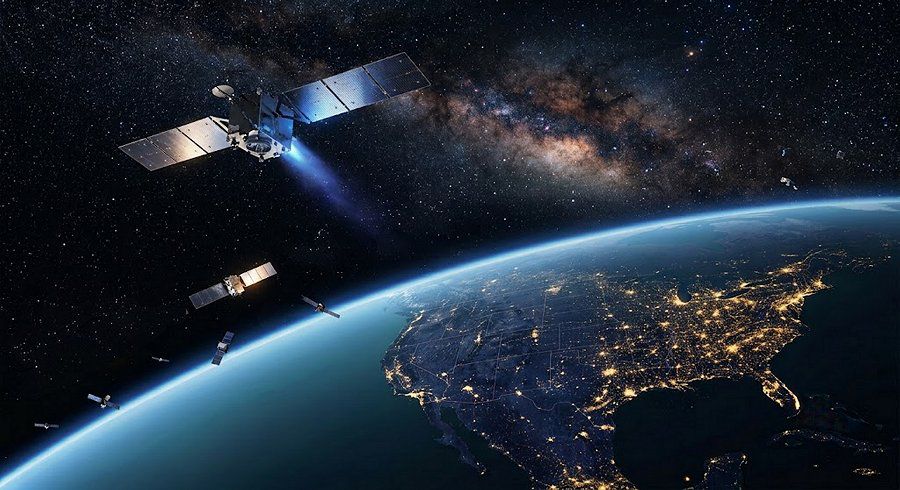
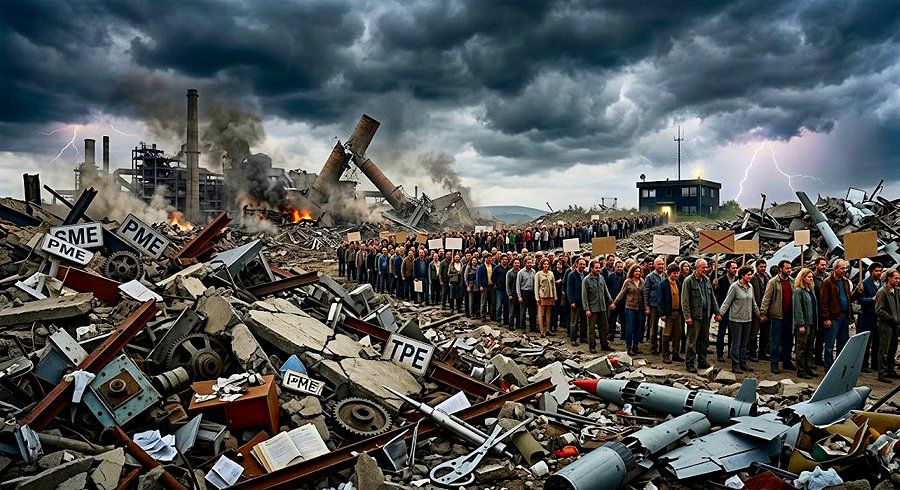 L
L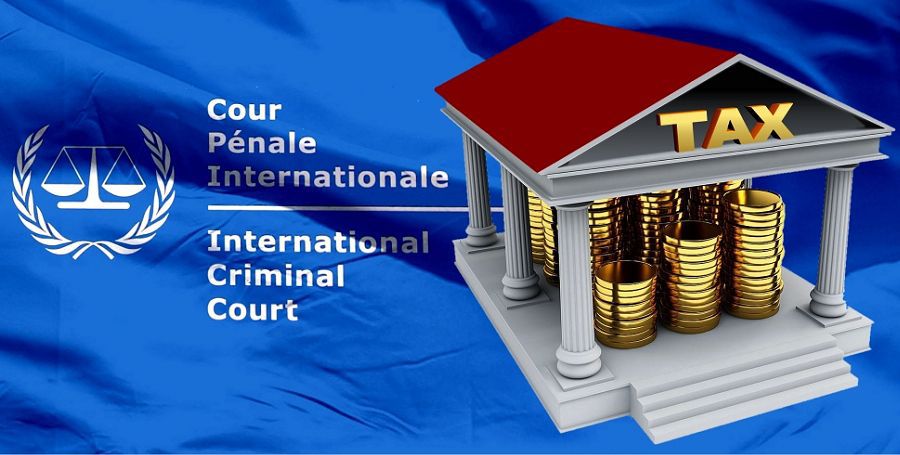 T
T








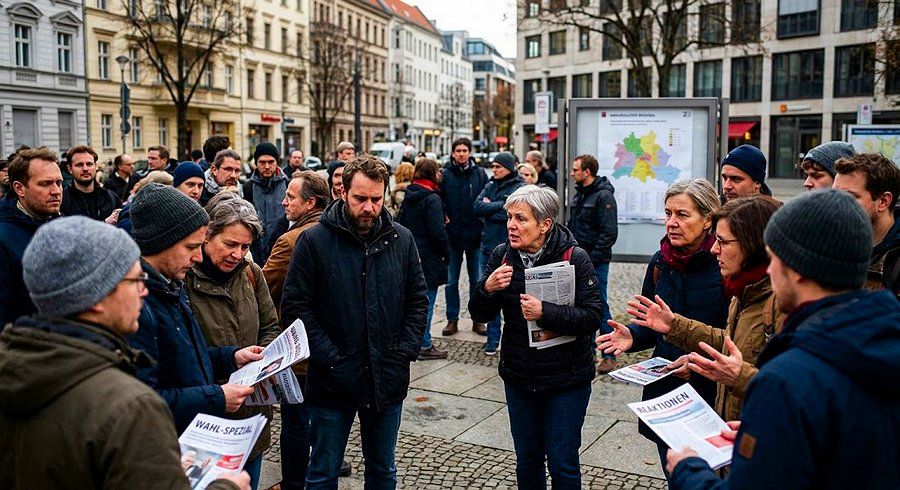 A
A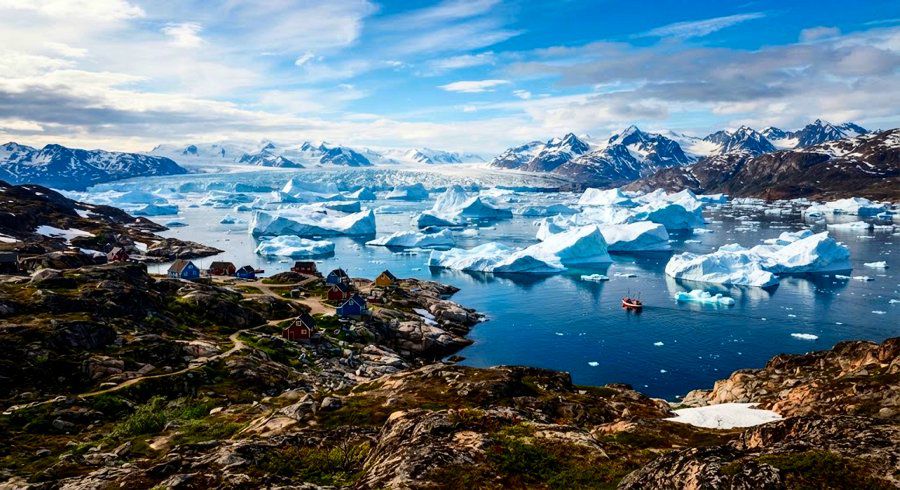 D
D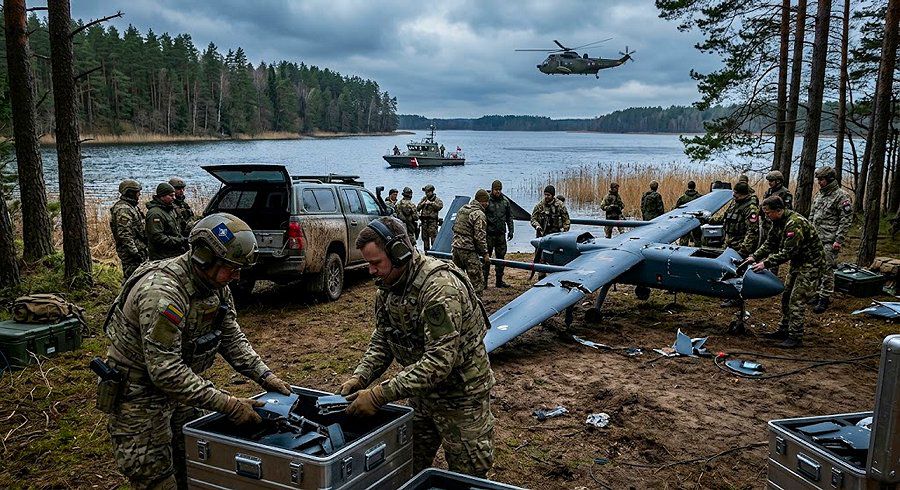 L'
L' I
I


 L
L
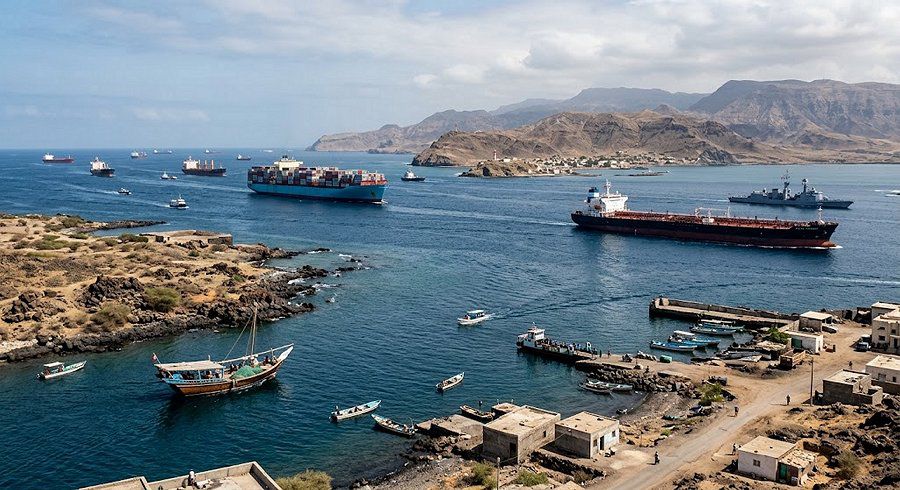 L
L

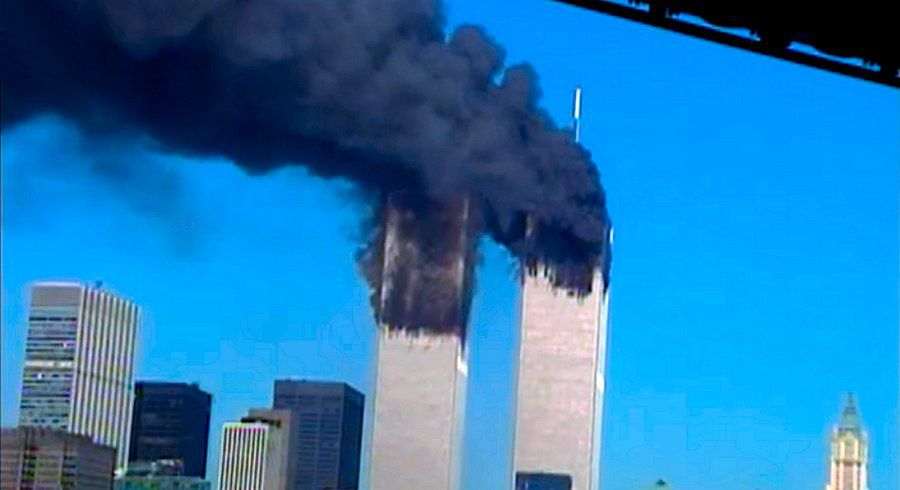 A
A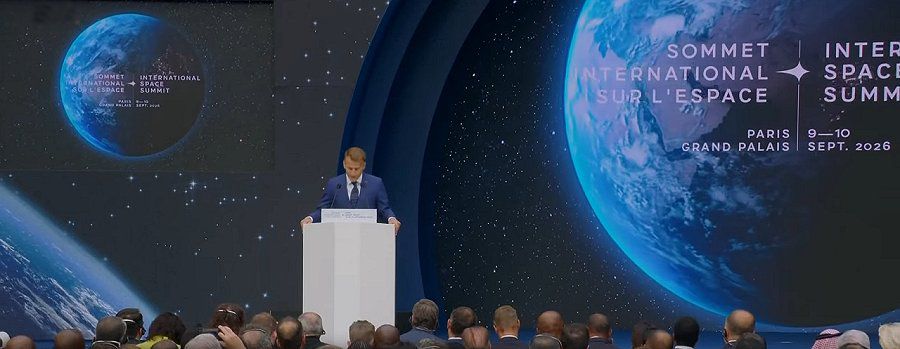 L
L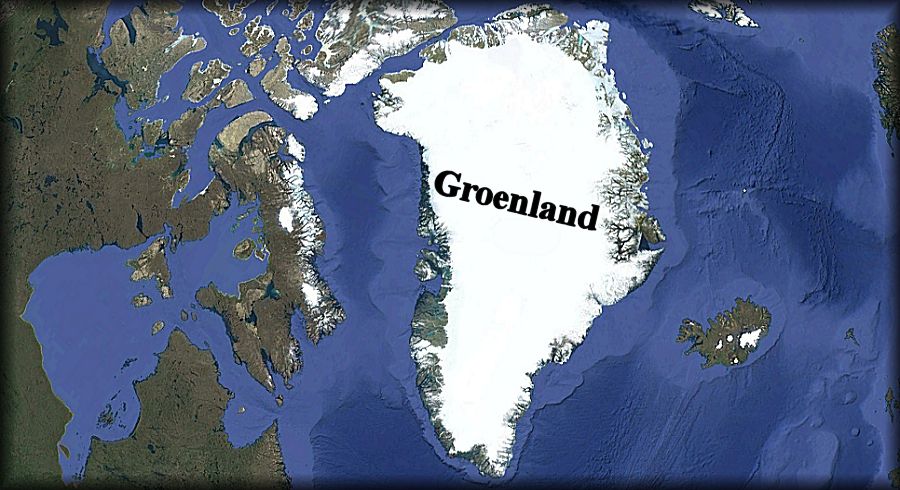

 L
L L’
L’
 L
L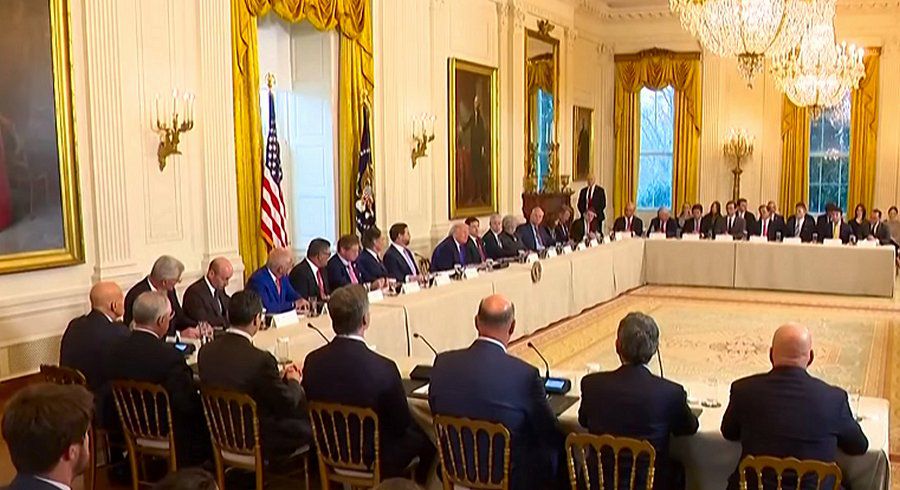 L’
L’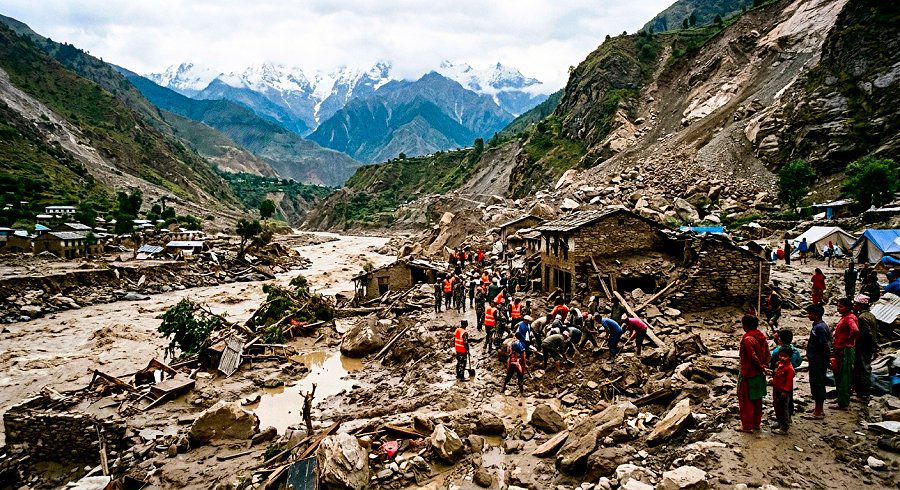 U
U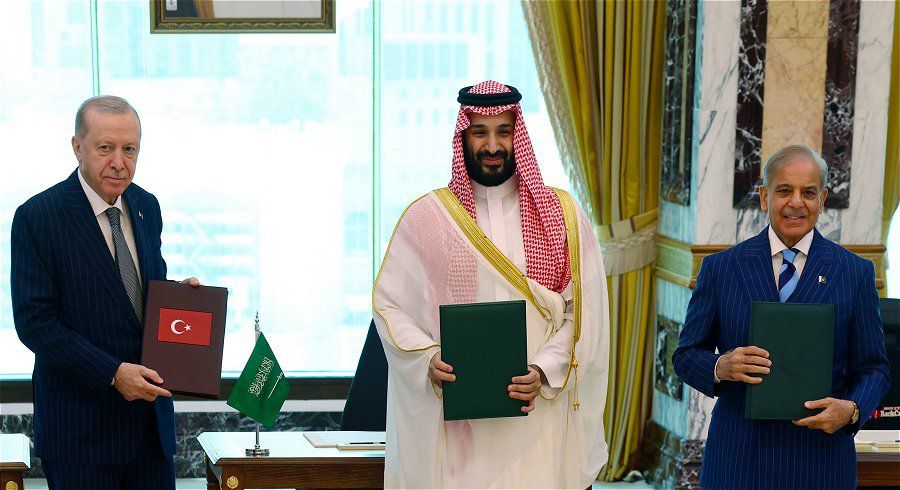 L
L
 L
L L
L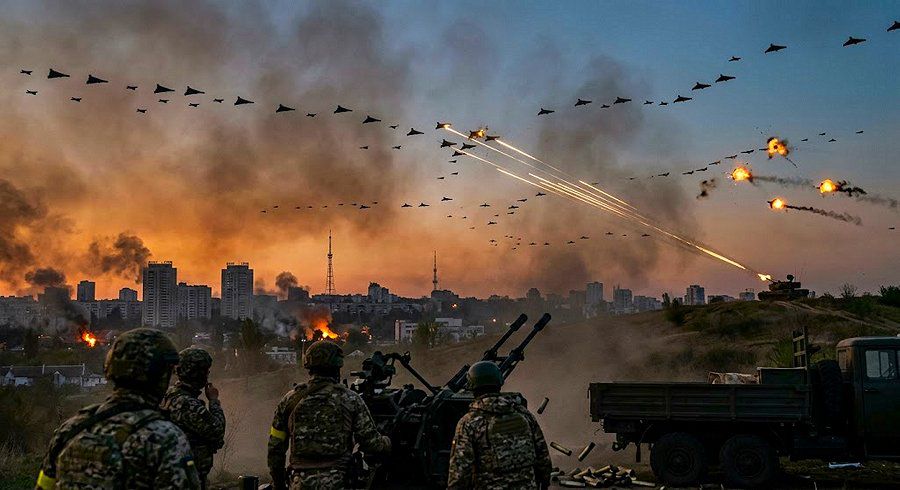 L'
L'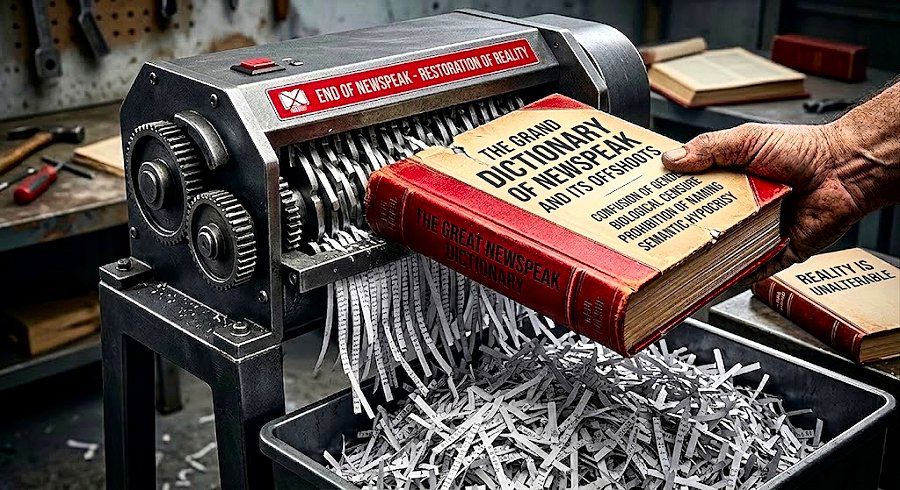





 Q
Q L
L P
P Honte à ceux qui ordonnent, gloire à ceux qui volent
 B
B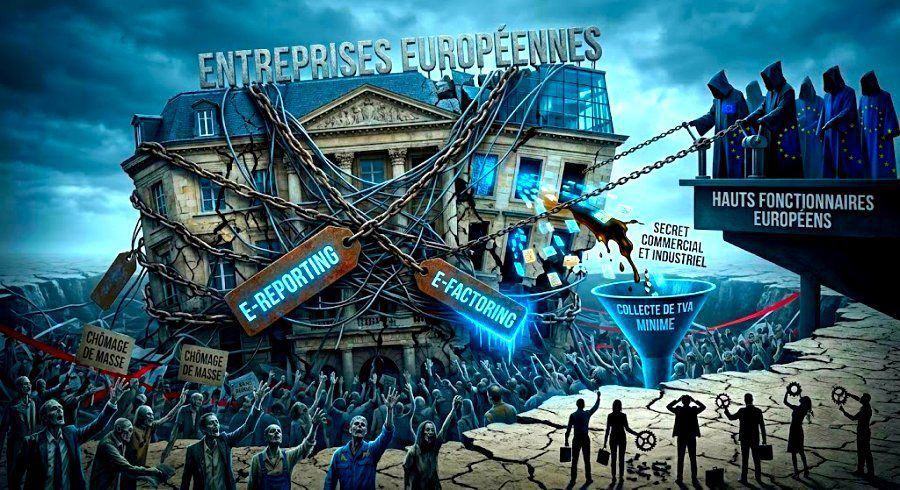
 M
M L
L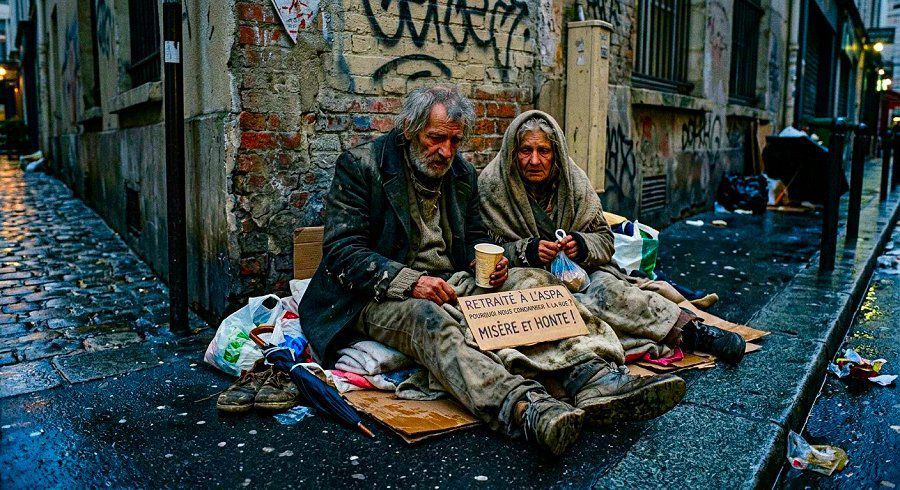 D
D
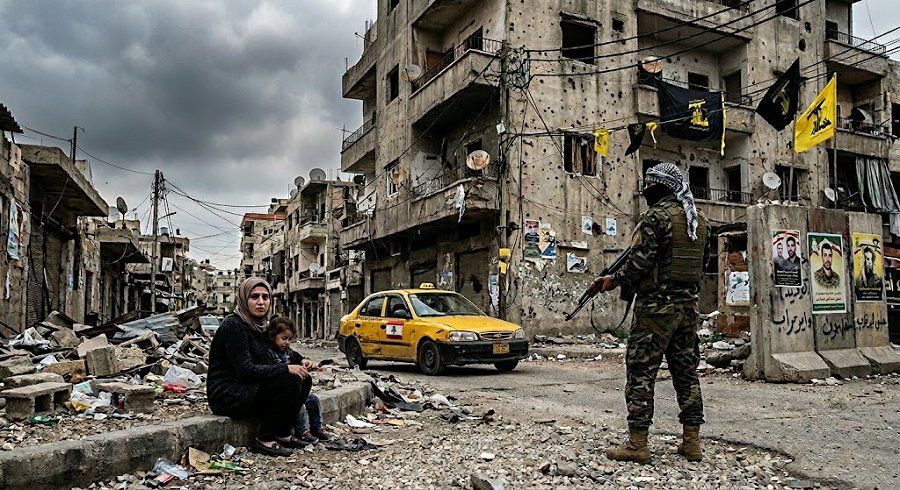 A
A D
D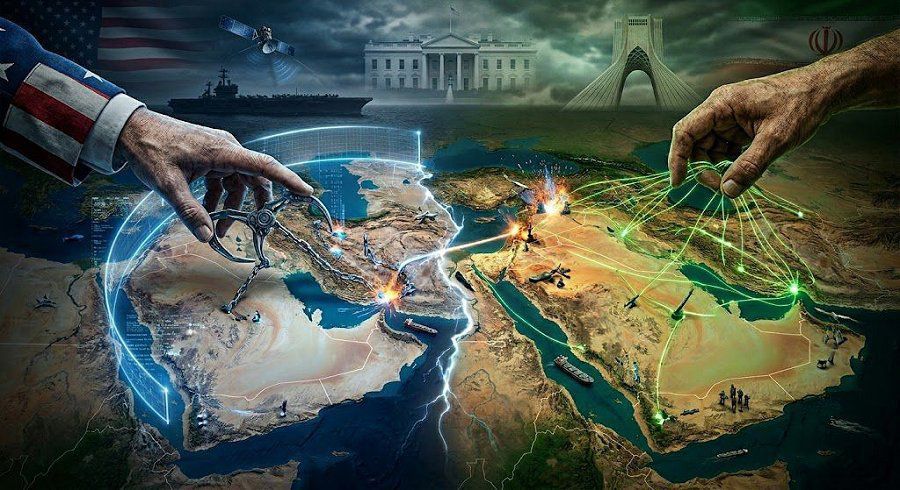 A
A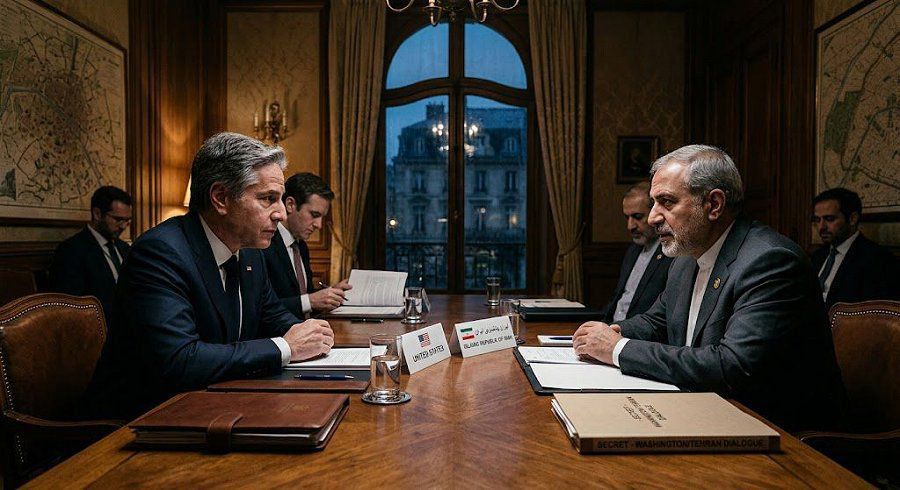 D
D C'
C'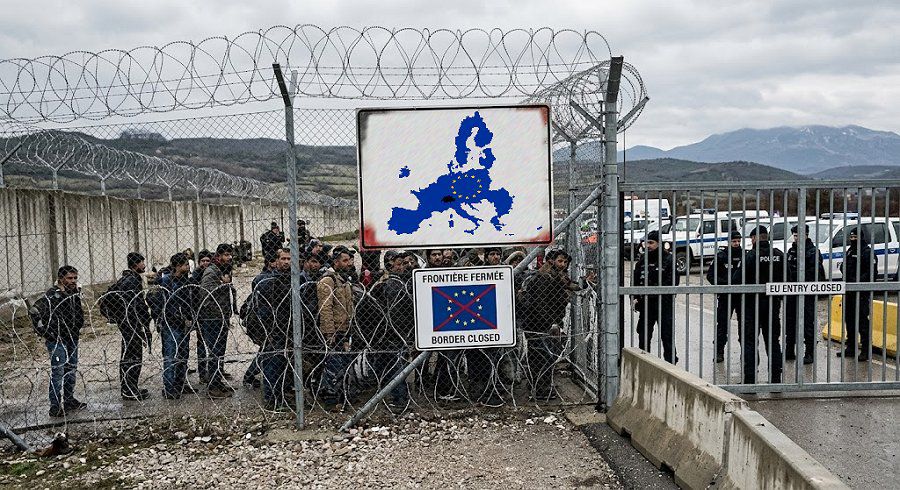 L'
L'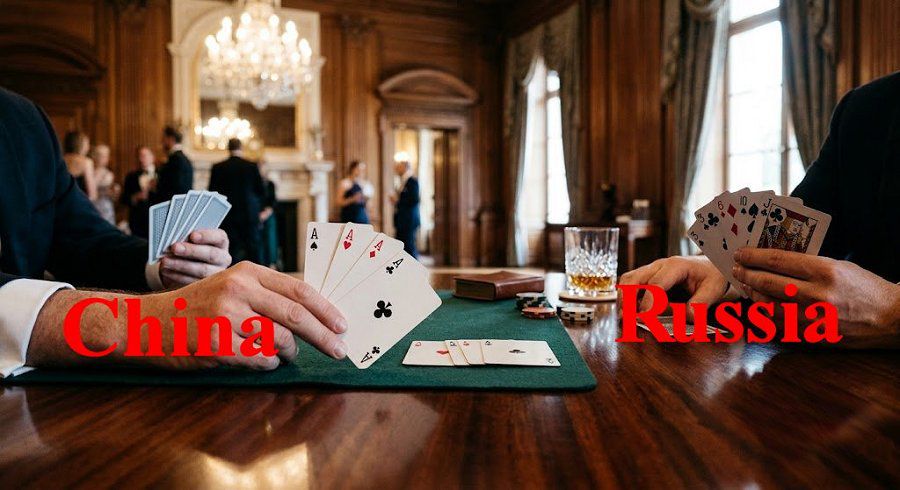 L
L A
A S
S
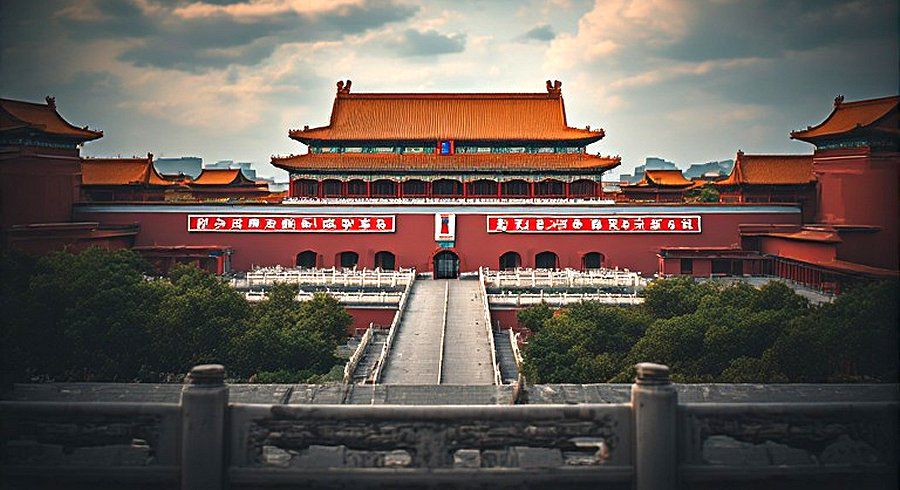







 The excellence of volunteering



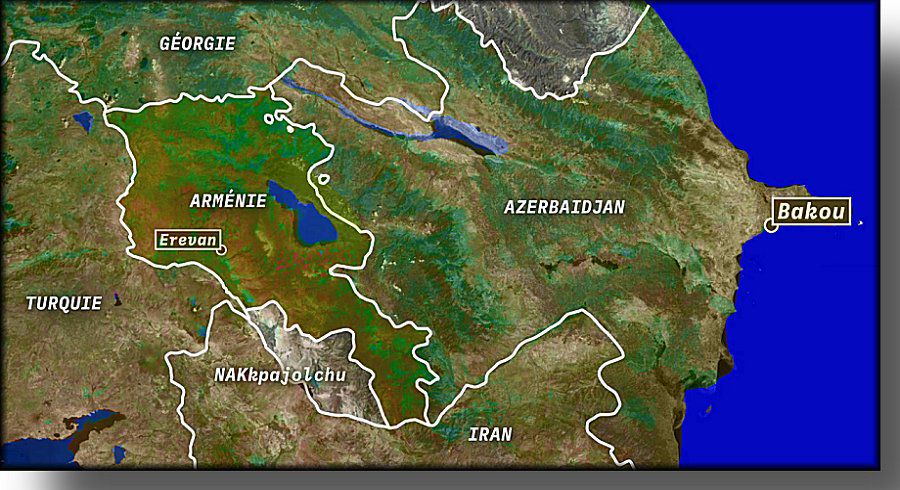




 D
D L
L L
L D
D L
L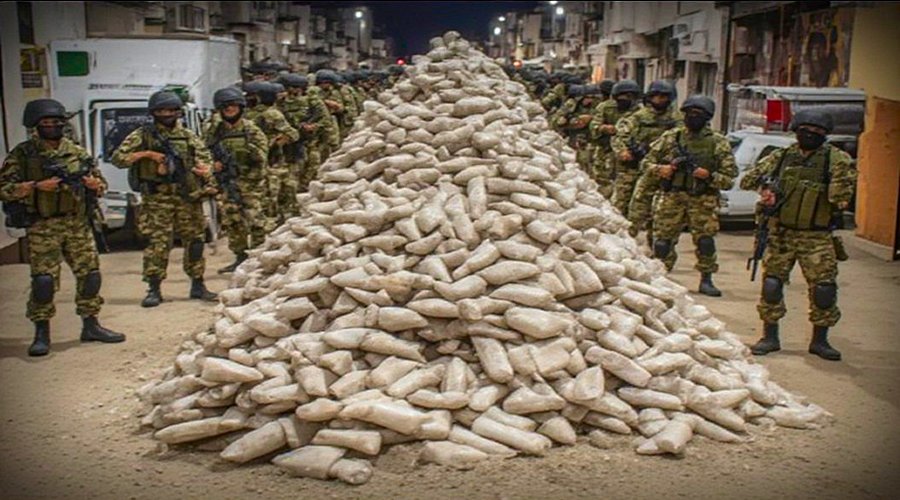 A
A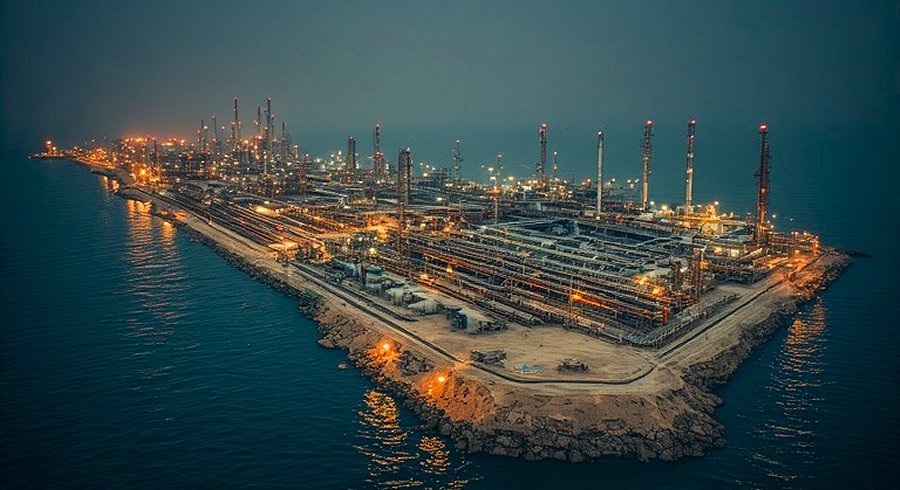 L
L E
E
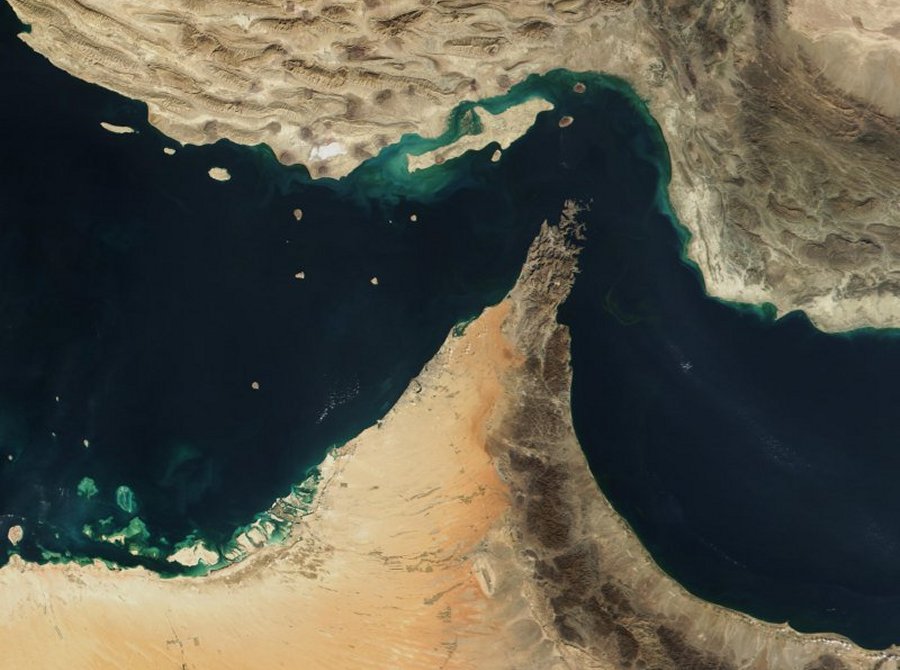 L
L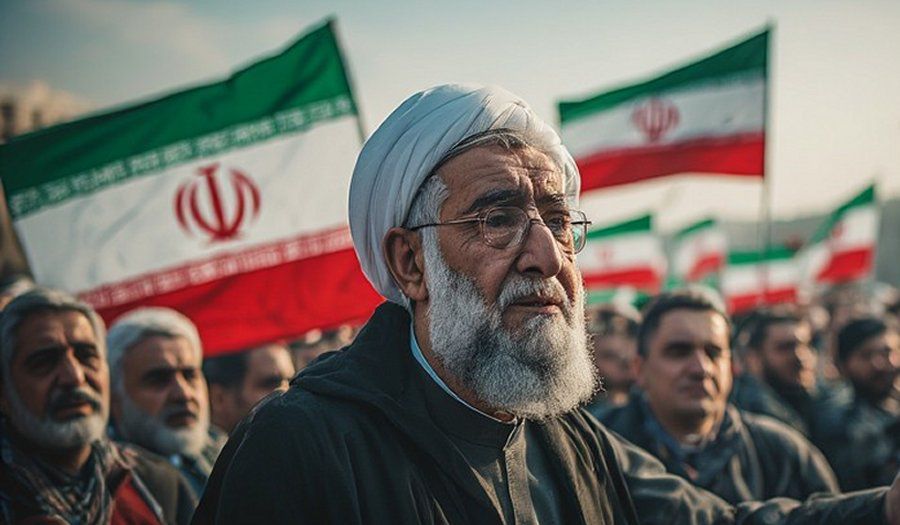
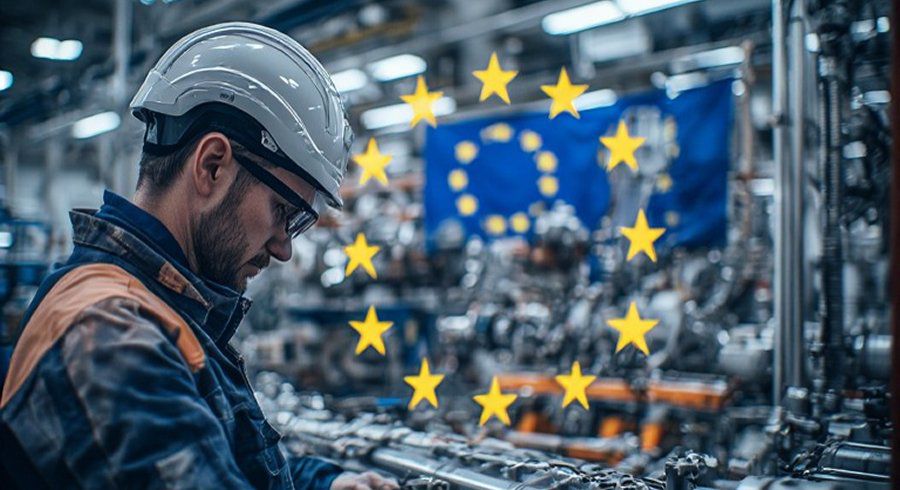
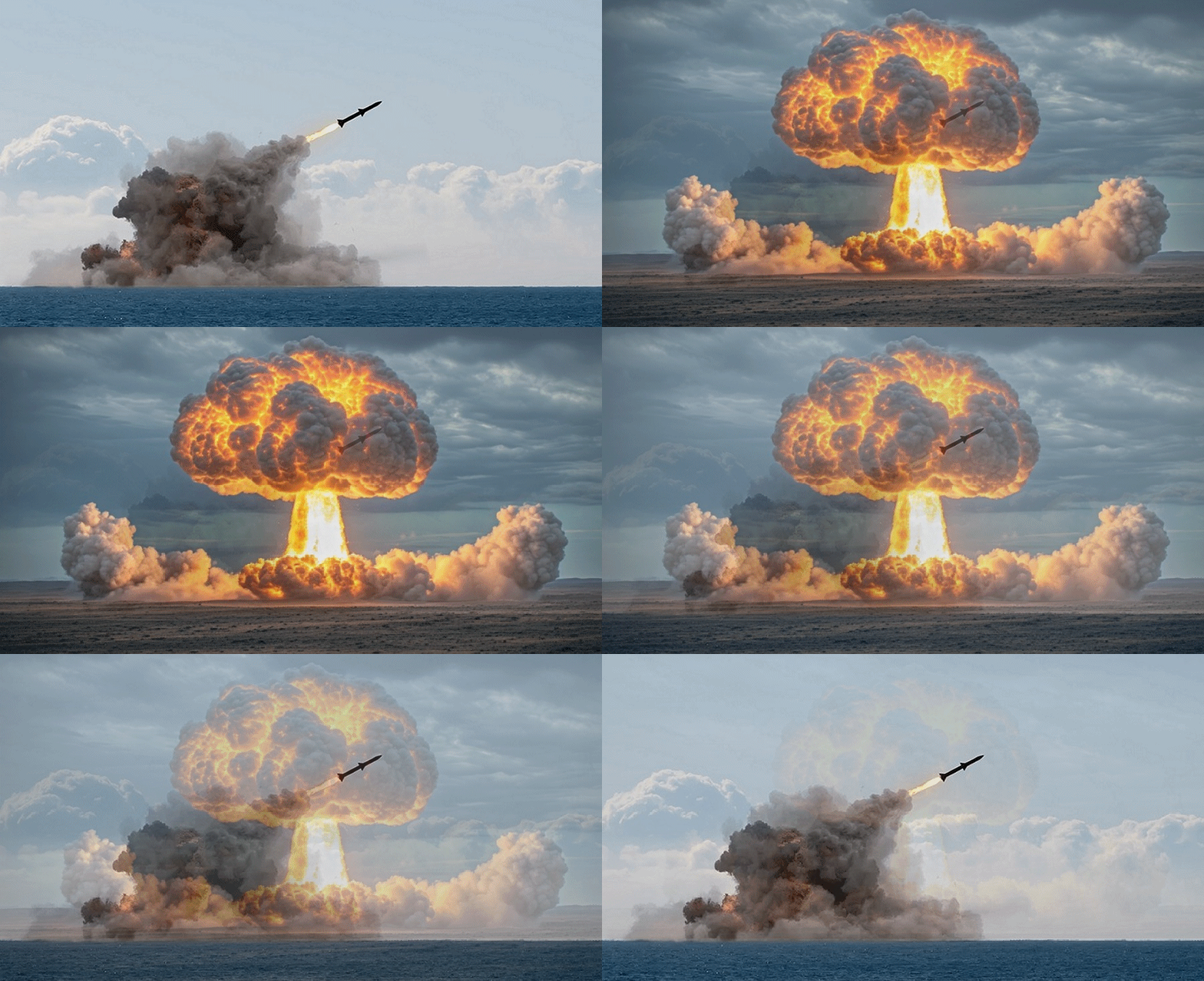 L
L