There are no translations available.
MOSTRA DE VENISE 2026 LE PANORAMA COMPLET DE LA 83° EDITION
|
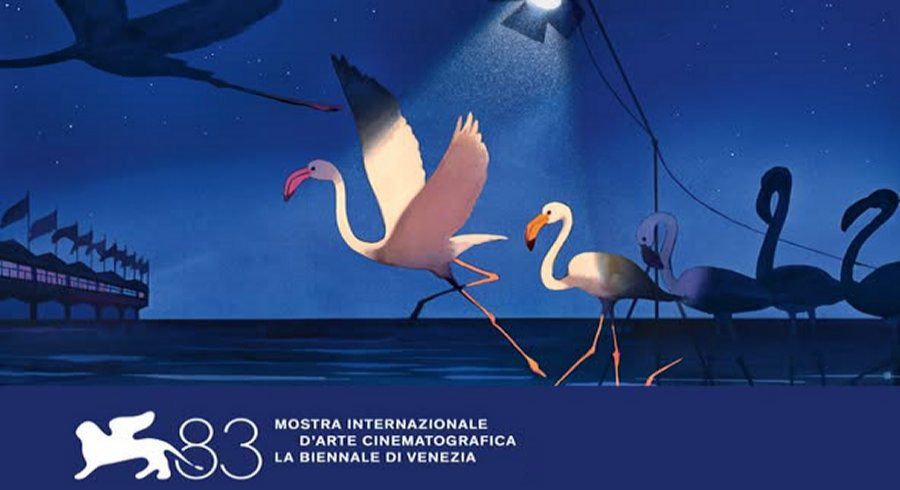 Le plus ancien festival de cinéma au monde s'apprête à faire vibrer le Lido du 2 au 12 septembre 2026. Entre tensions structurelles avec l'industrie hollywoodienne, vitrine d'auteurs européens et hommages à des monstres sacrés, la 83ᵉ édition s'annonce riche en enjeux. Le plus ancien festival de cinéma au monde s'apprête à faire vibrer le Lido du 2 au 12 septembre 2026. Entre tensions structurelles avec l'industrie hollywoodienne, vitrine d'auteurs européens et hommages à des monstres sacrés, la 83ᵉ édition s'annonce riche en enjeux.
Une ouverture choc signée Danny Boyle
Pour lancer les festivités, la Mostra s'ouvrira cette année avec le très attendu Ink du britannique Danny Boyle, présenté à la fois lors de la soirée inaugurale et en compétition officielle.
Adapté de la pièce à succès de James Graham, ce long-métrage retrace le rachat impitoyable du quotidien britannique The Sun par Rupert Murdoch à la fin des années 1960. Porté par Guy Pearce (dans le rôle du magnat de la presse), Jack O'Connell et Claire Foy, le film dissèque les coulisses d'une révolution médiatique qui a façonné la presse à sensation moderne.
Un jury présidé par Maggie Gyllenhaal
La lourde tâche de départager les œuvres sélectionnées reviendra au jury international présidé par l'actrice et réalisatrice américaine Maggie Gyllenhaal.
Pour composer le palmarès et attribuer le prestigieux Lion d'or, elle sera entourée d'un aréopage d'artistes aux sensibilités éclectiques
Le jury de la 83ᵉ édition de la Mostra de Venise réunit un panel de personnalités issues du cinéma international :
-Xavier Giannoli (Réalisateur et scénariste — France)
-Kaouther Ben Hania (Réalisatrice et scénariste — Tunisie)
- To (Réalisateur et producteur — Hong Kong)
-Shahrbanoo Sadat (Réalisatrice — Afghanistan)
-Francesco Casetti (Historien du cinéma — Italie)
-Daniel Blumberg (Compositeur — Royaume-Uni)
L'hommage aux légendes : les Lions d'or d'honneur
Au-delà de la compétition, le festival prendra le temps de saluer deux trajectoires d'exception qui ont marqué le septième art américain.
1. George Clooney. Fidèle du Lido, l'acteur et réalisateur recevra un Lion d'or d'honneur récompensant une carrière exemplaire, oscillant entre succès populaires et projets engagés.
2. Ellen Burstyn . L'icône américaine (L'Exorciste, Requiem for a Dream) sera également honorée pour l'ensemble de son parcours, célébrant plus de six décennies de grands rôles.
Une compétition dominée par l'Europe
Si la sélection réunit au total 21 longs-métrages, cette 83ᵉ édition met particulièrement à l'honneur les cinématographies française et italienne.
La compétition accueille également des grands noms du cinéma mondial comme Martin McDonagh avec Wild Horse Nine, Lee Chang-dong avec Possible Love ou encore Werner Herzog avec Bucking Fastard
Deux sujets au cœur des débats
Malgré l'enthousiasme entourant la programmation, cette 83ᵉ édition suscite déjà de vives discussions dans les allées du Lido.
La crise hollywoodienne et le plaidoyer d'Alberto Barbera
Marquée par une présence inhabituellement faible des grands studios américains, cette sélection reflète les mutations de l'industrie internationale. Face aux critiques, le directeur artistique *Alberto Barberas'e st exprimé fermement dans les colonnes de La Stampa pour défendre ses choix :
« Ce n’est pas la faute de Venise si Hollywood est en crise. Moi, je continue de rêver. Il serait erroné de nous imputer une absence qui découle presque exclusivement de la situation critique des anciens et glorieux studios américains, dont la plupart ont disparu suite à une série de fusions. »
L'autre point de tension concerne la représentation des réalisatrices. En compétition officielle, seule la cinéaste May el-Toukhy (Woman Unknown) figure en lice pour le Lion d'or, marquant un net recul sur l'objectif de parité par rapport aux éditions précédentes. Rendez-vous au 2 septembre ! |
|
|
|
| Emily Jackson pour DayNewsWorld |
 |
THE KREMLIN OFFERS ITSELF ITS INTERVISION 2025
TO DEVELOP YOUR SOFTPOWER | 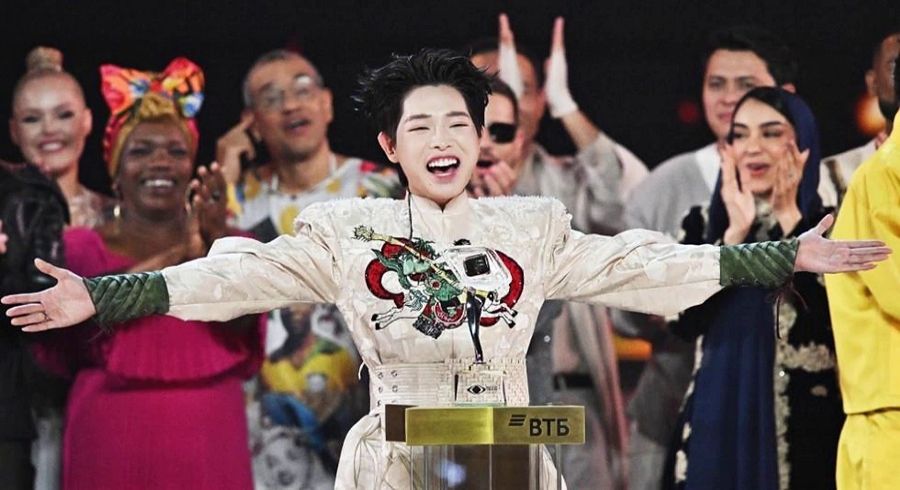
On September 20, 2025, Moscow hosted the revival of Intervision, a song contest designed as an alternative to Eurovision. Organized by the Russian public broadcaster Kanal 1 and broadcast in many so-called "partner" countries (India, China, Vietnam, Brazil, etc.), the event was won by Vietnamese artist Duc Phuc.
But behind the stage, the glitter, and the music, Russia was primarily trying to convey a political message: it is not isolated and still has leverage to attract parts of the world. Intervision aims to unite the Global South and the BRICS.
The list of participating countries shows that the event was designed as a true diplomatic summit. Alongside traditional allies like Belarus, there were India, China, Brazil, Cuba, and Qatar. This selection allowed Moscow to showcase the diversity of the "multipolar world."
"Intervision demonstrates that Russia is not isolated. It belongs to a global majority that chooses cultural independence," said Russian Foreign Minister Sergei Lavrov at the final press conference.
Soviet legacy and symbolic resurrection
Born in the 1960s in Czechoslovakia and then moved to Poland in the late 1970s, Intervision was conceived by the Eastern Bloc as a direct response to Eurovision, seen as the cultural symbol of the West. Its existence then reflected the cycles of hardening and détente of the Cold War: the Prague Spring (1968) and the strikes of
Solidarity in Poland (1980) had precipitated its interruption.
Briefly revived in 2008 in Sochi, the project seemed forgotten... until Russia, excluded from Eurovision in 2022 after the invasion of Ukraine, decided to resurrect it in 2025.
Although the European sanctions date back three years, the choice of 2025 is far from trivial. The Kremlin has been preparing this relaunch for a long time, with a clear objective: to make Intervision part of a sustainable cultural strategy and not as a temporary reaction.
The date also coincides with several symbols: the dragging on of the war in Ukraine, the strengthened alliance with Beijing, and the 70th anniversary that Eurovision is about to celebrate in 2026. All these are reasons to make an impression by offering an alternative showcase.
For Sergei Karaganov, an influential geopolitical scientist, "the central message is that the world is not ruled by a declining Western minority, but by a majority of nations seeking new forms of cultural and political representation."
A scene serving Russian soft power
Like the Olympic Games or the Football World Cup, a major televised competition is never neutral. Broadcast live in dozens of countries, it reaches millions of viewers and becomes a tool of cultural diplomacy.
The 2025 edition of Intervision was thus conceived as a laboratory of Russian soft power:
- to affirm that Russia retains an organizational capacity comparable to the West,
- to prove that it is not marginalized but supported by many countries of the Global South,
- to offer a stage that embodies its "traditional values" in opposition to Western "excesses."
A diplomatic showcase disguised as a spectacle
Eurovision, created in 1956 under the auspices of the European Broadcasting Union (EBU), has established itself as a celebration of diversity and artistic creativity. Its associative structure, relatively independent of governments, makes it a forum for pluralistic expression.
Russia has long participated successfully—until its victory in 2008 with Dima Bilan.
But in recent years, the contest has become the Kremlin's bête noire: perceived as too closely tied to LGBTQ+ causes, too favorable to Ukraine, and a symbol of a decadent West. Intervision, on the other hand, is now directly supported by the Russian state, financed and managed by the authorities, transformed into an avowed tool of cultural diplomacy.
The September 20 evening was designed to rival Eurovision: high-tech production, grandiose scenography, broadcast assisted by artificial intelligence. Foreign Minister Sergei Lavrov even took part in the preparations, and Vladimir Putin himself granted his official patronage.
The challenge goes beyond mere entertainment: Intervision is conceived as a mirror image of Eurovision. This project illustrates a growing divide where two cultural visions of the world now clash. On the one hand, a Eurovision rooted in pluralism and diversity; on the other, an Intervision that aims to showcase a "multipolar world" and act as a bulwark against the West.
After Sochi 2014 and the 2018 World Cup, Moscow is re-entering the global symbolic arena through song. The implicit message is clear: despite sanctions, Russia remains a cultural powerhouse capable of uniting an international audience.
However, popular enthusiasm remained muted, particularly due to the absence of a key element of Eurovision: the viewer vote. This verticality, reflecting the Russian model, reduces spontaneity and limits the event's ability to generate genuine popular enthusiasm. |
|
|
|
| Abby Shelcore for DayNewsWorld |
|
|
THE SUCCESS OF RAPPER JUL
THE CREATIVE SHIPWRECK IN JOGGING-FLIP FLOPS | 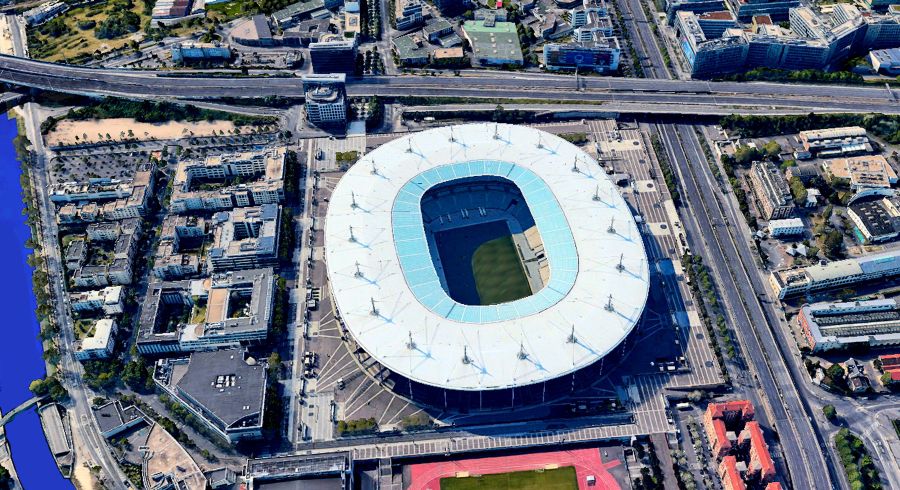
It's hard to escape Jul.
For almost a decade, his albums have been released at an industrial pace, flooding streaming platforms like an endless rain of autotune.
In just a few minutes, all the tickets for Jul's concerts at the Stade-Vélodrome and the Stade de France were snapped up.
A third concert is announced, and tickets are gone within ten minutes. A million simultaneous connections result in what, in many ways, amounts to mass hysteria.
In February 2020, he even became the biggest-selling record in the history of French rap. And more recently, he broke an attendance record at the Stade de France with 97,800 spectators, beating out sacred monsters like Johnny Hallyday and U2.
Yet, beyond the popular frenzy, the figure of Jul raises many questions about the artistic standards of our time.
It sells, it's a hit, it unites. And yet, it's disturbing. Not because it shakes up the established order, but because it embodies it—the new order of a culture that's leveled, sanitized, formatted for the algorithm.
A culture that's leveled and formatted for the algorithm.
Jul, alias Julien Mari, is not only the product of an atypical social trajectory – he is also a reflection of an era where commercial success seems to take precedence over any artistic requirement.
Coming from a working-class neighborhood in Marseille, he left school at 17 and briefly swapped his mason's trowel for a microphone.
Since 2014, his first album Dans ma paranoïa has been a resounding success, despite a musical aesthetic that is often criticized, both for its repetitive lyrics and its minimalist productions.
Jul's lyrics are indeed striking in their lexical poverty: Easy rhymes, limited vocabulary, redundant themes—money, betrayal, loyalty, cars, "gamos"—form a universe that seems to spin in a loop. The emotion is often overplayed, but rarely deep; the catchy refrains barely mask the absence of real poetic density or narrative risk-taking. In this refrain from Life
In my city, it's hot, you have to know how to keep control,
We move forward, we dream, even when the sky is gray,
I'm in my vibe, always faithful to my roots,
Jul in the street, it's for the family, it's life,
we seek in vain for finesse, double meaning, sincere emotion.
How can we see raw sincerity where there is only the mechanical repetition of a soulless pattern, calibrated for rapid and massive consumption on streaming platforms ?
His collaborations, notably with Alonzo and Naps, confirm a trend: that of constantly reproducing the same recipes, with the same simplistic refrains, in a musical loop that seems to go around in circles.
A form of uninhibited mediocrity
And what about his clothing style, jogging pants, flip-flops, and socks ?
By confining himself to this eternal uniform, Jul crystallizes much more than a simple visual signature: he embodies artistic mediocrity.
This choice of clothing, claimed as a rejection of the flashy codes of bling-bling rap, quickly becomes a meaningless posture, an anti-style transformed into a grotesque gimmick.
The artist claims not to "invent a life for himself" and wants to transcribe "what he lives and what he sees." Fine. Which one ?
That of the youth of Marseille, a Phocaean city that he carries like a banner in each of his projects. The "13 Organisé" collective is a testament to this. Why not ?
But should we therefore erect the ordinary and the banal as an artistic model ?
His delivery, meant to embody raw sincerity, sometimes seems to wallow in a form of uninhibited mediocrity.
Proclaimed by some as the best French rapper—a claim that stems more from blind fervor than analysis—Jul has certainly built a strong bond with his audience, and his "Jul sign" unites as much as his songs.
But this closeness, often presented as touching, takes on the appearance of a personality cult, fueled by a strategy of overproduction (more than 25 albums in less than 10 years) and a logic of digital omnipresence.
We must recognize a certain generosity: donations during the pandemic, auctions of his trophies, free albums... But here again, it is difficult to decide between sincere altruism and a well-oiled marketing operation.
Ultimately, Jul is perhaps not so much a genius as a symptom. That of an industry that glorifies abundance, sanctifies accessibility, and forgets artistic rigor along the way. Popular, undeniably, but at what cost to music ?
|
|
|
|
| Jenny Chase pour DayNewsWorld |
|
GRAMMY AWARDS 2025 BEYONCE
BEST ALBUM OF THE YEAR | 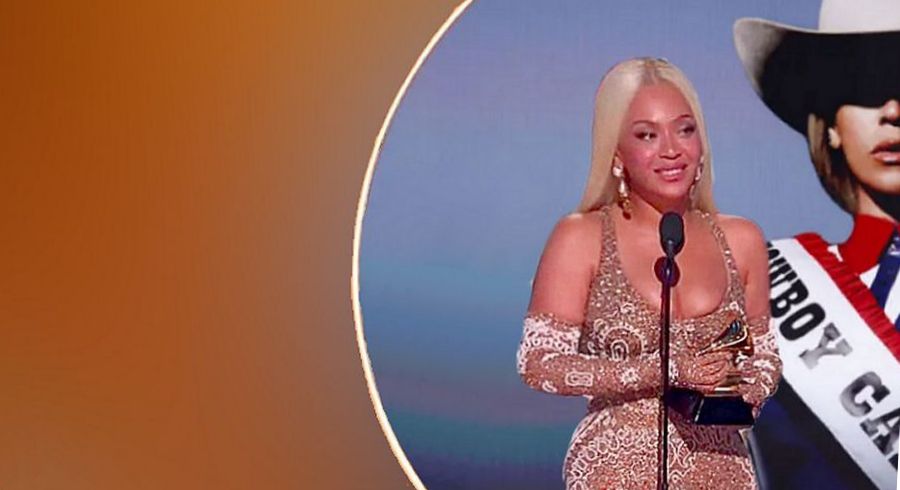 The entire American music industry gathered for this exceptional event. The entire American music industry gathered for this exceptional event.
This Sunday, February 2, 2025, at the Grammy Awards, Beyoncé won the album of the year trophy for the first time thanks to "Cowboy Carter", her country opus. This victory allowed her to surpass renowned competitors such as Taylor Swift and Billie Eilish.
This distinction, considered the most prestigious of this ceremony equivalent to the Oscars of music, comes to consecrate the career of the 43-year-old superstar, finally recognized by her peers. In addition to this consecration, she was also rewarded with two other Grammy Awards, including that of the best country album.
“I think the genre [country] is sometimes a code word that keeps us in our place as artists.
And I just want to encourage people to do what they're passionate about," the 43-year-old singer said on stage, thanking "all the incredible country artists who agreed" to collaborate with her.
Already the record holder for the most Grammys won in the history of this ceremony, including in secondary categories, the singer had never been awarded the top prize, previously awarded to Taylor Swift, Adele, Harry Styles and Beck.
With this triumph, "Queen B" joins Lauryn Hill, Natalie Cole and Whitney Houston, becoming the fourth black woman to receive the Grammy for album of the year.
"There's nothing more powerful than rap music"
For his part, Kendrick Lamar distinguished himself by winning two major awards at this edition of the Grammy Awards: best song and best recording of the year for "Not Like Us".
This title, released in May 2024, is part of a series of songs in which Kendrick Lamar attacks Canadian rapper Drake head-on, accusing him of inappropriate relationships with minors and labeling him a "pedophile".
However, once on stage, the 37-year-old artist chose not to mention his rival. "There is nothing more powerful than rap music," he declared, "we are the culture."
Driven by a pounding bass beat, “Not Like Us” immediately established itself as a new West Coast rap anthem.
Gojira and Marina Viotti honored
French metal band Gojira was also recognized for their landmark performance alongside opera singer Marina Viotti, who electrified the opening ceremony of the 2024 Paris Olympics.
On July 26, 2024, their stunning rendition of “Mea Culpa (Ah! Ça ira!)” allowed them to surpass metal legends like Metallica and Judas Priest to take home the award for best metal performance of the year.
Speaking from the Los Angeles stage, the band’s lead singer and guitarist Joe Duplantier dedicated the win “to all the bands that dare to push the envelope.” "Support your local artists, support your local bands," he said, accompanied by Marina Viotti, during the award ceremony before the ceremony.
"This year is exceptional for us and for the entire metal community," he added at a press conference.
The performance caused a sensation on social media: it shows Gojira, an internationally renowned French quartet, performing the revolutionary song "Ah! Ça ira" from the balconies of the Conciergerie, one of the most majestic Parisian monuments, surrounded by extras playing Marie-Antoinette, holding their bloody heads.
Chappell Roan, rising star of queer pop
Finally, the young artist Chappell Roan has established herself as the revelation of the year, a title that confirms her meteoric rise. Her album "The Rise and Fall of a Midwest Princess" propelled her to the forefront, revealing a sensitive and daring artist.
The Grammy Awards are intended this year as a symbol of resilience, at a time when Los Angeles is still healing its wounds, following the fires that killed nearly thirty people and destroyed thousands of buildings in January.
Throughout the evening, comedian Trevor Noah called on the audience and viewers to send donations to help the thousands of displaced residents. |
|
|
|
| Kate White for DayNewsWorld |
|
|



 L
L