


ERITREA ETHIOPIA FINALLY
PEACE AFTER DECADES OF CONFLICT |
|
|
The conflict between the two countries was born from the annexation in 1962, of Eritrea (former Italian colony, then English) until then "autonomous entity" federated to Ethiopia, by the Emperor Haile Selassie. Eritrea was only able to regain its independence in May 1993, after thirty years of war, an open war by the Independents of the Eritrean People's Liberation Front (FPLE). Despite a seemingly peaceful separation, the two neighbors remained at odds over monetary, trade and border issues, each claiming several border regions including Baden, Tsorona, Zalambessa and En Bure. Until 1998, however, the two countries remained close allies, while closely monitoring their new common border, the route of which had not immediately given full satisfaction to the two belligerents.
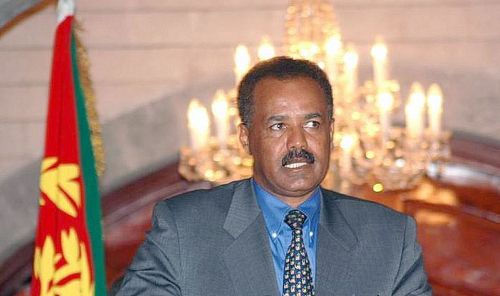
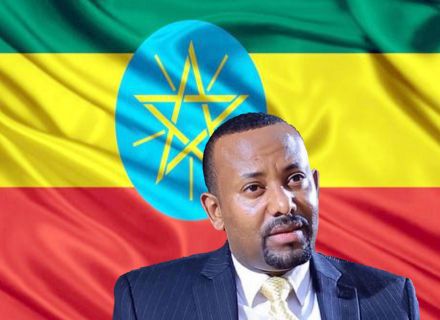
The two countries have since engaged in a fratricidal war. A first peace agreement was signed in June 2000. This first peace agreement provided for the creation of a 25-km-wide security zone within Eritrea under United Nations control (UNMEE). ); but Eritrea continued to occupy the locality of Baden, which will be at the heart of the new conflict. The independence of Eritrea had simultaneously lost Ethiopia's unique Red Sea front, Eritrea having reclaimed the ports of Massawa and Assab. For 20 years Ethiopia has been landlocked, forcing the country, which overnight had had to move its boats from Assad to Djibouti, to pass through almost all of its imports and exports through the corridor leading to the French colony, which is one of the most expensive corridors in the world. According to Serge Tiran, Ethiopia's representative of Massida Logistics Company, the 100 million inhabitants of a country 30% larger than France have been forced to stock up on a "departmental" road. France, barely drivable. The return trip between the two capitals still takes, currently, 8 days in the best of cases. Since 1998, the two countries have been in periodic clashes, until the Ethiopian government decides in June 2018, to implement the Algiers agreement of 12 December 2000. It is to the new Prime Minister Abiy Ahmed that this policy is due to the outstretched hand (Abiy Ahmed is the first Orano in office since 1991, he succeeded Haïlemariam Desalegn, resigned since February 2018). Thanks to the gesture of Abiy Ahmed, a wind of appeasement has just blown on this region of the Horn of Africa . Eritrea for its part was the most under-appreciated country in Africa. Recently, Europeans know a little more about the country, with Eritrea being one of the most represented countries among migrants trying to reach Europe. Eritrea is led by dictator Isaias Afwerki, a trained engineer who was elected in 1995 after a referendum, presenting himself "very evangelically" as "the shepherd of the people". Isaias Afwerki has become over the years a fierce dictator, despite his discretion and his African style "new style" , modern and open. Under his leadership, Eritrea has become an open-air concentration camp of 5 million people where all are hungry and enslaved. But Bill Clinton's White House pinched it for him then, imagining that because he had eaten in the UN bowl, he was going to set up a reformist, social-democratic "Swedish-style" regime? Clinton's teams had simply forgotten that it had been formed by the Beijing Mao, supporters of a single regime and surveillance by everyone, with a muzzled press and deprived of its freedoms. For many years, the regime practiced torture and set up a conscription regime for men aged 16 to 40 who were forced to give their lives to the state. Eritrea, the world's most closed country, is still on the list of rogue states! These are the main reasons why nearly 400 000 Eritreans have fled their country to Europe. Now, the time is now business in Eritrea as in Ethiopia. For a few years now, under the pressure of globalization, Ethiopia, where wages are very low, has been transformed into a weaving and clothing workshop (Decathlon has settled there). Ethiopia, which is experiencing double-digit growth, desperately needed access to the Red Sea. The Horn of Africa has become in recent years a cornucopia ... The real-political has done the rest ... On September 16, 2018, Ethiopia and Eritrea signed an agreement consolidating their reconciliation. This agreement was signed in Jeddah, in the presence of King Salman of Arabia and his son Crown Prince Mohamed Ben Salman and the Secretary General of the United Nations. The details of this agreement between the two countries are not yet known; but it has already resulted in the reopening of embassies, the re-establishment of airlines, new commercial relations, telephone lines and border posts. "A wind of hope has just blown on the Horn of Africa" has just welcomed the new Secretary General of the UN (since January 2017) Antonio Guterres. This geopolitical evolution fully satisfies, moreover, Saudi Arabia and the United Arab Emirates. The Saudi Foreign Minister has just declared that "this latest peace agreement will contribute to strengthening the security and stability of the region" which is in dire need of it! It is known that Saudi Arabia and the Arab Emirates have in the strategic port of Assad for their operations in Yemen, which is why they have greatly contributed to this historic rapprochement. Their short and medium-term interests are indeed obvious: dozens of ships transit through Bâb el Mandeb, the strategic strait that separates the Arabian Peninsula from the Horn of Africa. Will this be enough to completely pacify the Region and especially the Greater Middle East knowing that the war continues in Yemen, that Daesh seems to be reborn from the ashes, that the conflict in Syria is not completely over and that Iran threatens to close the Strait of Ormuz ... To be continued…. |
|
| Clara Mitchell for DayNewsWorld | |
 |
|
 And it is for a problem of border that Eritrea, engaged in May 1998 a new conflict ... For some square kilometers of deserts?