SUDAN THE HORROR OF MASS EXECUTIONS
AND ONE OF THE WORST HUMANITARIAN CRISES
WITH 15 MILLION HUNGRY CHILDREN | 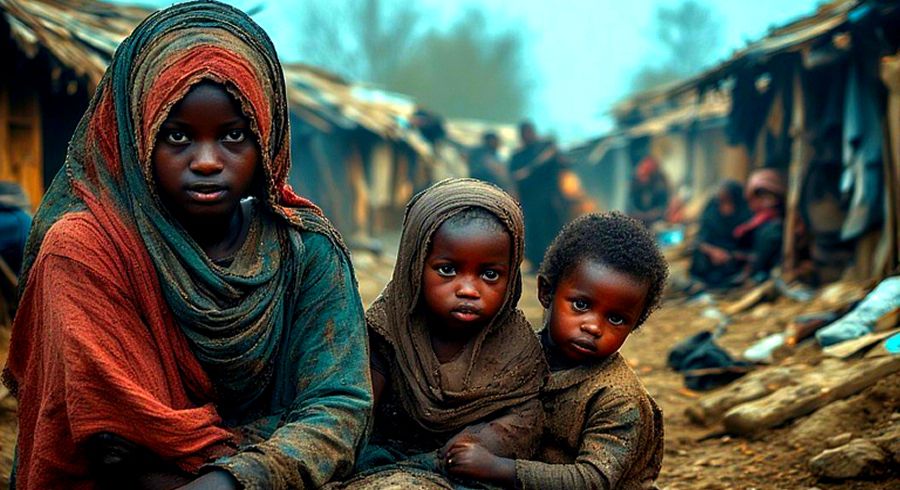
Since the entry of the Sudanese army and the Rapid Support Forces (RSF) in April 2023, Sudan has been gripped by a fragmented civil war with catastrophic consequences.
This conflict between two former allies, Mohamed Daglo, nicknamed Hemmeti, at the head of the FSR, and Abdel Fattah Al-Bourhane, chief of staff, constitutes the fourth civil war in a Sudan that has always been divided between North, South, East and West, after those of 1955-1972, 1983-2005 and 2003-2020.
The horror of the massacres
The Rapid Support Forces paramilitaries committed massacres in the town of El-Fasher, but the international community seems powerless.
Satellite images show fires in the city of El Facher, where verified videos establish that hundreds of civilians have been executed.
Nearly 450 women and children massacred in cold blood in a maternity hospital, and possibly up to 7,000 civilians killed in the Sudanese town of El-Fasher.
The civil war in Sudan, which erupted in April 2023 between loyalist forces and the Rapid Support Forces (RSF) paramilitaries, has reached a new level of horror in recent days. Numerous testimonies and videos verified by Human Rights Watch (HRW) show civilians of all ages being executed by shooting or hanging.
Fleeing looting, torture, massacres and rape, nearly 36,000 residents of the city conquered by the FSR paramilitaries, the last of the five Darfur prefectures still controlled by the regular army, fled on foot last weekend.
The FSR, who announced on Friday the arrest of some soldiers responsible for the abuses, are now in control of the whole of Darfur, a vast region in the west of the country.
A territorial conflict
The army dominates the east and the Nile, the FSR holds Darfur and the west of the country, while several cities are besieged or contested. This violence is not a surprise.
This is the culmination of several months of tension between the two groups and especially their two leaders. At the root of this situation is a power struggle between the two most powerful generals in Sudan.
On one side, the army chief, Abdel Fattah al-Burhan, who de facto rules the country. On the other, his number two, General Mohamed Hamdane Daglo, nicknamed "Hemetti", at the head of the Rapid Support Forces (RSF), a powerful paramilitary force.
To understand this rivalry, we must go back to April 11, 2019. On that day, dictator Omar al-Bashir was overthrown in a military coup. Al-Burhan and his junta seized power. Hemetti became the regime's number two.
Sudan was moving towards a transfer of power to civilians, but in October 2021, the military staged another coup. Al-Burhan and Hemetti were behind the operation, attempting to derail the democratic transition.
How did we get to this point ?
In October 2021, the two generals therefore joined forces to oust the civilians with whom they had shared power since the fall of dictator Omar al-Bashir in 2019.
“A marriage of convenience” for the coup, explains researcher Hamid Khalafallah. “They never had a sincere partnership but shared common interests in their dealings with civilians.”
And the cracks in the sacred union quickly became apparent: The head of the Rapid Support Forces (RSF), Hemedti, repeatedly denounced the "failure" of a coup that, according to him, reinstated the "old regime" of Bashir.
Then the conflict intensified when it became necessary to sign the conditions for the integration of his men into the regular troops, as part of the agreement with civilians that was supposed to revive the democratic transition.
Experts say this agreement has opened Pandora's box: by letting the military negotiate amongst themselves, "Hemedti has gone from being second to Burhane's equal," says Kholood Khair, who founded the Confluence Advisory research center in Khartoum.
Feeling "more autonomous from the army", Hemedti saw an opportunity to realize "his very grand political ambitions", adds Alan Boswell, in charge of the Horn of Africa at the International Crisis Group.
The thorny question remained to be resolved: how to integrate Hemetti's Rapid Support Forces into the regular army.
And who will control the soldiers ?
Who will control the weapons ?
Another bone of contention was the presence, since the reign of Omar al-Bashir, of numerous Islamist officers in the Sudanese army, whom General Hemedti wanted to purge.
Since the October 2021 coup, the Islamist movement, which already enjoyed significant support within the army, has strengthened with the blessing of General al-Burhan. This was one of the main points of contention with General Hemedti.
The two generals have opposing positions.
The army wanted very rapid integration, within one or two years. General Al-Burhan, supported by Egypt and under pressure from certain Islamist officers in the army, made the signing of the agreement conditional on the integration of the RSF into the ranks of the army, under his command.
The RSF wanted to maintain its autonomy for up to ten years. Hemetti categorically refused to let his rival command his troops and agreed to place his forces only under the authority of a civilian head of state, and on the condition that the army be purged of its Islamist elements. This security reform, a central issue in the transfer of power to civilians, thus ignited the conflict.
Old rivalry for economic power
But the rivalry between the two men goes back further. For years, General Hemetti's Rapid Support Forces have been steadily growing in power.
Comprising 80,000 to 120,000 well-equipped and well-trained men, this free-roaming force, which did not answer to the central power, aroused discontent in the general staff of the regular army.
With the deployment of mercenaries to Yemen and the financial windfall from gold smuggling on behalf of the United Arab Emirates, Hemetti also became one of the richest and most powerful men in the country.
The rivalry between Al-Burhan and Hemetti is also personal. The two officers know each other well, having both operated in Darfur during the civil war in the 2000s and then during the war in Yemen. And they have been competing for several years to gain control of a number of resource networks since the 2019 revolution.
All of this only exacerbated the situation over the months, with an acceleration during the political negotiations. Each side recruited heavily, particularly among the youth of Darfur, the large western region.
But behind this game of land control and rivalries, an unprecedented human crisis is emerging, with alarming figures.
The figures of the humanitarian catastrophe
Forced displacement has reached record levels. Since the start of the conflict, nearly 13 million people have had to leave their homes, including 8.6 million internally and more than 4 million refugees abroad.
Other estimates suggest 12 million displaced people, with 7.7 million remaining in Sudan. Every week, new families take to the road, fleeing fighting, famine, or violence.
Direct violence against civilians adds to this dramatic picture. In the camps for displaced people in Darfur, more than 100 people were killed in attacks in 2025.
The capture of the Zamzam camp by the RSF in April caused 400,000 residents to flee and vital infrastructure to be destroyed. In North Darfur, more than 480 civilians were massacred in a single month. In Khartoum, in February 2025, a bombing of the Omdurman market killed 56 people and injured 158.
Hunger is progressing at an alarming rate. More than 25 million Sudanese, or more than half the population, are now living in a situation of acute food insecurity.
In parts of North Darfur, famine conditions have now taken hold. In the besieged town of El-Fasher, the local medical network reports that 23 people have died in a single month from malnutrition. A total of 15 million children are in urgent need of humanitarian assistance, half of them under the age of five.
Epidemics are hitting a healthcare system already on its knees. The country is experiencing one of the worst cholera crises in its recent history, with 382,718 confirmed cases and 4,478 deaths recorded since 2024.
In Darfur, there are more than 12,700 cases and 358 deaths. Meanwhile, dengue fever is spreading rapidly, with more than 2,000 new cases recorded in a single week. On January 24, 2025, a drone strike hit a maternity hospital in El-Fasher, killing 70 people.
A Nonexistent International Response
Despite the concern expressed by the UN Security Council, which condemned the escalating violence in El-Fasher, the international community's response remains timid, if not nonexistent. No significant mobilization, whether political or humanitarian, has emerged, either in the West or even on the African continent.
The war, which has already claimed hundreds of thousands of lives in two and a half years, has generated neither popular outrage nor decisive diplomatic pressure. Deploying an intervention force is out of the question: the country is vast, unstable, and saturated with armed groups equipped with drones. As for economic sanctions, they remain ineffective on military leaders who lack structured financial interests.
According to several UN reports, the Rapid Support Forces (RSF) receive crucial support from the United Arab Emirates, which is anxious to prevent the return to power of Islamists close to former President Omar al-Bashir, overthrown in 2019. The RSF also receives, more discreetly, support from several neighboring African countries, including Kenya, Ethiopia, Uganda, and Chad.
On the other side, the military regime in Khartoum relies on Egypt, Saudi Arabia, Russia, Iran, and Turkey. All these states, however, deny any interference, even though their strategic interests intersect on the ground.
The great game of world powers :
The radicalization of the conflict could paradoxically push the United States to intensify its diplomatic efforts. Washington tolerates the military regime in place as long as it excludes any return of the Islamists, a position that, for the time being, aligns with that of Abu Dhabi. But the UAE's ambitions deeply irritate Saudi Arabia, opening a new regional fault line.
Marc Lavergne, a Sudan specialist, highlights the balancing act being carried out by the major powers – the United States, Russia, and China. None of them wants to become directly involved, for fear of upsetting their regional partners and finding themselves caught in a conflict where Egyptian, Ethiopian, Emirati, or Saudi interests clash.
The negotiations conducted for months by a quartet (the United States, Egypt, the United Arab Emirates, and Saudi Arabia) are at a standstill, constantly contradicted by the realities on the ground.
As the regular army and the FSR clash for control of cities and regions, neither side appears capable of achieving a decisive victory. Civilians are under constant siege: famine, forced displacement, bombings, and epidemics.
With nearly half its population displaced and food insecurity affecting more than 25 million people, Sudan is sinking into one of the worst contemporary humanitarian crises, threatening not only the survival of its inhabitants but also the stability of the entire region.
A war without a victor, a people sacrificed... |
|
|
|
| Andrew Preston for DayNewsWorld |
 |
MADAGASCAR A MILITARY COUP
SEAL THE FALL
FROM PRESIDENT ANDRY RAJOELINA |
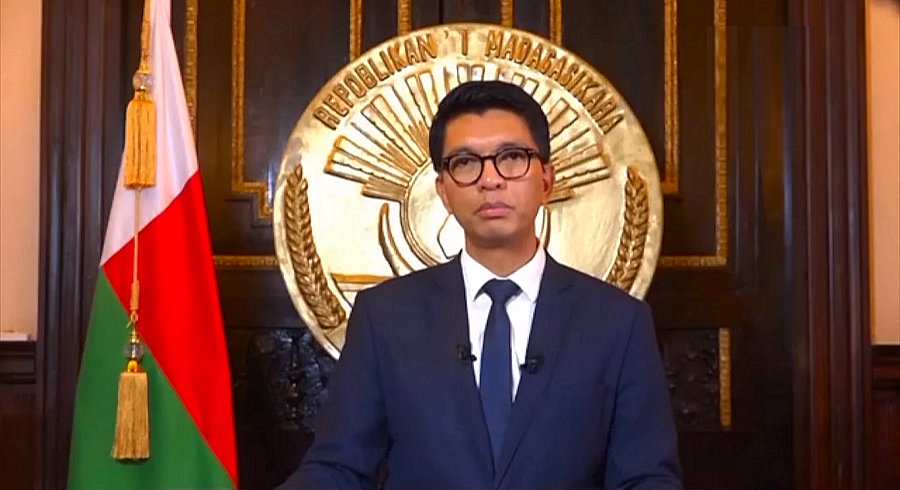
The political crisis that has been shaking Madagascar for several weeks has reached a decisive turning point. On Tuesday, October 14, 2025, a faction of the army that had rallied behind the popular protest movement announced its seizure of power, just hours after the National Assembly voted to impeach President Andry Rajoelina. This brutal rupture marks the end of a regime weakened by the street, divided by mutiny, and now isolated on the international stage.
A double institutional rupture in Antananarivo
In a climate of extreme tension, Colonel Michael Randrianirina, leader of an insurgent military unit, spoke in front of the presidential palace in Antananarivo, in the heart of the Malagasy capital. Surrounded by his men, he declared:
"As of today, we take power. The Senate and the High Constitutional Court are dissolved. The National Assembly can continue to work." »
This statement follows the historic vote of the National Assembly, which, by 130 votes out of 163, pronounced the dismissal of President Andry Rajoelina. The latter, anticipating the vote, had attempted to dissolve Parliament a few hours earlier, denouncing a "meeting devoid of legal basis." But this maneuver was not enough to halt the process.
For the first time since the 2009 transition—which Rajoelina himself had acceded to by force—the Malagasy civilian power has found itselfoverthrown by a movement that is both popular and military. The institutions that guarantee the republican balance, such as the High Constitutional Court, are now suspended, opening a period of major political uncertainty.
A chain of mutinies in the security forces
Colonel Randrianirina's announcement is not an isolated event. For several days, a series of defections within the army and the gendarmerie has profoundly shaken the state's security structures.
This Monday morning, General Nonos Mbina Mamelison was officially sworn in as the new commander of the National Gendarmerie, with the support of the Ministers of Defense and Gendarmerie, as well as the new Chief of Staff of the Armed Forces. The day before, as head of the FIGN (National Gendarmerie Intervention Forces), he had already announced his mutiny and his support for the protest movement. By proclaiming himself the new commander, he has drawn a significant portion of the gendarmerie into the insurgent camp.
This shift is all the more symbolic given that the gendarmerie had previously been the main armed force in the crackdown on the protests that have been rocking the country since late September. The transfer of power between Mamelison and his predecessor, which took place this Monday, marks an unprecedented shift in allegiance in the Malagasy military balance.
The Controversial Exfiltration of Andry Rajoelina
In this context of the disintegration of central power, President Andry Rajoelina was exfiltrated from Madagascar on October 12, 2025, according to several diplomatic sources. A direct agreement between him and French President Emmanuel Macron would have allowed his departure abroad.
The scenario, reconstructed from various local and military sources, suggests a helicopter ride to Sainte-Marie Island, on the east coast of the country, before being transferred aboard a French military plane to Réunion. From there, Rajoelina would have taken another flight to an unknown destination, probably Dubai, where he would have joined his family.
Paris confirms that it facilitated the departure of the Malagasy head of state for humanitarian reasons, while denying any political interference.
The French armed forces of the Indian Ocean, based in Réunion, reiterated their absolute neutrality, specifying that no military intervention is planned in Madagascar.
"There will be no French intervention on the Big Island," they insist in Paris, insisting on the need for a peaceful and sovereign transition.
A popular uprising turned into a state crisis
The overthrow of Andry Rajoelina has its roots in a social movement launched on September 25, 2025. What began as a protest against water and electricity cuts quickly transformed into a national movement challenging the regime.
Led by a connected urban youth, nicknamed Malagasy "Generation Z," the movement united unions, students, and citizen groups. The demands, initially economic, quickly took a political turn, demanding the resignation of the president and an end to endemic corruption.
Faced with the scale of the mobilization, the authorities responded with repression: arrests, violent dispersal of protests, and several deaths during the clashes. But this coercive strategy ultimately fractured the security forces themselves, precipitating the fall of the executive branch.
An uncertain transition and sensitive geopolitical issues
The military's seizure of power opens a delicate transition phase. Colonel Randrianirina has promised to maintain constitutional order, while announcing the partial dissolution of institutions. The National Assembly, the only one spared, could play a central role in establishing a transitional government.
At the regional level, the Malagasy situation is of concern to African organizations and international partners. The African Union and the SADC (Southern African Development Community) have called for restraint and a return to democratic order, while France and the European Union are currently favoring a position of cautious neutrality.
Geopolitically, Madagascar, a strategic pivot in the Indian Ocean, is attracting particular attention. The Big Island represents a key transit point between southern Africa and Asian shipping routes. Any prolonged instability could weaken the regional security balance, at a time when the Chinese and Indian presence is intensifying in the area.
A historic turning point for the Big Island
The fall of Andry Rajoelina, fifteen years after his first coup in 2009, marks a historical and political circle. The former "DJ" turned head of state leaves behind a deeply divided country, undermined by poverty, corruption, and social inequality.
The popular movement and military defection that led to his fall reflect the weariness of a population in search of democratic renewal. But the military takeover opens an uncertain period: between the hope of political reconstruction and the risk of lasting instability, Madagascar is entering a new era of transition, the outcome of which remains, for the time being, impossible to predict. |
|
|
|
| Britney Delsey for DayNewsWorld |
|
|
A SNUB FOR MACRONIST POLICY
IN AFRICA
FRENCH ARMY PUSHED TOWARDS THE EXIT | 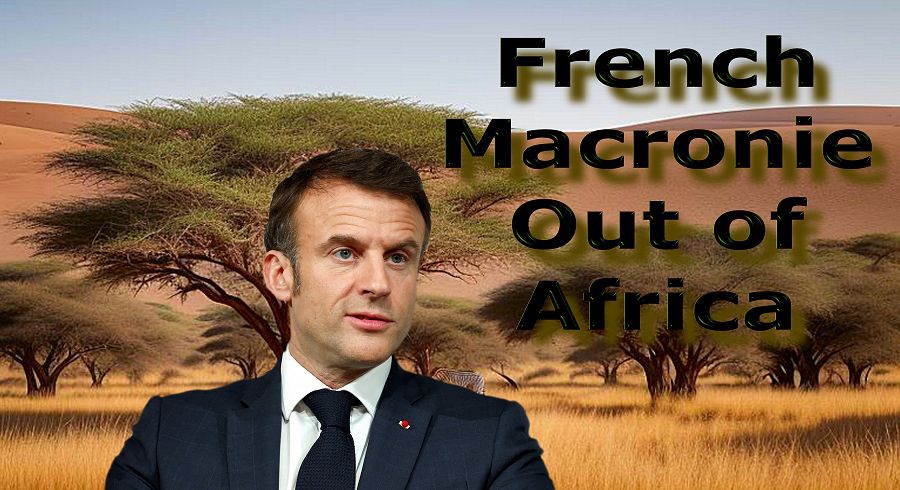
The announcement took everyone by surprise. Senegal and Chad are demanding the withdrawal of French troops. In a single day, two long-time allies announce the end of their strategic military collaboration.
Result: 1,350 soldiers stationed in Chad and Senegal respectively will gradually withdraw from Africa. Chad and Senegal illustrate the spectacular loss of France's influence on the continent, where Russia and China are advancing their pawns.
A snub for France
France's withdrawal from the region is confirmed. After 66 years of independence, Chad wishes to fully assert its sovereignty, the Chadian Ministry of Foreign Affairs said. The end of the defense agreement with Paris will allow Chad to redefine its strategic partnerships, the statement said.
"France is a key partner, but it must now recognise that Chad has matured and is a sovereign state, very attached to its sovereignty," stressed Abderaman Koulamalla, Minister of Foreign Affairs.
This announcement, made as Jean-Noël Barrot, French Minister of Foreign Affairs, had just finished his trip there, is however a new setback for France, marking the failure of Emmanuel Macron's strategy in Africa. This comes as he received Nigerian President Bola Tinubu on Friday for a state visit, to make him a privileged partner on the continent.
While Chad had long cooperated with Western armies, it has moved closer to Russia in recent years. This development had been noticeable for some time.
In January, during a visit to Moscow, Mahamat Déby Itno declared that Chad was a "brotherly" country of Russia and that he was ready to strengthen its relations with it. "Chad is among the potential partners in Africa, and all the possibilities of our exchanges are far from being exhausted. We are determined to continue expanding our interactions with African countries," Kremlin spokesman Dmitry Peskov later commented.
Three months later, US special forces, based at "Sergent Chef Adji Kosseï" in N'Djamena, a center for counterterrorism and intelligence activities in the Sahel, were firmly ordered to leave Chad.
Senegalese President Bassirou Diomaye Faye, for his part, said that the presence of French soldiers in his country did not correspond to his "vision of sovereignty and independence" and that their withdrawal was "inevitable".
Moscow's influence
"We have cooperation with the United States, China and Turkey without these countries having a base on our soil. Our relations nevertheless remain excellent. It is not because the French have been present since the colonial period that it is impossible to do otherwise," he declared.
The Senegalese president did not rule out working with Russia as well. Moscow is stirring up anti-French sentiment in Africa, where China is also expanding its influence. "Today, we want to collaborate with all those who can invest and contribute to creating wealth in Senegal," says Bassirou Diomaye Faye.
Niger, Burkina Faso, Mali…
Before the recent decisions of Senegal and Chad, several other states have, in recent years, demanded the departure of French forces. Indeed, over the past two years, Mali, Burkina Faso and Niger have also ended their military cooperation with the former colonial power, present in these countries to fight against jihadist groups in the Sahel.
Unlike Dakar and N'Djamena, the break with Paris was spectacular in Niger in 2023, following the arrival in power of General Abdourahmane Tchiani after a coup d'état.
The last French soldiers left Niger on December 22, 2023. Since the launch of Operation Barkhane in 2014, France has maintained a military presence in this Sahelian country, numbering up to 1,500 soldiers and airmen, notably at the non-permanent air base in Niamey.
On February 19, 2023, the Burkinabe general staff announced the end of operations by the Sabre special force in Burkina Faso. This French military unit, composed of 300 to 400 soldiers, had been conducting targeted operations in the Sahel since 2009, from its base in Kamboinsin, as part of the fight against jihadism.
As for Mali, the last French soldiers of Operation Barkhane left the country for Nigeria on August 15, 2022.
The operation, launched nine years earlier in the Sahel, also aimed to combat terrorist movements.
Paris wanted a gradual withdrawal, despite strained relations with Army General Assimi Goïta, who leads the country.
However, in February 2022, the Malian junta demanded the "immediate withdrawal" of French soldiers. Before this departure, the Gao base represented the largest French military base abroad, with around twenty helicopters, more than 400 armored vehicles and 300 heavy vehicles. In total, 2,400 soldiers from Operation Barkhane left Mali after the closure of the Gossi, Gao and Ménaka bases.
France has not completely abandoned its positions in Africa. It currently maintains military bases in three African countries: Côte d'Ivoire (around 600 soldiers), Gabon (around 350) and especially Djibouti. With nearly 1,500 soldiers, the Djibouti base, located in the Horn of Africa, represents the largest contingent of French soldiers on the continent. In total, some 2,450 soldiers are still stationed in Côte d'Ivoire, Gabon and Djibouti.
As the war draws closer to Europe's borders, this withdrawal from the Sahel could offer the French army an opportunity to reposition its forces to strengthen its presence on the European continent. |
|
|
|
| Andrew Preston for DayNewsWorld |
|
THE ARREST OF THE FRANCO-ALGERIAN WRITER BOUALEM SANSAL
A MEANS OF BLACKMAIL FOR ALGIERS |
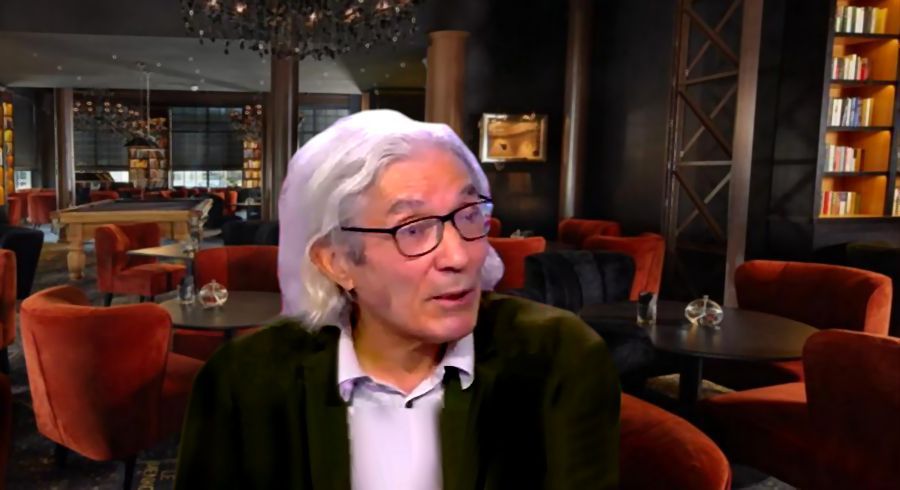
On Saturday, November 16, 2024, the French-Algerian writer Boualem Sansal was arrested at Algiers airport as he arrived from France. Since his arrest, no news of him has been communicated, and the author appears to have disappeared.
Emmanuel Macron said he was "deeply concerned" by this situation. According to his entourage, "state services are actively working to clarify his situation", with the president also affirming his "unwavering attachment to the freedom of a great writer and intellectual".
A controversial writer in Algeria
Boualem Sansal, 75, who acquired French citizenship this year, remains at the center of speculation about the reasons for his arrest. In 2015, he received the Grand Prix du Roman de l'Académie française for his work 2084: la fin du monde . This prize, founded a century earlier, rewards authors of novels written in French, regardless of their nationality.
Sansal had already found success with his first novel, The Oath of the Barbarians . This work, which depicts the emergence of fundamentalists and the Algerian civil war that caused at least 200,000 deaths between 1992 and 2002, had earned him international recognition. Although his books, published in France, are available in Algeria, the author remains a controversial figure, particularly since his visit to Israel in 2014.
Since his literary debut in 1999, Boualem Sansal has distinguished himself by his harsh criticism of the Algerian government and religious fundamentalism. More recently, he sparked controversy during an interview with the media outlet Frontières . In his statements, he stated: "When France colonized Algeria, the entire western part was part of Morocco. Tlemcen, Oran and even Mascara belonged to the Kingdom ." These remarks, which greatly irritated Algiers, were picked up by the Moroccan press, adding further tension to an already tense climate between the two countries over borders.
An arrest in a complex diplomatic context
Boualem Sansal's arrest comes at a time when relations between France and Algeria are particularly tense. This tension stems in particular from Paris' support, at the end of July, for Morocco's autonomy plan for Western Sahara, a disputed territory. This territory, a former Spanish colony, is largely controlled by Morocco, but the Polisario Front, supported by Algiers, continues to demand a self-determination referendum.
According to RFI, Boualem Sansal could be charged with "attacking national unity and the territorial integrity of the country" as well as "inciting division." These charges, punishable by heavy prison sentences in Algeria, could explain his arrest.
In France, the writer's arrest has provoked many reactions. Several political leaders, mostly from the right and the centre-right, have expressed their concern and support for Sansal. Laurent Wauquiez, president of the LR group in the National Assembly, said:
"All means of pressure on Algeria must be mobilized to obtain the release of our compatriot, the great writer Boualem Sansal." |
|
|
|
| Britney Delsey for DayNewsWorld |
|
|



 D
D