TOWARDS THE END OF THE SUDANESE SPRING ? |
|
| A small history
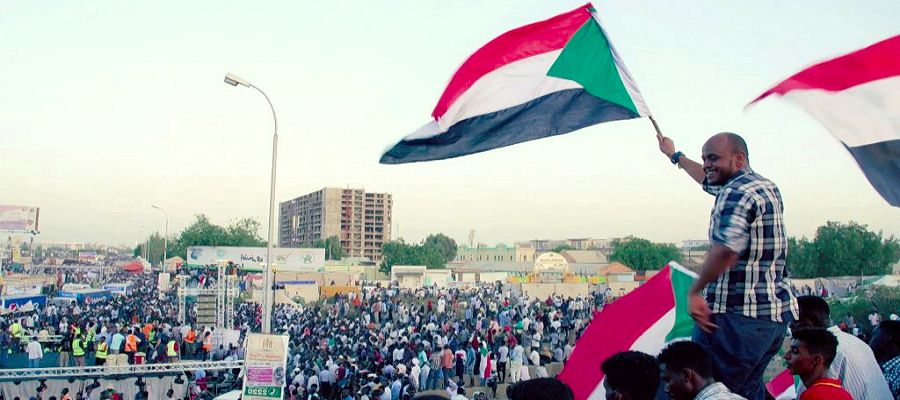
After months of peaceful protests, the Sudanese protest is now being violently repressed. On June 3, more than 100 civilians, according to the opposition, were killed in an assault by order of the military. For many, this coup could mark the end of the "Sudanese Spring". But opposition and protesters want to keep up the pressure for a transfer of power to civilians. Since the bloody dispersal of Sudanese protesters' sit-in in front of army headquarters in Khartoum on 3 June, 118 people have been killed and more than 500 wounded, according to the opposition. But the protesters intend to keep the pressure on the generals in power. The Transitional Military Council has been in power since the April 11 dismissal of President Omar al-Bashir by the army, under pressure from the protest movement launched on 19 December in a climate of acute economic crisis.
The protest calls for a transfer of power to a civilian government. Negotiations have been suspended since May 20 due to differences over the composition of a new body that would be responsible for leading the transition for three years. After the fall of Omar al-Bashir, protesters maintained a sit-in installed since April 6 in front of army headquarters to demand the transfer of power to civilians. Both sides then began discussions on the transition period but failed to agree. Born in December of anger against the tripling of the price of bread, the dispute quickly took a political turn. The standoff took a bloody turn with the violent dispersion of the sit-in in Khartoum on June 3. After four days of repression, and despite the mediation of Mr. Ahmed, the protest launched on Sunday a civil disobedience movement. Suppression of the sit-in and 118 dead The announcement of the resumption of negotiations comes as the leaders of the protest had announced Monday night that they will soon publish the composition of their own governing body with a Prime Minister. She also intervenes the day after the announcement of the visit this week of the US Assistant Secretary of State for Africa, Tibor Nagy. The State Department said the envoy would call "at the end of attacks against civilians". According to a committee of doctors close to the protest, 118 people have died and more than 500 have been wounded since then, the majority in the dispersal of the sit-in. The authorities estimate 61 deaths, including 49 by "live ammunition" in Khartoum. On Tuesday, vehicles equipped with Rapid Support Forces (RSF) machine guns - paramilitaries accused of disputing the spread of the sit-in and the crackdown that followed - continued to patrol in several districts of the capital, mostly deserts. Meanwhile, nine people were killed on Monday in al-Dalij village in western Darfur, a region wounded since 2003 by a civil war, according to a committee of doctors who blame Janjaweed militias for atrocities in the country. the region. The RSFs are considered by the protest and by experts as a "new version" of the Janjawid. Resumption of negotiations The Sudanese opposition and the Transitional Military Council (TMC) have agreed to resume talks on the formation of a new administration, Ethiopian mediator Mahmoud Dirir said Tuesday after more than three days of near-paralysis in Khartoum, the capital of Somalia. country. The Sudanese protest has indeed agreed to end the civil disobedience movement launched after the start of a deadly crackdown and resume discussions with the military in power to find a way out of the crisis. The Alliance for Freedom and Change (ALC), the spearhead of the protest, immediately called on the Sudanese to "get back to work on Wednesday," after more than three days of near-paralysis in the capital. UN Security Council condemns violence "The ALC agreed to end the civil disobedience movement from today" and "the two sides agreed to resume the talks soon," Drir said Tuesday. In a statement, Council members called for the immediate end of violence against civilians and stressed the importance of respect for human rights. George Clooney, very committed to Darfur In an editorial co-signed with human rights activist John Prendergast and published in Politico, US actor George Clooney urged the international community to track dirty money from Sudan in the hope that the military will change its attitude towards events. |
|
| Jaimie Potts for DayNewsWorld | |
 |
|