More Articles...

PRESIDENTIAL CHALLENGE AWARDED BY EMMERSON MNANGAGWA IN ZIMBABWE

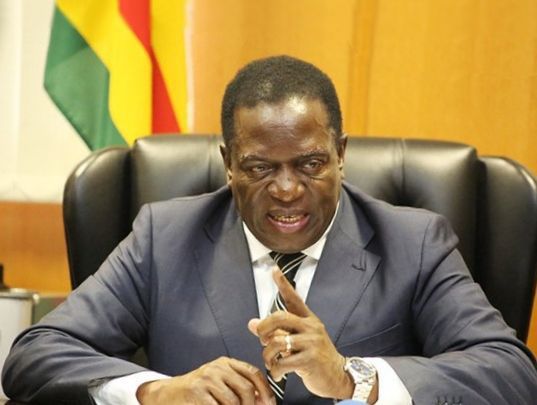
Emmerson Mnangagwa outgoing leader and former right arm of Robert Mugabe, won the presidential election with 50.8% of the vote, announced Friday,
August 3, the electoral commission.

The victory was announced in a climate of high tension;

Victory of Emmerson Mnangagwa .

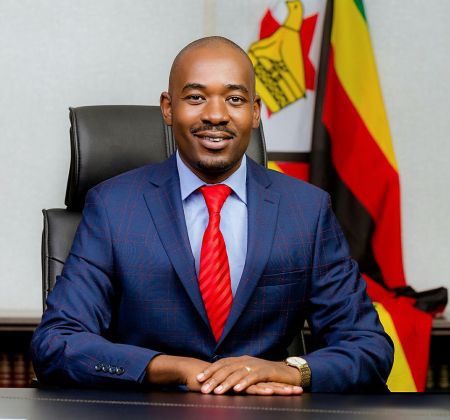
Elected in the first round of the presidential election, Mnangagwa was ahead of opposition leader Nelson Chamisa, who won 44.3 percent of the vote, commission chair Priscilla Chigumba told a news conference. in Harare. organized in a tense atmosphere as the army patrols the capital.

"As a result, Emmerson Mnangagwa Dambudzo of the ZANU-PF party is declared President-Elect of the Republic of Zimbabwe, effective August 3," said Election Commission Chair Priscilla Chigumba, with some cheers. Indeed because of tense climate the army patrols the streets in Harare.

Emmerson Mnangagwa, 75, to salute "a fresh start" while from calling to unity. "Let us unite in peace, unity and love and together we build a new Zimbabwe for all," he said on his Twitter account.

Challenging results and violence

But the opposition immediately rejected his victory, announcing that she was going to go to court.

Figures that challenge the opposition. Six people were killed in Zimbabwe, where on Wednesday the army cracked down on an opposition demonstration denouncing fraud in the general elections, according to a new police report released on Thursday.

"The results are wrong, (...) we reject them, we will denounce the whole process in court," said Morgan Komichi, spokesman for Nelson Chamisa's Movement for Democratic Change (MDC).

An opposition demonstration on Wednesday was repressed by the army with live ammunition. The demonstrators denounced frauds in the electoral process. Six demonstrators died. These historic general elections, which were to mark a turning point in the history of the country, where the elections were regularly tainted by fraud and violence turned to drama.

President Mnangagwa had promised free, peaceful and transparent elections in the hope of attracting new Western investors to his country on the brink of bankruptcy, and Zimbabweans had gone to the polls peacefully.

At the announcement of the results in the night from Thursday to Friday, the streets of the capital Harare and the stronghold of Bulawayo opposition (south) were deserted. Only soldiers and police were visible.

The United Kingdom, the former colonial power of Zimbabwe, has asked Harare to withdraw the army from the streets of the capital. The Commonwealth has "categorically denounced the excessive use of force against unarmed civilians".

Attempt to appease

President Mnangagwa called Thursday morning for appeasement, saying he wants to resolve "peaceful differences" with the opposition. He also said he had been in talks with Nelson Chamisa to try to "defuse" the crisis.

Emmerson Mnangagwa, who succeeded Robert Mugabe following a military coup, forced him to resign. Robert Mugabe had led the country with an iron fist for thirty-seven years. Emmerson Mnangagwa, nicknamed "the crocodile", has just entrusted several military key positions in his government ...

"We have all been naive, including the international community , " said Ibbo Mandaza, an analyst with the Harare-based Southern African Political and Economic Series (SAPES).

"We refused to call a coup and the international community was naive to think that the elections would be free and fair under a military government," he added.


Joanne Courbet for DayNewsWorld


AFTER MUGABE ELECTIONS IN ZIMBABWE

In a country where the unemployment rate is around 90%, the inhabitants voted for the first time freely. With the hope of turning the page on Mugabe decades.

They elect the first Zimbabwean president in the country's history who is not named Robert Mugabe. The 94-year-old has led the country since independence before being overthrown by an army coup in November 2017,

In fact, the general elections held on Sunday are the first since the fall of Robert Mugabe, who led the country for thirty-seven years.

His departure last November gave rise to hope for change among the population. More than 5.5 million voters registered to vote. At 94, the former strongman has still not digested his forced resignation with the help of the army.

No support from Mugabe to the candidate of his party:

Opposition leader in Zimbabwe Nelson Chamisa did not wait until the results were announced to announce his victory.

The opposition leader in Zimbabwe claims, Tuesday, July 31, " a brilliant victory" in the general elections held the day before in the country.

"We have done remarkably well (...) and we are ready to form the next government," he wrote in English on Twitter, in support of * a vote count of 10,000 polling stations.

Before the election, Robert Mugabe implied that he would vote for Nelson Chamisa, a long-time opponent, rather than Emmerson Mnangagwa, the current head of state and his party's candidate, Zanu-PF.

Two favorites out of 23 contenders

Emmerson Mnangagwa, Mugabe's close friend who fell out of favor, took power with the support of the military. He promised to reform the country from top to bottom just like his main rival, the opponent Nelson Chamisa.

For the first time, an election campaign in Zimbabwe took place in relative calm. . The main opposition party, the Movement for Democratic Change (MDC), has indeed been able to organize meetings, more and more important.

23 candidates ran in the presidential election, and more than one hundred political parties take part in the legislative elections.

Alyson Braxton for DayNewsWorld


HIGH RISK PRESIDENTIALS IN MALI

E read in 2013 after the French intervention to chase Islamists, President Ibrahim Boubacar Keita (IBK) is a candidate for his own succession and even favorite, while the country is still plagued by terrorist acts and community tensions. A great instability raises fears overflows on this day of the first round of elections, the army was deployed to avoid clashes, the government has been funding television advertising spots for several days to call the population to calm. This is to say the state of tension in which is plunged Mali.
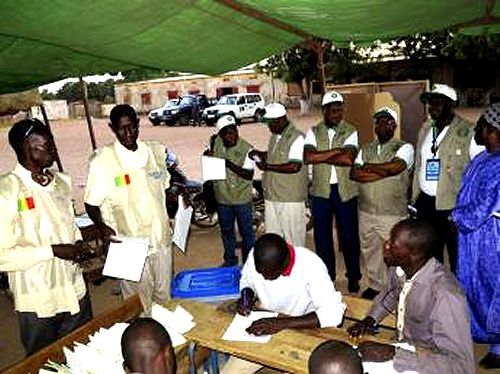
Safety issues first and foremost:

To allow for the holding of the vote in most of the country, more than 30,000 members of the security forces, national and foreign, are mobilized, according to the Ministry of Homeland Security. In terms of security, "today it can be said that the minimum conditions are likely to be met," said Mahamat Saleh Annadif, head of the UN mission in the country (Minusma), on UN radio in Mali, Mikado FM, while calling to remain "vigilant".

Ibrahim Boubacar Keita, 73, elected in 2013 and head of the "Rally for Mali", puts his mandate at stake despite a disputed record. Indeed insecurity has increased in the country and the economic situation is far from satisfactory.

But it is above all the security issue that is at the heart of tensions and hurts. In addition to the suspicions of fraud on the part of the presidential camp, the jihadist threat in the north of the country - which was taken by radical Islamists by France in 2013 - is growing. On the last day of campaign on Friday, the jihadists were invited to the debate by the leader of the main jihadist alliance of the Sahel, linked to al-Qaeda, the Malian Touareg Iyad Ag Ghaly, leader of one of the Islamist groups that had seized the entire north of the country in 2012 . "These elections are nothing but the pursuit of a mirage and our people will only harvest illusions, as they have become accustomed to," said in a video the head of the support group for and Muslims

Community tensions have been exacerbated in recent years in this vast landlocked country of West Africa, counting about twenty ethnic groups. Insecurity has also undermined the center of the country. And IBK is widely criticized for not being offensive enough on the subject of insecurity. That is why the main opposition leader, Soumaïla Cissé, promised to bring "peace" back to the center of the country and hopes to capitalize on security issues.

"Barkhane will not be eternal":

Moreover, Mali lives on a drip of foreign military aid to maintain fragile stability. The French operation Barkhane is more than 4,500 soldiers tricolor distributed in the Sahel to fight against the jihadist threat, mainly in Mali. If IBK prevails, the international community fears that it will do more than under its first mandate. Jean-Yves Le Drian, prime contractor of the French intervention in 2013 when he led the Defense, signified his impatience.

France and its partners do not want a status quo that would mean an extension of their presence. "Barkhane will be there as long as it takes but will not be eternal," says one to the Ministry of Armies, which by forming local armies, ultimately wants to "create the conditions" of his departure. The creation of the G5 Sahel in 2014, a coordination framework for five countries in the region to fight against terrorism, must also enable African countries to take charge of the situation.

Two favorites out of 24 candidates:

In any case, Malians are waiting for the president-elect (or re-elected) on security. More than eight million inhabitants of this vast landlocked country of West Africa, counting about twenty ethnic groups, are called to the polls to renew the president Ibrahim Boubacar Keïta or to elect one of its 23 competitors, whose head of the opposition, Soumaïla Cissé, and only one woman, Djeneba N'Diaye.

They vote Sunday, July 29 for a presidential election that will weigh on the fate of the peace agreement of 2015 and, beyond, on the entire Sahel, still facing the jihadist threat despite five years of international military interventions.

The official results will be known by Friday at the latest, before a possible second round on August 12.

No less than 24 candidates !! Has the time for revenge for Soumaïla Cissé sounded? Largely beaten (nearly 78% of the vote) by Ibrahim Boubacar Keïta in 2013, the opposition leader, 68 years, this time hopes that the climate of insecurity will encourage Malians to get rid of a socialist president considered too passive . But 24 candidates - of which only one woman - will separate the votes. Among them, many former ministers of the head of state, which says a lot about the ferocity of the campaign even if the outgoing president, Ibrahim Boubacar Keita, and the leader of the opposition, Soumaïla Cissé, are given favorites

Since the advent of democracy in 1992, less than one out of every two Malians has moved in five presidential polls. The last election, in 2013, was however particularly followed, in a post-coup context that had shaken the Republic, a few weeks after the outbreak of the war in the north of the country.

The participation rate is traditionally low, significantly lower than 50%, in the first round of the presidential election in this country known also for its cultural influence.


Joanne Courbet for DayNewsWorld


WHEN BOKO HARAM IS GIRLS

AS HUMAN BOMBS IN NIGERIA


The jihadist group Boko Haram did not hesitate to turn six girls between seven and ten years into human bombs to commit a double suicide bombing on the night of Saturday, June 16 to Sunday, June 17, in Damboa, Nigeria.

"It was discovered that the suicide attacks were perpetrated by six girls " and their heads were torn off at the scene by rescuers.

They were between 7 and 10 years old , a local government official said on condition of anonymity.

The jihadists then targeted the crowd that had gathered at the site of the attacks with grenades, causing more casualties.

Two suicide bombers had previously activated their explosive charge in the neighborhoods of Shuwari and Abachari in Damboa, killing six residents.

At least 31 people have been killed. The balance is likely to increase, many injured being in serious condition.

"31 people were killed and several others wounded," said local militia member Babakura Kolo.

The attacks targeted people who had just celebrated the Eid el-Fitr festival marking the end of Ramadan.

For nine years, the Islamist insurgency has killed more than 20,000 people in the region. It stretches from northeastern Nigeria to Niger, Chad and Cameroon, creating a serious humanitarian crisis. The conflict has displaced about 2.6 million people in Nigeria.

Alyson Braxton for DayNewsWorld


41 DEATH AFTER BREAK

A DAM IN KENYA


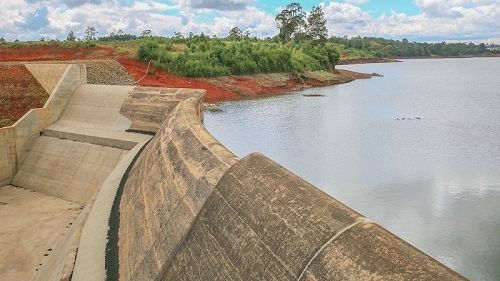
On Wednesday around 9 pm, the Patel private dam in Solai commune, located near the town of Nakuru (about 160 km north of Nairobi) broke down and its waters swept through the modest homes of this rural area.

All night long, rescue services, led by the Kenyan Red Cross, have been hard at work to shelter the survivors and recover the victims.

Houses were washed away after a dam broke 150 km north of Nairobi on May 10, 2018.

At least 41 people, including 20 children, have died as a result of Wednesday's break-up of a dam in central Kenya.

The survivors described the muddy waters carrying their homes "hell on earth".

The country, coming out of an acute drought. Since March and the beginning of the rainy season the country is subject to heavy rainfall leading to floods causing the death of some 170 people.

Carl Delsey for DayNewsWorld