More Articles...

SUDAN ON THE BRINK OF ALL-OUT CIVIL WAR

UN SAYS

An air force raid on a residential area of ​​Khartoum killed dozens of civilians in Sudan on Saturday (July 8th). The bombings took place in the Dar al-Salam district, literally "the house of peace" in Arabic, in Omdurman, the northwestern suburb of Khartoum. According to the local Ministry of Health, they caused "22 dead and a large number of injured civilians".

On Facebook, the ministry posted a video showing lifeless bodies, some with torn limbs, including several of women. For their part, the Rapid Support Forces, at war with the army since April 15, denounced "the tragic loss of more than 31 lives and many wounded".

"A total lack of respect for humanitarian law and human rights"

Sudan is "on the brink of total civil war", warns the UN. The organization considers that the situation is "potentially destabilizing for the whole region". In nearly three months of war between the paramilitaries of General Mohamed Hamdane Daglo and the regular troops of General Abdel Fattah al-Burhane, nearly 3,000 dead have been recorded – a very underestimated toll, both the bodies strewn on the streets are inaccessible. Nearly three million Sudanese out of the 45 have been forced to leave their homes as the abuses from both sides are increasing.

Khartoum and Darfur are on the front line, but the fighting has spread to other cities in the north and south. During the first week, “two-thirds of the fighting (…) took place in cities with more than 100,000 inhabitants”, notes the Armed Conflict Location & Event Data Project.

“Both warring forces repeatedly used explosive weapons in urban areas, causing loss of civilian life,” reports Human Rights Watch.

In some combat zones, members of the FSR turn into looters. They seize buildings, schools, businesses or health centers. Humanitarian offices and warehouses have been robbed. In Darfur, houses and markets have been set on fire.

One of the spokespersons for the UN Secretary General thus denounced "a total lack of respect for humanitarian law and human rights", particularly in Darfur, a region martyred in the 2000s, again at the heart of fighting having resumed a "ethnic dimension".

A power struggle between the two most powerful generals in Sudan.

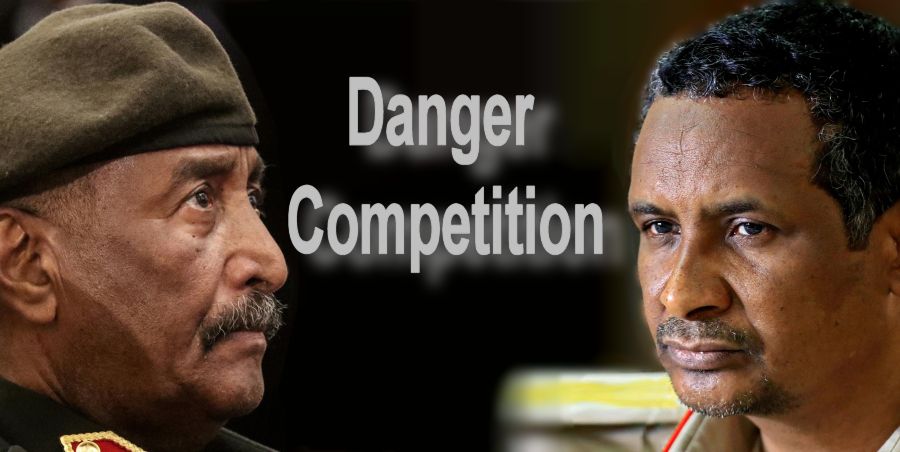
Deadly clashes erupted as early as April 15 in Sudan between the Sudanese Armed Forces led by General Abdel Fattah al-Burhan, and the Rapid Support Forces, a paramilitary militia led by General Hemetti.

This violence is the culmination of several months of tension between the two groups and especially their two leaders.

At the root of this situation, a power struggle between the two most powerful generals in Sudan. On the one hand, the head of the army, Abdel Fattah al-Burhan, who de facto leads the country. On the other, his number two, General Mohamed Hamdane Daglo, nicknamed "Hemetti", at the head of the Rapid Support Forces (RSF, in English), a powerful paramilitary force.

To understand this rivalry, you have to go back to April 11, 2019. On that day, dictator Omar al-Bashir was overthrown by a military coup. Al Burhan and his junta take power. Hemetti is number two in the regime. Sudan is moving towards a transfer of power to civilians, but in October 2021, the military carries out a new putsch. Al Burhan and Hemetti are maneuvering to defeat the democratic transition.

How did we get here ?

In October 2021, the two generals therefore joined forces to oust the civilians with whom they had shared power since the fall of dictator Omar al-Bashir in 2019.

“A marriage of convenience” for the putsch, explains researcher Hamid Khalafallah. "They never had a sincere partnership but common interests against civilians."

And the breaches in the sacred union quickly came to light: The leader of the Rapid Support Forces (FSR), Hemedti, repeatedly denounced the "failure" of a putsch which restored "the old regime" of Bashir, according to him. Then the conflict intensified when it was necessary to sign the conditions for the integration of his men into the regular troops, within the framework of the agreement with the civilians which was to relaunch the democratic transition.

For experts, this agreement has opened Pandora's box: by letting the military negotiate among themselves, "Hemedti has gone from the status of second to that of equal of Burhane", affirms Kholood Khair, who founded the Confluence research center Advisory in Khartoum. Feeling "more autonomous in the face of the army", Hemedti saw an opportunity to achieve "his very great political ambitions", abounds Alan Boswell, in charge of the Horn of Africa at the International Crisis Group.

The thorny question remained to be settled: how to integrate Hemetti's Rapid Support Forces into the regular army. And then who to control the soldiers ?

Who to control arms ?

Another bone of contention, the presence since the reign of Omar el-Béchir of many Islamist officers in the Sudanese army, whom General Hemedti wanted to purge. Since the October 2021 coup, the Islamist current, which already enjoyed significant support within the army, has grown stronger with the blessing of General al-Burhan. This was one of the main points of tension with General Hemedti.

The two generals have opposing positions.

The army wanted a very rapid integration, within one or two years. General Al-Burhan, supported by Egypt, and under pressure from certain Islamist cadres in the army, made the signing of the agreement conditional on the integration of the RSF into the ranks of the army, under his command.

The RSF wanted to maintain autonomy for up to ten years. Hemetti categorically refused to let his rival command his men and agreed to place his forces only under the authority of a civilian head of state, and on condition that the army be purged of its Islamist elements. This security reform, a central issue in the transfer of power to civilians, therefore set fire to the powder.

Ancient rivalry for economic power

But the rivalry between the two men is older. For years, General Hemetti's Rapid Support Forces have steadily grown in strength. Made up of 80 to 120,000 men, well equipped, well trained, this force in the form of a free electron, which did not respond to the central power, aroused discontent in the general staff of the regular army.

With the dispatch of mercenaries to Yemen and the financial windfall of smuggling gold on behalf of the United Arab Emirates, Hemetti has also become one of the richest and most powerful men in the country.

The rivalry between Al-Burhan and Hemetti is also personal. The two officers know each other well, they both operated in Darfur during the civil war in the 2000s and then during the war in Yemen. And they have been competing for several years to recover a number of resource networks since the 2019 revolution.

All of this only made matters worse over the months. With an acceleration during the political negotiations. Each camp recruited massively, particularly among the youth of Darfur, the greater western region.

For several weeks, the two opposing groups had carried out major movements, bringing men and equipment to the capital. The tension rose a notch on Thursday, April 13, when the RSF deployed around an air base in Meroe, in the north of the country. The clashes, two days later, could break out.

The conflict, transformed into a pitched battle, led to the flight of many civilians abroad: more than 600,000, including 10,000 to 20,000 people, especially women and children, crossed into neighboring Chad, according to the UN.

To attempt a way out of the crisis, the UN pleads for the proposals of Igad.

This East African bloc, to which Khartoum belongs, will bring together on Monday in Addis Ababa the heads of state or government of the four countries involved in the Sudanese dossier: Ethiopia, Kenya, Somalia and South Sudan.


Andrew Preston for DayNewsWorld

MASSACRE AT THE SCHOOL OF LHUBIRIHA WITH

FORTY PUPILS KILLED WITH MACHETE OR BURNED ALIVE BY ISLAMISTS

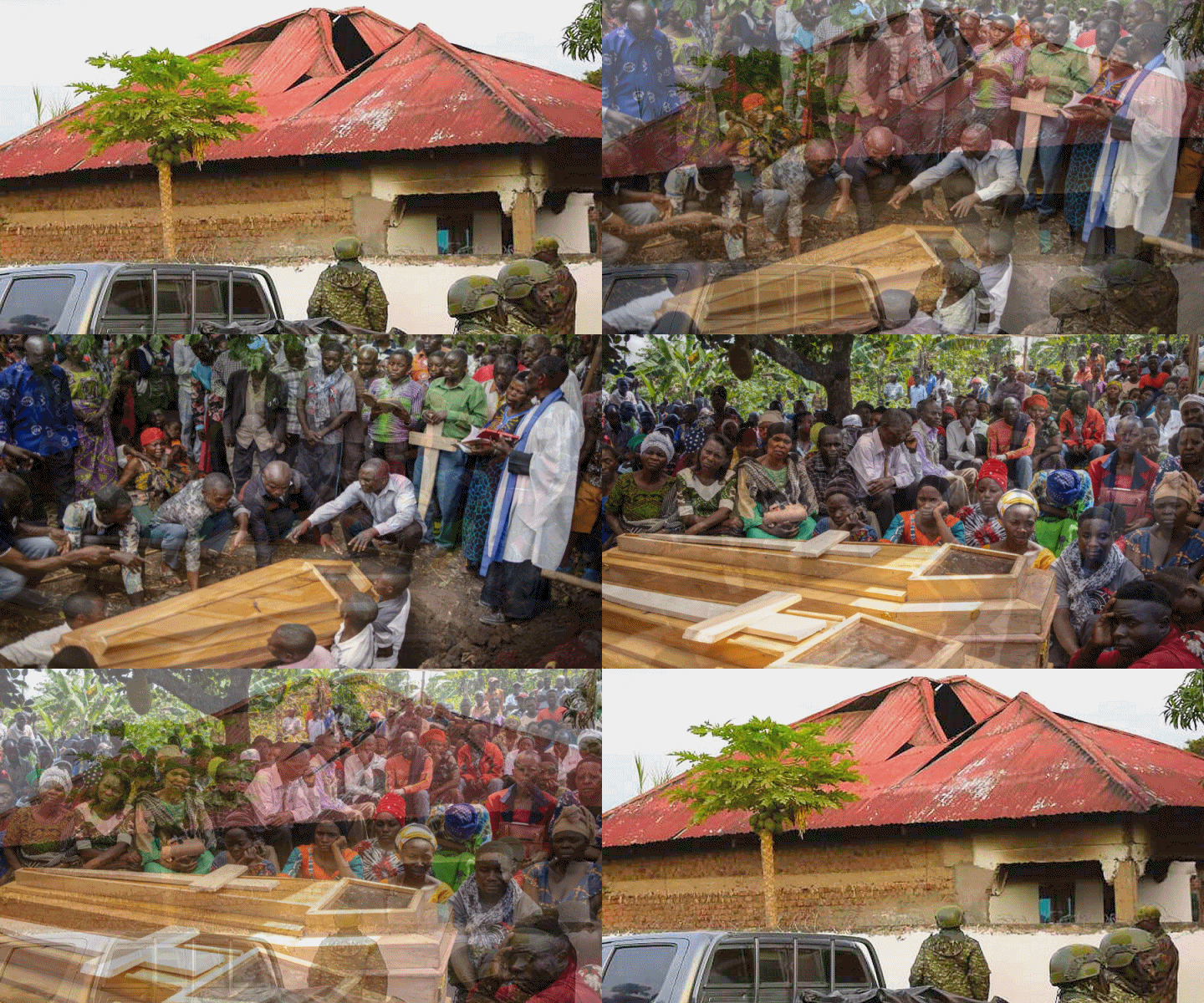
Mpondwe High School in Uganda was attacked on the night of June 17-18 by militants from the ADF militia, which has pledged allegiance to the Islamic State. We deplore the death of about forty people, including 39 to 45 students, according to the sources. Six students were kidnapped.

Army spokesman Felix Kulayigye told CNN that some were killed with machetes while others died when their dormitories burned.

“I was alerted to the attack a few minutes after 11 p.m. when cries from students were heard from our school,” the principal of Llubhira Secondary School said in remarks echoed by International Christian Concern, “J immediately contacted security but they didn't show up until after an hour when the attack was over and the rebels were coming out. So far we have counted 45 dead students

A local witness says he saw "a group of about 30 people dressed in jungle uniforms, but with their heads covered and armed to the teeth"

According to Major General Dick Olum, this officer, the attackers had detailed information about the school.

"They knew where the boys' and girls' dorms were," Dick Olum said. "That's why the rebels locked the boys' dormitory and set it on fire. The rebels didn't lock the girls' section and the girls managed to get out, but they were beaten with machetes, while 'they were running for cover, and others were shot."

"We have requested more firepower, aircraft to assist in the rescue of abductees and to locate rebel hideouts for military action," he said.

Vatican News reports the first elements of the investigation according to which the militia set fire to dormitories and several students were stabbed to death.

After the attack, the militiamen, who also abducted six people, fled towards Virunga National Park, located in Congolese territory. The border is only two kilometers from the school.

The ADF, the militia responsible for the massacre

Major General Dick Olum said intelligence had reported an ADF presence in the area at least two days before the attack, underscoring the need for an investigation.

The men responsible for the attack are part of the Islamist militia of the Allied Democratic Forces (ADF). This armed group was created in 1995 to overthrow the President of the Republic of Uganda Yoweri Museveni, in power since 1986.

The Allied Democratic Forces in English Allied Democratic Forces, ADF is a Ugandan armed group bringing together opposition movements to President Yoweri Museveni. The organization has since moved to the Democratic Republic of Congo where its operations are concentrated. Initially mainly composed of Islamists from the Tabligh movement, the ADF had been led since 2007 by Jamil Mukulu before his arrest in 2015. Then Musa Seka Baluku took over from its former chief of arms. According to several estimates, the ADF is composed of 300 to 600 combatants. In 2019, the militia pledged allegiance to the Islamic State

Operating largely on Congolese territory, the militia is believed to be responsible for more than 730 attacks since 2017, killing around 3,850, according to New York University and the NGO Human Rights Watch. This is not the first time that these rebels have attacked schools. Already, in 1998, the ADF had burned alive 80 students in the dormitories of the Uganda Technical Institute, in Kichwamba, near the DRC border.

Why attack Lubiriha high school?

The establishment, located in the town of Mpondwe, a Ugandan border post which manages the State's trade with the DRC, was built by a Canadian non-governmental organization, reports the “New York Times”. It opened in 2010.

According to Richard Moncrieff, expert at the International Crisis Group (ICG) interviewed by the BBC, attacking a high school is a way for the ADF to "recruit children". The Islamic group is suspected of enlisting child soldiers.


Carl Delsey for DayNewsWorld

HOMOSEXUALITY PUNISHABLE TO DEATH PENALTY

IN UGANDA

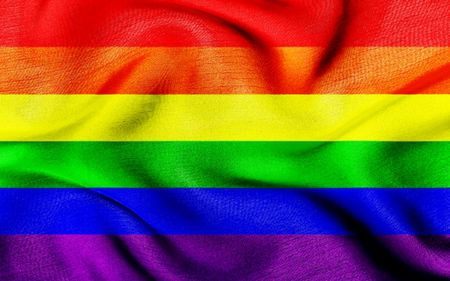
Ugandan President Yoweri Museveni on Monday signed into law a controversial anti-LGBT+ law that includes stiff penalties for same-sex relationships. In this East African country where homosexuality is already illegal, "acts of homosexuality" are punishable by life imprisonment since a law dating from British colonization.

The new law introduces the concept of “aggravated homosexuality”. In other words, the sexual act between people of the same sex is now considered a crime punishable by death in case of recidivism. Another provision is of great concern to NGOs. According to the text, anyone – individual or organization – “knowingly promotes homosexuality” faces up to 20 years in prison. If it is an organization, it risks a ten-year ban. The President's enactment of the law was first announced on Twitter by Speaker of Parliament Anita Among before being confirmed by Yoweri Museveni's spokesperson.

Outcry

The vote on the bill in Parliament on March 21 sparked an international outcry. The UN High Commissioner for Human Rights, Volker Türk, had denounced a “discriminatory text – probably the worst in the world of its kind”. After the announcement by the Western partners of potential economic consequences if the law were promulgated as it stands, President Yoweri Museveni had asked Ugandan parliamentarians, at the end of April, to reconsider certain provisions. Thus, in the text adopted on Monday, there is no longer any question of criminalizing the mere fact of being homosexual, nor of denouncing the practices of one's neighbor.

"The President of Uganda has today legalized state-sponsored homophobia and transphobia," said Clare Byarugaba, a Ugandan rights activist. “This is a very dark and sad day for the LGBTIQ community, our allies and all of Uganda,” she added.

But above all, on a continent where homosexuality is punishable by imprisonment in some thirty countries, activists fear the spillover effect of Ugandan law. "Why should a country criminalize part of its population based on their sexuality? I think it's very barbaric, it's primitive, and it goes back to the colonial era," said Alex Kofi Donkor, president of LGBT rights in Ghana. Ugandan [...] There have already been three proposed laws criminalizing homosexuality in the DRC.

Same-sex relationships are also considered a crime under colonial-era legislation in neighboring Kenya, whose President William Ruto recently declared homosexuality to be a Western import incompatible with “customs, traditions, Christianity and Islam.” of his nation.

The High Commissioner for Human Rights said it was "dismayed" to see this "draconian and discriminatory" bill come into force, "contrary to the Constitution and international treaties", which opens the way to " systematic violations of the rights of LGBT people”.


Garett Skyport for DayNewsWorld

DEADLY SHOOTING IN A SYNAGOGUE

IN TUNISIA

"Terrorist" attack or isolated act ?

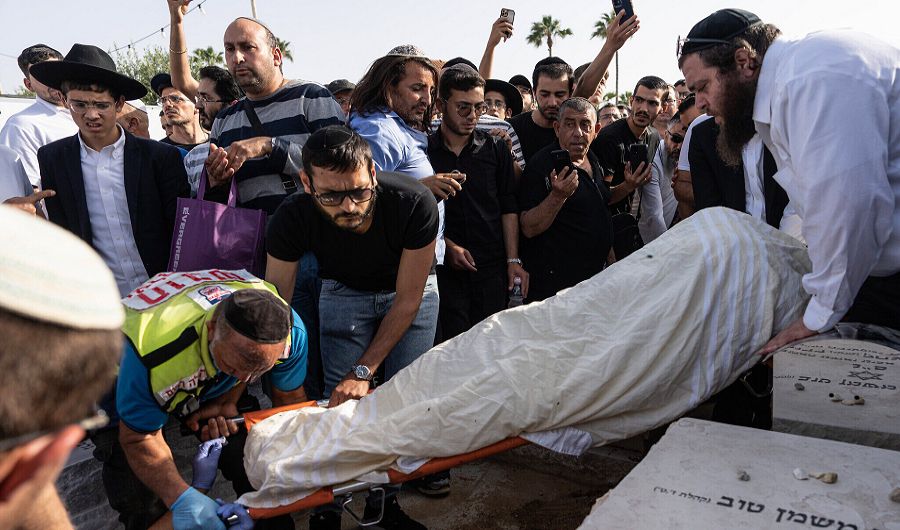
The Tunisian authorities are investigating, Wednesday, May 10, 2023, to elucidate the circumstances of the attack carried out by a gendarme who killed three of his colleagues and two faithful in front of a synagogue on the island of Djerba, during the annual Jewish pilgrimage, before be shot.

Security forces “encircled the synagogue and secured everyone inside and around it,” according to the Interior Ministry. “Investigations are continuing to elucidate the motives for this cowardly attack,” added the ministry, refraining at this stage from mentioning a terrorist attack.

Preliminary investigation opened

Two worshipers taking part in a Jewish pilgrimage and two gendarmes were killed Tuesday evening by an agent of the Tunisian maritime guard who opened fire in front of the Ghriba synagogue on the island of Djerba, announced the Ministry of the Interior.

A police officer who was hospitalized after Tuesday's attack died of his injuries on Wednesday, according to a medical official quoted by TAP, bringing the death toll to five.

This synagogue, the oldest in Africa, had already been targeted in 2002 by a suicide truck bomb attack that killed 21 people.

"A preliminary criminal investigation has been opened," said Fethi Bakkouche, spokesperson for the court in Medenine, on which the island of Djerba depends.

The attack came in two stages as hundreds of worshipers took part in the annual Jewish Ghriba pilgrimage which was coming to an end on Tuesday evening.

A security device was deployed in the perimeter of the synagogue, closing all the roads giving access to it.

According to the Tunisian Ministry of the Interior, the gendarme who fired the shots first shot and killed one of his colleagues in the port of Djerba and seized his weapon and ammunition. He then went to the outskirts of the synagogue, about fifteen kilometers away, where he opened fire on the police who were providing security for the place, before being shot.

Two faithful, a Tunisian and a Franco-Tunisian were killed by the assailant's shots, and four others were injured and evacuated to a hospital, according to the authorities. Six gendarmes were also injured by the assailant's shots.

One of them succumbed to his injuries on Tuesday evening, according to the Interior Ministry.

Tourism affected again ?

According to organizers, more than 5,000 Jewish pilgrims, mostly from abroad, took part in the Ghriba pilgrimage this year, which resumed last year after a two-year hiatus due to the Covid-19 pandemic.

Organized on the 33rd day of Passover, the Ghriba pilgrimage is at the heart of the traditions of Tunisians of the Jewish faith, who are only 1,500 – mostly settled in Djerba –, compared to 100,000 before independence in 1956.

Pilgrims also traditionally come from European countries, the United States or even Israel, but their number decreased considerably after the 2002 attack.

The attack comes as tourism is rebounding strongly in Tunisia after a sharp slowdown during the pandemic. This key sector for the economy had been seriously affected after the 2015 attacks against the Bardo museum in Tunis and a hotel in the seaside resort of Sousse, the toll of which had risen to 60 dead including 59 foreign tourists.


Britney Delsey for DayNewsWorld

UNDERSTANDING DEADLY CONFRONTATIONS

IN SUDAN DUE TO RIVALRY

BETWEEN TWO GENERALS

The Sudanese capital was shaken by gunfire and air raids in the night and morning of April 21, as has been the case daily since the start of the fighting on April 15, which left "413 dead and 3,551 injured", according to a new report from the World Health Organization (WHO). Images of devastated Karthoum are looping on the Al-Jazeera channel.

"Our country is bleeding" -

“For Eid, our country is bleeding: destruction, desolation and the sound of bullets have taken precedence over joy,” General Burhane said. So far, like his rival, General Daglo, he had only spoken to the media and had not directly addressed the 45 million Sudanese.

Deadly clashes broke out on Saturday (April 15th) in Sudan between the Sudanese Armed Forces led by General Abdel Fattah al-Burhan, and the Rapid Support Forces, a paramilitary militia led by General Hemetti.

This violence is not a surprise. It is the culmination of several months of tension between the two groups and especially their two leaders. At the origin of this situation, a power struggle between the two most powerful generals of Sudan. On the one hand, the head of the army, Abdel Fattah al-Burhan, who de facto leads the country. On the other, his number two, General Mohamed Hamdane Daglo, nicknamed "Hemetti", at the head of the Rapid Support Forces (RSF, in English), a powerful paramilitary force.

To understand this rivalry, you have to go back to April 11, 2019. On that day, dictator Omar al-Bashir was overthrown by a military coup. Al Burhan and his junta take power. Hemetti is number two in the regime. Sudan is moving towards a transfer of power to civilians, but in October 2021, the military carries out a new putsch. Al Burhan and Hemetti are maneuvering to defeat the democratic transition.

How did we get here ?

In October 2021, the two generals therefore joined forces to oust the civilians with whom they had shared power since the fall of dictator Omar al-Bashir in 2019.

“A marriage of convenience” for the putsch, explains researcher Hamid Khalafallah. "They never had a sincere partnership but common interests against civilians."

And the breaches in the sacred union quickly came to light: The leader of the Rapid Support Forces (FSR), Hemedti, repeatedly denounced the "failure" of a putsch which restored "the old regime" of Bashir, according to him. Then the conflict intensified when it was necessary to sign the conditions for the integration of his men into the regular troops, within the framework of the agreement with the civilians which was to relaunch the democratic transition.

For experts, this agreement has opened Pandora's box: by letting the military negotiate among themselves, "Hemedti has gone from the status of second to that of equal to Burhane", affirms Kholood Khair, who founded the Confluence research center Advisory in Khartoum. Feeling "more autonomous in the face of the army", Hemedti saw an opportunity to realize "his very great political ambitions", abounds Alan Boswell, in charge of the Horn of Africa at the International Crisis Group.

The thorny question remained to be settled: how to integrate Hemetti's Rapid Support Forces into the regular army. And then who to control the soldiers? Who to control arms?

Another bone of contention, the presence since the reign of Omar el-Bashir of numerous Islamist officers in the Sudanese army, whom General Hemedti wanted to purge. Since the October 2021 coup, the Islamist current, which already enjoyed significant support within the army, has grown stronger with the blessing of General al-Burhan. This was one of the main points of tension with General Hemedti.

The two generals have opposing positions.

The army wanted a very rapid integration, within one or two years. General Al-Burhan, supported by Egypt, and under pressure from certain Islamist cadres in the army, made the signing of the agreement conditional on the integration of the RSF into the ranks of the army, under his command.

The RSF wanted to maintain autonomy for up to ten years. Hemetti categorically refused to let his rival command his men and agreed to place his forces only under the authority of a civilian head of state, and on condition that the army be purged of its Islamist elements. This security reform, a central issue in the transfer of power to civilians, therefore set fire to the powder.

Ancient rivalry for economic power

But the rivalry between the two men is older. For years, General Hemetti's Rapid Support Forces have steadily grown in strength. Made up of 80 to 120,000 men, well equipped, well trained, this force in the form of a free electron, which did not respond to the central power, aroused discontent in the general staff of the regular army. With the dispatch of mercenaries to Yemen and the financial windfall of smuggling gold on behalf of the United Arab Emirates, Hemetti has also become one of the richest and most powerful men in the country.

The rivalry between Al-Burhan and Hemetti is also personal. The two officers know each other well, they both operated in Darfur during the civil war in the 2000s and then during the war in Yemen. And they have been competing for several years to recover a number of resource networks since the 2019 revolution.

All of this only made matters worse over the months. With an acceleration during the political negotiations. Each camp recruited massively, particularly among the youth of Darfur, the greater western region.

For several weeks, the two opposing groups had carried out major movements, bringing men and equipment to the capital. The tension rose a notch on Thursday, April 13, when the RSF deployed around an air base in Meroe, in the north of the country.

The clashes, two days later, could break out.

The conflict, transformed into a pitched battle, led to the flight of many civilians abroad: 10,000 to 20,000 people, especially women and children, went to neighboring Chad, according to the UN.


Andrew Preston for DayNewsWorld