HOUTHI ATTACKS IN THE RED SEA
AN EXTENSION OF THE CONFLICT
ISRAELO - PALESTINIAN ? | 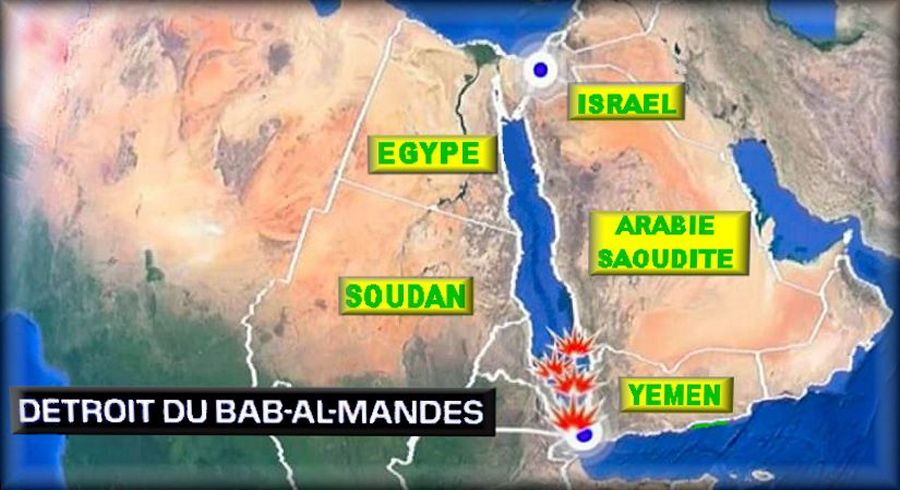
Since the start of the war on October 7, 2023 between Israel and Hamas, the Houthis, who control a large part of Yemen, have increased attacks in the Red Sea in order to slow down international maritime traffic there, claiming to act in solidarity with the Palestinians in Gaza. Proclaiming solidarity with the Palestinian people, the Houthis launched a series of attacks against commercial ships in the Red Sea, which borders Yemen.
The most spectacular attack took place on November 19, 2023, when fighters used a helicopter to kidnap the crew of a car transporter linked to an Israeli businessman. Media attention will focus on the Houthis who, buoyed by their success, will multiply their declarations: their spokesperson, Yahya Sarea, will publish numerous press releases on social networks warning the powers “linked to the Zionist entity” ( sic) of the risk now incurred by their ships cruising in the Red Sea
Although most Houthi attacks on the Red Sea have not been successful, they have forced thousands of ships to bypass this route and head towards South Africa, resulting in costs and considerable delays for maritime transport.
Israel's first ally, the United States, set up an international coalition in December to protect maritime traffic in this strategic area where 12% of world trade passes. Grouped under the banner of Operation Prosperity Guardian and under American command are the United Kingdom, Australia, Canada, France, Italy, Greece, the Netherlands, Norway, Spain, Seychelles and Bahrain [38].
With the exception of the latter, the Arab countries, or at least the countries bordering the Red Sea such as Egypt and Saudi Arabia, are among the notable absentees from this naval coalition, testifying to the reluctance of the countries of the region to take part in American military operations against an ally of Iran, moreover in the context of clashes initially triggered in retaliation for Israeli operations in the Gaza Strip.
Seizure of Iranian-made missile parts
The US military said Tuesday it had seized Iranian-made missile parts destined for Houthi rebels from a boat in the Arabian Sea, the first such seizure since the Houthis began attacks on commercial ships.
“This is the first seizure of lethal advanced conventional weapons (ACW) supplied by Iran to the Houthis since the Houthis began attacks on merchant ships in November 2023,” the Joint Chiefs of Staff said. US Army in a statement.
This operation, carried out on January 11, made it possible to seize weapons including “components of ballistic missiles and cruise missiles,” the press release said.
The missile parts were seized aboard a dhow, a traditional Arab sailboat, operated by a crew of 14 people. The boat was sunk, the US Army General Staff said.
This text also indicates that two American navy soldiers, missing off the Somali coast since Thursday evening, had taken part in the operation. They are two members of the Navy Seals, an elite commando force. “Intensive searches” are still underway to locate them, said Michael Kurilla, head of the American military command for the Middle East, Central and South Asia (Centcom).
The two sailors were on a mission with the United States 5th Fleet which operates in a wide area including the Persian Gulf, the Red Sea, the Gulf of Oman and parts of the Indian Ocean. Its headquarters is located in Manama, Bahrain.
Rebels' "largest attack" foiled last night
The US military announced that 18 drones and three missiles fired by the Houthis were shot down on Tuesday evening in a “complex” attack
This is, according to the British and American forces, “the largest attack” by the Houthis to date. It would also be the 26th carried out by Yemeni rebels targeting commercial maritime traffic in the Red Sea since mid-January.
“During the night” from Tuesday to Wednesday, the British ship HMS Diamond with American warships “successfully repelled (…) the Houthis supported by Iran”, wrote Minister Grant Shapps on the social network ex-Twitter). The US military had hours earlier said that 18 drones and three missiles fired by the Houthis had been shot down, as part of a "complex" attack.
Earlier, the US military's Middle East Command (Centcom) said the Houthis had "launched a complex Iranian-designed attack in the southern Red Sea using drones, anti-ship cruise missiles and an anti-ship ballistic missile.
The British Defense Minister announced Tuesday evening that another frigate, the HMS Richmond, was on its way to the Red Sea to counter “attacks” by the Houthis. That of Tuesday evening took place while the head of American diplomacy Antony Blinken is in Israel as part of a regional tour aimed, among other things, at preventing the war between Israel and Hamas from spreading.
Who are the Houthis?
The Houthis, also known as Ansar Allah (or "followers of God"), are a military group that currently exercises de facto control over most of northern Yemen. Formed in the 1990s, the militia is named after its founder, Hussein Badreddin al-Houthi, and follows the Zaidi branch of Shiite Islam, which makes up 20 to 30 percent of Yemen's population.
Today they control parts of northern Yemen. The turning point for the Houthi movement probably originated in the American invasion of Iraq in 2003. Inspired by the success of Hezbollah fighters, based in Lebanon and who Valiantly confronting Western forces in Iraq, the Houthis drew inspiration and support from the Lebanese group, as well as Iran, although their officials categorically deny such links.
But how did the Houthis manage to take power?
They were among the main protesters of Yemen's central government led by President A. Saleh. Faced with their growing power, Saleh launched a military campaign in 2003, supported by Saudi Arabia. Despite the apparent success of Saleh's forces in eliminating Houthi leader Hussein al-Houthi in 2004, they have repeatedly inflicted setbacks on Saleh and the Saudi army, despite billions of dollars spent by the latter.
The Yemeni civil war, which began in 2014, has seen incessant battles between the Houthis and the internationally-backed government. Since the 2011 revolution, the Houthis have struggled to oust Saleh from power, even forming an alliance with him in 2015.
However, when this alliance fell apart, the Houthis emerged as the dominant power, culminating in Saleh's assassination in December 2017.
The Houthis have also played a major role in Yemen's ongoing civil war, resulting in approximately 377,000 deaths, including many civilians. Although the southern government is internationally recognized, the Houthis have conquered much of the north of the country since seizing Sanaa in 2014. Their hold extends to the strategic port of Hudeidah, a crucial source of revenue generating up to 1 billion dollars for the Houthi government.
Access to the Red Sea?
Currently, the Houthis, numbering around 20,000 fighters, are led primarily by al-Houthi's brother, Abdul-Malik al-Houthi. He clearly announced that he would not hesitate to attack the United States and its allies. Since the Gaza war began in October, the Houthis have attempted to exploit the conflict to demonstrate their power and raise their international status.
In response to multiple attacks in the Red Sea, the United States and the United Kingdom launched their largest offensive against the Houthis since 2016. At that time, the United States struck three Houthi missile sites in response to attacks against American warships and commercial ships. This action temporarily stopped the Houthi attacks. Today, convinced of having triumphed against the Saudis and the West in Yemen, the rebels seem more determined than ever to openly defy the United States.
“The effectiveness of the naval coalition under American command and its ability to remain in a purely defensive posture will therefore prove decisive both in its success and in defusing a potential regional security escalation,” according to a specialist.
|
|
|
|
| Joanne Courbet for DayNewsWorld |
 |
NEITHER WAR NOR PEACE
SOMALILAND OR THE RESURGENCE
"OF A FROZEN CONFLICT" | 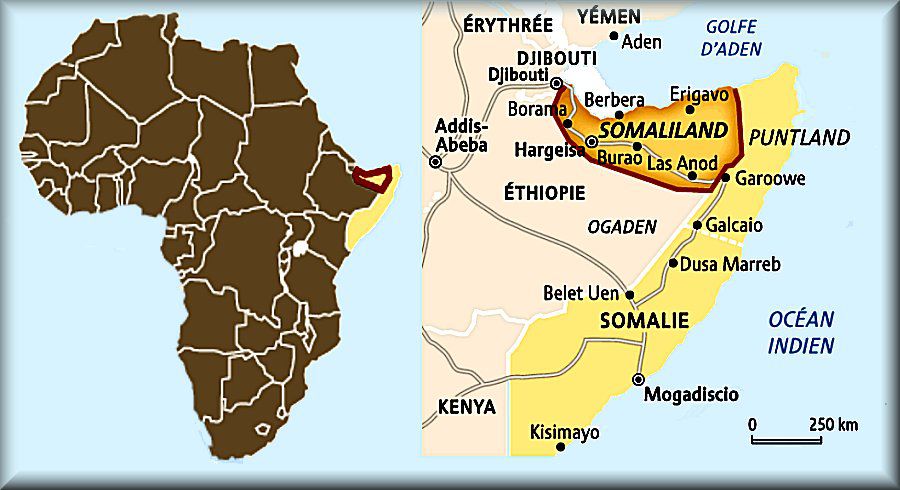
The latest upheavals in the news in Nagorno-Karabakh in November 2023 brought the term “frozen conflicts” back to the forefront. Conflicts which, by their duration, their alternation between periods of truce and confrontations, are very often forgotten or neglected even though their resolution is of crucial importance for the populations concerned.
And since Monday 01/01/2024, the Somaliland conflict has resurfaced:
Ethiopia regains access to the Red Sea after an agreement with Somaliland to the detriment of Somalia which considers its sovereignty violated.
The self-proclaimed Republic of Somaliland has just authorized Addis Ababa to use the port of Barbera for 50 years. Much to the dismay of Mogadishu. Somaliland, a semi-desert territory of 175,000 square kilometers whose independence (in 1991) has never been recognized by the international community, has just granted Ethiopia access to the Gulf of Aden.
The two signatories against Somalia
On the one hand, Somaliland aims to make the port of Berbera a regional maritime platform on the African shore of the Red Sea. This port is located on one of the busiest trade routes in the world, leading in particular to the Suez Canal. Additionally, Ethiopia will formally recognize the Republic of Somaliland.
On the other hand, Ethiopia, the second most populous country in Africa with 120 million inhabitants, benefited from access to an Eritrean port until the two countries went to war in 1998-2000 and she found herself without proper access to the outcome of this long conflict.
Since then, the Ethiopians have channeled most of their trade through Djibouti. But still in search of another maritime access, Ethiopia acquired 19% of the port of Berbera in 2018, as part of an agreement that has since fallen into disuse.
The agreement "will pave the way for realizing Ethiopia's aspiration to secure its access to the sea and diversify its access to seaports", according to the office of Ethiopian Prime Minister Abiy Ahmed. In addition, Addis Ababa will lease a military base on the Red Sea.
The agreement was greatly displeased in Somalia. The Mogadishu regime recalled its ambassador and denounced "a flagrant violation of its sovereignty and unity". The Somali authorities condemned this text as "illegal", denouncing an "Ethiopian aggression".
The Shebab Islamists, a group affiliated with al-Qaeda at war since 2007 against the federal government, also condemned the agreement.
Ethiopia has assured that the maritime agreement it signed with the separatist region of Somaliland does not transgress "any law", in response to the anger aroused in Somalia by this text deemed "illegal" against which residents of the capital demonstrated on Wednesday.
This “memorandum of understanding” signed on Monday has revived fears of a renewed tension between the two neighbors with historically tumultuous relations.
A region of 4.5 million people that prints its own currency, issues its passports and elects its government, Somaliland has been seeking international recognition since it proclaimed its independence in 1991, as Somalia plunged into chaos. from which she still has not emerged.
Concern for regional stability
The Intergovernmental Authority on Development (Igad) - an East African organization of which Ethiopia and Somalia are members - expressed its "deep concern", saying it was "aware of the potential implications for regional stability".
What characterizes these “frozen conflicts” – a term that appeared in the early 1990s to define separatist rebellions and frozen conflicts in the post-Soviet area – is not only the duration of the conflict, but also the end or at least the relative weakness of direct armed clashes between the parties. A conflict which does not cease, however, since no peace treaty or political agreement has been found. At any time, clashes could resume.
Populations between war and peace
“Frozen conflicts”, because they can restart at any moment, are sources of numerous difficulties for the populations concerned who thus live neither in peace nor in war. Generally speaking, there are no more, or few, victims, but the economic situation in these territories is often catastrophic.
The Cypriot conflict has lasted for fifty years, as has that of Western Sahara. And the list of regions and countries where wars continue grows over time. Kashmir, South Ossetia, Transnistria, Crimea, Donbass, Somaliland. Faced with these conflicts, the international community seems to be struggling.
For all parties to the conflict, the cost of resuming hostilities may be greater than maintaining the status quo, understood then as a necessary evil.
Ultimately, a “frozen conflict” never truly is. “The best analogy would be a frozen river, seemingly immobile. But under the layer of ice, the current remains as strong as ever,” reported Brian Fall, a former British diplomat in Le Monde.
And faced with the media and political silence which surrounds these areas of tension, it is very often the resurgence of clashes which reminds us that the situation was, in fact, in no way resolved.
|
|
|
|
| Abby Shelcore for DayNewsWorld |
|
|
HUMANITARIAN TRAGEDY IN LIBYA
WITH 10,000 MISSING
AFTER THE STORM DANIEL | 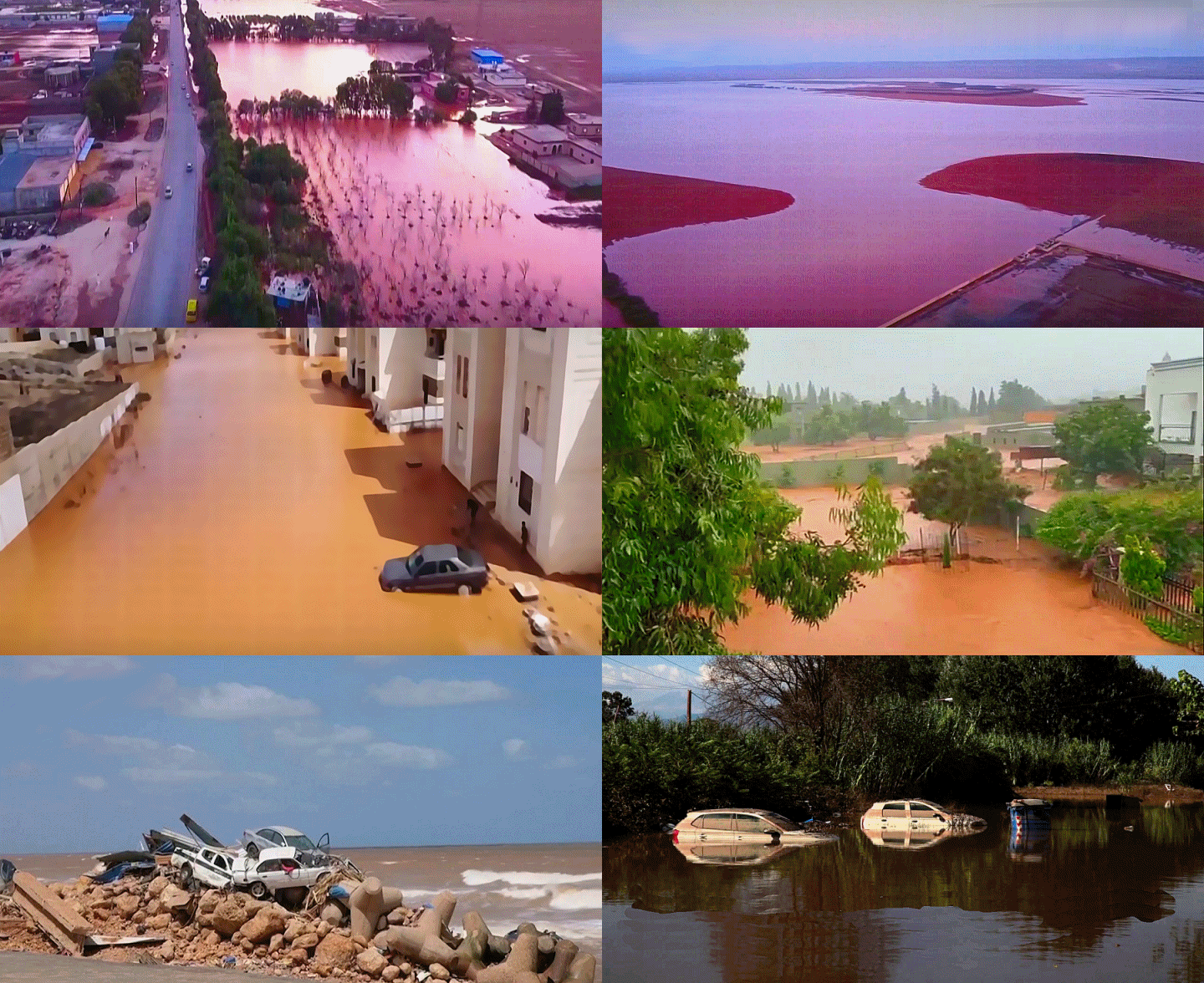
Terrential rains and floods this weekend have given way to scenes of devastation in eastern Libya. The heavy human toll continues to rise as bad weather caused by storm Daniel caused the collapse of two dams during the night from Sunday to Monday, south of the coastal town of Derna, now partly engulfed by the waves. Damage was also reported in Benghazi, Sousse, El Beïda and Al Marj.
“We do not have final figures” at the moment, Tamer Ramadan, head of the Libyan delegation of the International Federation of Red Cross and Red Crescent Societies, declared Tuesday during a press briefing. “The number of missing is close to 10,000 ".
The town of Derna devastated
An eastern government employee who arrived in Derna on Tuesday says at least a quarter of the city is destroyed. Entire neighborhoods have disappeared, giving way to sticky orange mud. It was carried by the torrents of water which poured down before disappearing into the sea. The sea, which had turned the color of mud, was throwing up bodies.
“Entire neighborhoods” of Derna were swept away, Ahmed al-Mismari, a spokesman for the Syrian National Army, said Monday. More than 2,000 people were then presumed dead, a number “likely to increase massively”.
“The city of Derna is devastated and needs international intervention and the opening of a maritime corridor because all access roads to the city are cut,” Ahmed Amdourd, a member of the municipal council, called on Monday. , on social networks. Telephone and internet communications initially stopped working, before being partially restored.
Emergency help
Forty-eight hours after the tragedy, help arrived in trickles in Derna, a town which had some 100,000 inhabitants before the disaster. The stricken city is no longer totally isolated as in the first hours of the tragedy. But the aid, coming from Benghazi, must bypass the city by the southern road, which considerably lengthens the journey.
The support dispatch is slowly starting to come together. A plane carrying 14 tons of supplies, medicines, equipment, body bags and 87 members of medical and paramedical staff left Tripoli towards Benghazi, 300 km from Derna, the government of national unity led by Abdel Hamid announced on Tuesday Dbeibah.
The disinterest of international donors ?
General Khalifa Haftar, head of the army which controls the east of the country, supported by the United Arab Emirates and Egypt, also mentioned sending emergency aid. Libyan territory has been divided for several years between areas controlled by the internationally recognized government of Dbeibah, based in Tripoli, and the troops in the east of General Haftar
President Al-Sissi's Egypt announced the sending of humanitarian aid to Libya, but also to Morocco ravaged by an earthquake on Friday. Turkish rescue teams also arrived in the city on Tuesday, according to Libyan television channel Al-Masar.
“We hope to launch assistance operations as quickly as possible but our response will depend on the funds we manage to raise,” explains Ahmed Bayram, in charge of preparing the response to the crisis at the Norwegian Refugee Council. “Our main fear is the disinterest of international donors regarding the situation in Libya. »
This dramatic event is directly linked to storm Daniel. This subtropical Mediterranean cyclone hit Turkey, Greece and Bulgaria a week ago before moving towards Libya. This storm is the fault of an "omega blockage", due to the shape similar to the Greek letter Ω
A phenomenon that moves
It is characterized by an anticyclone in the center, with very high temperatures, those which plagued France for several days. On the extremities, we find significant rain and cool temperatures. The dynamics of the Iberian cold drop are impressive, explaining the torrential rains over Spain and the associated floods. The same goes for Turkey and Greece. The same phenomenon has since moved to Libya.
Libya's National Meteorological Center said the storm reached its peak in northeastern Libya on September 10, with strong winds gusting between 70 and 80 km/h at maximum. Torrential rains averaged 150 to 240mm per hour, with up to 414mm of precipitation locally, a record.
The collapse of the two water retention dams in Wadi Derna
In the stricken city, anger begins to rise. Photos are circulating showing the dilapidated condition of the two water retention dams in Wadi Derna – the wadi that runs through the town of Derna, on the east coast of the Mediterranean – which have failed. Powerful torrents then destroyed the bridges and swept away entire neighborhoods with their inhabitants on either side of the wadi, before pouring into the sea. More than the rain caused by storm Daniel, it was the water from these dams which is responsible for the destruction of part of the port city, according to specialists.
The various wars and the division of the country into two political entities since 2014 have accelerated the dilapidation of these infrastructures.
|
|
|
|
| Britney Delsey for DayNewsWorld |
|
DEADLY EARTHQUAKE IN MOROCCO
MORE THAN 2900 DEATHS | 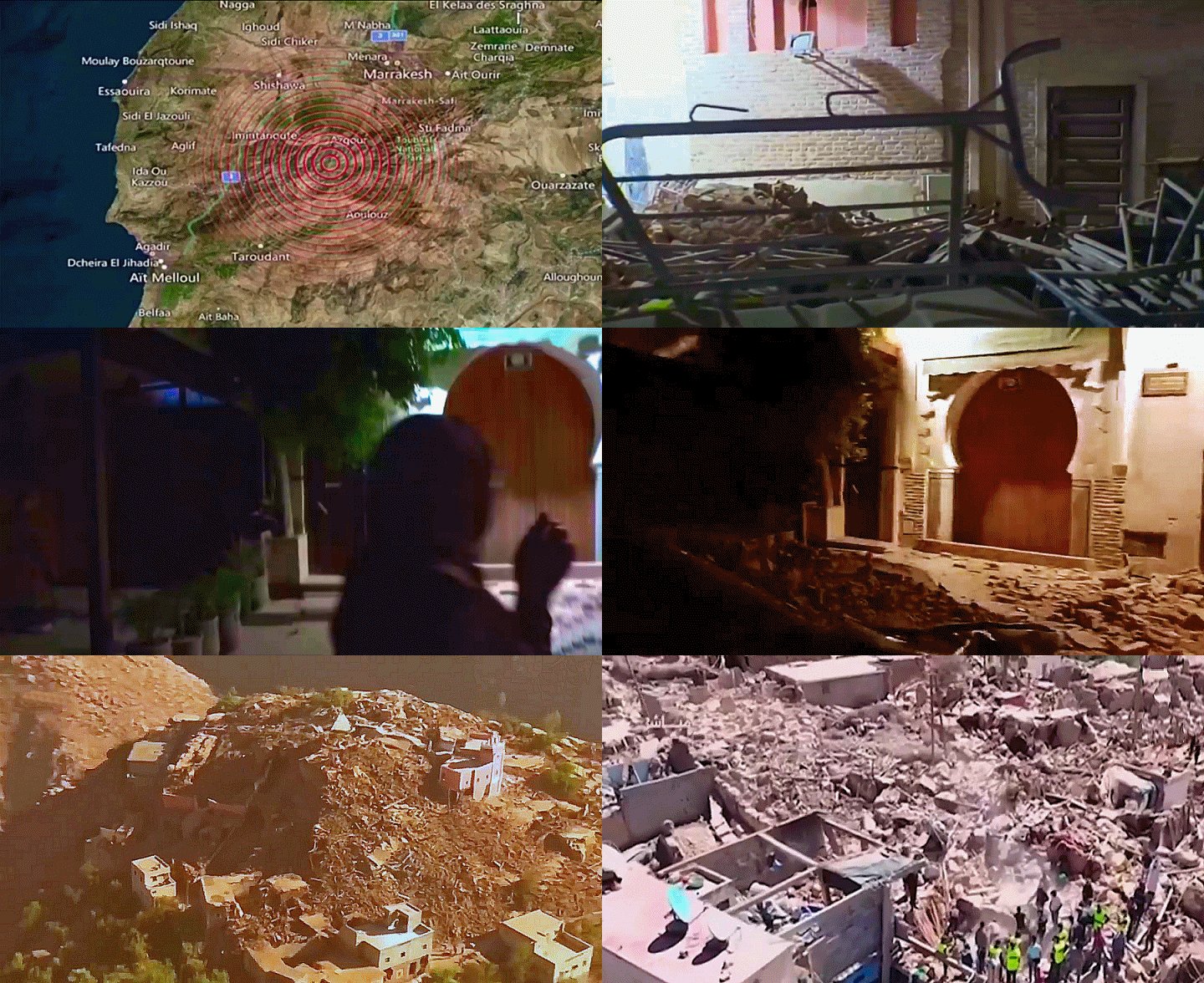 Friday evening, the deadliest earthquake in the kingdom for more than sixty years left nearly 2,900 dead and devastated entire villages of earth or clay houses in a mountainous area of the High Atlas, where the landslides further rendered difficult access to the affected villages. A race against time is still underway to find survivors. More than 72 hours after the tragedy, rescue operations will continue this Tuesday to try to save possible survivors, even if the chances of survival are diminishing day by day. Friday evening, the deadliest earthquake in the kingdom for more than sixty years left nearly 2,900 dead and devastated entire villages of earth or clay houses in a mountainous area of the High Atlas, where the landslides further rendered difficult access to the affected villages. A race against time is still underway to find survivors. More than 72 hours after the tragedy, rescue operations will continue this Tuesday to try to save possible survivors, even if the chances of survival are diminishing day by day.
Tremors felt across Morocco
The earth shook in central Morocco, in the region of Marrakech, at a magnitude of 7 on the Richter scale, on the night of Friday 8 to Saturday 9 September. The epicenter of this earthquake is located southwest of the tourist city of Marrakech, 320 km south of the capital Rabat, according to the American Institute of Geophysics (USGS). The number of victims is constantly increasing, significant damage is reported. The latest report from the Moroccan authorities shows 2,862 deaths, according to the latest report from the Ministry of the Interior.
Relief diplomacy
Catherine Colonna, the Minister of Foreign Affairs, announced on Monday aid of 5 million euros to support NGOs, French or others, already on site. She especially denounced the "bad controversy" emerging after Morocco's choice to accept aid offered by four States (Spain, United Kingdom, Qatar, United Arab Emirates), but not that of France, nor others countries that have reached out.
Some see it as a snub inflicted on France for its very tense relations with Morocco, around questions of migration, freedom of speech, Western Sahara and Algeria. However, the kingdom has not officially refused any aid, present or future, from France, and the choice of countries called as a priority is intended to be dictated by pragmatism.
“For example, Qatar has the best dogs, the United Kingdom the best drones,” explains Abdelmalek Alaoui, president of the Moroccan Institute of Strategic Intelligence (Imis), in Rabat.
In fact, significant resources are being mobilized to come to the aid, particularly isolated villages in the High Atlas.
Because few villages were spared by the earthquake around Moulay Brahim and Taloudennt. The villages of Asni and Ouiargane are almost completely destroyed. Traditional houses, built of stone and clay, are particularly vulnerable.
Significant resources have been mobilized in these mountains to help the victims. The inhabitants had to, at first, fend for themselves, due to a lack of a passable road, then, during the night, the emergency services were finally able to access the affected area. Ouarzazate, Azilal, Chichaoua and Taroudant are the towns most most affected in the province, but the earthquake was felt as far away as Casablanca and Rabat.
Royal gendarmerie helicopters were sent to the most isolated villages. Moroccan rescuers, supported by foreign teams, are trying to speed up searches to find possible survivors and provide shelter to hundreds of families who have lost their homes.
The Moroccan Ministry of National Education announced on Monday that 530 schools and 55 boarding schools were damaged.
Seven teachers died and 39 others were injured, the minister also announced in a press release published on Instagram. Classes were suspended in 42 localities, including the provinces of Chichaoua, Taroudant and Al Haouz.
This earthquake is the strongest ever measured in Morocco, and the deadliest since the one that destroyed Agadir, on the west coast of the country, in 1960, causing nearly 15,000 victims. |
|
|
|
| Carl Delsey for DayNewsWorld |
|
|