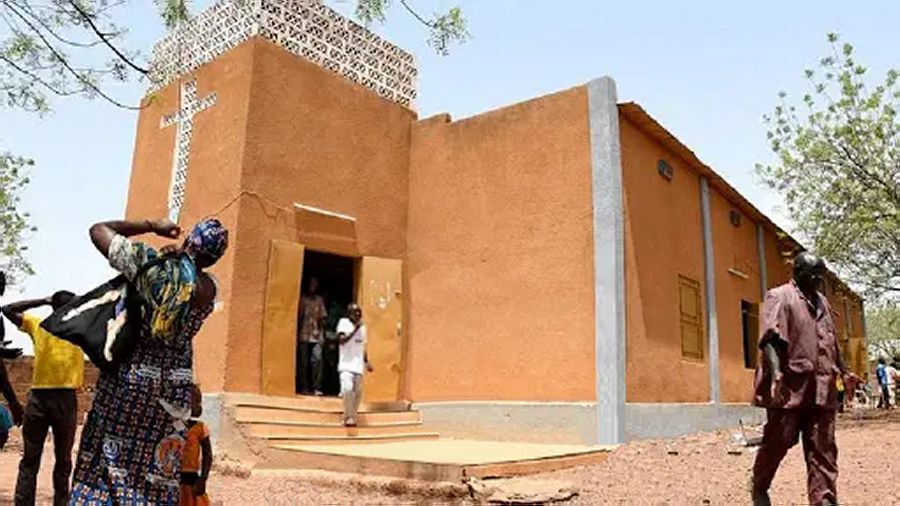
36 CIVILIANS KILLED IN A TERRORIST ATTACK
IN BURKINA FASO
|
| The horror occurred again in Burkina Faso with the death of 36 civilians in a terrorist attack. The assault took place on a market.
Thirty-six civilians were killed Monday in an attack on villages in northern Burkina Faso, authorities said on Tuesday (January 21st).
"The Burkinabe government has learned with dismay and indignation at the death of 36 Burkinabés in the province of Sanmatenga, following a terrorist attack," said Minister of Communication Remis Fulgance Dandjinou in a press release. 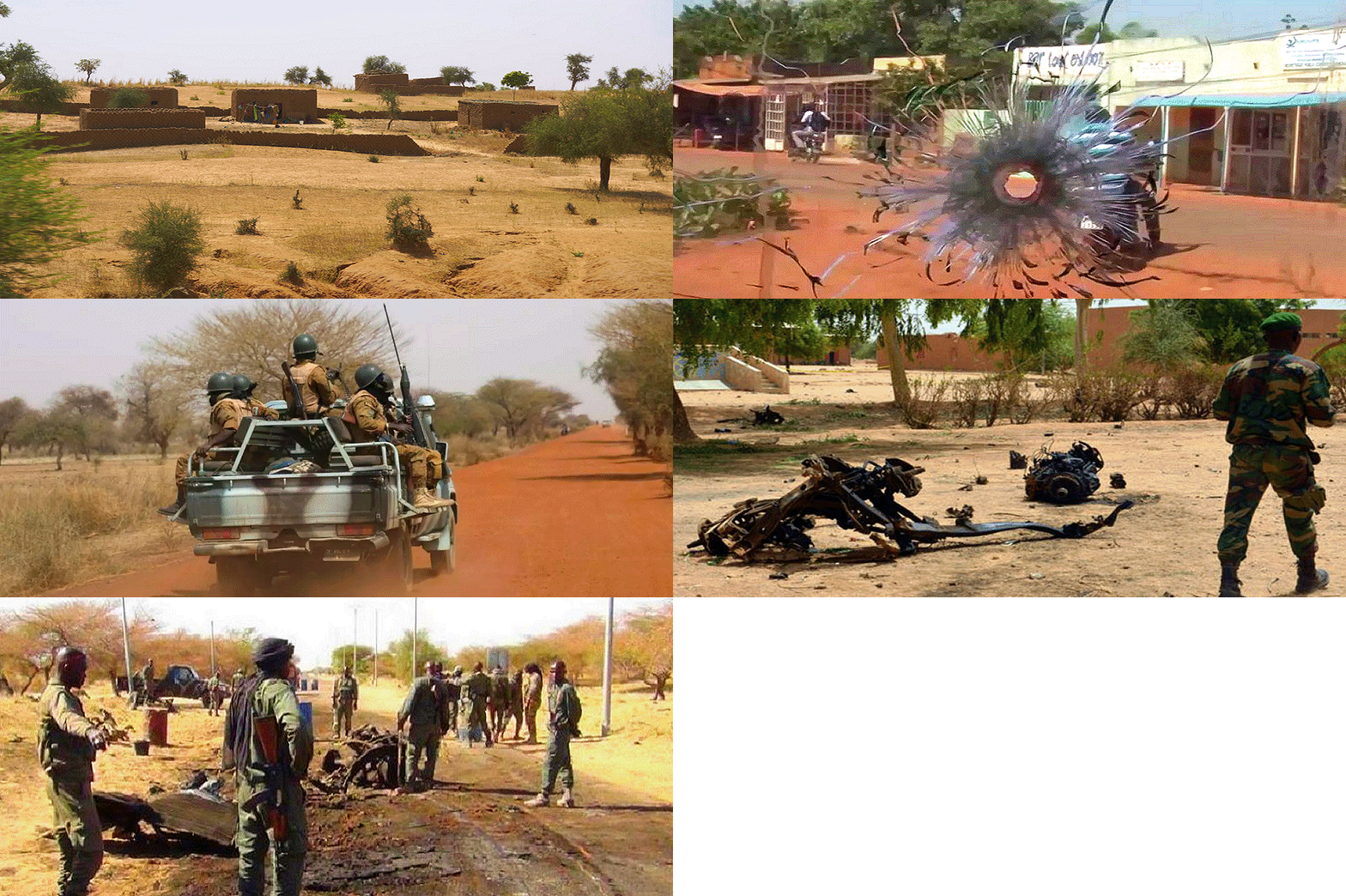
"On Monday January 20, 2020, an armed terrorist group broke into the Nagraogo market, killed 32 of our fellow citizens there, burned the market and, in its fall, killed four others in the village of Alamou. This attack also left three people injured. "
The president, Roch Marc Christian Kaboré, decreed a “national mourning of forty-eight hours going from Wednesday January 22 to Thursday January 23”
Faced with these "repeated attacks" against the populations, the government launched a call for "frank collaboration with the defense and security forces and the strengthening of solidarity between Burkinabés".
Also, the Parliament unanimously adopted a law on Tuesday January 21, 2020 allowing the recruitment of local volunteers to support the fight against jihadists. The idea was launched by President Kaboré in November 2019, after the attack on a convoy of a Canadian mining company, which had killed 38 people, in the East.
Burkina Faso, bordering Mali and Niger, is facing jihadist attacks, which have left more than 750 dead and 560,000 displaced since 2015.
According to the United Nations, jihadist attacks in Mali, Niger and Burkina killed 4,000 people in 2019.
Security experts presented a draft new security policy for the country to President Kaboré on Monday.
The French Minister of Armies, Florence Parly, announced on Monday in Bamako, Mali, new military operations to come in the so-called three-border area (Mali, Burkina Faso and Niger), where France and its allies are concentrating their efforts against jihadist expansion.
|
|
|
|
|
|
|
|
| Andrew Preston for DayNewsWorld |
 |
THE BERLIN SUMMIT ON LIBYA EAST
A LITTLE STEP FORWARD
|
| The Berlin summit, which brought together Sunday January 19 delegations from eleven states and four international organizations - United Nations (UN), European Union (EU), Arab League and African Union (AU) -, concluded with the adoption of a joint declaration opening a hope of appeasement.
The document calls for a "permanent cease-fire" in Libya, to "refrain from any interference in the armed conflict" and to relaunch the "political process" shattered by the Marshal's attack on Tripoli in April 2019 dissident Khalifa Haftar  . .
Finally, respecting the UN arms embargo, no longer interfering in Libya's internal affairs, this is what the 11 leaders participating in the Berlin conference finally promised. The important thing for Angela Merkel was to finally speak with one voice to support the precarious truce between the two opposing forces in Libya: "We have received the commitment of all participants, they will no longer provide any support to Libya, and should also stop all operations while the ceasefire lasts. Said the Chancellor.
But it is indeed "a small step forward" for Germany, "a very useful conference" for Russia.
"For a sustainable cease-fire"
Fayez al-Sarraj, the head of the government of national unity recognized by the UN in Tripoli, and his rival who controls the eastern Libyan, Marshal Khalifa Haftar, are fighting to take effective control of this oil-rich country and in gas.
If they have not met physically, the two Libyan headliners present in Berlin, Faïez Sarraj, the head of government of "national agreement" (GAN) based in Tripoli, and Khalifa Haftar based in the region of Benghazi ( est), they were both present in Berlin.
Marshal Haftar met Emmanuel Macron who is concerned about the dispatch of pro-Turkish Syrian militiamen and Turkish soldiers in support of Fayez al-Sarraj whom Turkish President Recep Tayyip Erdogan has also met.
A new military committee »
The two rivals, however, agreed to form a committee to work in the coming days in Geneva to establish a permanent ceasefire, as explained by the head of Russian diplomacy, Sergei Lavrov:
"The new military committee, made up of five representatives from Sarraj and Haftar, will develop, under the supervision of the United Nations, concrete confidence-building measures that will make the ceasefire sustainable. "
The conflict ravaging Libya
Libya has never been able to find stability since the death of General Gaddafi in 2011. In the past nine months, some 280 civilians and more than 2,000 combatants have been killed, according to the UN. Nearly 150,000 Libyans have been forced to flee the fighting.
Between the recent arrival on the ground of Turkish soldiers, the suspected presence of Russian mercenaries and the continuous influx of weapons delivered by several states, the international community fears that the conflict will escalate in this country plunged into chaos since 2011.
No politician has managed to take control of the country since the fall of Muammar Gaddafi in 2011.
Two men go to war: Marshal Haftar, the head of the "Libyan National Army" (ANL) controls the east of the country and part of southern Libya.
Supported by Egypt and the allies of Saudi Arabia, it has been trying for months to seize Tripoli, in order to dislodge Fayez al-Sarraj, the Prime Minister recognized by the UN.
On the ground, clashes between the two camps are reported almost daily. And the Haftar camp has blocked Libyan oil exports , the country's only real source of income, on the eve of the Berlin summit.
In this context, Fayez al-Sarraj asked Berlin to send an "international military force" under the aegis of the UN to his country.
Several leaders, including heads of government from Italy and the UK, have said they are open to the idea of sending an international mission, or even a force, to help guarantee a cease-fire.
The number one objective of this summit under the aegis of the UN was to put an end to multiple foreign interference in this state where the clashes are fueled by appetites around its large oil reserves, regional political rivalries and games influence. And relaunch the peace process to prevent Libya from becoming a "second Syria". Objective met even if uncertainties remain.
"We had no illusions about the difficulty of the path we have embarked on," admitted Angela Merkel.
|
|
|
|
|
|
|
|
| Abby Shelcore for DayNewsWorld |
|
|
IN ALGERIA THE PRESIDENT HAS PENALTY ELECTED
CONTESTED BY THE STREET
|
| Nearly ten months of a massive and unprecedented popular protest having won President Abdelaziz Bouteflika, the Algerians voted on Thursday for his successor.
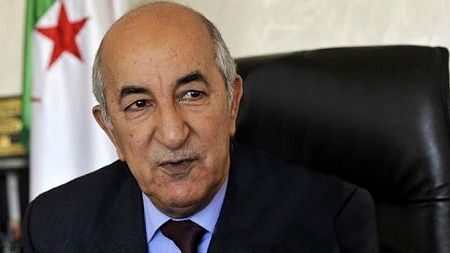 Abdelmadjid Tebboune, 74, was elected president in the first round of the election on Thursday, December 12, 2019 in Algeria with 58.15% of the vote, according to preliminary results announced on Friday by Mohamed Charfi, the president of the National Authority independent of elections (ANIE). Abdelmadjid Tebboune, 74, was elected president in the first round of the election on Thursday, December 12, 2019 in Algeria with 58.15% of the vote, according to preliminary results announced on Friday by Mohamed Charfi, the president of the National Authority independent of elections (ANIE).
Presented as the preferred candidate of the army, the septuagenarian, former close to the deposed president, won after a vote marked by a record abstention.
The participation rate was indeed 41.13%, the lowest of all the pluralist presidential elections in the country's history.
There will be no second round in Algeria.
A 74-year-old president.
Abdelmadjid Tebboune was presented by the Algerian press as the favorite and the preferred candidate of the army. Of the five candidates in the running, all born in the house of the regime, he passed for the closest to the strong man of the country, the general of the army Ahmed Gaïd Salah and Bouteflika. But the former Prime Minister sought to get rid of this image and presented himself as the "candidate of the people".
"Your mandate is a born dead mandate. "
In the afternoon, a demonstration against the newly elected president began in downtown Algiers. The latter reacted, saying he wanted to "reach out" to "Hirak", the unprecedented popular protest movement that has been shaking Algeria for almost ten months. But the demonstrators marched en masse, after Friday prayers, to reject this ballot, chanting that "the vote is rigged, your elections do not concern us and your president will not govern us".
The protesters continue to demand the end of the “system” in charge since independence, in 1962, and the departure of all the former supporters or collaborators of the 20 years of presidency Bouteflika.
|
|
|
|
|
|
|
|
| Boby Dean for DayNewsWorld |
|
54 DEATH IN TERRORIST ATTACK IN MALI
|
|

On Friday, November 1, 2019, the Malian army suffered heavy losses in the jihadist attack on one of its military camps in the north-east of the country.
The provisional balance sheet records 54 deaths, including one civilian. Reinforcements were dispatched near the border with Niger to track down the attackers.
Fifty-three Malian soldiers and a civilian were killed Friday, November 1, in a "terrorist attack" against a military camp in Indelimane, near the border with Niger, announced Mali's Minister of Communication Yaya Sangaré on Twitter. This attack has not been claimed.
With the attack on Friday, the Malian army suffers one of its heaviest losses for several years.
Forty soldiers were killed in two jihadist attacks on September 30 in Boulkessy and October 1 Mondoro, localities in the south of the country, near Burkina Faso, according to a report of a Defense Ministry official, according to several sources had been undervalued.
"The situation is under control. Raking and the process of identifying the bodies are continuing, "added the minister, reporting" ten survivors "and" significant material damage "in the locality of Ansongo, in the sector of Menaka (South-East) .
The Malian government announced on Friday night that it "condemned" this "terrorist attack that killed, wounded many and material damage on the side of the National Defense and Security Forces," according to a statement "Reinforcements have were dispatched to secure the area and track down the attackers, "added Bamako, without giving details of them. Malian soldiers are also reported missing.
Northern Mali had fallen in March-April 2012 under the guise of jihadist groups linked to al-Qaeda, thanks to the defeat of the army against the rebellion dominant Tuareg, first allied with these groups, which then ousted him.
The jihadists were largely driven out or dispersed following the launch in January 2013, at the initiative of France, of a military intervention, which continues.
However, jihadist violence not only persisted, but spread from north to central Mali, then to neighboring Burkina Faso and Niger, often intermingling with inter-communal conflicts that left hundreds dead.
|
|
|
|
|
|
|
|
| Britney Delsey for DayNewsWorld |
|
|