COVID A VERY CONCERNING OUTBREAK OF CASES
IN AFRICA
|

The trajectory of Covid cases in Africa is "very, very worrying," said the WHO emergency manager on Friday, with the spread of more contagious variants and a dangerously low vaccination rate.
According to data collected by the WHO, there were 116,500 new infections in Africa during the week ended June 13, 25,500 more than the previous week.
Dr Ryan pointed out that seen as a whole the continent did not look so badly off, accounting for just over 5% of new cases recorded worldwide last week and 2.2% of deaths. But in some countries infections have doubled and they are on the rise by more than 50% in others. The third wave of Covid-19 cases "is amplifying and accelerating" in Africa with the variants, had already alerted Thursday the office of the World Health Organization (WHO) on the continent, calling for an increase in the supply of vaccines.
Stronger impact
Like Dr Matshidiso Moeti, WHO Director for Africa, Dr Ryan pointed out that the continent is much more vulnerable because it has received so few anti-Covid vaccines, when Europe or the States United have high immunization rates that allow them to return to more normal lives with dramatic declines in infections and deaths.
1% of vaccinated
“The stark reality is that in an area with multiple variants that are more contagious and potentially have a stronger impact, we have left large parts of the population and vulnerable populations in Africa deprived of vaccine protection, while health systems are already fragile, ”said Dr Ryan. "This is the result of an unfair distribution of vaccines."
This is particularly true for Africa where only 1% of the population is fully immunized. Africa had so far been hit less hard by the pandemic than other regions but that does not mean that this will remain the case.
"It is totally premature to think that the next wave in Africa will be just a short rain and not a storm," the doctor said. "I think we have to take what's going on in Africa very, very seriously ".
|
|
|
|
| Carl Delsey for DayNewsWorld |
 |
HISTORY OF FRANCO-TCHADIAN FRIENDSHIP
EMMANUEL MACRON AT THE OBSEQUES
FROM PRESIDENT IDRISS DEBY |
The image may look very "Françafrique", as the Parisian underlines it, Emmanuel Macron will attend this Friday morning in N'Djamena, with the Minister of the Quai d'Orsay Jean-Yves Le Drian, at the funeral of the "Marshal of Chad" , President Idriss Déby Itno, killed in action against the rebels of the Fact in the north of the country, then on the scene of the fighting to command the armed forces. I “Idriss Déby, a“ warrior ”had defeated the powerful army of Libyan colonel Gaddafi with his Toyota pick-ups, and overthrew the uncontrollable President Hissène Habré. No French president of the Fifth has ever failed this essential ally in Africa ”.
This professional soldier had just been re-elected for a sixth term at the head of Chad during the presidential election of April 11. He had received 79.32% of the vote according to the provisional official results released on April 19, while his injury had not yet been made public. A plebiscite, while nearly 65% of voters had gone to the polls.
An operation at the border with Libya
Idriss Déby was seriously injured when he went to direct himself, at the age of 68, the fighting of his army in the north of the country against a column of rebels infiltrated, as often, from Libya, several hundred kilometers from N'Djamena . It was there that he was shot, earlier in the weekend. “He took the lead in the heroic fight against the terrorist hordes from Libya. He was wounded during the clashes and died once he was repatriated to N'Djamena ”, detailed on state television the army spokesman, General Azem Bermandoa Agouna. On April 19, Chadian forces claimed to have killed 300 rebels in fighting at the border. Five soldiers had lost their lives there.
A transition ensured by his son
After the death of Chadian President Idriss Déby Itno, who ruled his country for 30 years with an iron fist, his son General Mahamat Idriss Déby is the new strongman of Chad: he takes the head of a military junta and concentrates all the powers. Mahamat Idriss Déby, a young general of the Chadian army aged 37, dissolved the National Assembly and the government. He now occupies the functions of "President of the Republic, Head of State and Supreme Head of the Armed Forces" according to the transitional charter. This 37-year-old four-star general, who has proven himself at the head of the contingentChadian deployed in 2013 in Mali to support the French military intervention "Serval", had been appointed by his father to head the General Directorate of Security Services of State Institutions (DGSSIE), heir to the presidential guard, the best equipped and best organized elite corps in the Chadian army.
"This nevertheless reflects a certain continuity, since it is a military leader who succeeds another soldier, who is more from the same family", reacts Caroline Roussy, researcher at the Institute of International and Strategic Relations (Iris) . And to continue: "What really happened? We have very little information on the circumstances of his death. The transition was resolved extremely quickly, along with the announcement of his death. We can ask ourselves questions. "
For many opponents who have always been repressed by Idriss Déby's regime, this seizure of power is, however, nothing more than a “coup d'état”.
"An institutional coup" for the opposition
Voices are already rising from the ranks of the opposition but also from the army to demand the organization of a national and inclusive dialogue.
About thirty Chadian opposition parties denounced Wednesday "an institutional coup", and called "for the establishment of a transition led by civilians (...) through an inclusive dialogue". The opposition also called for "not to obey the illegal, illegitimate and irregular decisions taken by the Military Transition Committee, in particular the transition charter and the curfew".
Threats are therefore hanging over the new strongman of the regime from all sides. A Zaghawa, like his father. A career soldier, like his father. Young, of course. But Idriss Déby himself came to power at the age of 38, at the head of a rebellion.
With the death of Chadian President Idriss Déby Itno on Tuesday, France loses a pillar of the fight against terrorism in the Sahel. While Chad is the largest contributor to the allied G5-Sahel force, specialists fear that its military commitments will be called into question as Paris plans to gradually reduce its military footprint in the region.
“France is losing an essential ally”.
It is with these words that the French Minister of the Armed Forces, Florence Parly, reacted to the death of the Chadian President, Idriss Déby Itno, on Tuesday, April 20.
The man, who ruled the country with an iron fist for thirty years, was a solid partner of Westerners, Paris in the lead, in the fight against jihadism in the Sahel. Military cooperation between France and Chad is old. The French army has been present there almost permanently since the country's independence in 1960.
The future of Operation Barkhane at stake
Chad is thus the first country to support France in the Sahel for the operation “Serval”, launched the same year to stop the advance of jihadist groups towards the south of Mali, which then became “Barkhane”. A dangerous destabilization of the country for the region, would be a nightmare scenario for France too. The future of Operation Barkhane, whose CP is based in N'Djamena, would be at stake. At the beginning of the year, Chad sent a battalion of 1,200 very seasoned soldiers alongside the Barkhane force against the jihadists. in the “three borders” region (Mali-Niger-Burkina Faso).
“Chad is therefore a strategic lock between very unstable areas, Libya, Sudan, the Central African Republic, the Sahel, Boko Haram, etc., lists a soldier close to the issue. Idriss Déby has always been personally and actively involved in these crises ”.
"A strategic lock between very unstable areas"
Chad is also one of the pillars of the G5-Sahel joint force - also made up of Mauritania, Mali, Burkina Faso and Niger - a military coalition that has supported the French military since 2017. On its own, the country provides nearly a third of the armed forces, 1,850 soldiers out of the 6,000 deployed. It is also the only G5 Sahel country to have deployed a battalion outside its national borders, in Niger, in the so-called “three borders” region known to serve as a refuge for Sahelian jihadist groups. In addition to its involvement in the G5-Sahel, the country provides the second largest contingent within the United Nations Mission in Mali (Minusma). The Chadian army a driving force against the jihadist threat
Idriss Déby had made the Chadian army a driving force against the jihadist threat in the Sahel and Lake Chad region. And for Nigeria, a giant of 200 million inhabitants, his death could have serious consequences in the fight against Boko Haram and against the Islamic State group in West Africa (Iswap). If Chad sinks into chaos, it will have direct consequences for Nigeria and Niger. Chad under Déby has been a bulwark against the influx of terrorists from the Sahel to the Lake Chad region. A period of worrying uncertainty begins with the sudden disappearance of Idriss Déby.
"A period of floating"
However, these all-out military commitments could be called into question with the death of President Déby, experts note. The death of the Chadian president risks “introducing uncertainty,” says Yvan Guichaoua, researcher at the University of Kent.
The succession to the head of power in Chad and the fight against rebels from the north will also have a direct impact on security in the Lake Chad region. "It is almost certain that we will see a battle of succession" in N'Djamena, notes the Nigerian risk consultancy firm SBM Intelligence in a report published this week: "This means that the insurgents will have plenty of time to consolidate their base. on the lake and will be able to move around the area to attack the Nigerian army.
The country's stability threatened
On Tuesday, the CMT made a good commitment to organize “free and democratic” elections, but at the end of a “transition period” of eighteen months. This council brings together, in addition to Mahamat Déby Itno, the base of the old system, ie fifteen generals in all. Speaking on state television, the army spokesman, General Azem Bermandoa Agouna, promised that "new republican institutions will be put in place at the end of the transition by the organization of free elections. , democratic and transparent ”.
Will the new strongman of Chad have the leisure to lead this transition to the end? How will he manage to maintain the unity of a system that was already cracking despite the authority and charisma of his father? The resurgence of old rebellions and the appearance of new groups threaten the stability of the country.
Especially since the Front for Alternation and Concord in Chad (FACT), after announcing the day before that his men had operated a tactical withdrawal, the leader of the rebellion Mahamat Mahdi Ali announced that he was marching on the capital city.
"If the constitutional order had been respected, we would have stopped and been ready to discuss.
But there, all the institutions were dissolved and we do not recognize the military council that was put in place. A succession ensured by the son of Déby, it is white bonnet and white bonnet ".
|
|
|
|
| Garett Skyport for DayNewsWorld |
|
|
IN JORDAN WAVE OF ARRESTS
ON THE BACKGROUND OF THE STRUGGLE FOR POWER |
According to the "Washington Post", Prince Hamza was under house arrest after the discovery of a "complex and far-reaching conspiracy" against King Abdullah II.
This plot "included at least one other member of the royal family as well as tribal chiefs and members of the country's security department," added the American daily, citing a senior official in a Middle Eastern intelligence service. East.
 In a statement, the Jordanian chief of staff, General Youssef Huneiti, had specified that Prince Hamza had been "called to stop activities that could be used to undermine the stability and security of the kingdom" but had denied his arrest. In a statement, the Jordanian chief of staff, General Youssef Huneiti, had specified that Prince Hamza had been "called to stop activities that could be used to undermine the stability and security of the kingdom" but had denied his arrest.
The state-run Petra news agency said authorities had arrested a former king's adviser, Bassem Awadallah, and an unknown number of others on “security concerns”. “No one is above the law. Jordan's security and stability come first, ”General Huneiti wrote in the statement. "All the measures that have been taken have been taken within the framework of the law and after a thorough investigation," he added.
A "slander"
The former crown prince and half-brother of King Abdullah II of Jordan, Prince Hamza Ben Hussein, announced that he had been "under house arrest" in his palace in Amman, after being accused by the army of activities against "The security of the kingdom".
In a video transmitted to the BBC by his lawyer, Prince Hamza denied having taken part in a conspiracy and accused the authorities of his country of "corruption" and "incompetence". His mother, Queen Noor, fourth and last wife of the former King Hussein, who died in 1999, denounced on Twitter, Sunday, a "slander" and affirmed "to pray that truth and justice prevail for all innocent victims ”of these arrests.
"I am not part of any plot or any evil organization", defended the prince in the video, regretting that it is no longer possible, according to him, to express his opinion or to criticize the authorities " without being intimidated, harassed or threatened ”. The Jordanian power thinks that "its personal interests , its financial interests, its corruption is more important than the life, the dignity and the future of the ten million people who live here", again accused Prince Hamza.
Stripped of its title
Hamza is the eldest son of King Hussein and his American wife, Queen Noor, née Lisa Halaby. In accordance with the wishes of his father, who died in 1999, he was appointed crown prince when Abdullah became king. But in 2004, Abdallah stripped it of the title and gave it to his eldest son Hussein.
Two allies of Jordan quickly lent their support to King Abdullah II on Saturday.
"King Abdullah is a key partner of the United States, and he has our full support," said US State Department spokesman Ned Price. In Saudi Arabia, the royal palace also tweeted its “full support (…) for the decisions and measures taken by King Abdullah II and Crown Prince Hussein to safeguard security and stability” in the country.
Qatar, Kuwait, Bahrain and Oman, other members of the Gulf Cooperation Council (GCC) have given their support in very similar terms. The wealthy Gulf countries are important partners of Jordan, which depends heavily on international aid. In addition, Egypt expressed its "total solidarity and its support for the Jordanian Hashemite kingdom represented by his majesty Abdallah II", according to the spokesperson of the presidency, Bassem Rady.
The prince's house arrest and arrests took place a few days before the celebration of the kingdom's centenary.
On April 11, 1921, King Abdullah, ruler of the new state of Transjordan, formed his first government, after the creation of the emirate in March 1921, alongside Palestine during the British Mandate.
|
|
|
|
| Garett Skyport for DayNewsWorld |
|
There are no translations available.
TERRORISME AU MOZAMBIQUE PALMA TOMBEE AUX MAINS DES DJIHADISTES
|
La petite ville de Palma, dans le Nord, est tombée aux mains des djihadistes du groupe Al-Shebab, après plusieurs jours d’affrontements avec l’armée.
Depuis samedi, l'extrême nord du Mozambique a basculé. 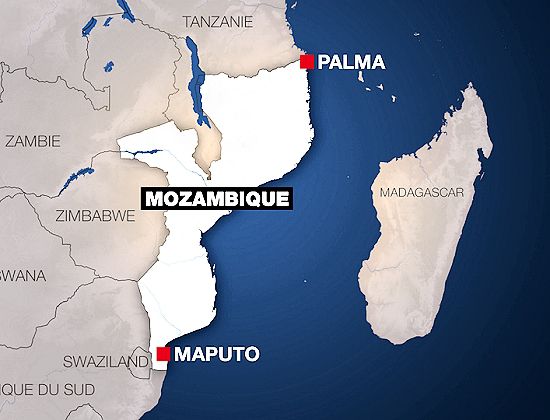 La ville portuaire de Palma est tombée aux mains d'un groupe djihadiste connu sous le nom de Ahlu Sunna wal Jamaa, ou La ville portuaire de Palma est tombée aux mains d'un groupe djihadiste connu sous le nom de Ahlu Sunna wal Jamaa, ou
« Al-Shebab » ( c'est-à-dire « les jeunes » en arabe).
Cela fait trois ans que cette guérilla djihadiste met sous pression cette région frontalière avec la Tanzanie avec une montée en puissance.
Depuis août 2020, elle contrôle déjà le port stratégique de Mocimboa da Praia, crucial pour l'arrivée du matériel nécessaire aux installations gazières et qui n'a jamais été repris par les militaires mozambicains en dépit de plusieurs tentatives, ces djihadistes sont désormais maîtres d'une bonne partie de la zone côtière.
Violence inouïe et décapitations
L’attaque contre Palma cette ville du bord de l’océan Indien avait débuté mercredi 24 mars 2021. Mercredi, les groupes armés ont lancé une attaque d'envergure contre Palma, simultanément sur trois fronts, le jour même où Total annonçait la reprise des travaux du site d'exploitation gazière, censé être opérationnel en 2024. La ville est tombée entre leurs mains samedi, après trois jours de combats. Le nombre de victimes parmi les civils et les combattants reste inconnu.
Lundi 29 mars au matin, la ville de Palma était toujours plongée dans la violence de l' attaque des militants du groupe djihadiste Ahlu Sunna wal Jamaa, appelés « Al-Chabab ». Au soir du sixième jour de cette attaque, dimanche, le bilan devait déjà se monter à « plusieurs dizaines de victimes », selon un porte-parole de l’armée mozambicaine. Des témoins ont raconté à l'ONG Human Rights Watch qu'ils ont tiré « tous azimuts sur les gens et les bâtiments », laissant une traînée de corps dans les rues.
Un bilan incertain, des milliers d'habitants en fuite
Ce lundi 29 mars, plusieurs agences de l'ONU se sont réunies dans la matinée pour coordonner leurs efforts et organiser le transport vers des zones sûres de milliers de civils ayant fui la ville pour se réfugier dans les forêts et plages environnantes. Mais aussi, en masse, vers le site gazier piloté par Total. Selon une source participant aux opérations d'évacuation, il y aurait entre 6 000 et 10 000 personnes réfugiées à l'intérieur du site ou demandant à l'être, une situation compliquée à gérer d'autant que les travaux de la construction du site gazier, censé être opérationnel en 2024, sont à l'arrêt depuis plusieurs mois.
Les Shebabs terrorisent le nord du Mozambique
Tout a commencé en octobre 2017. Ce jour-là, une trentaine d'hommes armés lancent un raid à l'aube contre trois postes de police à Mocimboa da Praia, ville portuaire de la province de Cabo Delgado, frontalière de la Tanzanie, et à majorité musulmane. C'est le début d'une sanglante guérilla djihadiste qui continue à ravager la province, forçant à ce jour plus de 670 000 personnes à quitter leur foyer, selon l'ONU, et faisant au moins 2 600 morts, dont plus de la moitié de civils, selon l'ONG Acled.
Le mouvement serait né vers 2007, autour d'un groupe baptisé Ansaru-Sunna, qui construit de nouvelles mosquées adoptant un islam rigoriste, selon Éric Morier-Genoud, professeur d'histoire africaine à Belfast. Les autorités locales sous-estiment alors leur capacité de nuisance, qui se nourrit aussi des déçus de l'exportation gazière offshore, qui avant même d'avoir commencé, chasse des habitants de leurs villages et de leurs zones de pêche.Aujourd'hui, la péninsule d'Afungi, centre névralgique des installations gazières représentent l'un des plus gros investissements en Afrique auquel participe notamment le groupe français Total.
Les dirigeants de ces rebelles, surnommés localement « al-shebab », restent un mystère. Mais ils ont fait allégeance au groupe État islamique en 2019. Ils ont incendié de nombreux villages, après les avoir pillés, et pratiquent la décapitation à grande échelle pour terroriser la population. Ils enlèvent aussi jeunes gens et femmes pour grossir leurs rangs. Ils contrôlent une bonne partie de la zone côtière, y compris le port de Mocimboa da Praia, pris en août 2020.
Une armée débordée
Faiblement équipée et peu entraînée, l'armée a d'abord semblé dépassée, dans ce pays d'Afrique australe indépendant du Portugal depuis 1975. Le Mozambique a réussi sa transition démocratique il y a près de 30 ans, à l'issue d'une longue et sanglante guerre civile qui a duré une quinzaine d'années et fait un million de morts, jusqu'à un accord de paix en 1992. Des milliers de soldats ont été déployés, aboutissant à une accalmie ces derniers mois, mais aussi à la préparation de nouvelles attaques. Les militaires sont « faiblement équipés », commentait Sergio Chichava, de l'université Eduardo Mondlane, à Maputo, et ils s'appuient sur « des armes d'un autre âge ». Washington a annoncé mi-mars l'envoi de forces spéciales américaines pour deux mois de formation. Les autorités ont fait appel à une société militaire privée sud-africaine, Dyck Advisory Group (DAG), pour appuyer les forces de sécurité mozambicaines, qui seraient aussi discrètement épaulées par des mercenaires russes, selon des observateurs.
L'organisation État islamique a revendiqué lundi 29 mars, par le biais de son agence de propagande, l'attaque des derniers jours contre la ville de Palma, dans le nord du Mozambique, a annoncé le service de surveillance des sites Internet islamistes Site. La
prise de la ville de Palma par des terroristes islamistes samedi
démontre l'ampleur des défis sécuritaires qui attendent le Mozambique.
|
|
|
|
| Alize Marion pour DayNewsWorld |
|
|