WHAT SCENARIOS AFTER THE RESIGNATION OF PRESIDENT BOUTEFLIKA ?
|
| The President of the Republic of Algeria has informed the Constitutional Council of his resignation "as of today," Algerian official media reported on Tuesday (April 2nd).
"I have the honor to formally notify you of my decision to terminate the mandate I perform as President of the Republic, from today, Tuesday, Radjab 1440, corresponding to 2 April 2019," he wrote in a statement. letter he sent to the Constitutional Council, published by the Algerian official APS news agency.
 This decision that I take in my soul and conscience is intended to contribute to the appeasement of the hearts and minds of my compatriots, to enable them to project together Algeria towards the better future to which they legitimately aspire. "
While he had already given up, under the pressure of the street in March, to seek a fifth term and announced the postponement sine die of the presidential election, these announcements were not enough to calm the dispute.
During this period the "Bouteflika" clan, however, was trying to save the day.
The Bouteflika clan had indeed accepted Monday, April 1 to cede power, promising a departure from the head of state before the 28th of the month, end date of his term.
But Saïd, the brother, tried to buy time, a process widely used by the Algerian government, proposing to the former President of the Republic Liamine Zéroual to ensure the transition in case of resignation.
An approach little appreciated by the chief of staff of the army so that General Gaïd Salah denounced Tuesday, April 2 "stubbornness and the deviousness of certain individuals at the head of the country".
These individuals are "concerned only with the preservation of their narrow personal interests," he added, in what appears to be an attack on President Bouteflika's close entourage.
With the resignation of the Algerian president, opens a period of 90 days during which a presidential election must be organized.
The president of the Council of Nations, Abdelkader Ben Salah, a close friend of Abdelaziz Bouteflika, will take the interim. The current and new Prime Minister, Noureddine Bedoui, is a former Minister of the Interior. The two will be able to get along with General Gaïd Salah. Indeed, the military, who put pressure on Bouteflika to resign, remains the only undisputed institution in Algeria. It acts as guarantor to keep a calm atmosphere during this transition period,
But the resignation of Bouteflika does not mean the end of the Algerian revolt.
If the announcement Monday night is experienced as a "good news", it is not enough for the Algerian youth on the street for a month. They call at the end of the "system", and not just the resignation of Bouteflika.
For the moment, opposition candidates are not scrambling to formalize their candidacy. Rachid Nekkaz, the anti-Bouteflika candidate, has been more discreet in recent days.
The opponent to Bouteflika Ali Benfis who had given up the election originally scheduled for April 28, could return to the game. The lawyer and human rights activist Mustapha Bouchachi has for his part advantage of being rather supported by the street.
However, it is now necessary to take into account a new arbitrator: the Algerian citizens did not say either their last word.
|
|
|
|
|
|
|
|
| Joanne Courbet for DayNewsWorld |
 |
THE RESIGNATION OF PRESIDENT BOUTEFLIKA
CLOSE
|
| After the army is the turn of the party RND, main ally of the Algerian president, to claim in a statement released Wednesday, March 27, the resignation of the latter. The announcement, made by former Prime Minister Ahmed Ouyahia, comes after the statement by the army chief of staff, who asked the Constitutional Council to declare President Bouteflika unfit for the job.
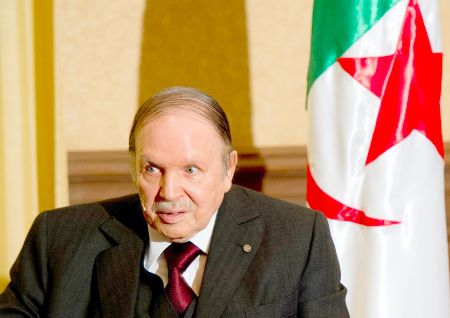 Indeed, the military no longer seem to support Abdelaziz Bouteflika at the head of Algeria. Ahmed Gaid Salah, the chief of staff of the army loyal to the Algerian president so far, asked Tuesday, March 26, 2019 to initiate the procedure provided by Article 102 of the Constitution, when the President of the Republic
"Because of serious and lasting illness, it is totally impossible to perform his duties".
Weakened since 2013 by the after-effects of stroke, President Abdelaziz Bouteflika has been facing unprecedented protests for more than a month.
Admittedly, he has given up a fifth term, but has postponed indefinitely the date of the presidential election, originally scheduled for April 18, after the drafting of a new constitution. He would remain in power after April 28, the end of his term.
But civil society demands above all a rapid change. And clearly within the army, soldiers and officers were not ready to turn against the people what seems to have understood the general so far most loyal to President Bouteflika.
"It becomes necessary, even imperative, to adopt a solution to get out of the crisis, which responds to the legitimate demands of the Algerian people, and which guarantees the respect of the provisions of the Constitution and the maintenance of the sovereignty of the State," said General Ahmed Gaïd Salah, also vice-minister of defense, in a speech broadcast on national television.
But in any case the distancing of the army vis-à-vis President Bouteflika means a consensus at the top of the state to avoid a violent break.
Indeed if the procedure is initiated, the president of the Council of the Nation will then take the interim for 45 days. And if the president is declared unfit at the end of this period, the "vacancy" of power is declared. The interim then continues for a maximum of 90 days, during which a presidential election is organized.
"Only the quick passage to an election will renew the institutions," according to constitutionalist Fatiha Benabbou.
|
|
|
|
|
|
|
|
| Jenny Chase for DayNewsWorld |
|
|
There are no translations available.
MASSACRE MEURTRIER DANS UN VILLAGE PEUL
AU MALI
|
|
Village dévasté : Des corps sans tête, d’autres jetés au fond d’un puits et des amas de chaires noires, brûlées vives. Au moins 134 civils ont été massacrés à Ogossagou dans le centre du pays par des miliciens.
 Selon les Nations unies, au moins 134 personnes ont été massacrées et une cinquantaine d’autres blessées, dans ce village largement habité par des civils appartenant à l’ethnie peule.
Selon l’association de défense des Peuls Tabital Pulaaku, la majorité était des femmes et des enfants.
Beaucoup avaient trouvé refuge dans ce village après avoir déjà fui d’autres affrontements intercommunautaires qui ont fait plus de 500 morts en 2018 dans le centre du Mali, selon l’ONU.
Depuis l'apparition il y a quatre ans dans le centre du Mali du groupe djihadiste du prédicateur Amadou Koufa, recrutant prioritairement parmi les Peuls, traditionnellement éleveurs, les affrontements se multiplient entre cette communauté et les ethnies bambara et dogon, pratiquant essentiellement l'agriculture.
Au delà de litiges terriens qui opposent ces communautés, la spirale des violence revêt de plus en plus un caractère ethnique. De plus, la zone est un terrain d’action privilégié des groupes terroristes, au Mali.
Les Dogons ont créé, en contre partie, leurs propres « groupes d'autodéfense », dont l'association « Dan Nan Ambassagou » qui serait à l'origine du génocide.
En conséquence le président Ibrahim Boubacar Keïta a prononcé « la dissolution de l'association 'Dan Nan Ambassagou' pour dire clairement aux uns et aux autres que la protection des populations restera le monopole de l'Etat », a expliqué le Premier ministre Soumeylou Boubeye Maïga.
Le gouvernement a également annoncé le remplacement des chefs d'état-major des armées, de l'armée de terre et de l'armée de l'air.
Avec ce limogeage d’une rare ampleur l'Etat tente de reprendre la main sur les milices armées au lendemain du massacre de plus de 130 Peuls dans le centre du pays, l'attaque la plus meurtrière qu'ait connue le Mali depuis au moins six ans.
|
|
|
|
|
|
|
|
| Alyson Braxton pour DayNewsWorld |
|
BOUTEFLIKA OU D'UNE CONCESSION SYMBOLIQUE A UNE REPRISE EN MAIN DU POUVOIR
|
| It was the protesters claim for several weeks. Algerian President Abdelaziz Bouteflika, faced for the past two weeks with an unprecedented challenge in 20 years of power, announced Monday, March 11 to waive a fifth term and the postponement sine die of the presidential scheduled on April 18.
 For the first time since the beginning of the protest movement, Abdelaziz Bouteflika appeared on Algerian television.
In a long message to the nation, he said the presidential will take place "in the extension of a national conference" to reform the political system and develop a draft Constitution by the end of 2019.
The news was initially welcomed with joy. It thus meets one of the main demands of popular mobilization.
But by pledging "to hand over the duties and prerogatives of the President of the Republic to the successor that the Algerian people will freely elected," Abdelaziz Bouteflika implicitly indicates that he will remain head of state at the end of his mandate on April 28, 2019.
"There will be no fifth term and it was never discussed for me, my state of health and my age not assigning me as an ultimate duty to the Algerian people that the contribution to the foundation of the foundations of 'a new republic', says Abdelaziz Bouteflika in this text.
The relief has quickly given way to doubts, as shown by the headlines of major Algerian newspapers: "Bouteflika extends the fourth term" (El Khabar), "Bouteflika will leave, the system will wait! "(El Watan)," Bouteflika offers Algerians a "transition" managed by the power "(TSA). The proposals offer him by postponing the presidential election a lengthening of the current presidential term, beyond the term provided by the Constitution, which allows him to organize his exit.
Thus power plays its all-round game and today uses solutions that it had envisaged even before the crisis to remain master of the calendar and the modalities of evolution of the political system.
Difficult to see in these latest announcements an executive releasing ballast to the protesters. Attendism, on the contrary, appears to be the last bastion of a discredited regime.
In fact through a symbolically important concession, the power tries to regain control. The demonstrations continue.
|
|
|
|
|
|
|
|
| Joanne Courbet for DayNewsWorld |
|
|