More Articles...

DUEL OF TWO SEPTUAGENARIES FOR THE PRESIDENTIAL IN NIGERIA

COLOSSE AT THE FOOT OF CLAY

Return of the elections to February 23rd.

The Nigerian presidential election scheduled for Saturday, February 16 was postponed to February 23 by the Independent National Electoral Commission of Nigeria (INEC). The INEC has decided to postpone for a week the general elections (presidential and legislative) scheduled for Saturday, February 16, arguing of logistical problems after an emergency meeting in the night from Friday to Saturday. the holding of free, fair and credible elections, organizing the ballot as agreed was no longer possible, "told the press Mahmood Yakubu, president of the INEC.

The most populous country in Africa, the continent's largest oil producer, the main African economy in the neck and neck with South Africa, Nigeria remains a colossus with clay feet.

The challenges facing the winner of the presidential election on Saturday, February 23 will be gigantic. The election is expected to split the incumbent president, Muhammadu Buhari, and the wealthy businessman Atiku Abubakar, leader of the opposition and former vice president (1999-2007) .72 other candidates are vying for the presidential election.

The duel of two septuagenarian Buhari (76 years), outgoing president, and the businessman Atiku Abubakar.

During the campaign, former General Buhari (76), who had led the country in the 1980s, did not deny the shortcomings of his mandate.

"It has not been a long, quiet river," he said, asking his compatriots to consider "the important progress" made by his government and to give him the opportunity to complete the projects, particularly in terms of anti-corruption, security and economic. Outgoing President Muhammadu Buhari has promised to take his country to a higher level and do better if he is re-elected.

"We are determined to deepen the work that we started during this first term so that the assets and resources of the nation continue to be organized and used in a way that serves the Nigerian citizen," said the outgoing president at the meeting. his campaign. But at 76, his health raised many questions while he was hospitalized several times in London.

The main competitor of President Buhari, who comes from the former ruling party, the PDP, disputes the record. The businessman Atiku Abubakar, who will thus seek for the fourth time the supreme magistracy in his last "Address to the Nation", has violently taken the current president, treating his presidency as "disaster". For him, President Buhari has failed in his policy of securing the country and its economic results are disappointing as its anti-corruption policy called "witch hunt against opponents."

It promises the recovery of the country's economy and an effective fight against corruption by favoring the return of funds diverted into public funds through an "amnesty".

Whoever wins this election, the challenges the winner will face are immense.

An economically poor country despite its hydrocarbon resources.

Indeed the economy of the most populous country in Africa is very badly in point. The crisis caused by the vertiginous drop in hydrocarbon prices in 2015, on which the Nigerian economy depends, has had a lasting impact on the country. Growth was only 1.9% in 2018, remaining at a lower rate than population growth in a country where unemployment affects a quarter of the labor force, and even more than half of 15-35 year olds .

In this country of some 190 million inhabitants - whose population is expected to double by 2050 - this sluggish growth, against a backdrop of high inflation, can not stop the spiral of extreme poverty. According to the World Bank, Nigeria is surpassing India to become the country with the largest number of people living on less than $ 1.90 a day. The recovery of the economy will inevitably go through a diversification of activities to stop this spiral of poverty ...

Security challenges with the threat of Boko Haram and land conflicts.

In addition to the economic challenge, security was a major theme of the February 23 presidential campaign. Determining Muhammadu Buhari's victory in 2015 as a former general who led a military regime with a military hand in the 1980s, security will still dominate the agenda of the next mandate, particularly with the rise of communal clashes. in addition to the ever-present terrorist threat of Boko Haram.

Muhammadu Buhari had indeed promised to stop the jihadist insurgency Boko Haram that has killed more than 20,000 and 2.6 million displaced since 2009.

But in the north-east of the country Boko Haram group remains a real threat to the security of the population, even if in four years, Boko Haram has given a little ground against the government of Buhari. The terrorist group has increased in 2018 attacks and suicide bombings in several cities in the north-east. In particular, the kidnapping, at the end of February, of more than a hundred girls in a boarding school in Dapchi (Yobe State) and the double bombing of May 1 that killed nearly a hundred victims in Mubi. In March2018, the Nigerian administration acquired US armament for 414 million euros, including surveillance planes and attack, to suppress the jihadists ...

In addition to Boko Haram, there are other conflicts in Nigeria that need to be addressed, such as pro-Biafra separatist tensions challenging the Abuja authority that still persist in the Southeast, and the old land dispute between nomadic herders and sedentary farmers.

There are many deadly clashes between farmers and pastoralists, particularly in the states of Benue, Taraba, Nasarawa, Plateau and Kogi. Farmers are accused by farmers of ransacking their farms. But to this grievance is added a dimension of identity between the predominantly Muslim breeders and the mostly Christian farmers.

By 2018, Muslim herders reportedly massacred two priests and sixteen Catholic faithful in a church in the central Benue state. The following day, in retaliation, eleven Muslims were lynched in the capital of the state of Benue. The bishops of the states of Benue and Nassarawa had denounced, in a statement, "a clear program of Islamization of the Nigerian central belt" whose goal is "to hit Christians".

In the first economy of Africa the challenges to be met by the new head of state will be immense like the presidential election postponed because of security and logistical problems.

All eyes are now on President APC's Buhari and his main opponent, Atiku Abubakar, of the PDP, the ballot between the two northern men, Muslims, looking very tight.

Joanne Courbet for DayNewsWorld

BOUTEFLIKA TOWARDS A FIFTH MANDATE

IN ALGERIA

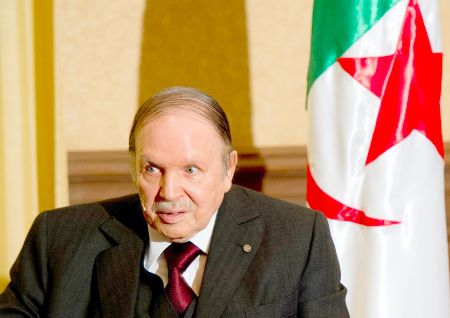
End of the false suspense: Algerian President Abdelaziz Bouteflika is officially a presidential candidate on 18 April.

No television appearance, or even radio message but a simple "message to the Nation" to official Sunday, February 10 the presidential candidacy of Abdelaziz Bouteflika, in power for two decades in Algeria.

Despite his age and health problems, the outgoing Algerian president will seek a fifth term.

Nailed in a wheelchair by a stroke since 2013, Abdelaziz Bouteflika is ahead of criticism of his state of health:

"Of course, I do not have the same physical strength as before, something that I have never hidden from our people. But the unwavering desire to serve the homeland has never left me and it allows me to transcend the constraints related to the health problems that everyone may face one day. ".

The National Liberation Front (FLN), in power since the country's independence, has designated it as its candidate, as the three other parties of the alliance have already done: the Prime Minister's National Democratic Rally (RND) Ahmed Ouyahia, the Rally of Hope of Algeria (TAJ) and the Algerian People's Movement (MPA).

Behind this weakened president, there would be a whole entourage pushing to keep him in power. First of all, a family clan with its two brothers at the heart of the system, Said Bouteflika being a transmission belt with the army, but also an economic ruling caste ; For pro-Bouteflika, the president guarantees the stability of the country as a bulwark against fundamentalism in view of the situation in Libya, Syria or Egypt.

Abdelaziz Bouteflika was also the architect of the return to peace in Algeria after ten years of bloody civil war. While he took advantage of the rise in oil prices between 2004 and 2014 to launch extensive infrastructure programs and de-leveraging the country, his fourth term was marked by the fall in oil prices that hit the economy hard. ultra-dependent country of oil. One-third of young people under 25 are unemployed.

All the austerity measures taken in recent years to cope with the fall in the price of a barrel of oil have been abandoned. Recruitment in the public service has been revived. Young business creators financially supported by the state who have not repaid their credit will not be prosecuted. The Ministry of the Mujahideen (veterans) has announced up to 100% increase on pensions paid to those who suffer from chronic diseases. The president announced a "national conference" open to the opposition and intended to give birth to institutional, economic and social reforms.

In opposition, some candidates seek to negotiate an alliance for a single bid against Bouteflika. For those who do not let themselves be tempted by the call for an outright boycott of the polls, the negotiations are already well underway to know who will try to embody the wave of "Everything but Bouteflika" that rises in the Algerian youth on the networks social.

Two opponents are already in the running. Abderrazak Makri, head of the largest Islamist Islamist Movement for Peace (MSP), and retired general Ali Ghediri, unknown to the public, have announced their intention to run for office while Ali Benflis, former prime minister of Bouteflika and his main opponent, has not yet said if he would show up.

Systematically reelected in the first round with more than 80% of the vote, the head of state again this time as the favorite of the vote but abstention may be strong .

Jenny Chase for DayNewsWorld

A STRATEGIC PARTNERSHIP OF FRANCE

WITH EGYPT

DESPITE THE AUTHORIZED DRIFT OF ALISIS ?

Emmanuel Macron flew to Egypt on Sunday and will stay there until Tuesday. Accompanied by a delegation of personalities and several ministers, including Jean-Yves Le Drian, the president makes a trip "to strengthen the strategic partnership between the two countries," says the Elysee. With his counterpart Marshal Al-Sissi, he should talk about contracts and security, but also human rights.

Culture and Archeology


On the first day, President Macron began his visit Sunday with a stopover at Abu Simbel Temple, one of the country's iconic archaeological sites. Beyond a French tradition of Egyptology that goes back to Champollion, France hopes today to be entrusted with new missions of excavations or enhancement of ancient sites, such as that of Saqqara, south of Cairo. It also seeks to participate in the future Grand Egyptian Museum of Guizeh and the renovation of the famous archaeological museum located in the center of Cairo since the nineteenth century.

On the second day of his visit to Egypt on Monday, Emmanuel Macron is greeted in Cairo at the presidential palace by his Egyptian counterpart Abdel Fatah al-Sisi for a one-to-one interview.

Economic contracts

The program: the signing of thirty agreements and commercial contracts, for "a few hundred million euros", according to the French Presidency. About fifty French patrons are part of the trip. Contracts cover sectors as varied as transport, renewable energies, health or agrifood

Strategic partnership.

The two presidents will also talk about defense and security with the fight against terrorism. Among the emblematic contracts is that of Rafale fighter planes of which 2 4 copies were delivered to Egypt. has become the third largest arms sales customer for France. Negotiations are underway for the acquisition of 12 others, but no contract should be announced during this trip, they say behind the scenes.

Paris supports Egypt as a strategic partner, seeing the most populous country in the Arab world as a center of stability in the Middle East, despite strong criticism from NGOs about the Egyptian authorities' failure to respect human rights. Emmanuel Macron, despite the authoritarian drift of the Egyptian president, does not want to break any form of cooperation that would lead Egypt to Russia or other powers, on the contrary.

Human rights

Several NGOs, including Amnesty and Human Rights Watch (HRW), have therefore stepped up to "suspend the suspension of any French sale of weapons that could be used to commit or facilitate serious violations of international law".

They called on Monday Emmanuel Macron to "deliver a strong speech on the catastrophic situation of human rights" in Egypt, "demanding the release of all prisoners unjustly detained". In October 2017 Emmanuel Macron had received the Egyptian president in Paris, despite the criticism of NGOs. At that time the French president had refused to "give lessons" to his counterpart on the issue of human rights. However, Sunday evening in an interview with the French press in Cairo, President Macron said he would speak "more openly" of this sensitive issue during his visit. According to the French president, "things have gotten worse since October 2017"

As a result, he promised to express himself "in a more determined manner, including openly (...) because I think it is the interest of President Sissi and Egyptian stability".

A visit that aims to diversify the French commercial offer, which remains "too low" according to Emmanuel Macron, France being only the 11th partner of Egypt, third market in Africa and to "tighten the links" between two countries.

Joanne Courbet for DayNewsWorld

FELIX TSHISEKEDI PRESIDENT OF CONGO ALTERNANCE OR CONTINUITY OF POWER

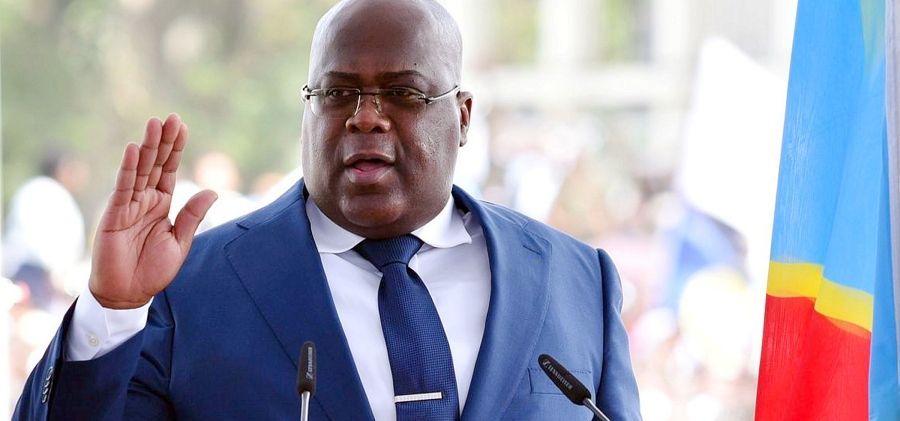
A new era is opening up in the DRC. The opponent Felix Tshisekedi officially became, Thursday, January 24, the fifth president of the Democratic Republic of Congo (DRC). He succeeds Joseph Kabila, who leaves power after eighteen years at the helm of the country.

This political alternation is the first in Congolese history to be done without violence in a country marked by two coups (1965 and 1997), two assassinations of leaders (Patrice Lumumba, in 1961, and Laurent-Désiré Kabila, in 2001), and two wars.

But this election is contested by Martin Fayulu, another opponent of Kabila, who denounced an "electoral coup" orchestrated by Mr. Kabila with the complicity of Mr. Tshisekedi.

If the African heads of state of South Africa, Kenya, Burundi and Tanzania have welcomed, on Sunday, the election of Mr. Tshisekedi, others have delayed including two of the nine neighbors of the DRC, Angola and Congo.

The African Union (AU) and the European Union (EU), in a joint statement, "took note" of the outcome of this contested election. As for the United States, they said they were ready to work with the new president.

A "political coalition agreement"

For a peaceful alternation, Mr. Kabila, a 47-year-old senator, encouraged "political leaders" to favor a

"Coalition" rather than "cohabitation". Thus the pro-Tshisekedi and pro-Kabila have signed a "political coalition agreement" and "power sharing" which provides that the regal ministries (diplomacy, defense, domestic) return to the elected president's political family.

The National Assembly is acquired by President Kabila with 337 seats out of 500, so that Mr. Tshisekedi will have to choose a prime minister in this majority. Nehemiah Mwilanya Wilondja, the President Kabila's chief of staff, or Albert Yuma, a Congolese boss, is being approached for the post. The army is also largely shaped by outgoing power.
Formal deadlines, however, should help to establish the government.

Towards "a reconciled Congo"

Felix Thisekedi is committed to reforming justice, fighting corruption, poverty, tax evasion and improving respect for human rights. In his inaugural speech, the new president promised to release all "political prisoners".

He also assured that he would improve respect for human rights in the country.

"Under our mandate, we will ensure that every citizen respects the exercise of their fundamental rights. We are committed to banning all forms of discrimination, "he said.

The new government will take over a mineral-rich country, but 70% of the 80 million people live below the poverty line, according to the IMF.

Andrew Preston for DayNewsWorld

THE NEW GOVERNMENT OF

THE PRESIDENT OF MADAGASCAR ANDRY RAJOELINA

With error or omission we are fortunate to announce that the new government of President Andry Rajoelina has just been formed in Madagascar.

Recall that after a transfer of power that was made between two elected presidents, Hery Rajaonarimampianina and Andry Rajoelina, which represents the obvious illustration of a democratic transfer of power, in respect of republican values.

In his address to the nation in front of thousands of Malagasy people attending the ceremony, Andry Rajoelina promised to fill in five years the economic backlog accumulated by the country since its independence in 1960

"From now on, the Malagasy will always be victorious but not conquered every time in the economy, in the social sector, in the cultural sector, in all sectors. This is my priority, " said Andry Rajoelina just after being sworn in as president of Madagascar.

President Andry Rajoelina also announced the creation of industries in the six provinces of the country to equalize development across Madagascar.

Since the energy sector is an obstacle preventing entrepreneurs from investing in the provinces, he promised to double electricity production during his tenure and sell it at a low price to the public.

"We are going to create a solar panel manufacturing company to bring light to every family," he said. "We will double the cultivated land in five years so that Madagascar imports more rice, but exports it in five years" .

"We will create a new city to ease congestion in the capital Antananarivo. Work will begin this year 2019. This city will be the pride of the Malagasy, because it will be the most modern city of the Indian Ocean. All the ministerial offices will be transferred there . "

President Andry Rajoelina chose as prime minister is Christian Ntsay.

To foreign affairs is appointed Foreign Minister Naina Andriantsitohaina post all the more important as it must weave links with the whole world.

Another important seat Minister of Economy Richard Randriamandrato and Minister of Spatial Planning and Public Works Hajo Andrianainarivelo and Minister of Industry, Heritage and Crafts Landisoa Rakotomalala to sit the future of Madagascar.

Then and are named:

Minister of National Defense Gal de Div Leo Jean Richard Rakotonirina
Minister of Justice Jacques Randrianasolo
Ministry of the Interior Tiana Harivelo Razafimahefa
Public Security Comptroller General Rafanomezantsoa Rafanomezantsoa
Secretary of State for the Gendarmerie Ravalomanana Richard

Minister of Energy, Water, and Hydrocarbons: Vonjy Andrianjaka
Minister of Transport, Tourism and Meteorology: Joël Randriamandranto
Minister of Higher Education Madeleine Felicite Fienena

Minister of the Environment and Sustainable Development: Alexandre Georget
Minister of Communication and Culture Lalatiana Andriatongarivo Rakotondrazafy
Minister of Youth and Sports: Tinoka Roberto.
Minister of Post, Telecommunications, and Digital Development MPTDN Christian Ramarolahy
Ministry of Population Irma Lucien Naharimamy


If the task that awaits this new government team to lead the great project of President Andry Rajoelina is important, the judicious choice of a team of people of value should help to advance in the right track Madagascar, which as we recall , at such an important potential

Luc T. for DayNewsWorld