TOWARDS THE END OF THE SUDANESE SPRING ?
|
| A small history
After months of peaceful protests, the Sudanese protest is now being violently repressed. On June 3, more than 100 civilians, according to the opposition, were killed in an assault by order of the military.
For many, this coup could mark the end of the "Sudanese Spring". But opposition and protesters want to keep up the pressure for a transfer of power to civilians.
Since the bloody dispersal of Sudanese protesters' sit-in in front of army headquarters in Khartoum on 3 June, 118 people have been killed and more than 500 wounded, according to the opposition. But the protesters intend to keep the pressure on the generals in power.
The Transitional Military Council has been in power since the April 11 dismissal of President Omar al-Bashir by the army, under pressure from the protest movement launched on 19 December in a climate of acute economic crisis.
 A blocked political process between military and civilians A blocked political process between military and civilians
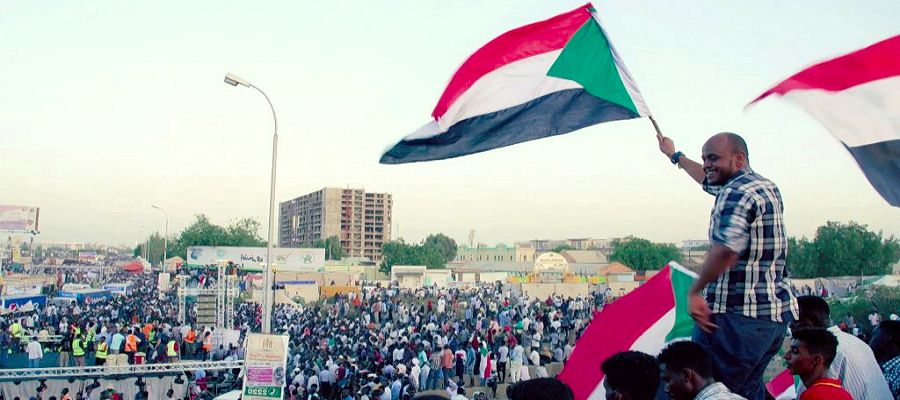
The protest calls for a transfer of power to a civilian government. Negotiations have been suspended since May 20 due to differences over the composition of a new body that would be responsible for leading the transition for three years.
After the fall of Omar al-Bashir, protesters maintained a sit-in installed since April 6 in front of army headquarters to demand the transfer of power to civilians. Both sides then began discussions on the transition period but failed to agree.
Born in December of anger against the tripling of the price of bread, the dispute quickly took a political turn.
The standoff took a bloody turn with the violent dispersion of the sit-in in Khartoum on June 3. After four days of repression, and despite the mediation of Mr. Ahmed, the protest launched on Sunday a civil disobedience movement.
Suppression of the sit-in and 118 dead
The announcement of the resumption of negotiations comes as the leaders of the protest had announced Monday night that they will soon publish the composition of their own governing body with a Prime Minister.
She also intervenes the day after the announcement of the visit this week of the US Assistant Secretary of State for Africa, Tibor Nagy. The State Department said the envoy would call "at the end of attacks against civilians".
According to a committee of doctors close to the protest, 118 people have died and more than 500 have been wounded since then, the majority in the dispersal of the sit-in. The authorities estimate 61 deaths, including 49 by "live ammunition" in Khartoum. On Tuesday, vehicles equipped with Rapid Support Forces (RSF) machine guns - paramilitaries accused of disputing the spread of the sit-in and the crackdown that followed - continued to patrol in several districts of the capital, mostly deserts.
Meanwhile, nine people were killed on Monday in al-Dalij village in western Darfur, a region wounded since 2003 by a civil war, according to a committee of doctors who blame Janjaweed militias for atrocities in the country. the region. The RSFs are considered by the protest and by experts as a "new version" of the Janjawid.
Resumption of negotiations
The Sudanese opposition and the Transitional Military Council (TMC) have agreed to resume talks on the formation of a new administration, Ethiopian mediator Mahmoud Dirir said Tuesday after more than three days of near-paralysis in Khartoum, the capital of Somalia. country.
The Sudanese protest has indeed agreed to end the civil disobedience movement launched after the start of a deadly crackdown and resume discussions with the military in power to find a way out of the crisis.
The Alliance for Freedom and Change (ALC), the spearhead of the protest, immediately called on the Sudanese to "get back to work on Wednesday," after more than three days of near-paralysis in the capital.
UN Security Council condemns violence
"The ALC agreed to end the civil disobedience movement from today" and "the two sides agreed to resume the talks soon," Drir said Tuesday.
In a statement, Council members called for the immediate end of violence against civilians and stressed the importance of respect for human rights.
George Clooney, very committed to Darfur
In an editorial co-signed with human rights activist John Prendergast and published in Politico, US actor George Clooney urged the international community to track dirty money from Sudan in the hope that the military will change its attitude towards events.
|
|
|
|
|
|
|
|
| Jaimie Potts for DayNewsWorld |
 |
DOUBLE TERRORIST ATTACK IN TUNIS
|
The explosions took place in the late morning minutes apart. Both suicide attacks were directed against the police. 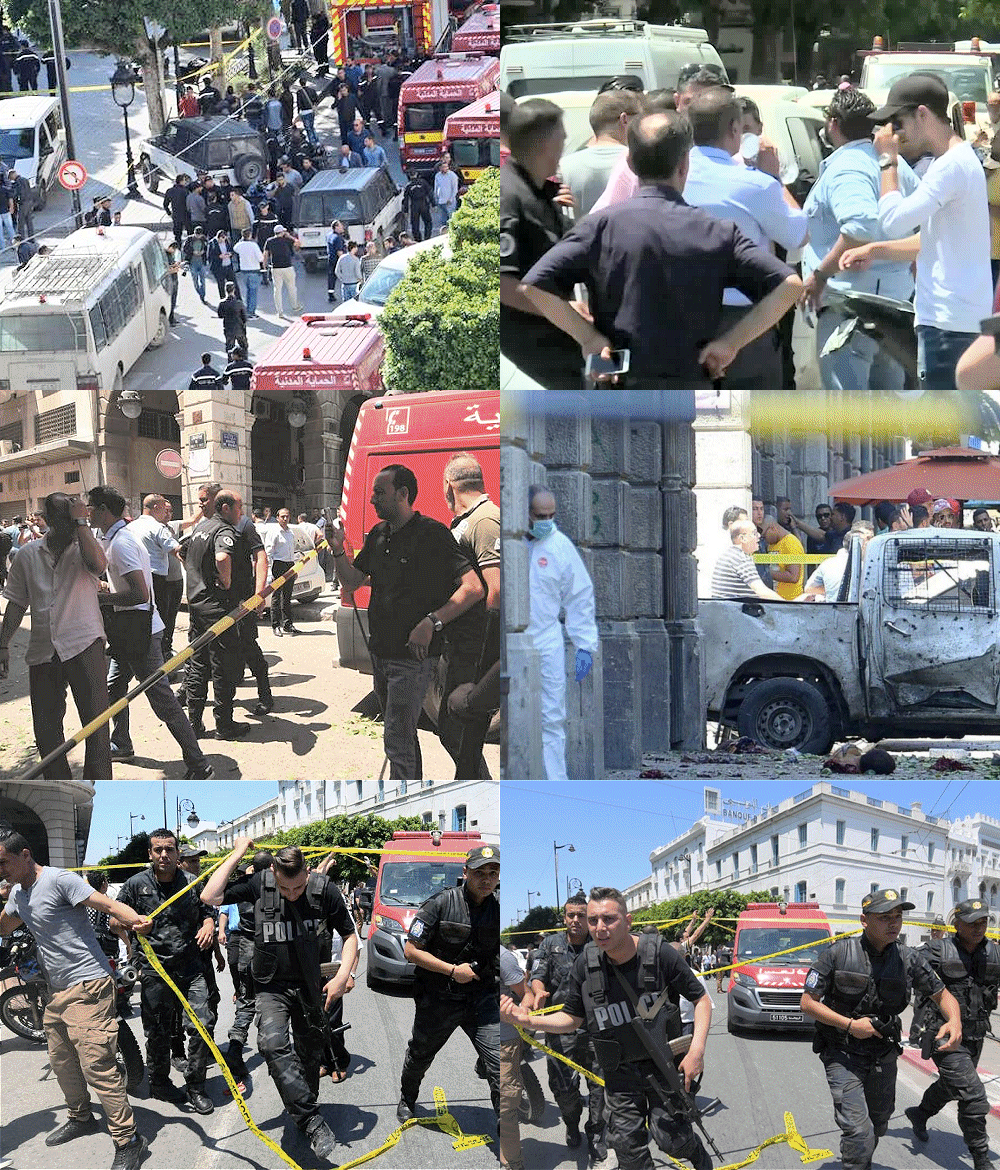
Two suicide attacks were perpetrated on Thursday, June 27 at midday in Tunis.
A car was the target of an attack on Thursday afternoon on Avenue Bourguiba, the main artery of Tunis. The kamikaze targeted the police, said a police officer on the spot. According to the authorities, three policemen and two civilians were injured.
Body pieces littered the roadway around a police car on Bourguiba Avenue, the capital's main avenue, near the old town.
A little later, it was reported that a second attack targeted a barracks of the National Guard, in the neighborhood of Al Karjani four wounded.
At the end of October, Tunis had already been hit by a suicide bombing.
Already on the avenue Bourguiba, an artery very popular with passers-by and tourists.
A woman in her thirties had activated an explosive charge that she was transporting, approaching again this time a group of police officers. Twenty people were injured, including five civilians.
Tunisia, which relies heavily on tourism, has raised its security measures since a series of attacks in 2015, including the attack on the museum of Bardo where 21 people were killed, and in the resort of Sousse, which killed 38 people.
|
|
|
|
|
|
|
|
| Carl Delsey for DayNewsWorld |
|
|
MOHAMED BEN SALMAN INVESTIGATED IN THE KILLING OF JOURNALIST JAMAL KHASHOGGI
BY UN INVESTIGATION
|
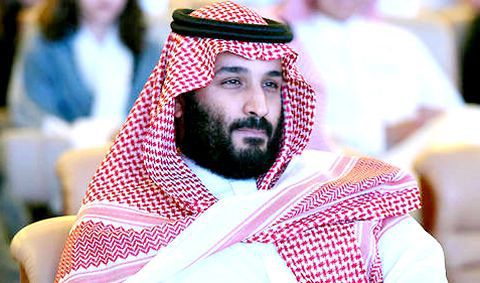
| UN investigators announced Wednesday (June 19th) to have credible evidence of the involvement of Crown Prince Mohamed Ben Salmane and other top Saudi officials in the assassination of journalist Jamal Khashoggi.
Exiled to the United States, where he wrote regularly for the Washington Post, the journalist was last seen on October 2, 2018 while entering the Saudi Consulate General in Istanbul, Turkey.
 After initially denying the murder, Riyadh has put forward several contradictory versions and now claims that Jamal Khashoggi was killed in an operation not authorized by the authorities. After initially denying the murder, Riyadh has put forward several contradictory versions and now claims that Jamal Khashoggi was killed in an operation not authorized by the authorities.
But a UN report invalidates this latest version of the monarchy.
In a six-month report, UN Special Rapporteur Agnès Callamard said that "Mr. Khashoggi was the victim of a deliberate, premeditated execution of an extrajudicial execution of which State of Saudi Arabia is responsible under international human rights law ".
Call to "open a criminal investigation"
"There is credible evidence, warranting further investigation, of the individual responsibility of senior Saudi officials, including the Crown Prince," she adds.
Sufficient evidence exists to open an investigation into the responsibility of senior Saudi officials, including Crown Prince Mohammed bin Salman, in the Khashoggi case, according to UN human rights expert
The rapporteur cautioned against "the disproportionate importance attached to the identification of the perpetrator", stressing that justice should not only establish the responsibility of the physical perpetrator. Eleven suspects have been arrested in Saudi Arabia to answer for the murder of the journalist. But a judicial inquiry "also aims, if not primarily, at identifying those persons who, in the context of the commission of a violation, have abused or failed to fulfill the responsibilities of their position of authority," argues the rapporteur. Special Report of the United Nations in its report.
The UN expert therefore calls on UN Secretary-General Antonio Guterres to "open a follow-up criminal investigation into the assassination of Jamal Khashoggi in order to establish solid files on each of the alleged perpetrators".
The head of the UN "should itself be able to open a follow-up international criminal investigation without a state having to intervene," she notes.
|
|
|
|
|
|
|
|
| Alyson Braxton for DayNewsWorld |
|
INTERCOMMUNITY MASSACRE IN MALI
|
| Sobame Da attack on Sunday night marks the acceleration of a completely uncontrolled cycle of communal vengeance. At least 95 people were killed in the night from Sunday to Monday in a Dogon village in central Mali. An entire Dogon village was razed with rare cruelty by unidentified gunmen. A new tragedy in this region plagued by violence, two and a half months after a massacre of 160 Peuls.
Intercommunity revenge
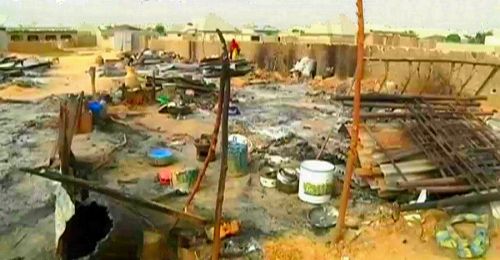 The death toll is still unclear: in the afternoon of Monday, the government said in a statement a provisional record of 95 deaths. The death toll is still unclear: in the afternoon of Monday, the government said in a statement a provisional record of 95 deaths.
For its part, the association of Dogon hunters Dan Nan Ambassagou "(Monday) noted with indignation the barbaric and ignoble attack on the village of Sobane" and "condemns with the utmost energy this intolerable terrorist and genocidal act" "
Zones under the guise of jihadist groups
In a statement released Monday, the Malian government suspected those attackers of being terrorists, before ensuring that "all measures will be taken to stop and punish the perpetrators of this carnage". Security reinforcements have been deployed to try to find the perpetrators of this umpteenth killings. The Ministry of Justice announced Monday night, the opening of an investigation, led by the prosecutor of the judicial center specializing in the fight against terrorism.
"It is not a cycle of revenge, of vendetta, that this country must be led," said ORTM public television president Malian, in Switzerland for the centenary of the International Labor Organization (ILO), announcing that he was shortening his stay. "IBK" (his initials) instead called for a "reunion" between Malians, "which alone will allow us to rebound and allow our nation to survive. Because we are in question of survival, "he said.
State powerlessness
For the head of the UN Mission in Mali (Minusma), this drama illustrates the impotence of the Malian state to prevent inter-ethnic clashes on its soil. "In response, a coordinated UN mission was put with the support of the Malian authorities, and the UN organization is mobilized in Mali to provide humanitarian assistance to assist those affected, and the mission received air support this morning, in coordination with Malian authorities, in order to avoid future attacks. ", according to the United Nations, June 20, 2019.
A meeting on troop contributors to the Minusma is scheduled for Wednesday afternoon at the United Nations, which the Security Council is expected to decide on June 27 on the mandate of the force. The UN Secretary General, Antonio Guterres, recommends that it not be reduced, despite calls from the United States.
Since the emergence in 2015 in central Mali of the jihadist group of the preacher Amadou Koufa, recruiting primarily among the Fulani, traditionally breeders, the clashes between the community and the Bambara and Dogon ethnic groups, mainly engaged in agriculture, have increased. created their "self-defense groups". Since 2015, this violence has spread from the north to the center of the country, and sometimes to the south. They are concentrated mainly in the center, often mixed with inter-communal conflicts, a phenomenon that is also experienced by neighboring Burkina Faso and Niger.
Northern Mali had fallen in March-April 2012 under the guise of jihadist groups but entire areas are beyond the control of the Malian, French and UN forces, despite the signing in 2015 of a peace agreement meant to isolate definitively the jihadists, whose application accumulates delays.
The violence culminated on March 23 with the massacre at Ogossagou, near the Burkinabè border, of some 160 Peul villagers by suspected members of Dogon hunter groups.
Violations of human rights
Since January 2018, the Human Rights and Protection Division of the UN Mission in Mali (Minusma) has documented 91 human rights violations committed by traditional hunters against civilian members of the population peule, in the regions of Mopti and Ségou, having made at least 488 dead and 110 wounded, said May 16 the Minusma during a scrum.
Conversely, armed self-defense groups in the Fulani community committed 67 human rights violations against the civilian population in the Mopti region in the same period, causing 63 deaths and 19 injuries, the report said.
|
|
|
|
|
|
|
|
| Joanne Courbet for DayNewsWorld |
|
|